Life Satisfaction, Social Skills, and School Climate in the Final Years of Elementary School
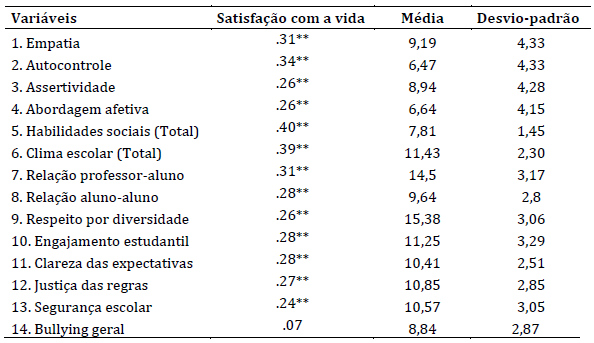
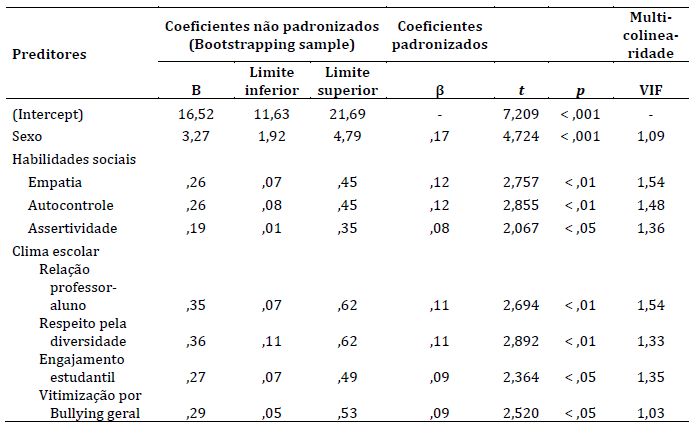
School dropout and disengagement in the final years of elementary education remain significant challenges in Brazil, influenced by personal, contextual, and socioeconomic factors that affect student engagement. During this stage, life satisfaction emerges as a protective factor against school failure; however, it has received limited attention in the literature. This study aimed to investigate factors associated with life satisfaction among students in the final years of elementary education, examining the effects of social skills and school climate on this indicator of well-being. Additionally, it sought to compare life satisfaction levels according to sex and grade retention experience, in order to identify potential inequalities in students’ academic and socioemotional trajectories. Participants were 659 students (aged 10 to 18 years), of both sexes, enrolled from 6th to 9th grade in public schools in the state of Rio de Janeiro. The instruments used were the Global Life Satisfaction Scale for Adolescents, the Delaware School Climate Survey, the Social Skills Inventory for Adolescents, and a sociodemographic questionnaire. Results indicated that boys showed higher levels of life satisfaction. In the regression analysis, 24 % of the variance in life satisfaction was explained by the variables sex (male), self-control, empathy, teacher-student relationship, respect for diversity, student engagement, lack of bullying victimization, and assertiveness. These findings provide evidence to support preventive interventions and mental health promotion efforts targeting students, families, and teachers in the final years of elementary education
Keywords:
life satisfaction; adolescents; social skills; school climate; elementary education