Persistence after one year in Uruguayan Higher Education: A longitudinal study based on a cohort of students evaluated by PISA 2013
Abstract
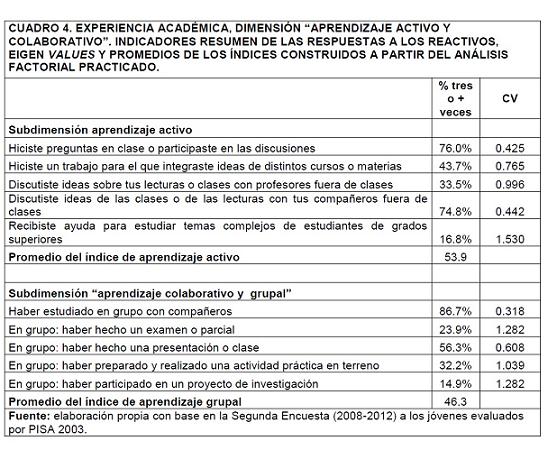
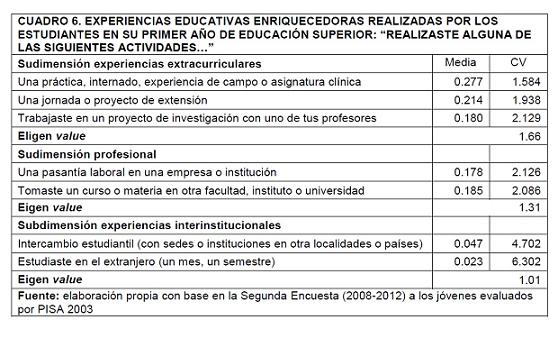
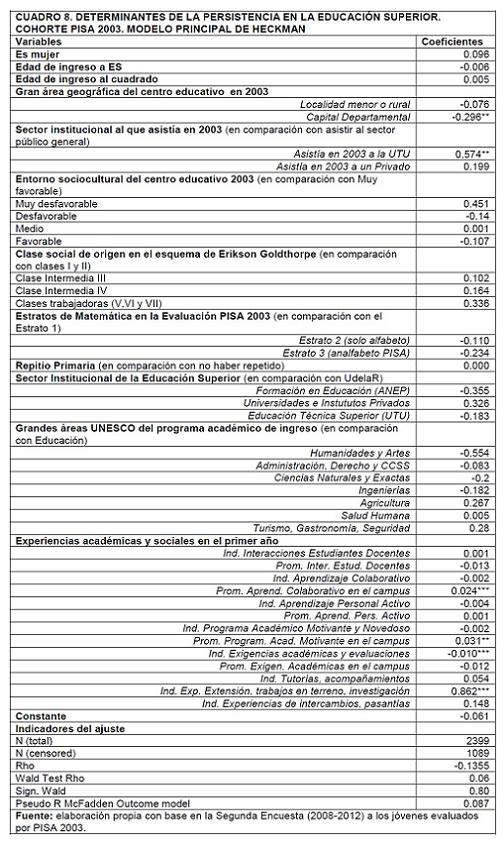
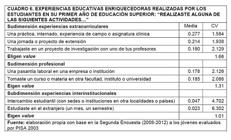
The aim of the paper is to describe the experiences in the first year of admission to Higher Education according to a four-dimensional theoretical approach, focusing on the social and academic integration of students. We show the relationship between the experiences and persistence after this traffic and find positive effects of a motivational climate awakened by the academic program of the career. In other words, a state of collaborative learning practices and participation in extracurricular activities related to fieldwork and extension. On the other hand, we found a negative effect of the individual assessment according to what students say about the requirements for tests and exams. For this study, we rely on the Second Survey that followed a group of youngsters assessed by PISA 2003. This survey was collected by the Transición Educación Trabajo Research Group (TET, Work Transition Education) in 2012 to a total of 2451 cases nationwide
higher education; persistence; inequality; Uruguay
 Thumbnail
 Thumbnail