Association of Sociodemographic and Occupational Factors with Teachers’ Attitudes toward Inclusion of Students with Disabilities
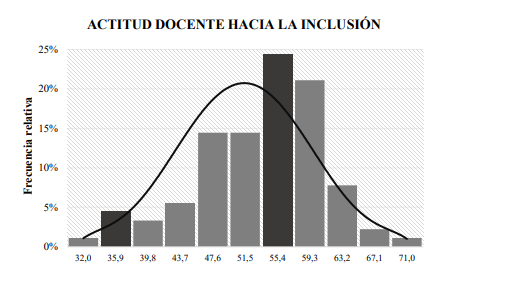
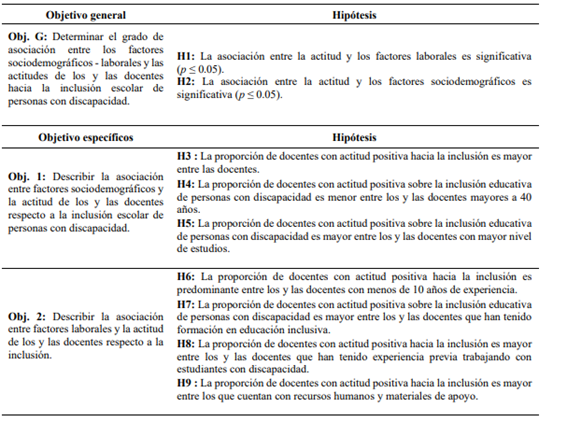
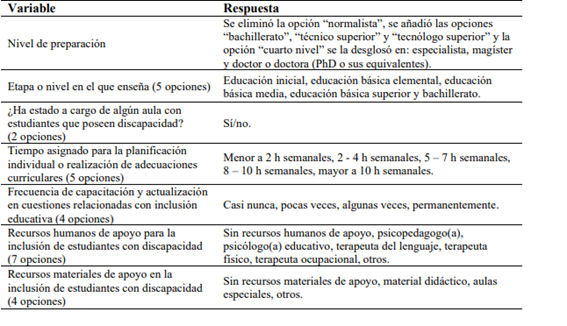
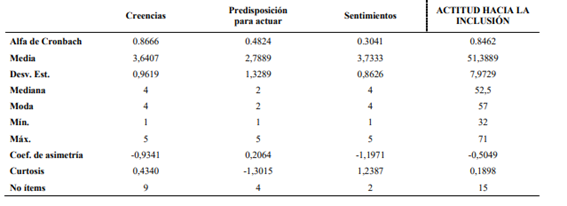
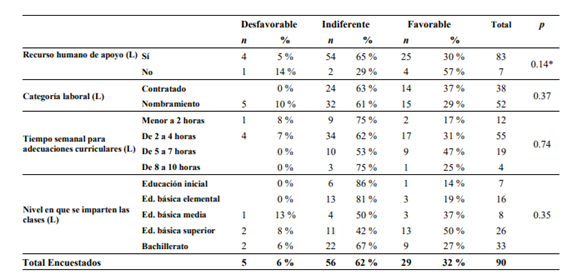
The primary aim of this research is to determine the degree of association between sociodemographic and occupational factors and teachers’ attitudes towards the inclusion of students with disabilities in the school system. This study adopts a basic quantitative approach with a descriptive-correlational scope, employing a non-experimental cross-sectional design. The research tool used was a survey based on the questionnaire developed by Tárraga-Mínguez et al. (2013), adapted by Clavijo et al. (2016). The questionnaire comprises 15 items, distributed across three dimensions: 1) beliefs (9 items); 2) predisposition to act (4 items); and 3) emotions (2 items), all adapted on a Likert scale. The survey was administered to a random probabilistic sample of 90 teachers working in four educational institutions in District 09D09, Zone 8 in Ecuador. The reliability of the instrument, as assessed by Cronbach’s alpha, was 0.8462. Key findings indicate a higher proportion of women compared to men who exhibit a favorable attitude towards inclusion. Additionally, teachers who have received training in inclusive education tend to display a lower degree of negativity and indifference, favoring a positive attitude towards inclusion. Having access to human resources and support materials also promotes a positive attitude towards inclusion.
Keywords:
teacher attitude; inclusive education; disability; sociodemographic factors; occupational factors
 Thumbnail