Evaluating the In-visible Dimensions of Gamification and Digital Gaming in Times of Disinformation: Human-AI Convergences in Initial Validation
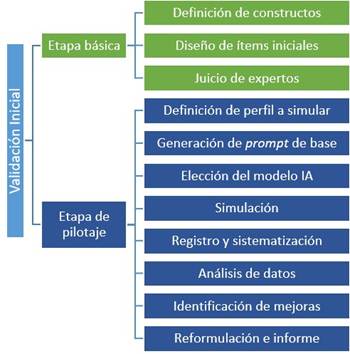
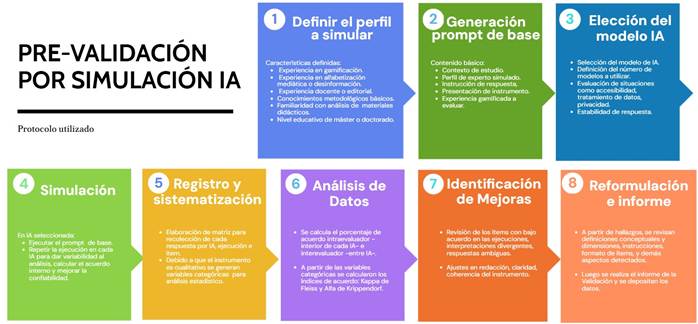
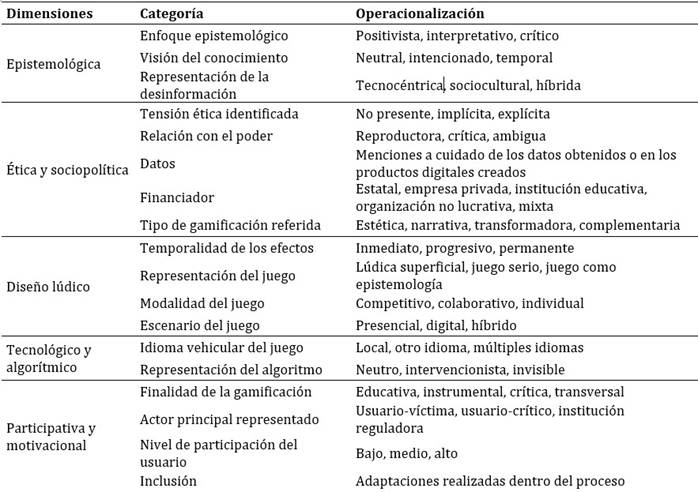
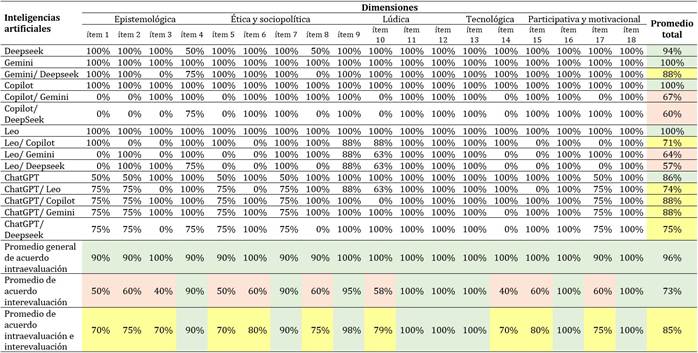
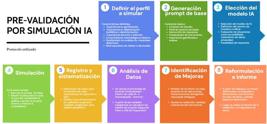
In response to information disorder, social resilience strategies such as gaming and digital gamification have emerged. However, approaches to disinformation-along with their underlying mechanics and mediations-are not neutral; rather, they involve representations that often remain invisible during implementation. Objective: Design and conduct a preliminary validation of an instrument intended to assess the representations embedded in gamification and digital gaming experiences used as strategies against disinformation. Methodology: The study follows a descriptive-exploratory design with a mixed-methods approach, structured in two stages: an initial development stage and a pilot stage involving artificial intelligence systems (ChatGPT, Gemini, Copilot, Leo, and DeepSeek). Results: The instrument was successfully designed and underwent initial validation, yielding a high level of agreement and a strong Holsti index (0.9) in the first stage. In the second stage, a moderate level of agreement (0.577) was observed, consistent with the calculated indices, along with a distribution of low (23 %), medium (33 %), and high (44 %) agreement across item evaluations. Conclusion: The instrument achieved a moderate level of initial validation, with 56 % of the items showing potential for improvement. However, increasing agreement may reduce response variability among evaluators, potentially leading to challenges in the calculation of indices and coefficients commonly used in educational psychometrics. Regarding the use of artificial intelligence, several limitations were identified, including response instability, memory constraints, and difficulties in data processing, all of which may affect its applicability in research contexts
Keywords:
disinformation; gamification; digital literacy; artificial intelligence; educational psychometrics
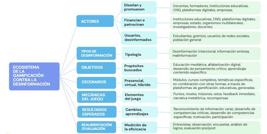 Thumbnail
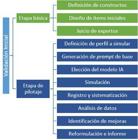 Thumbnail
 Thumbnail