Urban segregation in Montevideo: Investment in human capital, access to social capital, and their impact in the first job
Abstract
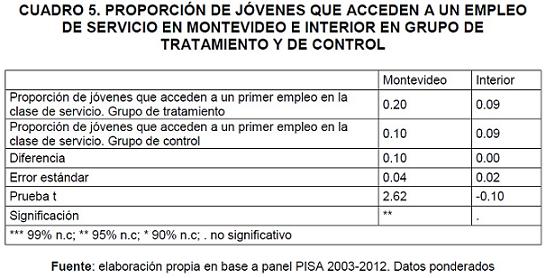
This article explores the impact of urban segmentation in Montevideo in the distribution of social capital as well as the years of schooling achieved. Thus, it analyzes the consequences on the quality of the first job. Firstly, we observe the distribution of schooling and social capital based on PISA panel 2006-2011 through hierarchical lineal models of individuals nested in neighborhoods. Secondly, we estimate the impact of the social capital on the prevalence of youngsters who obtain a quality first job through propensity score matching. The results show a segmentation of Montevideo with socioeconomic criteria, the impact in schooling achievement as well as in social capital. This social capital is relevant for obtaining a quality first job, thus promoting inequality in urban segregation scenario
social capital; human capital; urban segregation; educational inequality
 Thumbnail