Validation of the Emotional Exhaustion Scale in Peruvian University Students
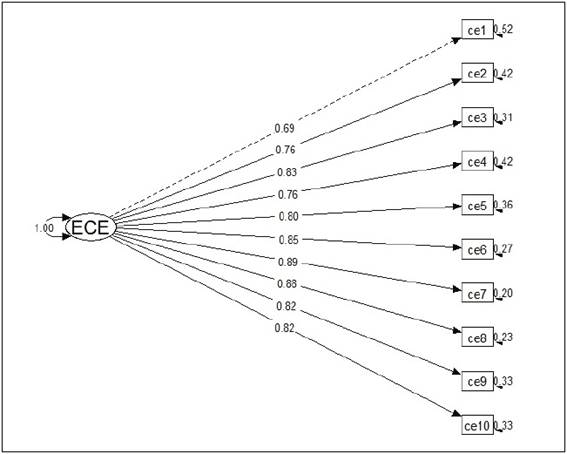
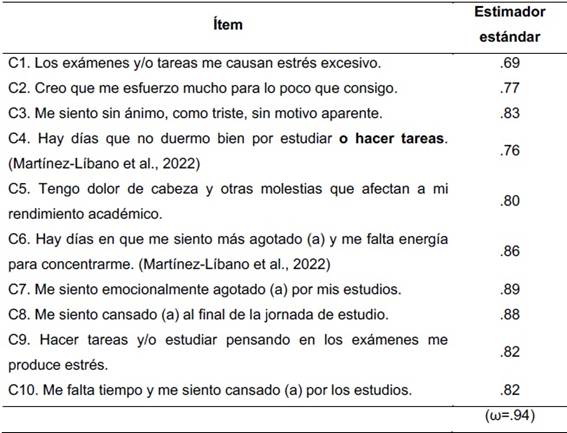
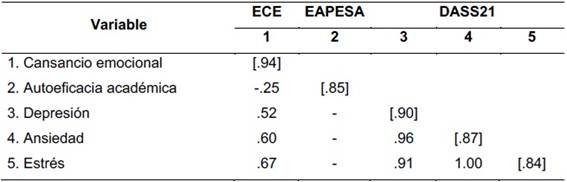
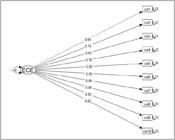
The Emotional Exhaustion Scale (EES) is one of the most studied instruments in Latin America for measuring fatigue associated with academic activities in university students. This study reviews its properties after modifying eight of the ten items in the original version, with the goal of offering a standardized instrument for the Peruvian university population. The study included 778 university students, aged 16 to 35 years (M = 20.5, SD = 2.3). Two instruments were administered alongside the EES to evaluate its validity: a) the Anxiety, Depression, and Stress Scale (DASS21) and b) the Perceived Self-Efficacy Scale Specific to Academic Situations (EAPESA). The results, based on the unidimensional model of the scale, indicated a good fit (χ2 (35) = 110, p < .001, RMSEA = .05 (.04-.06), SRMR = .03, CFI = .99 and TLI = .99) and high reliability (ω = .94). Furthermore, the ECE showed a positive correlation with the DASS21 and a negative correlation with the EAPESA (-.25). In conclusion, the revised version of the ECE exhibits an adequate fit to its internal structure, as well as convergent and divergent validity and reliability.
Keywords:
Emotional exhaustion; university students; validity; reliability
 Thumbnail