Hedonic, Eudaimonic, and Extrinsic Motivations for Physical Exercise: Measurement Model and Nomological Networks
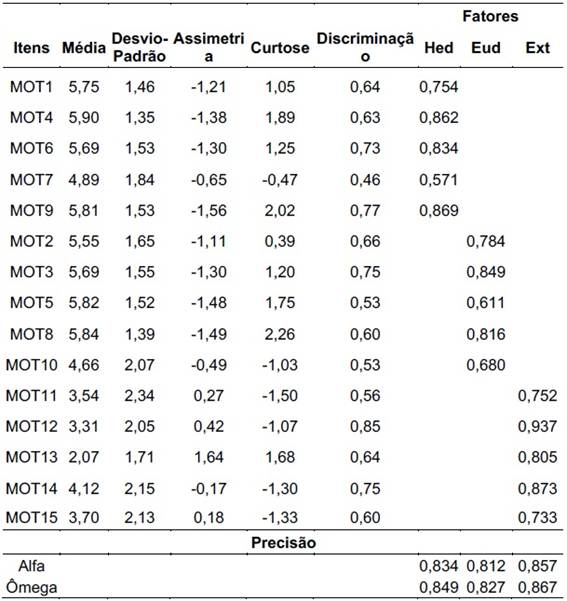
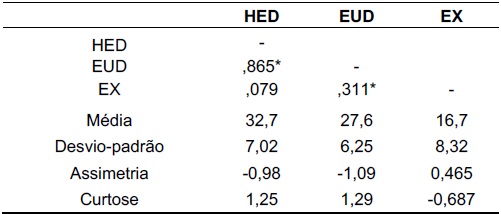
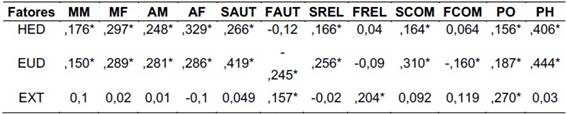
The exercise contributes to personal development, just as experiencing pleasure in physical activity can increase adherence and motivation for practice. Thus, the study aimed to adapt the Hedonic, Eudaimonic, and Extrinsic Motivations in Exercise Scale (HEEMA) for the Brazilian population and estimate validity evidence based on internal structure, relationship with other variables, and precision. The sample consisted of 232 athletes, aged between 18 and 67, of different genders. Confirmatory analysis demonstrated the adequacy of the oblique three-factor structure, all with good indicators of precision, similar to the original proposal. Hedonic and eudaimonic motivations were positively related to mindfulness, satisfaction of basic psychological needs, and harmonious passion for exercise. Extrinsic motivation was positively related to frustration of basic psychological needs and obsessive passion. The results suggest that the HEEMA is an appropriate measure for assessing different motivations in Brazilian athletes.
Keywords:
Physical exercise psychology; psychological assessment; validity evidence; positive psychology