Private speech in solving problem with adolescents 15 years old
The phenomenon of self-addressed speech has been researched from different psychological standpoints. Socio-cultural psychology refers to this as Private Speech (PS). It is defined as an external manifestation of language, which is self-directed and has a self-regulatory function.
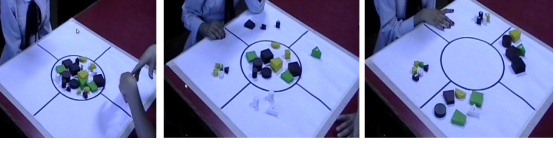
PS enables individuals to guide, monitor and evaluate ongoing activities. It appears in moments when people are faced with tasks which demand a high level of cognitive challenge. This is why the relation between PS and problem-solving performance has been researched. Although most of the investigations focus on childhood, there are studies which were carried out by teenagers and adults. Such studies show that PS is a cognitive strategy, which is present throughout the lifespan. The aim of this article is to present the results of a study which focused on PS in teenagers and its relation with the ability to solve problems. To achieve this, the Vygotsky-Saharov Artificial Concept Formation Task (ACFT) was carried out by nineteen 15-year-old teenagers, from two different socio-economic contexts. In addition to this, creating verbal protocols and performing a microgenetic analysis thereof.
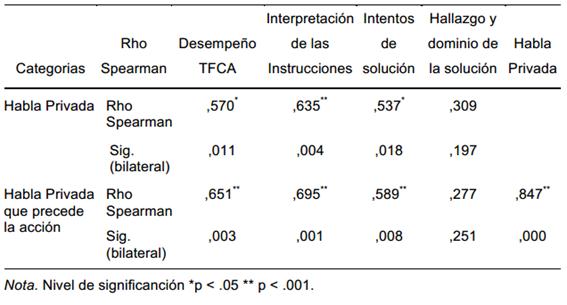
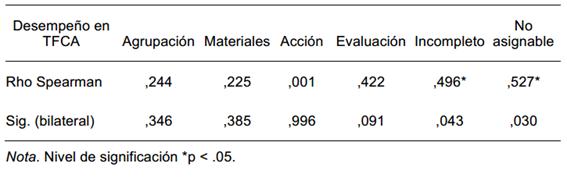
Findings add to prior evidence regarding the relation between thought and language since seventeen of nineteen teenagers used PS and showed a significant positive correlation between the use of PS and task performance.
Keywords:
Private-Speech; Problem-Solving; Thought & Language
 Thumbnail