Transition of young males in conflict with the criminal law towards adult life in Córdoba (Argentina)
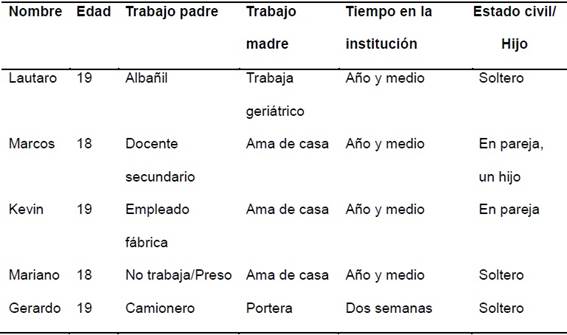
The aim of this work is to analyze the ways in which the transition to adulthood occurs in incarcerated young men who have been in conflict with criminal law. The research explores their life trajectories (family, work, education), capturing major divergences, the inter connections of significant life events are investigated with regard to how the young men approach their major decisions, find answers to the obstacles they face, mobilize resources and make decisions about their future. A qualitative approach was chosen using biographical narrative methodology. Based on in-depth interviews, the stories of five young people between 18 and 19 years of age housed in a socio-educational juvenile justice detention center (Córdoba, Argentina) were gathered. The data were coded and analyzed simultaneously using Atlas TI software, and four central categories were identified, describing trajectories that mark the path of transition towards: a) family history, b) school experience, c) work experience, and d) the role of confinement in the transition to adulthood.
Young people point out a succession of significant events in their biographical itineraries, combining the present experience with confinement, the framework of the punitive and control system, and with feeling “trapped” in the face of an uncertain future.
Key words:
Transition to adult life; young people in deprivation of liberty; life trajectories; social inequality