Gender stereotypes and candidate evaluation in the United States: evidence from a survey-experiment
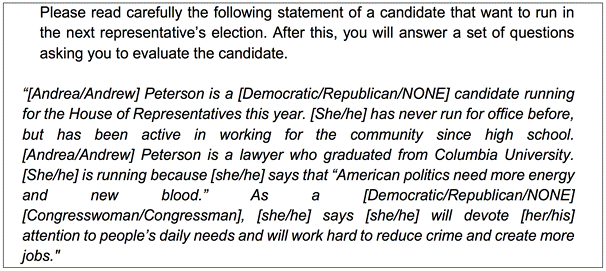
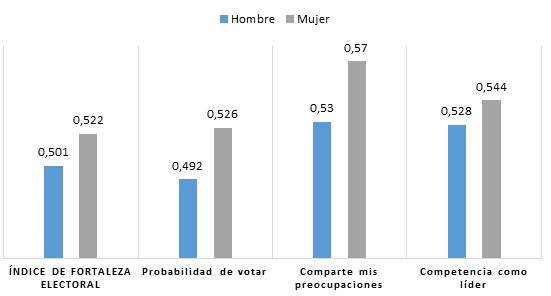
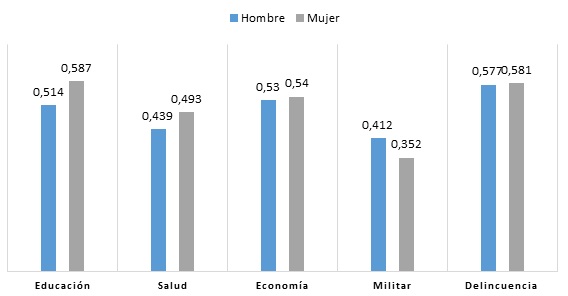
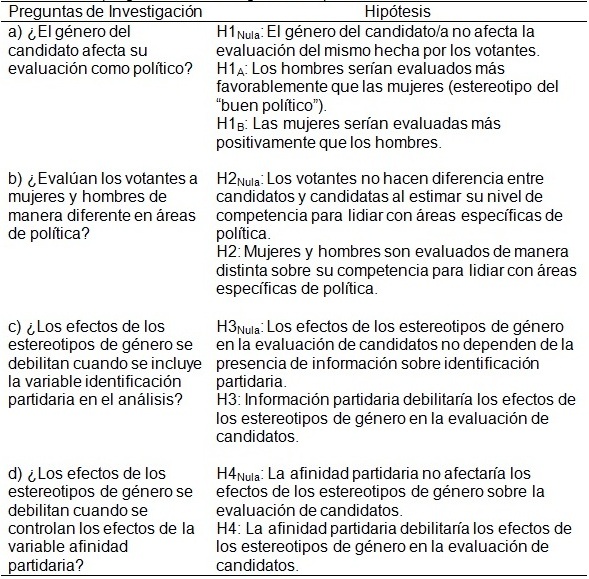
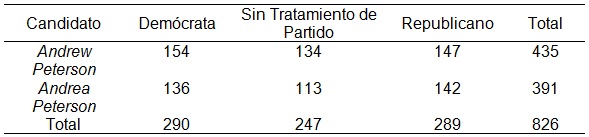
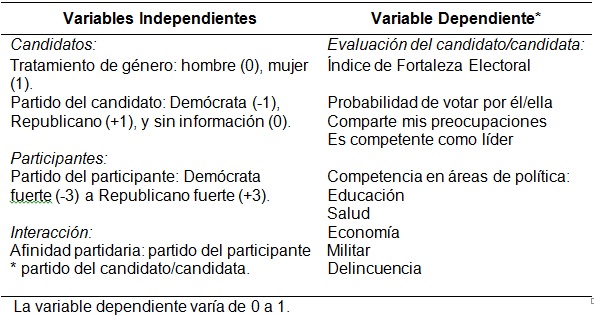
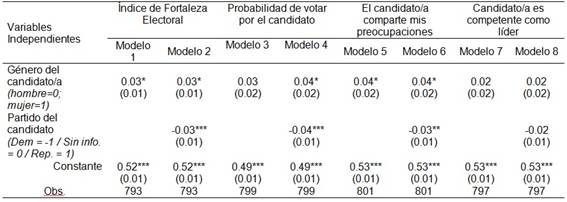
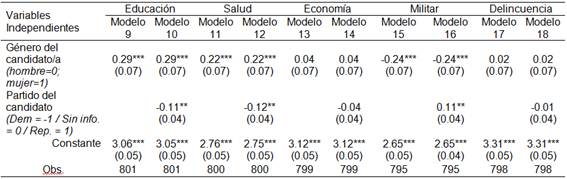
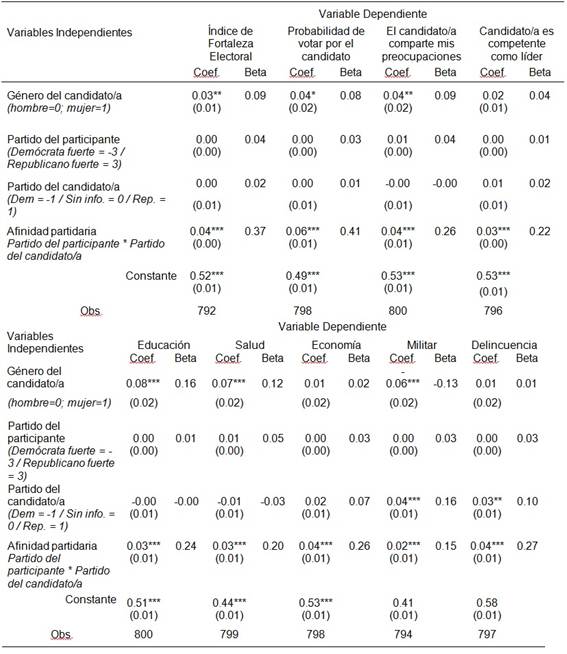
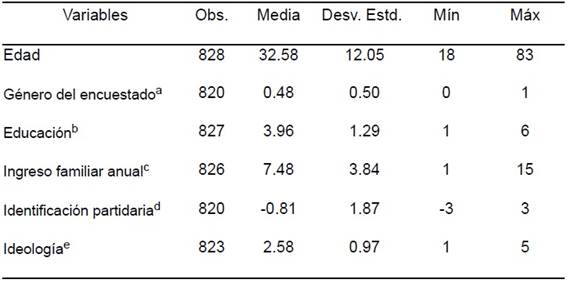
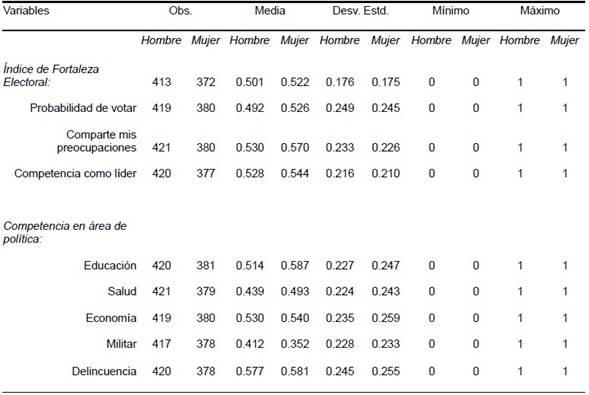
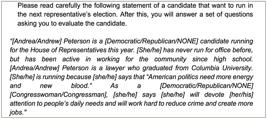
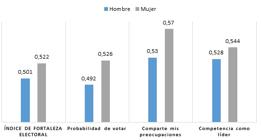
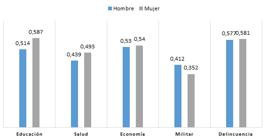
In this article, we use an experimental design to test the effects of gender stereotypes on candidate evaluation. We randomly assign 826 U.S. residents the task of reading a description of a fictional candidate: 391 participants received the script of a female candidate, whereas 435 read the same script but of a male candidate. Our results show that respondents are more likely to vote for the woman, to believe that she shares their concerns and to see her as more competent to deal with education and health care issues than the man. We also find that party affinity is consistently the strongest predictor of candidate evaluation. Interestingly, the effects of gender stereotypes partially weaken when partisanship is controlled for.
Keywords:
Women candidates, Experimental method; Gender stereotypes; Attitudes
 Thumbnail
 Thumbnail
 Thumbnail
 Thumbnail