Prosocial behavior in adults: association with empathy and sociodemographic variables
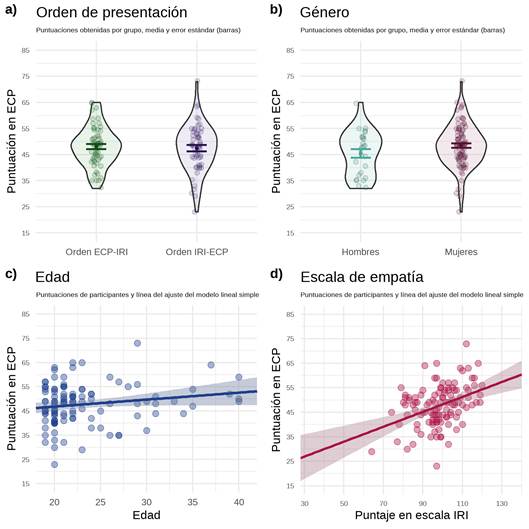
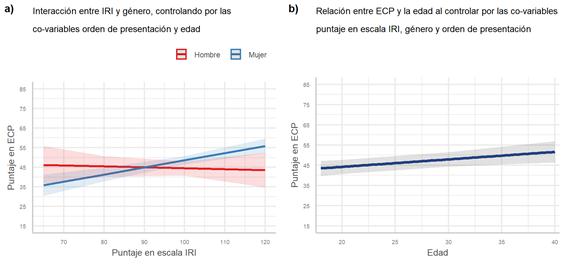
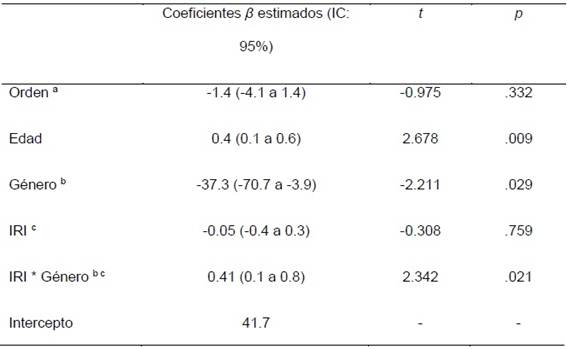
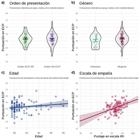
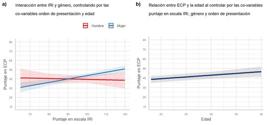
Previous research has shown an association between prosocial behavior and empathic ability. These constructs are normally assessed in the adult population using self-report scales, such as Prosocial Behavior Scale (ECP) and Interpersonal Reactivity Index (IRI). Currently, there is no available data about the interaction between empathy and prosocial behavior assessed with these scales in Spanish-speaking adults. Objective: To assess prosocial behaviors using ECP in Spanish-speaking adults and analyze its interaction with empathy assessed with IRI, as well as identify the relationship with other variables of interest (age, gender and order of presentation of the scales during the assessment). Method: ECP and IRI were administered to a sample of 115 subjects, who were randomly assigned to a specific order of exposure to the scales (IRI-ECP and ECP-IRI). Results: Performance on ECP was associated with age and the interaction between IRI scores and gender. The order in which the scales were presented during assessment showed no association with ECP scores. Conclusion: Empathy and sociodemographic variables, such as gender and age, are associated with prosocial behaviors of Spanish-speaking adults and therefore need to be considered during the assessment.
Keywords:
Prosocial behavior; empathy; gender; age
 Thumbnail
 Thumbnail