Comparison of the antimicrobial effect of sodium hypochlorite, superoxidized water, and photodynamic therapy against Enterococcus faecalis in Endodontics
One of the main challenges in endodontics is combating Enterococcus faecalis due to its ability to resist various antimicrobial treatments and its role in the failure of endodontic procedures. E. faecalis is a gram-positive bacterium capable of forming biofilms within root canal systems, which grants it resistance to antimicrobial agents and the host's immune defenses. It is the microorganism most frequently found in secondary infections and endodontic failures.
Objective: To compare the sensitivity of Enterococcus faecalis to three antimicrobial strategies (2.5% sodium hypochlorite, superoxidized water, and PDT).
Method: One hundred lower human premolars were selected and instrumented with #25 K-files, then contaminated with a pure culture of E. faecalis. They were divided into four groups, each treated with a different antiseptic.
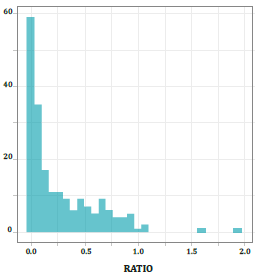
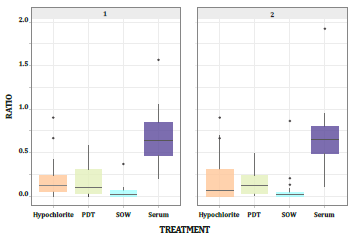
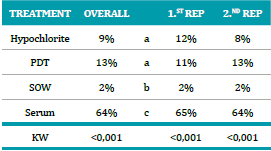
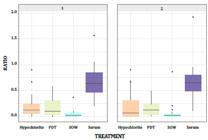
Results: All three antiseptic therapies reduced the initial number of microorganisms. Sodium hypochlorite and photodynamic therapy showed similar effectiveness, while superoxidized water produced better results.
Conclusions: All three alternatives are suitable for root canal sanitation, with improved outcomes observed when used in combination. This ex vivo experimental study was conducted in the microbiology laboratory of the Faculty of Dentistry at UDELAR.
Key words:
Enterococcus faecalis; sodium hypochlorite; superoxidized water; photochemotherapy.
 Thumbnail
 Thumbnail