In vitro demineralization techniques used to form white spot as an initial caries lesion: a systematic review
Objective: The objective of this systematic review was to describe and compare the most commonly used in vitro demineralization techniques for the formation of white spot lesions as an initial caries lesion.
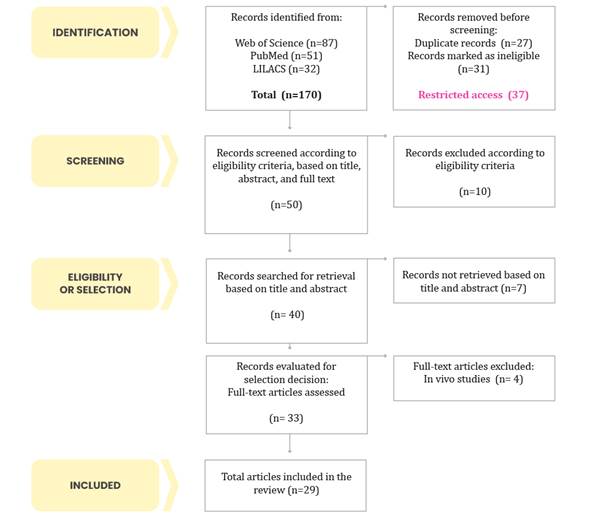
Methods: This study was conducted in accordance with the updated PRISMA 2020 guidelines for the publication of systematic reviews. A systematic search of the scientific literature was performed to identify original research that met the eligibility criteria, using the PICO model for systematic reviews. The search terms were: caries, white spot lesion, in vitro, and demineralization. In vitro studies with clear and replicable methodologies were included, while systematic reviews, in vivo studies, and those lacking sufficient methodological detail were excluded. The search was carried out in LILACS, PubMed, and Web of Science, for articles published in 2024.
Results: A total of 29 full-text articles that met all eligibility criteria were included in the systematic review. The demineralization technique using acid solutions was applied in 65.52% of the studies (20 of 29 articles), with acetic acid being the most commonly used solution (44.83%). The pH cycling technique was employed in 31.03% of the studies (9 of 29 articles), with acetic acid predominating in 27.59% of cases. The use of acid solutions allows for controlled demineralization conditions; the pH of the acids ranged from 4.0 to 5.5, with 4.5 being the most frequent. Exposure times varied from 36 hours to 22 days, most commonly around 4 days. The use of pH cycles simulates the dynamic conditions of demineralization and remineralization found in the oral environment. Solutions with a pH of 4.4 were used for demineralization and a pH of 7.0 for remineralization. The cycles had variable exposure times-6 hours for demineralization and 18 hours for remineralization-repeated for 5 to 10 days.
Conclusion: Demineralization with acid solutions is the most widely used technique due to its simplicity and experimental control. Demineralization using pH cycling offers greater similarity to clinical conditions but requires a more complex protocol. No in vitro technique presents an accepted standard formula for the formation of white spot lesions as an initial caries lesion, highlighting the need to establish uniform guidelines in future studies.
Keywords:
enamel caries; white spot lesions; in vitro; demineralization; acetic acid (MeSH)
 Thumbnail