Erosive tooth wear in 5-year-old preschool children from Montevideo-Uruguay: first population study
Objective: To assess the prevalence, extent, severity, and distribution of erosive tooth wear (ETW) in preschool children of Montevideo.
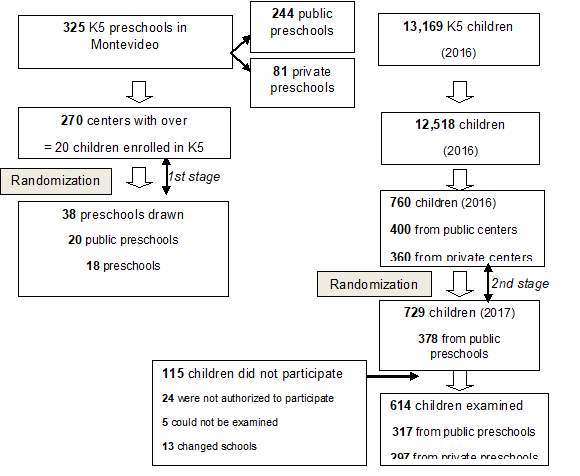
Methodology: Cross-sectional population-based study with a representative sample of public and private educational centers. Sociodemographic, biological, and behavioral aspects were studied through a self-reported questionnaire administered to parents/guardians. The examinations were performed by two examiners (Kappa ≥ 0.7). The ETW was recorded with the modified O’Brien index reported in percentage and average; the confidence interval (CI) was 95%. We analyzed the association between sex and socioeconomic status.
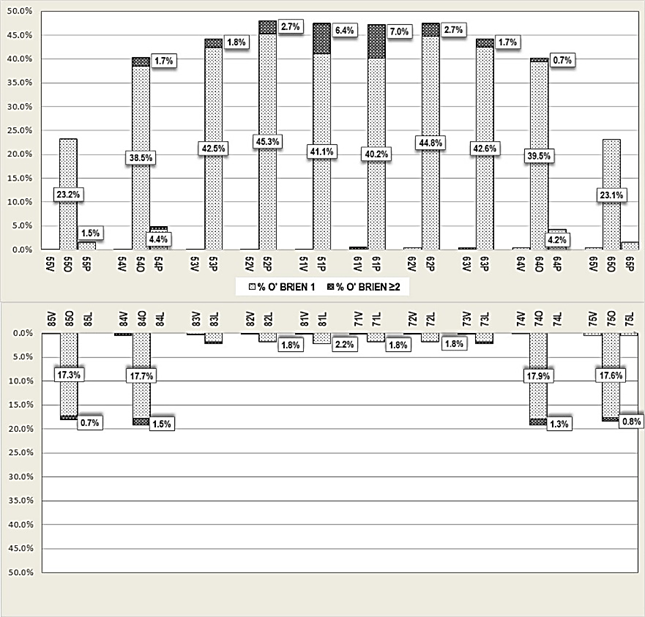
Results: 614 preschool children were examined. Prevalence: 57% (95% CI: 52.7-62.5). ETW extent: 4.8 (95% CI: 4.3-5.3). Severe ETW: 8.2% (95% CI: 5.5-10.9). The most affected areas were the palatal surfaces of the upper incisors. Preschoolers of high socioeconomic status had higher ETW than those of lower socioeconomic status; 73.1% (95% CI: 61.9-84.2) and 48.4% (95% CI: 39.2-57.7), respectively (p≤0,01).
Conclusion: ETW prevalence and extent were high. These data can contribute in modifying actions that aim to control ETW prevalence.
Keywords:
erosive wear; preschool children; cross-sectional studies
 Thumbnail
 Thumbnail