Reduction of Intra- and Postoperative Bleeding Using Fibrin Spray Adhesive for Surgically Assisted Maxillary Expansions: Case Report from Dr. Franco Ravera Zunino Hospital
Abstract
Over the past decades, blood derivatives have contributed to advances in various surgical fields, and maxillofacial surgery has been no exception. Among the advantages of these products are their growth factors and platelet content, which accelerate platelet plug formation and are particulary useful in surgeries with a high probability of significant bleeding. We present the case of a 23-year-old patient who underwent Surgically Assisted Rapid Palatal Expansion (SARPE) at Dr. Franco Ravera Zunino Hospital in Rancagua, with direct application of the Vivostat® system to the nasal fossae and Le Fort I osteotomy sites. Minimal intraoperative bleeding was observed, without the need for controlled hypotension by the anesthesiology team. The use of spray-applied fibrin adhesive via the Vivostat® system proved to be an effective and safe method for reducing intraoperative and postoperative bleeding, providing improved surgical control and uniform sealing of the surgical sites. These findings suggest a potential clinical benefit that should be confirmed in studies with larger sample sizes.
Keywords:
Surgical Procedures, Operative; Palatal Expansion Technique; SARPE; Platelet-Rich Plasma; Fibrin, blood products
Resumen
Los hemoderivados han aportado en las últimas décadas avances en distintos campos quirúrgicos. La Cirugía Maxilofacial no ha estado exenta. Dentro de las ventajas de estos productos están los factores de crecimiento y la presencia de plaquetas que aceleran el proceso de formación del tapón plaquetario, lo cual es de gran utilidad en cirugías con probabilidad de sangrados abundantes. Se presenta el caso de un paciente de 23 años, operado de Expansión Palatina Rápida Asistida Quirúrgicamente (SARPE) en el Hospital Dr. Franco Ravera Zunino de Rancagua, con aplicación directa del sistema Vivostat® en fosas nasales y abordajes de osteotomía Le Fort I, verificando mínimo sangrando en el intraoperatorio sin necesidad de manejo sistémico con hipotensión controlada por parte de anestesiología. El uso de adhesivo de fibrina en aerosol, sistema Vivostat®, se mostró como una herramienta eficaz y segura para disminuir el sangrado intraoperatorio y postoperatorio, ofreciendo además un mejor control quirúrgico y un sellado uniforme de los abordajes. Los hallazgos sugieren un potencial beneficio clínico que debe confirmarse en estudios con mayor número de casos.
Palabras clave:
Procedimientos Quirúrgicos, Operatorios; Técnica de Expansión Palatina; SARPE; Plasma Rico en Plaquetas (PRP); Fibrina, hemoderivados
Resumo
Nas últimas décadas, os derivados do sangue trouxeram avanços em diferentes campos cirúrgicos. A cirurgia maxilofacial não ficou de fora. Entre as vantagens desses produtos estão os fatores de crescimento e a presença de plaquetas que aceleram o processo de formação do tampão plaquetário, o que é muito útil em cirurgias com probabilidade de sangramento abundante. Apresentamos o caso de um paciente de 23 anos, operado de SARPE no Hospital Dr. Ravera Zunino de Rancagua, com aplicação direta do sistema Vivostat em narinas, e abordagens de osteotomia Le Fort 1, verificando-se hemorragia mínima no intra-operatório sem necessidade de manejo sistémico com hipotensão controlada pela anestesiologia. A utilização de cola de fibrina em spray, o sistema Vivostat®, demonstrou ser uma ferramenta eficaz e segura para reduzir as hemorragias intraoperatórias e pós-operatórias, além de oferecer um melhor controlo cirúrgico e uma selagem uniforme dos pontos de acesso. Os resultados sugerem um potencial benefício clínico que requer confirmação em estudos de maior dimensão.
Palabras clave:
Procedimentos Cirúrgicos Operatórios; Técnica de Expansão Palatina; SARPE; Plasma Rico em Plaquetas; Fibrina, produtos sanguíneos
Introduction
The transverse maxillary dimension is an essential component for occlusal function and stability.¹ Several treatment options are available to correct transverse deficiencies, including orthodontic approaches involving dental and orthopedic expansion through rapid maxillary expansion (RME), as well as surgical options.²,³ The latter is indicated when the patient has completed fusion of the midpalatal sutures, increasing skeletal resistance and rendering RME ineffective.²,³
Surgically Assisted Rapid Palatal Expansion (SARPE) is a procedure used to correct transverse maxillary deficiencies greater than 5 mm in patients with complete skeletal maturity,¹,⁴ in which areas of skeletal resistance are released through a Le Fort I osteotomy or its modifications,²,⁵ providing favorable orthopedic and surgical results.³,⁵
Although SARPE is considered a simple and safe procedure, its complication rates remain uncertain, with incidences reported in the literature ranging from 1% to 50% of cases.¹ These complications are classified as major, or of high morbidity, and minor, which do not produce sequelae and are treated on an outpatient basis.¹ One of the complications associated with SARPE described in the literature is epistaxis, for which the standard treatment is anterior and/or posterior nasal packing for 3 to 5 days.³
Open procedures involve surgical approaches that are not exempt from other complications such as dehiscence and early or late reopening of the surgical sites.⁶ To prevent these, autologous elements such as blood derivatives have been incorporated to reduce the probability of such complications.⁷ One example is Vivostat Platelet-Rich Fibrin® (PRF), an autologous platelet concentrate used for the local treatment of chronic or complicated wounds.⁷
Several clinical reports and comparative studies have described the advantages of using aerosolized autologous fibrin adhesive (Vivostat® system) in various specialties, including reduced postoperative drainage in thoracic surgery,⁸ immediate hemostasis in neurosurgery near eloquent cortical areas,⁹ and a more uniform, lower-pressure application compared with conventional spray systems.¹⁰ Safety and efficacy have been reported in thyroid surgery, with a reduction in drainage during the first 24 hours.¹¹ Possible disadvantages include higher cost and the need for equipment and preparation time. Heterologous fibrin glues (e.g., Tisseel®), synthetic adhesives (PEG, cyanoacrylates), and other autologous platelet concentrates (PRF/PRGF)¹² have been described as technical alternatives.
In light of the above, this work aims to present our experience with the Vivostat® system -a spray sealant that combines Platelet-Rich Plasma (PRP) with autologous fibrin, which is intended to reduce intraoperative and postoperative bleeding complications in the SARPE technique in a patient operated at Dr. Franco Ravera Zunino Hospital.
Background
We report the case of a 23-year-old male patient with no relevant medical history, known allergies, or harmful habits (tobacco or alcohol use), who presented to the Maxillofacial Surgery Service of the Dr. Franco Ravera Zunino Regional Hospital in Rancagua, Chile. Following clinical and imaging evaluation with CBCT, and orthodontic assessment, treatment, and follow-up, a diagnosis of transverse maxillary deficiency was established. The multidisciplinary committee determined that the most appropriate therapeutic option was to perform a Surgically Assisted Rapid Palatal Expansion (SARPE) to correct this defect.
Description
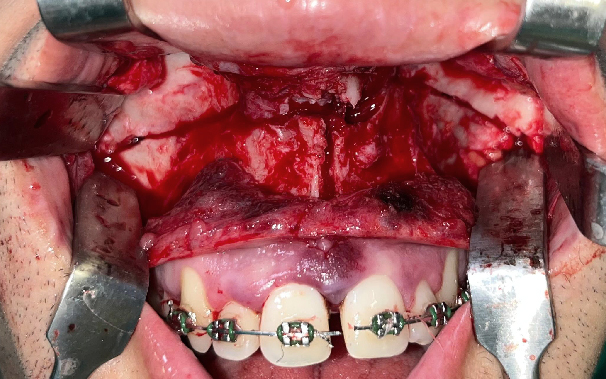
The surgical procedure was performed under general anesthesia in the central operating room. Following the protocol and technique described by the manufacturer (Vivostat®), 120 mL of blood was collected from the patient prior to surgery. During the intraoperative period, the product was used after completing the surgical approach and maxillary osteotomy (Figure 1). The collected blood was centrifuged, and at the time of use, the fibrin solution was loaded into the spraypen applicator unit of the system.
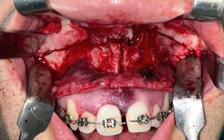
SARPE. Intraoperative view after Le Fort I osteotomy and maxillary expansion. Bleeding bone surfaces are observed following surgically assisted maxillary expansion.
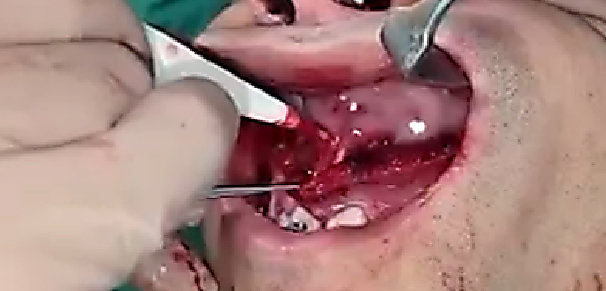
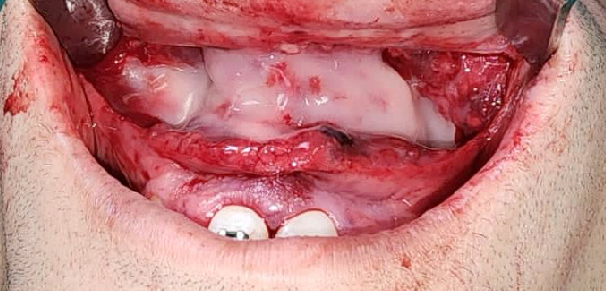
Application was carried out using small lateral movements (Figure 2), depositing the sealant and ensuring the formation of a visible white layer approximately 2 mm thick (Figure 3), thereby sealing the nasal floor mucosa and the surgical approaches in layers.
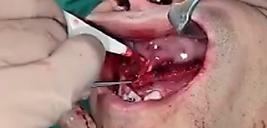
Use of the Vivostat® system with a spraypen applicator unit. Application of the PRP-fibrin spray along the palatal midline after bony disjunction.
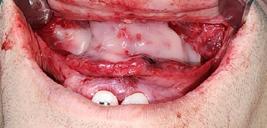
Vivostat® system adhered to the tissues. View of the maxilla after completion of the surgical expansion procedure and subsequent application of the fibrin adhesive.
A marked reduction in intraoperative bleeding was observed following application, with no need for hypotensive anesthetic management.
Postoperative follow-up was conducted after surgery and hospitalization, with serial evaluations at 7, 14, and 21 days. Long-term check-ups were then performed at 1, 3, and 6 months post-surgery, yielding satisfactory results without epistaxis or associated bleeding.
Discussion
Before surgery, potential complications must be considered. In the case of the SARPE surgical technique, possible bleeding episodes that may occur during pterygomaxillary disjunction -due to injury to the pterygoid plexus- should be taken into account. During dissection of the nasal mucosa, tissue damage and loss may occur. The branches of the internal maxillary artery may also be compromised, particularly the descending palatine artery during the posterior osteotomy or the nasopalatine artery in the anterior osteotomy.¹³
Several studies in the literature have addressed the use of blood derivatives such as platelet-rich plasma (PRP) and fibrin-rich plasma (PRF). Marx et al. were the first to publish a study on the use of PRP in reconstructive maxillofacial surgery,¹⁴ and since then, the procedure has been tested in various clinical contexts, with some authors reporting its benefits.¹⁵ However, some studies have reported inconclusive or heterogeneous results, so further studies are required to justify its use.¹⁵ On the other hand, regarding the current literature on PRF, there is also a general lack of evidence. However, it has been established that it promotes rapid tissue healing and reduces the likelihood of bacterial infection.¹⁶
In this case report, we observed that the use of the Vivostat® system in the SARPE surgical technique yielded good results, serving as an excellent complement by reducing intra- and postoperative bleeding and contributing to the sealing of surgical approaches and sites. No bleeding events were observed, particularly epistaxis, which is reported as a frequent complication due to surgical damage to the nasal mucosa.¹ In addition, it provided the operator with greater control and comfort during handling thanks to the “spraypen” device. It should also be noted that the Vivostat® system is a sterile system that prevents manipulation prior to use, thereby reducing the possibility of microbial contamination.
The available evidence suggests that autologous fibrin spray adhesive (Vivostat®) can contribute to more efficient hemostatic control and reduced postoperative drainage in different surgical contexts,8,11as well as facilitate a uniform seal with lower application pressure compared to conventional spray systems.10 In neurosurgery, immediate hemostasis has been reported, with less need for bipolar coagulation in areas near the eloquent cortex.9 However, its adoption may be limited by cost and preparation logistics; alternatives include heterologous fibrin glues and synthetic adhesives (PEG, cyanoacrylates), in addition to other presentations of autologous platelet concentrates.12 In maxillofacial surgery, although specific evidence remains limited, our findings are consistent with these potential benefits. However, larger comparative studies are required to confirm their impact on clinical outcomes.
Despite the success of this report, it remains highly important to continue deepening research to obtain more studies that justify the use of blood derivatives such as Vivostat®, with the aim of supporting decision-making through evidence-based medicine in clinical practice.
Conclusion
The Vivostat® system, used as a surgical sealant, stood out in our study for providing favorable results and demonstrating clinical and therapeutic usefulness. It was notable for its easy preparation, handling, and application, apparently providing greater comfort for the operator. Based on the results obtained in this patient, we confirm that the fibrin sealant of the Vivostat® system represents another alternative as a hemostatic sealing material for surgical approaches and sites. It is quick to prepare and apply intraoperatively and effectively reduces intra- and postoperative bleeding.
Our findings are consistent with recent literature reporting the benefits of autologous fibrin spray adhesive in different specialties, such as improved hemostatic control, less postoperative drainage, and uniform sealing of surgical sites. However, its routine implementation may be limited by cost and preparation logistics. Therefore, future comparative studies with larger patient samples will be essential to confirm its effectiveness and to define its clinical indications more precisely.
References
- 1 Carvalho PHA, Moura LB, Trento GS, Holzinger D, Gabrielli MAC, Gabrielli MFR, et al. Surgically assisted rapid maxillary expansion: a systematic review of complications. Int J Oral Maxillofac Surg. 2020 Mar;49(3):325-32.
- 2 Gogna N, Johal AS, Sharma PK. The stability of surgically assisted rapid maxillary expansion (SARME): A systematic review. J Craniomaxillofac Surg. 2020 Sep;48(9):845-52.
- 3 Cakarer S, Keskin B, Isler SC, Cansiz E, Uzun A, Keskin C. Complications associated with surgically assisted rapid palatal expansion without pterygomaxillary separation. J Stomatol Oral Maxillofac Surg. 2017 Oct;118(5):279-82.
- 4 Bortolotti F, Solidoro L, Bartolucci ML, Incerti Parenti S, Paganelli C, Alessandri-Bonetti G. Skeletal and dental effects of surgically assisted rapid palatal expansion: a systematic review of randomized controlled trials. Eur J Orthod. 2020 Sep 11;42(4):434-40.
- 5 Sygouros A, Motro M, Ugurlu F, Acar A. Surgically assisted rapid maxillary expansion: cone-beam computed tomography evaluation of different surgical techniques and their effects on the maxillary dentoskeletal complex. Am J Orthod Dentofacial Orthop. 2014 Dec;146(6):748-57.
- 6 Jedrzejewski M, Smektala T, Sporniak-Tutak K, Olszewski R. Preoperative, intraoperative, and postoperative complications in orthognathic surgery: a systematic review. Clin Oral Investig. 2015 Jun;19(5):969-77.
- 7 Tapia P, Saroza M, Arrue P, Mordoh S, Guerrero M. Uso de Sistema Vivostat(r) como hemoderivado sellador de abordajes en cirugía ortognática y reconstrucciones de los maxilares, reporte de 23 casos: Use of the Vivostat(r) system as a sealing blood product for approaches in orthognathic surgery and maxillary reconstructions, report of 23 cases. Ars Med. 2023;48(1):23-6.
- 8 Belboul A, Dernevik L, Aljassim O, Skrbic B, Rådberg G, Roberts D. The effect of autologous fibrin sealant (Vivostat) on morbidity after pulmonary lobectomy: a prospective randomized, blinded study. Eur J Cardiothorac Surg. 2004;26(6):1187-91.
-
9 Graziano F, Certo F, Basile L, Maugeri R, Grasso G, Meccio F. Autologous fibrin sealant (Vivostat(r)) in the neurosurgical practice: Part I: Intracranial surgical procedure. Surg Neurol Int (Internet). 2015;6. Available from: http://dx.doi.org/10.4103/2152-7806.156871
» https://doi.org/10.4103/2152-7806.156871 - 10 Dodd RA, Cornwell R, Holm NE, Garbarsch A, Hollingsbee DA. The Vivostat application system: a comparison with conventional fibrin sealant application systems. Technol Health Care. 2002;10(5):401-11.
- 11 Pino A, Frattini F, Sun H, Zhang D, Wu CW, Kim HY, et al. Use of Vivostat(r) autologous fibrin sealant in thyroid surgery. Surg Technol Int. 2021 May 20;38:57-61.
- 12 Spotnitz WD. Fibrin sealant: The only approved hemostat, sealant, and adhesive-a laboratory and clinical perspective. ISRN Surg. 2014 Mar 4;2014:203943.
- 13 Peleg O, Mahmoud R, Shuster A, Arbel S, Manor Y, Ianculovici C, et al. Orthognathic surgery complications: The 10-year experience of a single center. J Craniomaxillofac Surg. 2021 Oct;49(10):891-7.
- 14 Marx RE, Carlson ER, Eichstaedt RM, Schimmele SR, Strauss JE, Georgeff KR. Platelet-rich plasma: Growth factor enhancement for bone grafts. Oral Surg Oral Med Oral Pathol Oral Radiol Endod. 1998;85:638-46.
- 15 Simonpieri A, Del Corso M, Vervelle A, Jimbo R, Inchingolo F, Sammartino G, et al. Current knowledge and perspectives for the use of platelet-rich plasma (PRP) and platelet-rich fibrin (PRF) in oral and maxillofacial surgery part 2: Bone graft, implant and reconstructive surgery. Curr Pharm Biotechnol. 2012 Jun;13(7):1231-56.
- 16 Miron RJ, Zucchelli G, Pikos MA, Salama M, Lee S, Guillemette V, et al. Use of platelet-rich fibrin in regenerative dentistry: a systematic review. Clin Oral Investig. 2017 Jul;21(6):1913-27.