Presentation and analysis of a new variable for electromyographic study of the function skull-jaw: Pilot study
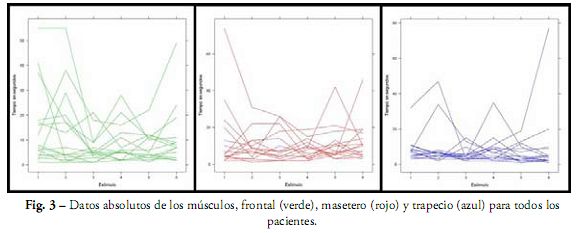
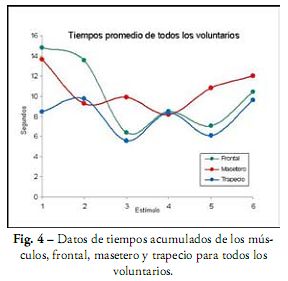
Objectives. Despite decades of research in the area of electromyography, its use in dentistry is still controversial because low sensitivity of the proposed variables. We defined and analyzed a new variable, which is the ability of the subject to control the muscle force trajectory, with the aim to find possible normality patterns. Methods. Real-time visual biofeedback was used to control the muscle force trajectory of the masseter, trapezius and frontal muscles. We measured the time that each individual needed to control the trajectory under a standardized set of experimental conditions. Results. We showed that the ability to control the muscle force trajectory can vary for muscles innervated by different cranial nerves. A possible ¨normality¨ pattern was more evident in the masseter muscle. Conclusions. We defined and analyzed, in a pilot research, a new variable for the study of the craniomandibular function. Further research, with an increased sample size, will be needed in order to confirm these preliminary results
craniomandibular function; electromyography; inhibitory reflexes
 Thumbnail
 Thumbnail