Dental eruption at 12 years of age in schools of Montevideo: cross-sectional study
Objective: To know the sequence and chronology of tooth emergence in 12-year-old schoolchildren in Montevideo, with emphasis on the eruption of the second molar in relation to the replacement of the mesially located teeth.
Materials and methods: This work was based on secondary data from a cross-sectional observational study involving 1,136 schoolchildren. A questionnaire was administered to collect sociodemographic variables. Height and weight were measured for each participant, and BMI was calculated. The clinical examination recorded the erupted permanent teeth.
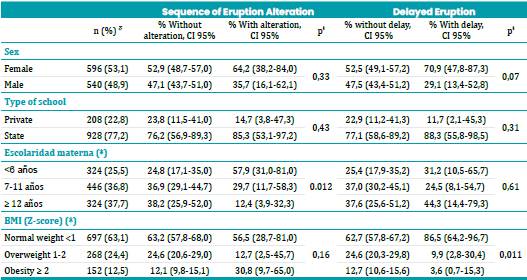
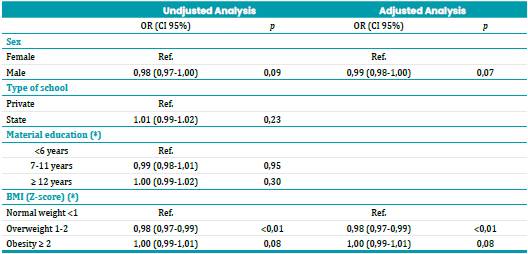
Results: The prevalence of altered sequence of eruption was 2.03% (95% CI: 1.26-3.31), and eruption delay was 1.6% (95% CI: 0.89-3.2). Schoolchildren whose mothers had fewer than six years of education showed a higher prevalence of altered eruption sequence. Overweight schoolchildren were 2% less likely to experience delayed emergence of the second permanent molar (OR = 0.98; 95% CI: 0.97-0.99; p ≤ 0.01) compared to their normal-weight peers.
Conclusion: A total of 2.06% of the schoolchildren exhibited an unfavorable eruption sequence, where the second molar erupted before the canine or premolars. A slight delay in the eruption chronology was observed and associated with nutritional status: overweight and obese children showed less delay compared to normal-weight children.
Keywords:
“tooth emergence”; “Eruption time”; “Sequence of eruption”; “Dentition, Mixed”; “permanent teeth”; “body mass index”; “Socioeconomic Factors”