Analysis of the irradiance of curing lights in health centers of a Colombian city
Objective: To evaluate the irradiance of curing lights used in the health centers of ESE Alejandro Próspero Reverend in Santa Marta (Colombia), in relation to the acceptance limits established by manufacturers and international irradiance standards.
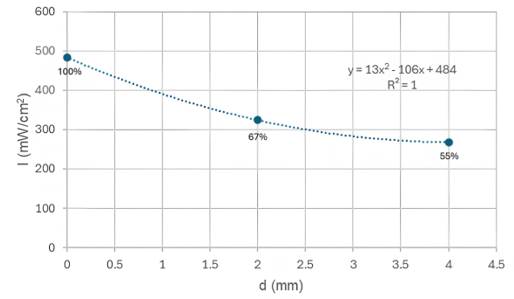
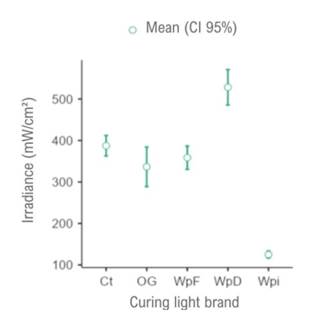
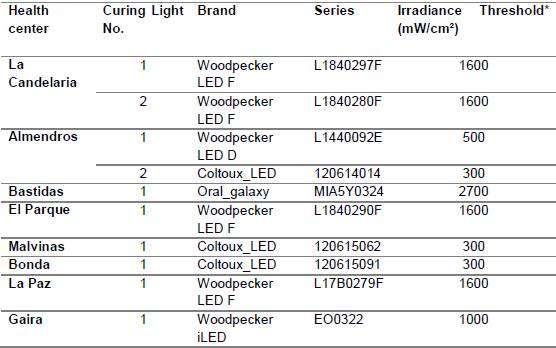
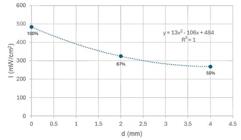
Materials and Methods: Analytical, cross-sectional study. The irradiance of ten curing lights from health centers in Santa Marta was measured at different distances (0, 2, and 4 mm) using a Woodpecker LM-1 Intensity Meter. The results were compared with the manufacturers’ recommended levels and international standards (300-500 mW/cm²).
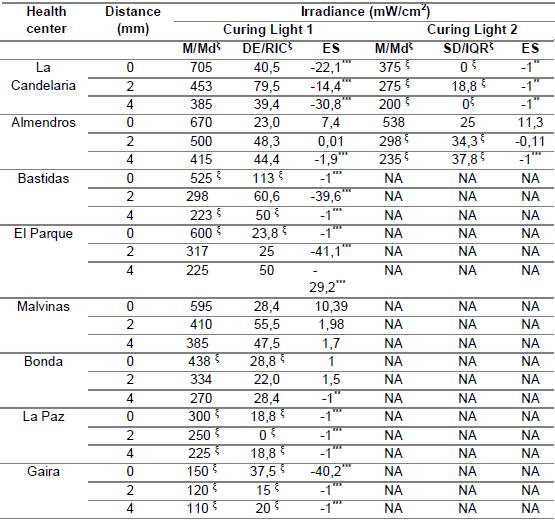
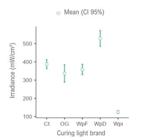
Results: Irradiance decreased significantly as the distance from the light source increased. In 63% of the health centers evaluated, the lamps failed to meet the irradiance levels recommended by the manufacturers. Overall, irradiance was adequate in 60% of the lamps when compared to the updated standard of 500 mW/cm², and in 90% when compared to the traditional standard of 300-400 mW/cm².
Discussion: The curing lights used in the health centers do not comply with the manufacturers’ recommendations, and several also fall short of the current thresholds recommended in the scientific literature. These findings underscore the need to implement quality control measures for dental equipment.
Conclusion: The irradiance of curing lights should be regularly monitored to ensure successful polymerization. It is recommended that maintenance protocols be implemented to improve the quality of dental treatments, along with ongoing education for dentists regarding the technical parameters and biophysical principles of light-curing technology.
Keywords:
Composite Resins; Light-Curing of Dental Adhesives; Reference Standards; Calibration; Community Health Centers
 Thumbnail
 Thumbnail
 Thumbnail
 Thumbnail
 Thumbnail
 Thumbnail
 Thumbnail