Analysis of the irradiance of curing lights in health centers of a Colombian city
Abstract
Objective: To evaluate the irradiance of curing lights used in the health centers of ESE Alejandro Próspero Reverend in Santa Marta (Colombia), in relation to the acceptance limits established by manufacturers and international irradiance standards.
Materials and Methods: Analytical, cross-sectional study. The irradiance of ten curing lights from health centers in Santa Marta was measured at different distances (0, 2, and 4 mm) using a Woodpecker LM-1 Intensity Meter. The results were compared with the manufacturers’ recommended levels and international standards (300-500 mW/cm²).
Results: Irradiance decreased significantly as the distance from the light source increased. In 63% of the health centers evaluated, the lamps failed to meet the irradiance levels recommended by the manufacturers. Overall, irradiance was adequate in 60% of the lamps when compared to the updated standard of 500 mW/cm², and in 90% when compared to the traditional standard of 300-400 mW/cm².
Discussion: The curing lights used in the health centers do not comply with the manufacturers’ recommendations, and several also fall short of the current thresholds recommended in the scientific literature. These findings underscore the need to implement quality control measures for dental equipment.
Conclusion: The irradiance of curing lights should be regularly monitored to ensure successful polymerization. It is recommended that maintenance protocols be implemented to improve the quality of dental treatments, along with ongoing education for dentists regarding the technical parameters and biophysical principles of light-curing technology.
Keywords:
Composite Resins; Light-Curing of Dental Adhesives; Reference Standards; Calibration; Community Health Centers
Resumen:
Objetivo: Evaluar la irradiancia de las lámparas de fotocurado empleadas en los centros de salud de la ESE Alejandro Próspero Reverend de Santa Marta (Colombia), en relación con los límites de aceptación establecidos por los fabricantes y los estándares internacionales de irradiancia.
Materiales y Métodos: Estudio analítico y transversal. Se midió la irradiancia de 10 lámparas de fotocurado de los centros de salud de Santa Marta a diferentes distancias (0, 2 y 4 mm) utilizando un radiómetro LM-1 Woodpecker. Los resultados se compararon con los niveles recomendados por los fabricantes y los estándares internacionales (300 - 500 mW/cm²).
Resultados: Se encontró que la irradiancia disminuyó significativamente con la distancia desde la fuente de luz. En el 63% de los centros de salud analizados, no se cumplieron con los niveles recomendados por los fabricantes. En general, la irradiancia fue adecuada en el 60% de las lámparas al cotejarse con el estándar más recientes de 500 mW/cm2; alcanzó el 90% cuando se comparó con el estándar tradicional de 300 - 400 mW/cm2.
Conclusión: Se debe verificar constantemente la irradiancia en las lámparas de fotocurado para garantizar el éxito de la polimerización. Se recomienda la implementación de protocolos de mantenimiento para mejorar la calidad del tratamiento odontológico, así como una educación continua para los odontólogos sobre los parámetros técnicos y los principios biofísicos de las lámparas de fotocurado.
Palabras clave:
Resinas Compuestas; Curación por Luz de Adhesivos Dentales; Estándares de Referencia; Calibración; Centros Comunitarios de Salud.
Resumo:
Objetivo: Avaliar a irradiância das lâmpadas de fotopolimerização utilizadas em alguns centros de saúde da ESE Alejandro Próspero Reverend em Santa Marta (Colômbia), em relação aos limites de aceitação estabelecidos pelos fabricantes e aos padrões internacionais de irradiância.
Materiais e Métodos: Estudo analítico e transversal. Foram avaliadas 10 lâmpadas de fotopolimerização dos centros de saúde de Santa Marta, medindo-se a irradiância a diferentes distâncias (0, 2 e 4 mm) utilizando um radiômetro LM-1 Woodpecker. Os resultados foram comparados com os níveis recomendados pelos fabricantes e com os padrões internacionais (300 - 500 mW/cm²).
Resultados: Observou-se que a irradiância diminuiu significativamente com o aumento da distância da fonte de luz. Em 63% dos centros de saúde analisados, as lâmpadas não atenderam aos níveis recomendados pelos fabricantes. De modo geral, a irradiância foi adequada em 60% das lâmpadas quando comparada ao padrão mais recente de 500 mW/cm², atingindo 90% quando comparada ao padrão tradicional de 300 - 400 mW/cm².
Conclusão: É necessário verificar constantemente a irradiância das lâmpadas de fotopolimerização para garantir o sucesso da polimerização. Recomenda-se a implementação de protocolos de manutenção para melhorar a qualidade do tratamento odontológico, bem como a educação contínua dos dentistas sobre os parâmetros técnicos e os princípios biofísicos das lâmpadas de fotopolimerização.
Palavras-chave:
Resinas Compostas; Fotopolimerização de Adesivos Odontológicos; Padrões de Referência; Calibração; Centros Comunitários de Saúde
Introduction and Background
Curing lights are essential electronic devices in clinical dental practice. They emit visible light within the blue to violet spectrum (400-500 nm), which activates the photoinitiators in resin-based composite materials, allowing them to polymerize and solidify. The technology of curing lights has evolved significantly in recent decades, transitioning from traditional halogen lamps to modern light-emitting diode (LED) devices. LED curing lights offer several advantages, including greater energy efficiency, longer lifespan, and more uniform and focused light emission (1.
There are various types of curing lights, each with distinct features and benefits. The first to be used in dentistry were quartz tungsten halogen (QTH) lamps. The first aesthetic, light-cured restorative composite applied with this technology dates back to 1976 2. QTH lamps emit visible curing light from a tungsten filament enclosed in a transparent quartz casing filled with a halogen-based gas. However, they are inefficient in energy use and have a limited lifespan. Additionally, they generate considerable heat, which may cause patient discomfort and reduce the effectiveness of restorative materials (3.
Light-emitting diode (LED) curing lights have had a significant impact on dentistry, standing out for their energy efficiency, durability, narrower emission spectrum in the blue range, and reduced heat output compared to other units. This lower heat generation helps minimize the risk of burns or soft tissue damage4. Another type of equipment is the plasma arc lamp, which produces an intense, broad-spectrum light. However, its use has declined due to high cost, short lifespan, and ozone generation, which may be harmful to oral tissues (3.
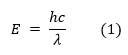
Regardless of the equipment used, the goal of photopolymerization remains the same: “to transform composite materials into solid, durable structures.” To successfully achieve this process, it is critical that curing lights emit sufficient irradiance-or power density-within the optimal absorption range (ideally at the peak) of the photoinitiator’s wavelength. The energy of emitted photons can be calculated by the equation: (1)
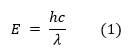
where ℎ is Planck’s constant, 𝑐 is the speed of light in the medium, and λ is the wavelength of the emitted photons.
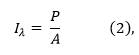
Irradiance is defined as the power of light per unit area, expressed in milliwatts per square centimeter (mW/cm²) (5 (2)
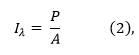
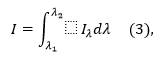
where 𝑃 is the emission power at a given wavelength 𝜆, and 𝐴 is the irradiated area. However, since curing lights emit across a spectral range (or emission spectrum), total irradiance is calculated as:
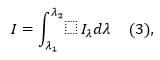
where 𝐼 𝜆 represents the irradiance at a specific wavelength, and 𝜆 1 and 𝜆 2 are the minimum and maximum emission wavelengths, respectively.
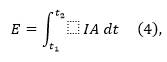
The energy transmitted (𝐸) to the restorative material can thus be determined by:
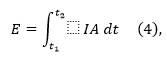
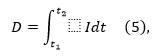
where 𝑡 1 and 𝑡 2 represent the start and end times of irradiation. The unit of energy is the joule (J). In addition to irradiance, the likely key parameter is exposure dose, or energy density, derived from Equation (4):
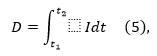
This value is expressed in joules per square centimeter (J/cm²). From this, it follows that irradiation time can compensate for lower irradiance levels. The higher the irradiance, the less time is needed for proper curing and polymerization. Indeed, several studies have shown that an energy density between 16 and 24 J/cm² is required for optimal polymerization. For example, older QTH lamps with irradiance levels around 400 mW/cm² required approximately 50 seconds to cure a restoration, whereas modern LED devices-with irradiance levels 10 to 12 times higher-achieve the same effect in just 4 to 5 seconds (6.
More specifically, the relationship between irradiance and photoinitiators is directly proportional: the higher the irradiance, the greater the number of photons impacting the composite resin, increasing the likelihood that they will deliver sufficient energy to effectively initiate polymerization 7.
However, it is also important to understand the wavelength range in which a photoinitiator most effectively absorbs light. Ideally, the radiation's wavelength should match the photoinitiator’s absorption peak (8. There are two types of photoinitiators: type I (Lucirin TPO and Ivocerin) and type II (camphorquinone and phenylpropanedione). Type I photoinitiators exhibit higher quantum efficiency than type II, meaning they require fewer photons to generate enough free radicals to initiate polymerization. All of these photoinitiators react to wavelengths between 320 and 510 nm, with particularly high reactivity at wavelengths below 330 nm. Focusing on the range above 330 nm, camphorquinone has an absorption peak near 470 nm (blue region), phenylpropanedione peaks at 405 nm, while Lucirin and Ivocerin peak at 380 nm and 410 nm, respectively. Therefore, slight variations in the emission spectrum (Eq. (3)), even if imperceptible to the human eye, can be relevant for photopolymerization-hence the importance of knowing the specific photoinitiators contained in each resin (9.
To ensure optimal polymerization, it is crucial that dentists understand and adhere to the technical specifications of curing lights, as indicated by the manufacturer, especially regarding irradiance and/or exposure time, as well as the properties of the material being used. Nevertheless, many practitioners continue to select lamps primarily based on their shape or price, overlooking the type and irradiance of the device (10. As a result, these professionals may lack an understanding of the essential characteristics and operating parameters of curing units, which can lead to inappropriate equipment choices and treatment failure.
Therefore, the aim of this study was to determine whether the irradiance levels of the curing lights used in selected public health centers in a city on the Colombian Caribbean coast meet the acceptance standards established by the manufacturers and those reported in the international scientific literature.
Materials and Methods
Study Type
Cross-sectional analytical study.
Population
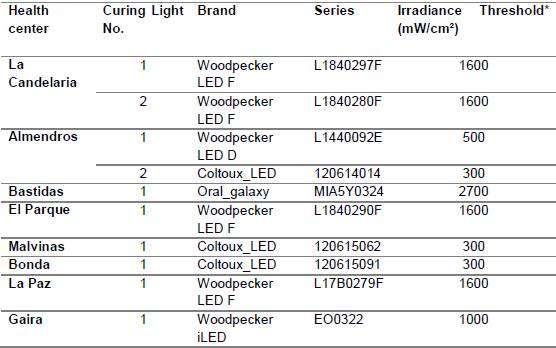
The initial population consisted of 11 curing lights from the nine health centers of E.S.E. Alejandro Próspero Reverend in Santa Marta, Colombia, which have agreements with the University of Magdalena. However, the lamp from one center (Manzanares) was excluded because it was out of service during the measurement period (October 2024). Consequently, the final study population included 10 lamps from the remaining eight health centers. The brand, serial number, and the irradiance acceptance threshold provided by the manufacturer were recorded (Table 1).
Instruments
An LM-1 Woodpecker intensity meter was used to measure the beam irradiance of each curing light. For this purpose, the tip of each lamp’s light guide was positioned at distances of 0, 2, and 4 mm, perpendicular to the sensitive area of the intensity meter, and irradiation was maintained for 10 seconds. Ten measurements were taken per lamp. The data were entered into an MS Excel 365 spreadsheet for subsequent export to the statistical software.
Statistical Analysis
Normality tests were performed to determine the distribution pattern of the irradiance data for each lamp. Based on these results, either the mean and standard deviation (SD) or the median and interquartile range (IQR) were calculated for each lamp in the health center. In addition, the mathematical relationship between the mean irradiance of all lamps and the irradiation distance was established to evaluate the degree of proportionality.
Subsequently, a t-test (or Wilcoxon test) was applied to one sample to identify significant differences between the mean or median irradiance of the curing lights in each health center and the corresponding acceptance threshold, as reported by the manufacturer. The null hypothesis was that “there is insufficient scientific evidence to assert that there are differences between the irradiance of the curing lights in the health centers and the irradiance recommended by the manufacturer for each of them.”
Likewise, the irradiance of the curing lights grouped by brand was compared using the Kruskal-Wallis test. In this case, the null hypothesis was that “there is insufficient scientific evidence to affirm that there is a difference between the irradiance of the curing lights of the different brands.”
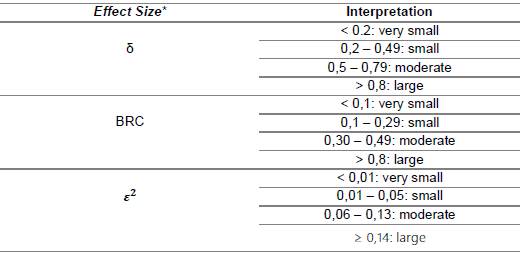
For all statistical tests performed, a significance level of 0.05 (p < 0.05) was established. Regarding the effect size (11 of the t-test (or Wilcoxon test) of a single sample, Cohen's d (δ) was used for irradiance values with normal distribution, and the biserial rank correlation (BRC) was used in all other cases 12,13. Regarding the effect size of the Kruskal-Wallis test, the squared epsilon (ε²) 14 was used (Table 2).
The open-access software Jamovi v. 2.3.28 was used to conduct the above statistical tests.
Ethical considerations
This study complied with current ethical regulations in Colombia, in accordance with Resolution 8340 of 1993 issued by the Ministry of Health. Under this resolution, the research is classified as risk-free, since it involves the analysis of inert materials and does not entail any direct or indirect intervention involving humans or animals.
Confidentiality and data custody were ensured through security protocols, including storage in controlled environments accessible exclusively to the research team. At all times, rigorous measures were implemented to safeguard data integrity and prevent any form of manipulation, in line with both Colombian ethical and legal standards and the guidelines of E.S.E. Alejandro Próspero Reverend.
Results
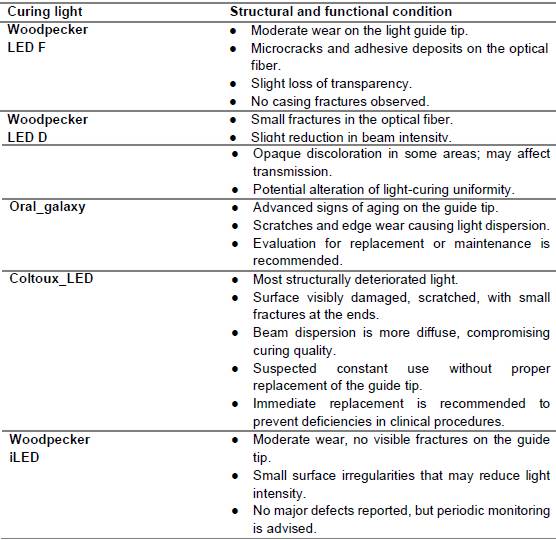
Upon inspecting the structural condition of the curing lights, signs of improper or prolonged use without replacement or preventive-corrective maintenance were suspected. Several units showed scratches, discoloration, and wear on the identification plate. In addition, the tips revealed moderate to severe wear, loss of transparency, cracks, and other issues (Table 3).
Wear on the light guide tips compromises beam quality and, consequently, the polymerization efficiency of light-curing procedures.
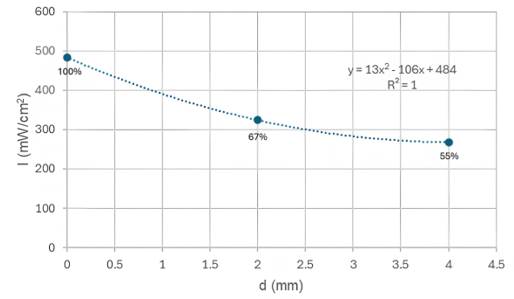
The mean irradiance values for all curing lights were 484 (170), 324 (113), and 268 (97.4) mW/cm² at distances of 0, 2, and 4 mm from the tip, respectively. The results show a decrease in irradiance with increasing distance-over 30% at 2 mm and nearly 50% at 4 mm (Figure 1).
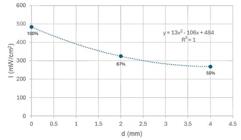
Inverse relationship between the average irradiance of the curing lights in all health centers and the distance from the source to the tooth surface. The percentage decrease in irradiance relative to its maximum value (at 0 mm) is also shown.
Based on the irradiance measured at 0 mm, the curing lights in the 10 health centers would require at least 42 seconds to achieve adequate polymerization in 2 mm increments. If the irradiation distance increases to 4 mm from the resin surface, the curing time would need to be extended to approximately 75 seconds, according to Eq. (5).
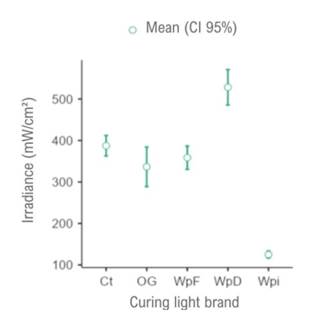
On the other hand, when comparing the irradiance of the curing lights by brand, no significant differences were observed between Woodpecker LED F, Coltoux LED, and Oral Galaxy. However, significant differences were found when these were compared with Woodpecker LED D and Woodpecker iLED (Figure 2).
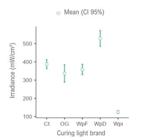
Comparison of the irradiance of curing lights used in the health centers, grouped by brand. WpF: Woodpecker LED F, Ct: Coltoux LED, OG: Oral Galaxy; WpD: Woodpecker LED D, Wpi: Woodpecker iLED.
The Woodpecker LED D curing light exhibited significantly higher irradiance (p < 0.001) than all other brands, while the Woodpecker iLED showed significantly lower irradiance (p < 0.001) compared to the rest. Additionally, the effect size by brand was large (ε² = 0.38).
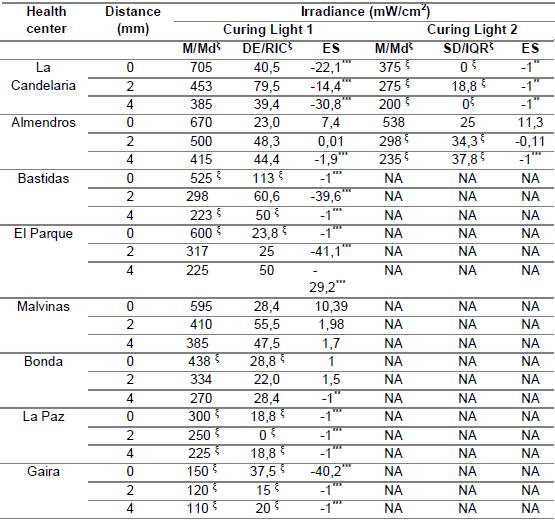
When examining the irradiance of the curing lights in each health center, it was found that in 5 (63%) of them-La Candelaria (both lights), Bastidas, El Parque, La Paz, and Gaira-at least one of the evaluated distances did not meet the levels recommended by the manufacturer. At 0 mm, only 3 lights (20%)-both in Almendros, the one in Bonda, and the one in Malvinas-met the standard (Table 4).
Only one health center (12.5%)-Malvinas-had a curing light that met the acceptance threshold at the three evaluated distances. In two others (25%)-Almendros and Bonda-the threshold was not met only at 4 mm. The centers with the greatest deviations from the threshold at the three distances were, in order: La Paz, El Parque, and Gaira.
On the other hand, if the universal acceptance criterion of 300-400 mW/cm² is applied, 9 (90%) of the lights would be considered to have acceptable performance: 7 (70%) exceeded 300 mW/cm², and 2 exceeded 400 mW/cm². However, the minimum irradiance level currently recommended by curing light manufacturers has increased to 500 mW/cm² due to the need to reduce curing times 15. Under this criterion, only 6 (60%) of the curing lights in the health centers reached acceptable levels. Furthermore, since polymerization in clinical settings is most likely to occur at a distance of 2 mm, only 1 (10%) of the lights analyzed in this study met this requirement (Almendros Health Center, light 1).
Discussion
This study evaluated the irradiance of curing lights used in health centers in Santa Marta, Colombia. The observed decrease in irradiance with increasing distance underscores the importance of proper positioning during photopolymerization, as well as the need for periodic irradiance recalibration, as recommended by manufacturers. However, this decrease did not follow the inverse square law, as is typically expected (16. On this point, Price et al. (5 have reported that the effect of distance on irradiance is not consistent across all curing lights, clearly stating that “the reduction in irradiance received does not follow the inverse square law of distance.” This discrepancy is due to variations in beam dispersion, which depends on each device’s level of collimation. Consequently, it is recommended that manufacturers provide irradiance values not only at the tip of the curing light but also at clinically relevant distances-from 0 mm (standard reference point) up to 10 mm-to offer more accurate guidance for clinical use.
In addition, the results showed that a significant number of curing lights (7 out of 10) did not meet the irradiance levels recommended by their manufacturers. This discrepancy may stem from the fact that manufacturer guidelines are designed to ensure adequate curing within short irradiation times, assuming scenarios where resin layers may exceed 2 mm in thickness and the light is positioned directly at 0 mm from the surface-conditions that are rarely replicated in clinical practice 15.
Prado et al. (17, in a thesis aimed at evaluating the irradiance levels of eleven curing lights at the dental clinics of the University of Nariño, Armenia campus, reported an average irradiance of 506.4 mW/cm² across all devices. They noted that one lamp did not exceed 300 mW/cm² and four failed to reach 400 mW/cm²-values that, according to the scientific literature, represent the recommended acceptance thresholds. They also observed that no regular monitoring of irradiance was being conducted in those clinics. To compensate for reduced irradiance, the authors suggest increasing exposure time by 10 to 20 seconds compared to lights that meet the recommended standards.
In relation to Prado et al.’s 17 findings, the average irradiance of the curing lights in this study is similar. However, it was observed here that two lamps showed irradiance levels below 300 mW/cm², while the rest exceeded 400 mW/cm² at a 0 mm distance from the surface. One possible explanation for this difference is that all the lights analyzed in the current study were LED-based, whereas four of the lights evaluated by Prado et al. were quartz-tungsten halogen lamps.
Cordonero (18, in a descriptive study on the irradiance and power output of thirteen LED curing lights at the dental clinic of the American University (Nicaragua), assessed performance at distances of 0, 2, 4, and 6 mm. They found that six lights registered no irradiance value-meaning their output was below 300 mW/cm²-although power values were still recorded. The remaining devices showed irradiance levels above 500 mW/cm², reaching up to approximately 1700 mW/cm². All the lights with low irradiance levels were of the Coltoux brand. Additionally, the study noted that irradiance decreased with distance-by 35% at 3 mm and 50% at 6 mm. They concluded that the greater the distance, the lower the irradiance and power values, and that the lights with the lowest irradiance had been in use for more than five years.
These results are consistent with those of this study in that a decrease in irradiance with distance was also observed, although slightly more pronounced (33% at 2 mm and 45% at 4 mm). They differ, however, in that Cordonero’s study reported a higher average irradiance in Woodpecker LED curing lights than what was found in this study.
Lehmann et al. 15, in a study evaluating the light irradiance of 21 Woodpecker LED curing lights across different exposure modes (standard, soft start, and pulsed) and distances from the light source to the radiometer surface (ranging from 0 to 8 mm in 2 mm increments), found that the average irradiance exceeded 1,000 mW/cm² in all three modes, dropping to 587 mW/cm² in soft start mode. They concluded that the standard mode appears to be the most effective for curing deep cavities, as it is less affected by distance, while the soft start mode may be suitable for anterior teeth or the cervical region.
In this study, the standard mode was used. Compared with Lehmann et al.’s results 15, the irradiance here was clearly lower by nearly 50%. The authors of that study indicated that the lights were in good condition, undamaged, and recharged after every five exposures. In contrast, several curing lights in the health centers showed visible signs of deterioration, to the point that their brand names were almost illegible. Although not explicitly stated, this may suggest that the devices had been in use for several years. Given that both extended use (over four years) (19 and untimely recharging can affect performance 20, this may partially explain the lower irradiance observed in comparison to the manufacturer’s specifications.
Considering that irradiance values above 2,000 mW/cm² may cause direct damage to the dental pulp, especially in the presence of deep restorations (21,22, the lights used in health centers would not pose such a risk. However, when the curing light is positioned farther from the surface, irradiance values drop. To compensate, clinicians may arbitrarily increase exposure time, but prolonged exposure can lead to thermal trauma to the dentin-pulp complex. Therefore, it is advisable to use curing lights that begin with optimal irradiance, reducing polymerization time and improving clinical efficiency 23,24. Since dental professionals in health centers often work under time constraints, lights with higher irradiance would be preferable.
As the curing lights in these health centers do not meet the manufacturers’ recommendations, and several also fall below the latest threshold recommended in the scientific literature (500 mW/cm²), it is essential to implement quality control measures for dental equipment. This issue may stem from various factors, such as a lack of awareness among staff regarding the importance of irradiance, the absence of regular maintenance and calibration protocols, and resource limitations in some health centers (25,26.
Another factor to consider is the insufficient knowledge of the technical specifications of curing lights, which could lead to inadequate maintenance and lack of monitoring of clinical performance. Indeed, Kopperud et al. 25) found that most respondents (78.3%) were unaware of their curing light's irradiance value, resulting in uncertain curing times and reduced effectiveness in restorations. They also observed that dentists performed less regular maintenance on their curing lights compared to the rest of the respondents.
Interestingly, the curing lights from the Bonda and Malvinas health centers, both Coltoux brand, maintained irradiance levels within acceptable limits despite presenting the most visible structural deterioration. It can be hypothesized that this may be due to lower usage, possibly associated with a lower patient flow in these facilities.
Additional recommendations for optimal polymerization include:
-
1. Curing depth: for thin layers, an irradiance level between 300 and 400 mW/cm² may be sufficient; for thicker layers, higher irradiance is required.
-
2. Type of restorative material: more translucent materials may require shorter curing times.
-
3. Radiation beam wavelength: curing lights should be selected based on the absorption spectrum of the photoinitiators in the restorative material.
-
4. Irradiation uniformity: more powerful curing lights can ensure better radiation distribution across the surface.
-
5. Devices with adjustable settings: allow clinicians to tailor curing parameters to specific needs.
-
6. Modern equipment: high-power devices reduce curing time, making them particularly useful in high-demand healthcare settings. However, they must be used with caution to avoid thermal damage to dental tissues. Consulting the user manual or clinical guidelines is essential for proper use.
The limitations of this study include: i) not using a more accurate intensity meter such as the Ivoclar Bluephase Meter II 27, due to its high cost and limited commercial availability in the country; ii) not having access to data such as usage time and number of preventive maintenance procedures (despite having requested it), which would have allowed for an analysis of their possible association with low irradiance; and iii) not having inspected the prior condition of the light batteries.
Conclusion
Most of the curing lights in the health centers of the ESE Alejandro Próspero Reverend in Santa Marta (Colombia) do not meet the levels recommended by the manufacturers, making it urgent to either repair or replace the devices. Alternatively, irradiation times may be increased as a provisional measure. However, more than half of the units appear to fall within the traditionally suggested acceptance range (300-400 mW/cm²) and the more current threshold established in the global scientific literature (500 mW/cm²).
Irradiance decreased significantly with increasing distance from the light source, underscoring the importance of proper lamp positioning during photopolymerization. Compared to previous studies, the results of this research show a similar trend in irradiance reduction, although some irradiance values were lower than those previously reported. This highlights the need for ongoing irradiance monitoring in dental clinics and continuing education for practitioners regarding the appropriate selection, calibration, and maintenance of light-curing units.
Future research could focus on identifying the factors that lead to irradiance degradation over time and on designing more effective maintenance protocols. Dentists are advised to regularly verify the irradiance output of their curing lights, follow manufacturer guidelines, and stay informed about technological advances in light-curing techniques.
References
-
1 Price RB, Ferracane JL, Shortall AC. Light-Curing Units. J Dent Res. 2015;94(9):1179-86. Available from: https://journals.sagepub.com/doi/10.1177/0022034515594786
» https://journals.sagepub.com/doi/10.1177/0022034515594786 -
2 Rueggeberg FA. State-of-the-art: Dental photocuring-A review. Dent Mater. 2011;27(1):39-52. Available from: https://linkinghub.elsevier.com/retrieve/pii/S0109564110004641
» https://linkinghub.elsevier.com/retrieve/pii/S0109564110004641 -
3 Rueggeberg F, Giannini M, Arrais C, Price R. Light curing in dentistry and clinical implications: a literature review. Braz Oral Res. 2017;31(suppl 1):64-91. Available from: http://www.scielo.br/scielo.php?script=sci_arttext&pid=S1806-83242017000500206&lng=en&tlng=en
» http://www.scielo.br/scielo.php?script=sci_arttext&pid=S1806-83242017000500206&lng=en&tlng=en -
4 Omidi B, Gosili A, Jaber-Ansari M, Mahdkhah A. Intensity output and effectiveness of light curing units in dental offices. J Clin Exp Dent. 2018;10(6):0-0. Available from: http://www.medicinaoral.com/medoralfree01/aop/54756.pdf
» http://www.medicinaoral.com/medoralfree01/aop/54756.pdf -
5 Price RB, Ferracane JL, Hickel R, Sullivan B. The light-curing unit: An essential piece of dental equipment. Int Dent J. 2020;70(6):407-17. Available from: https://linkinghub.elsevier.com/retrieve/pii/S0020653920337783
» https://linkinghub.elsevier.com/retrieve/pii/S0020653920337783 -
6 AlShaafi MM. Factors affecting polymerization of resin-based composites: A literature review. Saudi Dent J. 2017;29(2):48-58. Available from: https://linkinghub.elsevier.com/retrieve/pii/S1013905217300147
» https://linkinghub.elsevier.com/retrieve/pii/S1013905217300147 -
7 Hasanain FA, Nassar HM. Utilizing Light Cure Units: A Concise Narrative Review. Polymers (Basel). 2021;13(10):1596. Available from: https://www.mdpi.com/2073-4360/13/10/1596
» https://www.mdpi.com/2073-4360/13/10/1596 -
8 Melendez D, Delgado L, Tay L. La ciencia detrás de las lámparas de polimerización led. Revisión bibliográfica. Rev Oper Dent y Biomater. 2021;10(3):6-18. Available from: https://www.rodyb.com/wp-content/uploads/2021/08/2-LAMPARAS.pdf
» https://www.rodyb.com/wp-content/uploads/2021/08/2-LAMPARAS.pdf -
9 Price RBT. Light Curing in Dentistry. Dent Clin North Am. 2017;61(4):751-78. Available from: https://linkinghub.elsevier.com/retrieve/pii/S0011853217300745
» https://linkinghub.elsevier.com/retrieve/pii/S0011853217300745 -
10 Alhaddad HM, Meisha DE, Al-Bukhary RA, Al-Zain AO. General Knowledge of Light-Curing Units Among Dentists in Saudi Arabia. Dent Mater. 2022;38:e2. Available from: https://linkinghub.elsevier.com/retrieve/pii/S0109564121003651
» https://linkinghub.elsevier.com/retrieve/pii/S0109564121003651 -
11 Avello-Martínez R. ¿Por qué reportar el tamaño del efecto? (Internet). Grupo Comunicar. 2020 (accessed 11/02/2020). p. 1-11. Available from: https://www.grupocomunicar.com/wp/escuela-de-autores/por-que-reportar-el-tamano-del-efecto/#:~:text=El tamaño del efecto es,la diferencia entre dos grupos
» https://www.grupocomunicar.com/wp/escuela-de-autores/por-que-reportar-el-tamano-del-efecto/#:~:text=El tamaño del efecto es,la diferencia entre dos grupos -
12 Mackinnon SP. How an effect size can simultaneously be both small and large (Internet). Savvy Statistics. 2023 (accessed 11/02/2024). p. 1-8. Available from: https://savvystatistics.com/how-an-effect-size-can-simultaneously-be-both-small-and-large/
» https://savvystatistics.com/how-an-effect-size-can-simultaneously-be-both-small-and-large/ -
13 Kerby DS. The Simple Difference Formula: An Approach to Teaching Nonparametric Correlation. Compr Psychol. 2014;3(1):1-10. Available from: http://cop.sagepub.com/lookup/doi/10.2466/11.IT.3.1
» http://cop.sagepub.com/lookup/doi/10.2466/11.IT.3.1 -
14 López-Martín E, Ardura D. El tamaño del efecto en la publicación científica. Educ XX1. 2023;26(1):9-17. Available from: https://revistas.uned.es/index.php/educacionXX1/article/view/36276
» https://revistas.uned.es/index.php/educacionXX1/article/view/36276 -
15 Lehmann A, Nijakowski K, Mroczyk M, Podgórski F, Czarnecka B, Surdacka A. Influence of Exposure Distance on Light Irradiance of Dental Curing Lamps in Various Operating Modes. Appl Sci. 2024;14(21):9999. Available from: https://www.mdpi.com/2076-3417/14/21/9999
» https://www.mdpi.com/2076-3417/14/21/9999 -
16 Malhotra S. Effect of curing distance for cure depth in composite resin. Bioinformation. 2023;19(13):1353-8. Available from: https://www.bioinformation.net/019/973206300191353.htm
» https://www.bioinformation.net/019/973206300191353.htm -
17 Prado Muñoz EY, Alarcón Díaz LY, Barona Bolívar NA. Evaluación de irradiancia de las lámparas de fotocurado de luz LED y halógena de las clínicas odontológicas de la universidad Antonio Nariño sede Armenia (Internet). Universidad Antonio Nariño; 2021. Available from: https://repositorio.uan.edu.co/items/6b144107-d287-442f-8ad7-043df323e948
» https://repositorio.uan.edu.co/items/6b144107-d287-442f-8ad7-043df323e948 -
18 Cordonero Espinoza MA. Potencia e irradiancia producida por las lámparas de fotoactivación utilizadas en el área clínica de grado de la Facultad de Odontología de la Universidad Americana (UAM). Rev Odontológica Stomarium. 2024;1(1):1-20. Available from: https://portalderevistas.uam.edu.ni/index.php/stomarium/article/view/79
» https://portalderevistas.uam.edu.ni/index.php/stomarium/article/view/79 -
19 Lamthong W, Yodyadthai K, Senawongse P. Output intensity of LED light curing units over a 4-year period of clinical use. M Dent J. 2019;39(2):91-101. Available from: https://dt.mahidol.ac.th/th/wp-content/uploads/2019/09/11-Mahidol-Dental-Journal-39-2.pdf
» https://dt.mahidol.ac.th/th/wp-content/uploads/2019/09/11-Mahidol-Dental-Journal-39-2.pdf -
20 Prochnow FHO, Kunz PVM, Correr GM, Kaizer M da R, Gonzaga CC. Relationship between battery level and irradiance of light-curing units and their effects on the hardness of a bulk-fill composite resin. Restor Dent Endod. 2022;47(4). Available from: https://rde.ac/DOIx.php?id=10.5395/rde.2022.47.e45
» https://rde.ac/DOIx.php?id=10.5395/rde.2022.47.e45 -
21 Assaf C, Fahd JC, Sabbagh J. Assessing dental light-curing units' output using radiometers: A narrative review. J Int Soc Prev Community Dent. 2020;10(1):1-8. Available from: https://journals.lww.com/10.4103/jispcd.JISPCD_407_19
» https://journals.lww.com/10.4103/jispcd.JISPCD_407_19 -
22 Slack WE, Yancey EM, Lien W, Sheridan R, Phoenix R, Vandewalle K. Effect of high-irradiance light curing on exposure times and pulpal temperature of adequately polymerized composite. Dent Mater J. 2020;39(6):976-83. Available from: https://www.jstage.jst.go.jp/article/dmj/39/6/39_2019-236/_article
» https://www.jstage.jst.go.jp/article/dmj/39/6/39_2019-236/_article -
23 Rueggeberg F, Cole M, Looney S, Vickers A, Swift E. Comparison of Manufacturer-Recommended Exposure Durations with Those Determined Using Biaxial Flexure Strength and Scraped Composite Thickness Among a Variety of Light-Curing Units. J Esthet Restor Dent. 2009;21(1):43-61. Available from: https://onlinelibrary.wiley.com/doi/10.1111/j.1708-8240.2008.00231.x
» https://onlinelibrary.wiley.com/doi/10.1111/j.1708-8240.2008.00231.x -
24 Shimokawa C, Sullivan B, Turbino M, Soares C, Price R. Influence of Emission Spectrum and Irradiance on Light Curing of Resin-Based Composites. Oper Dent. 2017;42(5):537-47. Available from: https://meridian.allenpress.com/operative-dentistry/article/42/5/537/107107/Influence-of-Emission-Spectrum-and-Irradiance-on
» https://meridian.allenpress.com/operative-dentistry/article/42/5/537/107107/Influence-of-Emission-Spectrum-and-Irradiance-on -
25 Kopperud SE, Rukke H V, Kopperud HM, Bruzell EM. Light curing procedures - performance, knowledge level and safety awareness among dentists. J Dent. 2017;58:67-73. Available from: https://linkinghub.elsevier.com/retrieve/pii/S0300571217300301
» https://linkinghub.elsevier.com/retrieve/pii/S0300571217300301 -
26 Molvig Kopperud H. Dentistry ? Polymer-based restorative materials (Internet). NIOM. 2017 (accessed 11/22/2024). p. 1-3. Available from: https://www.niom.no/dentistry-polymer-based-restorative-materials.6641854-606139.html
» https://www.niom.no/dentistry-polymer-based-restorative-materials.6641854-606139.html -
27 Shortall AC, Hadis MA, Palin WM. On the inaccuracies of dental radiometers. Huettig F, editor. PLoS One. 2021;16(1):e0245830. Available from: https://dx.plos.org/10.1371/journal.pone.0245830
» https://dx.plos.org/10.1371/journal.pone.0245830