Construction and instrumental validation of Gamboa monofilaments for orofacial somatosensorial assessment
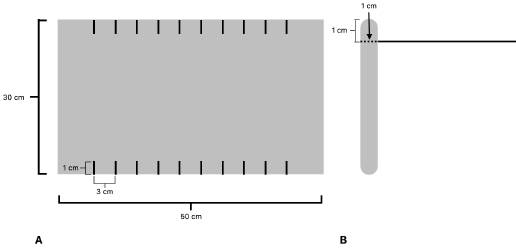
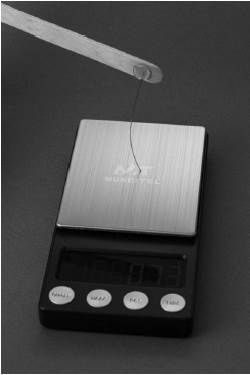
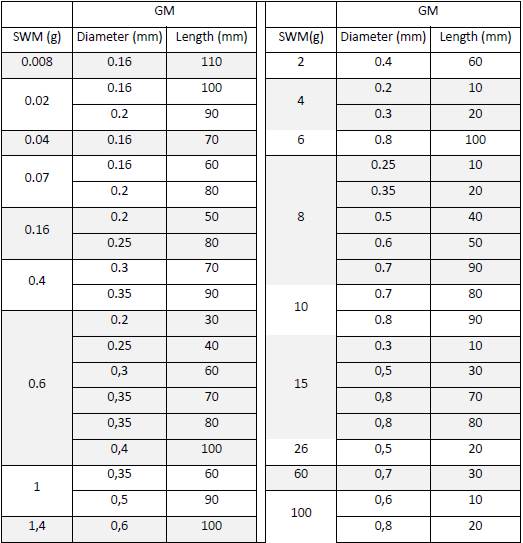
This study aimed to construct and instrumentally validate disposable low-cost monofilaments to evaluate orofacial sensitivity. The monofilaments were called Gamboa monofilaments and were created with nylon fishing line monofilaments of different diameters (0.16 to 0.8 mm) and lengths (10 to 110 mm) glued perpendicularly to the ends of wooden popsicle sticks. Semmes-Weinstein monofilaments were used as a reference for the target force. The force exerted by both monofilaments was measured with a precision scale. The coefficient of variation assessed force data variability of Semmes-Weinstein and Gamboa monofilaments, and a two-sample t-test was used to compare the force exerted by Semmes-Weinstein and Gamboa monofilaments. The force variability ranges of Semmes-Weinstein and Gamboa monofilaments range from 0.5 to 10.9 % and 0.33 to 16.97 %, respectively. Thirty-eight Gamboa monofilaments did not show differences from the 0.008 to 100 g Semmes-Weinstein monofilaments. The force exerted by 0.02, 0.07, 0.16, 0.4, 0.6, 1, 4, 8, 10, 15, and 100 g Semmes-Weinstein monofilaments can be obtained by varying the diameter and length of Gamboa monofilaments. In conclusion, this study developed and validated low-cost disposable monofilaments, showing that Gamboa monofilaments could replicate the force of Semmes-Weinstein monofilaments within the range of 0.008 and 100 g. This finding suggests potential applications in the future, particularly in the context of evaluating orofacial sensations.
Keywords:
Sensory thresholds; Signal detection; Semmes-Weinstein monofilaments; Tactile perception; instrumentation
 Thumbnail
 Thumbnail