UNIVERSAL SYNTACTIC PRINCIPLES OR INTRALINGUISTIC VARIATION? THE CASE OF RELATIVE CLAUSES WITH DOUBLE NOMINAL ANTECEDENT
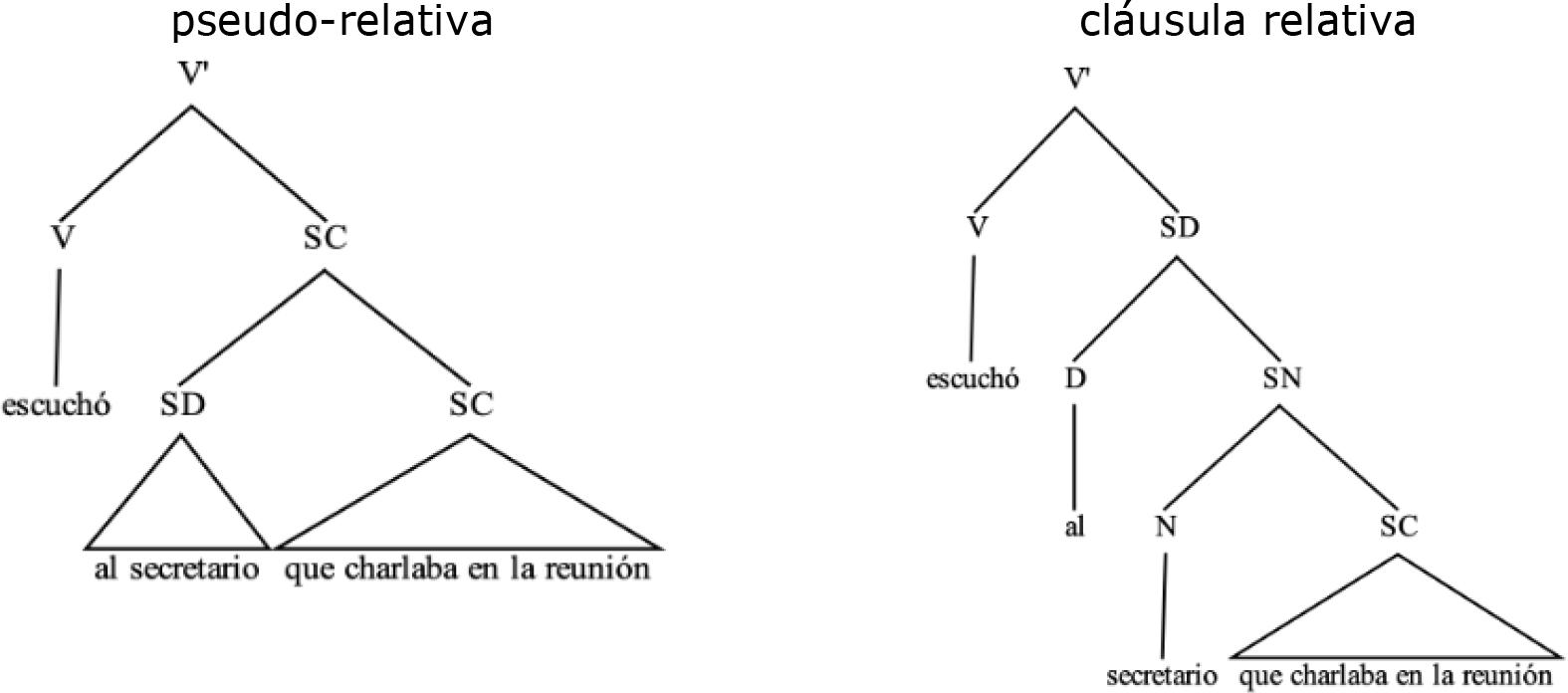
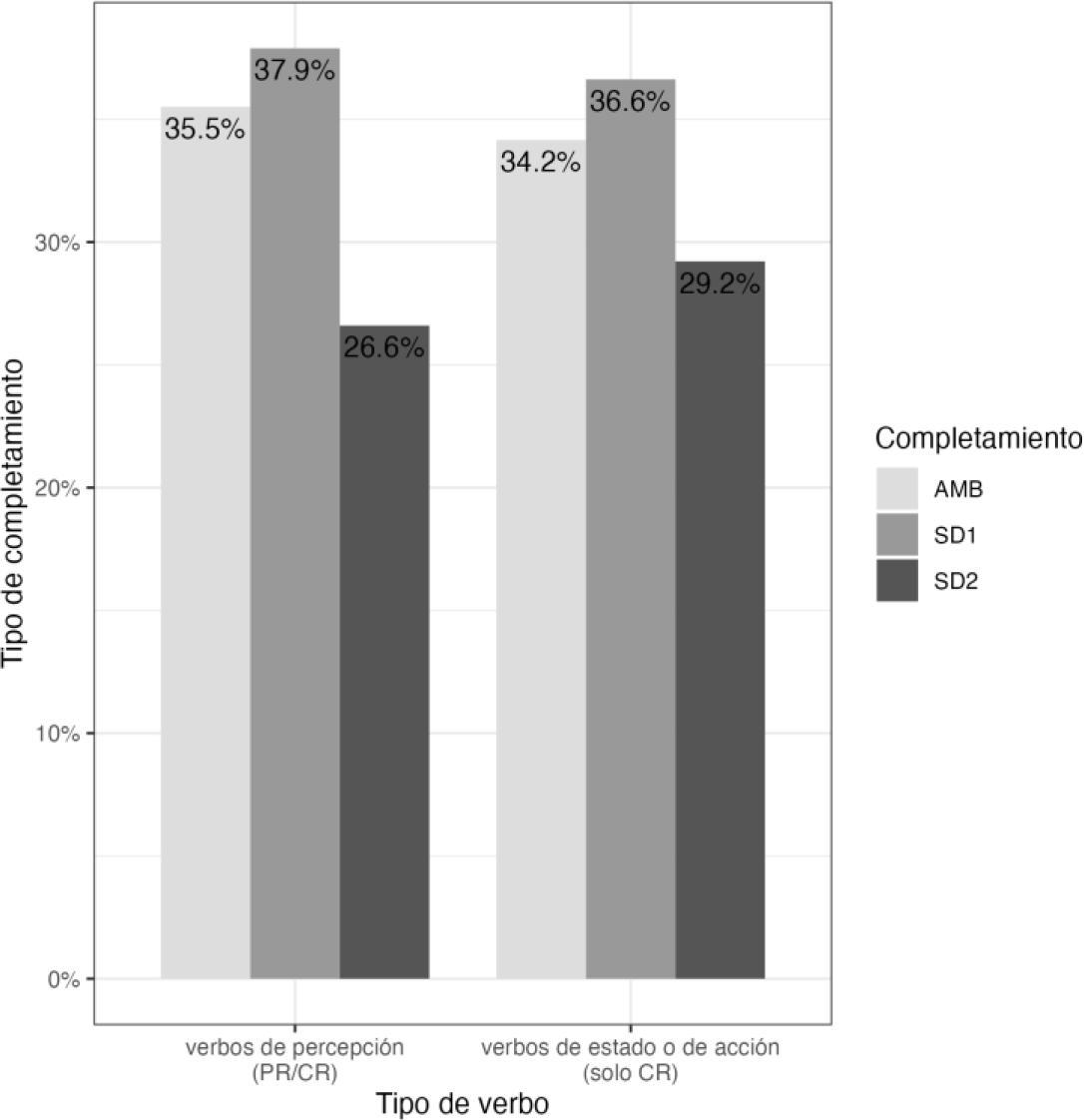
In the discussion about the universality of syntactic parsing, Spanish supposedly stands out as a high attachment language. However, that was recently questioned by the Pseudo-relative First Hypothesis, which maintains that if the presence of pseudo-relatives were controlled for, Spanish would show a preference for low attachment, which classical syntactic models postulate as universal. To analyze if this hypothesis holds true in Spanish, we designed a sentence completion task with sentences in two conditions: with perception verbs, which enable a pseudo-relative interpretation, and with state or action verbs, which do not enable a pseudo-relative interpretation. The findings refute the experimental hypothesis; we found a general preference for high attachment and no differences between both conditions. A possible explanation is that attachment preferences are modulated by various factors and that there is no single one that determines them.
Keywords
syntactic parsing; syntactic ambiguity; relative clause attachment; pseudo-relatives
 Thumbnail
 Thumbnail