Sound games in child speaking and changes in the interpretation of others
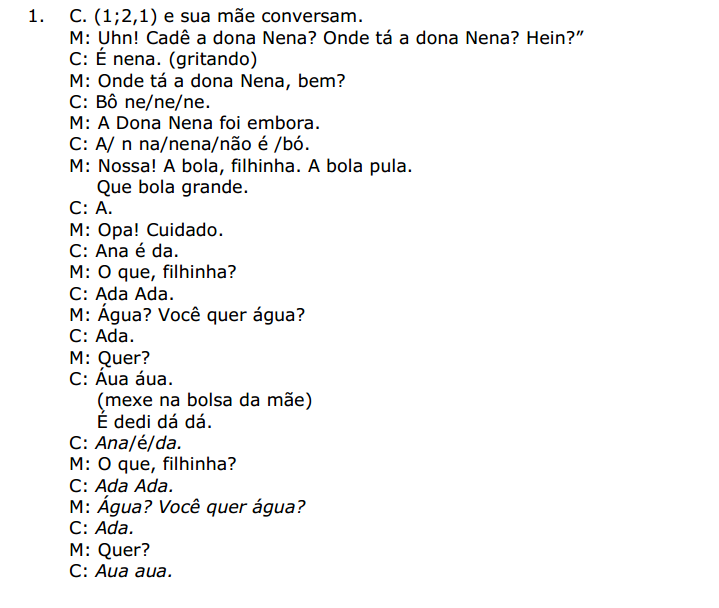
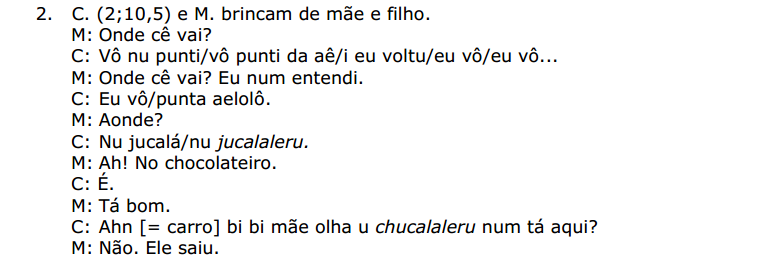
In this article, we focus on children's sound games, i.e., the approximations/associations among similar sound segments, which dominate child’s speech at an early point in their linguistic course. By comparing the various ways children play with the sounds of signifiers of their mother tongue, we have supposed that there would also be a variation in the interpretation of the other, depending on the dialogic context, which would configure the so-called pragmatic flexibility of interpretation in language acquisition.
From this perspective, the analysis of three episodes of dialogue between a child and her mother indicates that the differences in children’s sound-plays would be related to differences in mother's interpretations for these games.
Key words:
sound games; interpretation; pragmatic flexibility; language acquisition
 Thumbnail
 Thumbnail
 Thumbnail