The compound past in epistolary correspondence of 18th and 19th centuries’ Uruguay
Abstract
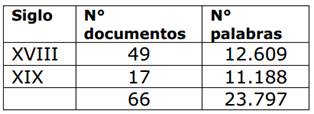
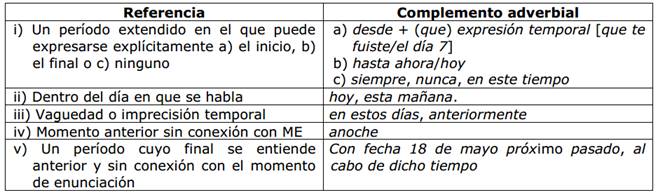
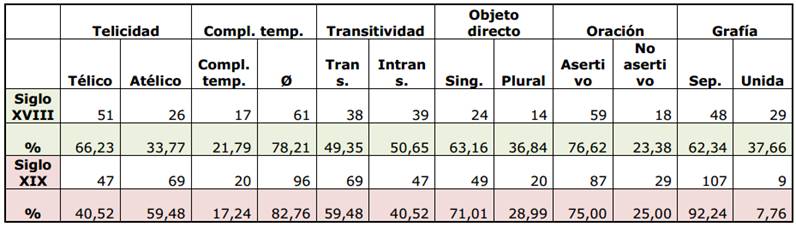
Abstract: This paper focuses on the use of the Compound Past (CP) found in a set of epistolary letters from the 18th and 19th centuries’ Uruguay. It is claimed that the CP already at this time encodes situations that are conceptualized within a temporal frame of indeterminacy. All the cases of CP in 66 letters are analyzed according to its contexts - with or without temporal determinants; in colocational environments; any significant relation with surrounding tokens of the Simple Past (SP); and the variation between these two tenses in the same statement. The results show, depending on the case, a strong formulaic feature, indeterminate temporal adverbials or the absence of such adverbials, tokens of SP canonically endorsed to perfect meaning, and the variation between these two tenses as a discursive strategy in order to place the situations either in a generic plane (CP) or in a concretization plane (SP).
Key words:
compound past; present perfect; temporal adverbials; generic reference; token reference; Uruguay.