| Vista |
Entender es ver |
La profesora vio con claridad la relación entre las variables. |
The professor saw the relationship between the variables clearly. |
Die Professorin sah klar die Beziehung zwischen den Variablen. |
教授は変数間の関係を見た。 |
En todos los idiomas se mantiene el verbo de percepción visual con el mismo sentido metafórico. |
| Vista |
Prever es ver |
El analista político vio el desenlace de la crisis con anticipación. |
The political analyst foresaw the outcome of the crisis. |
Der politische Analyst sah voraus den Ausgang der Krise. |
政治アナリストは危機の結末を予見した。 |
En inglés y alemán se mantiene 'ver' con prefijos de anticipación (fore-, voraus). En japonés, se usa 予見 (yoken, prever), lo que sustituye la metáfora visual por un concepto más abstracto. |
| Vista |
Imaginar es ver |
El novelista vio un mundo alternativo en su historia. |
The novelist envisioned an alternative world in his story. |
Der Schriftsteller stellte sich vor eine alternative Welt in seiner Geschichte. |
小説家は物語の中で別の世界を想像した。 |
En inglés y japonés se sustituye 'ver' por 'imaginar'. En alemán, sich vorstellen ('presentarse a sí mismo') mantiene el significado figurado sin usar un verbo de percepción. |
| Tacto |
Afectar es tocar |
La crisis económica tocó a miles de familias en la región. |
The economic crisis affected thousands of families in the region. |
Die Wirtschaftskrise traf Tausende von Familien in der Region. |
経済危機は地域の何千もの家族に影響を与えた。 |
En todas las lenguas se sustituye 'tocar' por verbos de impacto o afectación. |
| Tacto |
Persuadir es tocar |
Sus palabras tocaron profundamente la conciencia de los ciudadanos. |
His words deeply moved the citizens’ conscience. |
Seine Worte berührten tief das Gewissen der Bürger. |
彼の言葉は市民の良心を深く揺さぶった。 |
En alemán se mantiene berühren (tocar físicamente/emocionalmente), mientras que en inglés y japonés se opta por equivalentes de 'mover'. |
| Oído |
Prestar atención es oír |
Los asistentes al congreso oyeron cada argumento del expositor. |
The attendees listened to every argument of the speaker. |
Die Teilnehmer hörten aufmerksam jeden Punkt des Redners. |
参加者は講演者の議論をしっかりと聞いた。 |
En inglés, alemán y japonés se mantiene 'oír', pero enfatizando la idea de atención activa. |
| Oído |
Notar es oír |
La madre oyó un ruido inusual en la habitación. |
The mother noticed an unusual noise in the room. |
Die Mutter nahm ein ungewöhnliches Geräusch im Raum wahr. |
母親は部屋で異常な音を聞き取った。 |
En inglés y alemán se cambia 'oír' por 'notar' o 'percibir'. En japonés se emplea el compuesto 聞き取る (kikitoru, ‘oír’ + ‘tomar’), que mantiene el verbo original de audición y adquiere el significado de “captar” o “distinguir” un sonido en su entorno. |
| Olfato |
Sospechar es oler |
Claro que yo me huelo que la responsabilidad recae sobre él. |
I can sense that the responsibility falls on him. |
Ich spüre, dass die Verantwortung auf ihm liegt. |
私は責任が彼にあると感じる。 |
En inglés, alemán y japonés se usa un verbo de 'sensación' en lugar de 'oler'. Se reemplaza la metáfora olfativa con un verbo de intuición. |
| Olfato |
Investigar es oler |
El fiscal olió irregularidades en los documentos financieros. |
The prosecutor detected irregularities in the financial documents. |
Der Staatsanwalt erkannte Unregelmäßigkeiten in den Finanzunterlagen. |
検察官は財務書類に不正を発見した。 |
Se sustituye 'oler' por verbos de 'descubrir' en todas las lenguas. |

 SEEING IS BELIEVING: A COMPARATIVE TRANSLATION ANALYSIS OF PERCEPTION VERBS FROM SPANISH (L1) INTO ENGLISH, GERMAN, AND JAPANESE
 Thumbnail
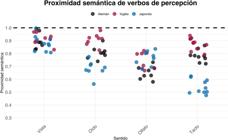 Thumbnail
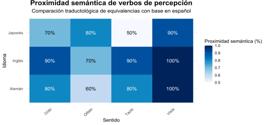 Thumbnail