The Duende’s critique: algorithmic mediation and the brain without organs
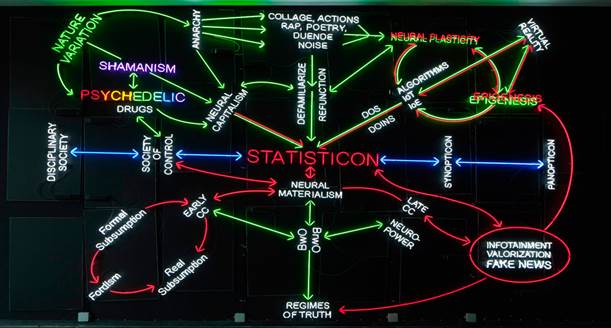
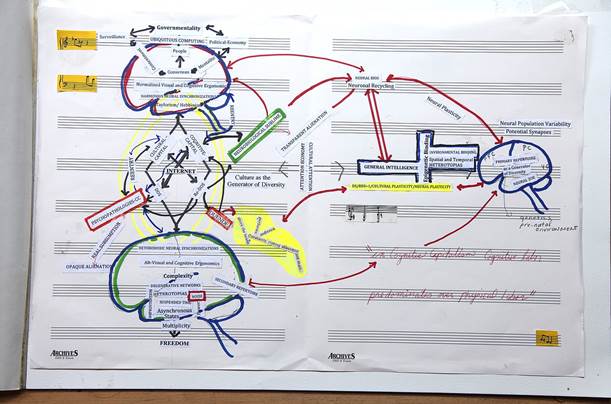
This article investigates the interaction between mediation and informational perception of knowledge in the process of constructing reality through information systems. Inspired by the concept of "duende", as outlined by the poet Federico García Lorca and reinterpreted by the author and artist Warren Neidich, the study proposes an analysis of informational mediation starting from a conceptual derivation of the "brain without organs", in line with the concept of "body without organs" developed by Gilles Deleuze and Félix Guattari. By considering the duende as an emergent and evasive intensity that permeates realities through creative variation, Neidich mobilizes powers that transcend traditional forms of mediation, escaping the rigidity of the synoptic model of algorithmic surveillance in the human psyche and social dynamics. Based on the concept of “brain without organs”, understood as an agonistic experimentation of negotiation and ontological emergence, the article suggests that artistic practice can be understood as an ethics of creation in moments of inflection in the formation of fields of immanence in the production of systemic and classified signs in the neural and informational architecture of contemporary society. By affirming the importance of artistic creation in expanding perceptions and mediating new ways of life, the article argues that cognitive and artistic production is configured as a creative and productive horizon in economic and social relations.
Keywords:
mediation; algorithms; art; critic; cognition
 Thumbnail
 Thumbnail
 Thumbnail
 Thumbnail