Semiotics of contemporary art: exploring the intersection of language, meaning, and artistic practice
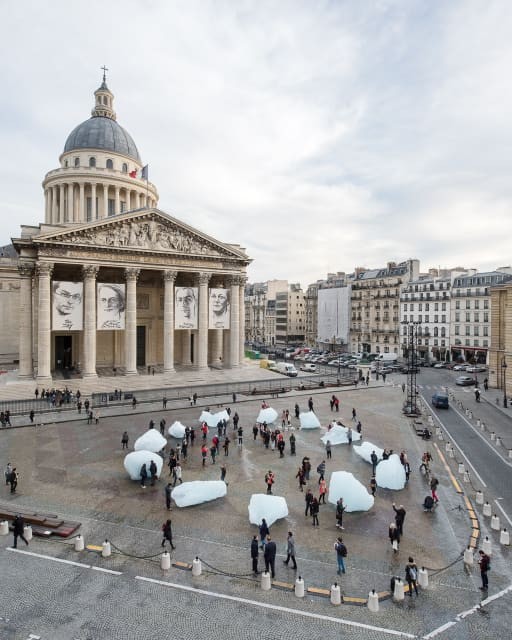
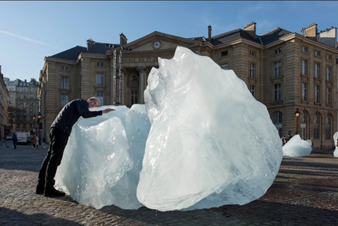
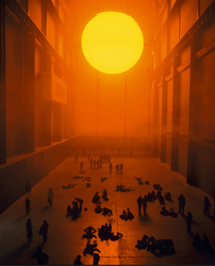
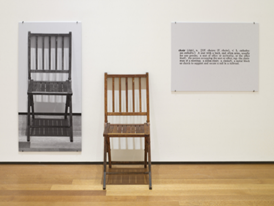
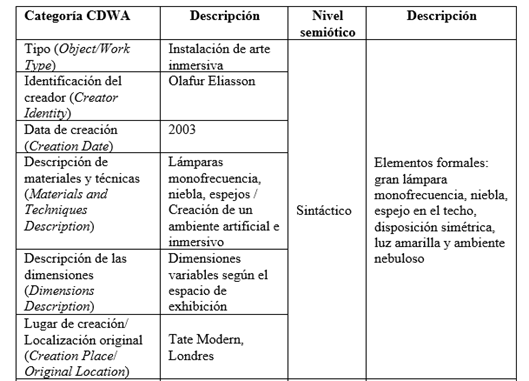
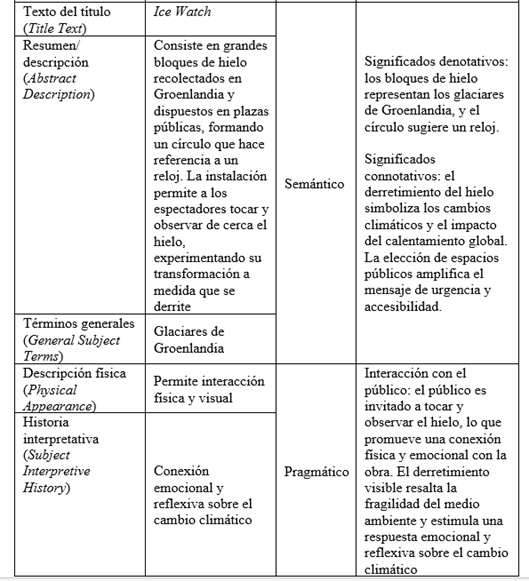
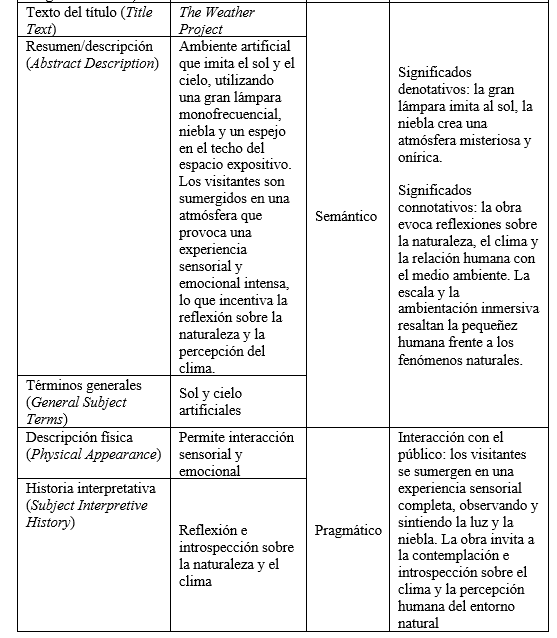
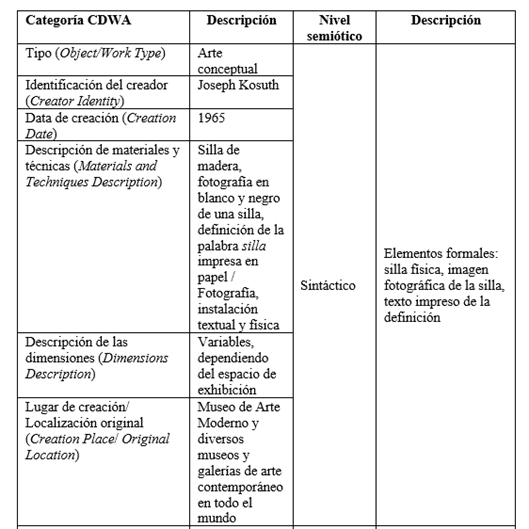
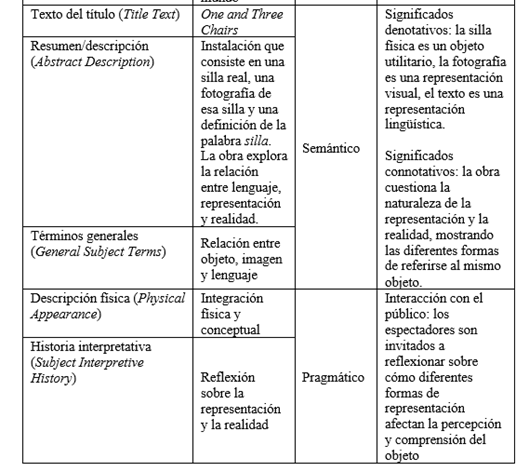
This article analyzes how contemporary art installations employ visual and conceptual strategies to construct meaning, articulating a relationship between language, semiotics, and artistic practice. Based on a qualitative methodology, selected artworks are examined through the syntactic, semantic, and pragmatic levels of semiotic analysis, in dialogue with the Categories for the Description of Works of Art (CDWA) standard. The study demonstrates that these installations generate aesthetic experiences that activate audience perception, promoting plural and reflective interpretation. Furthermore, it explores how the combination of standardized description systems with flexible interpretive frameworks can enrich both documentation and curatorial mediation. Examples such as the works of Olafur Eliasson and Joseph Kosuth illustrate the power of art to trigger critical thinking processes, facilitating connections between the artwork, its context, and the viewer’s experience. In sum, the article proposes a methodological articulation that combines semiotic analysis with structured documentation as a tool to better understand the ways in which contemporary art produces meaning, thereby contributing to the strengthening of curatorial, educational, and theoretical approaches within the museological and artistic fields.
Keywords:
CONTEMPORARY ART; COMMUNICATION; DESCRIPTION OF WORKS OF ART; SEMIOTICS; VISUAL LANGUAGE
 Thumbnail
 Thumbnail
 Thumbnail
 Thumbnail
 Thumbnail