
 Diki-Kidiri´s theory in practice: the traditional´s brazilian midwives´ terminology
This paper aims to apply the theoretical-methodological approach of Cultural Terminology (CT), as developed by Marcel Diki-Kidiri, to propose a terminological analysis of the language used by Brazilian Traditional Midwives (ParTra) in the representation and oral transmission of knowledge related to their craft. ParTra are women who work in contexts where public healthcare is precarious or nonexistent. Their specialized language is expressed through terms that name practices, objects, herbal medicines, and processes related to childbirth and pregnancy. It is through their language that they perpetuate and transmit their knowledge. We analyze their specialized discourse through the lens of CT, using the notion of percept as a central concept-understanding the term as a unit of meaning rooted in the way a community perceives and interprets the world. Based on the premise that a term results from the interaction between experience and perception within a given culture, we analyzed and categorized the terminological units found in the knowledge systems of ParTra. As a result, we highlight that adopting the CT approach made it possible not only to observe and systematize how a craft is organized through oral transmission-regarding the techniques, objects, and procedures used-but also to reaffirm the specialized nature and technical value of traditional crafts.
Keywords:
TERMINOLOGY; CULTURAL TERMINOLOGY; INTANGIBLE CULTURAL HERITAGE; BRAZILIAN TRADITIONAL MIDWIVES
 Thumbnail
 Thumbnail
 Thumbnail
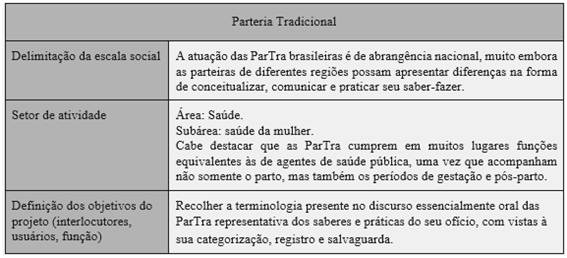 Fonte: As autoras
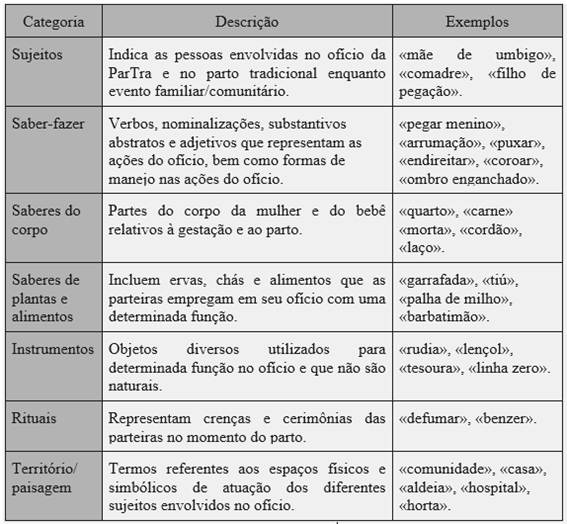 Fonte: as autoras.
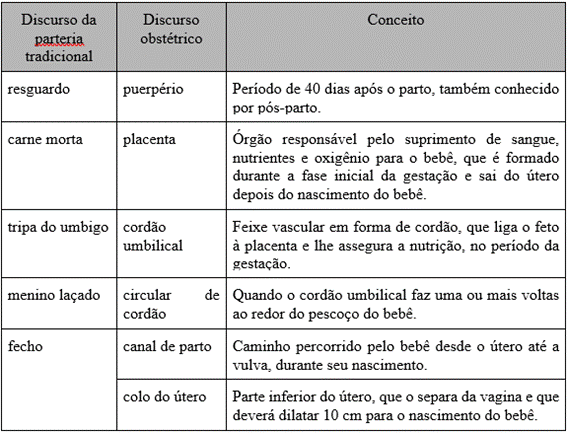 Fonte: as autoras Termos obstétricos e conceitos baseados no Glossário do grupo Parto do Princípio