When faced with content, what do young people do to avoid disinformation? A study on criteria used by audiences in Salvador and Porto Alegre (Brazil)
Abstract
Brazilians are among the most vulnerable populations when faced with the phenomenon of disinformation. In a survey of 21 countries (OECD, 2024), Brazilians were the most likely to believe in false content. This poor performance was repeated in the national survey (CGI, 2024). Given this, this article focuses on the topic of disinformation, from the perspective of young people, who are considered one of the groups most at risk of being impacted by the phenomenon (United Nations, 2024). The discussions presented here are based on unpublished data from an empirical investigation with young people, aged 18 to 29, from two Brazilian state capitals: Salvador (Bahia) and Porto Alegre (Rio Grande do Sul). The online questionnaire, answered by 486 young people, addressed whether they paid attention to the source of the information, the date of publication, the authorship and the context, as well as the use of fact-checking websites and their interest in learning more about disinformation. This is an applied study, using a qualitative approach and an exploratory-descriptive objective, based on data from quantitative research. The results reveal gaps in the fact-checking of information by the interviewees and a desire to learn more about how to prevent and combat disinformation. The development of critical thinking and methods for investigating sources of information and content are recommended.
Keywords:
DISINFORMATION; YOUNG PEOPLE; INFORMATION ASSESSMENT; CRITICAL THINKING
Resumen
Los brasileños se encuentran entre las poblaciones más vulnerables frente al fenómeno de la desinformación. En una encuesta realizada en 21 países (OECD, 2024), los brasileños fueron los más propensos a creer en contenido falso. Este pobre desempeño se repitió en una encuesta nacional (CGI, 2024). Ante este escenario, este artículo está dedicado al tema de la desinformación, desde la perspectiva de los jóvenes, considerados uno de los grupos con mayor riesgo de ser impactados por el fenómeno (Naciones Unidas, 2024). Las discusiones aquí presentadas se basan en datos inéditos de una investigación empírica con jóvenes, de 18 a 29 años, de dos capitales brasileñas: Salvador (Bahía) y Porto Alegre (Rio Grande do Sul). El cuestionario en línea, respondido por 486 jóvenes, implica su atención a la fuente de la información, la fecha de publicación, la autoría y el contexto, así como el uso de sitios web de verificación de datos y el interés en aprender más sobre cómo prevenir y combatir la desinformación. Este estudio es de carácter aplicado, con enfoque cualitativo y objetivo exploratorio-descriptivo, basado en datos de una investigación cuantitativa. Los resultados revelan lagunas en la verificación de la información por parte de los encuestados y un deseo de aprender más sobre cómo prevenir y combatir la desinformación. Se recomienda el desarrollo del pensamiento crítico y de métodos de investigación de fuentes de información y contenidos.
Palabras clave:
DESINFORMACIÓN; JÓVENES; EVALUACIÓN DE LA INFORMACIÓN; PENSAMIENTO CRÍTICO
Resumo
Os brasileiros estão entre as populações mais vulneráveis diante do fenômeno da desinformação. Em uma pesquisa realizada com 21 países (OCDE, 2024), os brasileiros foram os mais propensos a acreditar em conteúdo falso. Esse desempenho ruim se repetiu em uma pesquisa nacional (CGI, 2024). Diante desse cenário, este artigo se dedica ao tema da desinformação, sob a perspectiva dos jovens, considerados um dos grupos com maior risco de serem impactados pelo fenômeno (Nações Unidas, 2024). As discussões aqui apresentadas baseiam-se em dados inéditos de uma investigação empírica com jovens, de 18 a 29 anos, de duas capitais brasileiras: Salvador (Bahia) e Porto Alegre (Rio Grande do Sul). O questionário online, respondido por 486 jovens, envolve a atenção deles com a fonte da informação, a data da publicação, a autoria e o contexto, assim como o uso de sites de checagem e o interesse para aprender mais sobre como se prevenir e combater a desinformação. Esse estudo é de natureza aplicada, com abordagem qualitativa e objetivo exploratório-descritivo, a partir de dados da pesquisa quantitativa. Os resultados revelam lacunas na checagem de informações pelos entrevistados e um desejo de aprender mais sobre como se prevenir e combater a desinformação. Recomenda-se o desenvolvimento do pensamento crítico e de métodos de apuração de fontes de informação e conteúdo.
Palavras-chave:
DESINFORMAÇÃO; JOVENS; AVALIAÇÃO DA INFORMAÇÃO; PENSAMENTO CRÍTICO
1 INTRODUCTION
Information is everywhere and reaches even those who are not looking for it. It arrives through instant messaging apps, social media feeds, pop-up ads on websites, and other digital media. The more immersed people are in digital culture, the more they are caught up in the unbridled flow of content. And when this content is false, with or without the intention of deceiving, it fuels the phenomenon of misinformation, one of the most worrying and complex issues of our time.
Young people are among the groups most familiar with digital environments, 1although there are inequalities in the quality of connectivity and internet use among them. Disinformation is therefore a topic that is present in their lives, as well as on the private agenda of society and also on the public agenda of the country and the world. This is because the consequences of disinformation range from impacts on the personal dimension to threats to the democratic system and national sovereignty.
The United Nations Educational, Scientific and Cultural Organization (UNESCO) defines disinformation “as false or misleading content that can cause specific harm, irrespective of motivations, awareness or behaviors” (United Nations, 2023, p. 5). Faced with such a challenging phenomenon, several efforts have been made to understand the level of vulnerability of individuals and nations to false content that circulates on a large scale, driven mainly by digital environments.
In a survey involving 21 countries, disinformation was a topic of concern for the Organization for Economic Cooperation and Development (OECD, 2024), and Brazil was considered the most susceptible to the phenomenon. Of the 40,756 respondents, Brazilians (around 2,000 people) demonstrated greater ease in believing and sharing untruths. Only 54% of this public were able to distinguish true information from false information, while the overall average was 60%. Among the Finns, who performed best, the rate was 90%.
The performance of Brazilians was similar in a national survey, TIC Domicílios 2023 (CGI, 2024). About half of the interviewees (51%) check the veracity of the information they find on the internet. The publication also highlighted the importance of education for the development of digital skills.
People with higher education showed higher levels of skills compared to those who only had completed elementary education: 75% of those with higher education check content, compared to 32% of those who did not get to high school.
Given this scenario, this article focuses on the topic of misinformation, from the perspective of young people2, who are considered one of the groups most at risk of being impacted by the phenomenon as they are more likely to be online for longer periods of time (United Nations, 2024).
At the same time, because young people are more immersed in the digital world, there is an assumption that they already master everything in this environment (Buckingham, 2023). This exaggerated assessment can be made by young people themselves and/or by adults.
When young people receive content through digital environments, what do they do to avoid being misled by false, inaccurate or out-of-context information? Based on this research question, the discussions presented here are supported by evidence gathered from an empirical investigation carried out with young people, aged 18 to 29, from two Brazilian state capitals: Salvador (Bahia) and Porto Alegre (Rio Grande do Sul).
The study sought to identify the precautions they take to avoid believing in misleading information. The questions asked through an online questionnaire and answered by 486 young people involved paying attention to the source of the information, the date of publication, the authorship and the context, as well as the use of fact-checking websites and their interest in learning more about how to prevent and combat misinformation.
The answers to these questions are part of a broader research project developed as part of a postdoctoral program in Information Science (PPGCIN/UFRGS). This article explores an excerpt from the research related to the aforementioned research question.
The objective is to discuss the behavior of young people in Porto Alegre and Salvador when faced with online content, to avoid disseminating or producing misleading or inaccurate information. The next section is dedicated to theoretical discussions on misinformation and youth. The research method is then presented. The following section focuses on the analysis and discussion of the results and, finally, the conclusion.
2 DISINFORMATION
Concerns about disinformation have been heightened worldwide since 2016 when the United States faced turbulent presidential elections with the intense dissemination of untruths in the political arena (D'Ancona, 2017). At that time, false content, packaged as if it were news, was given the name fake news and soon became the subject of studies by researchers due to the broad scope of the disorder it caused during that period.
Although the use of lies in political disputes was not innovative (Santaella, 2020a ), the new environments for the diffusion, capillarity and speed of dissemination of misleading information were recognized as a new phenomenon typical of digital environments.
Since then, there have been repeated instances of informational chaos in electoral processes in different parts of the world, during pandemics, emergency crises and even in everyday life. In addition to this increasingly widespread problem, the scale of complexity has also increased, with advances in artificial intelligence, for example, which make information falsification resources even more sophisticated.
Wardle and Derakhshan (2017) breakdown disinformation into three types: misinformation, to refer to incorrect and misleading information; disinformation, when the content is fabricated with the intention of causing harm; malinformation, when the content is perverse, such as hate speech. They all have in common the intention to deceive, to manipulate.
This article also considers misinformation to be false content that is shared by those who disseminated it believing it to be true (Fallis, 2015), i.e., the individual did not intend to deceive the recipients, but contributed to the spreading of lies, even in an innocent manner. This is one of the challenging behaviors of today because it requires from the individual an a level of education and self-criticism that contemplates the dimensions of the cognitive, emotional and their own beliefs.
In the field of theories, this type of behavior is related to the so-called cognitive dissonance (Festinger, 1975). Generally speaking, people seek cognitive coherence to avoid a kind of mental disorientation. Therefore, they tend not to check information that agrees with their certainties, out of a desire not to be contradicted and to remain in a state of cognitive and emotional comfort.
This belief-driven behavior is not something new, “ However, our new existence in networked environments amplifies this power, also called confirmation bias, especially because we are now monitored by artificial intelligence algorithms”, explains Santaella (2020b, p. 23).
Belief in false information can also be motivated by trust in the person who shared it and by the inertia of not worrying about the information that is passed on. In either situation, there is a lack of responsibility for what is consumed and disseminated, thus feeding the cycle of misinformation. The same attention is crucial when producing content. What is created requires a commitment to the truth. After all, the consequences of distorting reality, whether deliberately or not, are harmful to living in society.
In addition to the individual dimension, the responsibility for disseminating truthful content and combating misinformation also involves companies, especially digital platforms, the so-called big tech. It is through their social networks and apps that the ocean of content that ends up in the hands of the population circulates.
The quality this information, however, has been neglected and what should not circulate on social media has gained more public attention. A study by the Massachusetts Institute of Technology (Dizikes, 2018) shows that fake content generates 70% more engagement than real content and is therefore more profitable for companies.
Morozov (2018) reinforces that fake content is the most profitable news for platforms thanks to digital capitalism. The low transparency in the functioning of algorithms, which often drive disinformation, also endorses the role of big tech as an accomplice in the spread of fake, hostile and even criminal content.
3 YOUTH
In the context of digital environments flooded with misinformation, those who are most immersed in this universe are more likely to come across distorted content, with inappropriate and even criminal intentions (United Nations, 2024). There is also research that shows that people who spend the most time using social media for entertainment are more vulnerable to untruths.
This was detected by researchers from the University of Cambridge 3in partnership with the YouGov Institute, who developed the Disinformation Susceptibility Test (Lewsey, 2023) to assess a person's ability to differentiate fake news from true news, based on content presented to participants.
Among the findings, it was found that 36% of young participants, aged 18 to 29, had low performance, getting at least half of the questions wrong. Only 11% got 80% or more of the questions right. The performance of young people was lower than that of respondents over the age of 65. Among these, 36% achieved high scores and less than 9% got below at least 10 correct answers.
By observing the amount of time spent using the internet for entertainment each day, the study showed that there was a proportionality between the increase in recreational hours spent online and the susceptibility to misinformation, as well as who used social media more as a news channel.
One of the people responsible for the research, Rakoen Maertens, warns: “Young people are increasingly turning to social media to find out more about the world, but these channels are full of misinformation” (Lewsey, 2023, p. 24).
The United Nations (2024), when publishing the global principles for information integrity, emphasized that young people need to be involved in actions to develop resilience to the risks of digital environments and to ensure the integrity of the information ecosystem.
Many young people and children spend a significant portion of their lives online and will be most directly affected by emerging technologies and media trends. People are generally more resilient and better equipped to pre-empt navigate such risks when they have access to a diverse range of information sources and feel included, equal, socioeconomically secure and politically empowered. (United Nations, 2024, p. 9).
Thus, young people who experience digital culture intensely are more exposed to the challenges of misinformation, and for the same reason, they can be crucial to rethinking and enhancing what is good in the current informational ecosystem. It is important to emphasize, as Novaes (2019, p.16) argues, in the same way that the internet has accentuated and generated problems,
ICTs can also break down isolation, produce new affections, expand the possibilities of identification between subordinate actors and groups, disseminate social causes and create new youth collectives. Therefore, at the same time that racist and homophobic attacks have gained space on the web, new utopias are also being created by young people connected nationally and internationally.
The current times of hyperconnection also fuel, highlights Passarelli (2020, p. 4), “the emergence of new logics, new semantics and new literacies (set of skills and/or competencies built through the use of different technologies)”. The author emphasizes the importance of the social interfaces of Communication, Information and Education, from which the meanings of learning and new competencies are being recreated.
It is from this context of challenges faced by young people, but also from the recognition of their potential when engaged and when supported by a media education that includes both Communication and Information Sciences knowledge applied to Education processes, that the survey of young people from Salvador and Porto Alegre was carried out. The research methodology will be presented in the next section.
4 RESEARCH METHOD
This is an applied study using a qualitative approach and an exploratory-descriptive objective, based on unpublished data from a quantitative survey conducted with young people from Salvador and Porto Alegre. The results presented in the next section deal with the criteria adopted by young people to access complete information in order to reduce the risks of misinformation.
Postdoctoral empirical research adopted non-probabilistic quota sampling (Selltiz, 1974; Richardson et al., 2012) 4. According to Gil (2008), this type of sampling presents scientific rigor and is usually used in academic research, due to advantages such as “low cost and the fact that it provides some stratification to the sample” (Gil, 2008, p. 94). Among the limitations are biases due to “the researcher’s classification of the elements and the non-random selection in each class” (Gil, 2008, p. 95).
To obtain accurate and statistically significant results, the sampling design considered the results of the 2022 IBGE Demographic Census 5. This research involved the young population aged 18 to 29, totaling 413,081 individuals in Salvador (BA) and 224,170 in Porto Alegre (RS). Thus, the calculation of the non-probabilistic sampling by quota considered proportionality in relation to the population of young people in Salvador and Porto Alegre.
To ensure that the sample faithfully represents the characteristics of the universe researched, the number of interviewees had to consider the following factors: size of the universe, established confidence level, maximum error allowed and percentage with which the phenomenon occurs (Gil, 2008; Richardson et al., 2012).
The confidence level was set at 90%. This indicates that if the sampling procedure were repeated one hundred times, the results would be the same in 90% of cases. The margin of error was equal to six percentage points (0.06 or 6.0%) either way (i.e., it indicates that the results for the entire sample should be read considering the range of -6 to +6). To calculate this estimate, it was assumed that populations are infinite.
The sample size was set at 188 for Salvador and 188 for Porto Alegre, considering other variables such as color/race, gender, education and income, which expanded the possibilities for analyzing the results. The quantitative research was conducted online, adopting a questionnaire as the data collection instrument. The instrument was created in Google Forms.
Data collection was performed after the study was approved by the Research Ethics Committee of the Federal University of Rio Grande do Sul. Participants had to meet the criteria of being between 18 and 29 years old, living in one of the two capitals mentioned, and accepting the Free and Informed Consent Form (FICF). The following section presents the research results, analysis, and discussion of the findings.
5 ANALYSIS AND DISCUSSION
The online questionnaire reached 280 young people from Salvador and 206 from Porto Alegre, exceeding the minimum expected sample size and totaling 486 participants. As there are differences in the number of interviewees between the two capitals, the results are presented in proportional terms.
The data contribute to an understanding the behavior of young people in Porto Alegre and Salvador when faced with online content and the steps they take to reduce the risks of disinformation. The research findings were analyzed in relation to one of the steps taken to avoid spreading false content, which is taking care with a critical evaluation of what is sought, received, produced and/or disseminated.
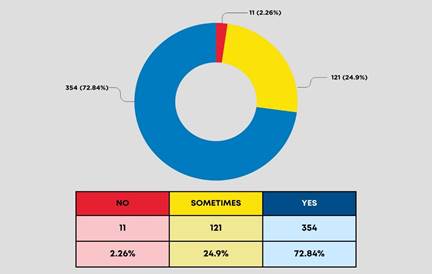
Among those interviewed in the two capitals, almost a third of the total (27%) said they do not evaluate information before sharing it or only do so sometimes, as shown in Graph 1.
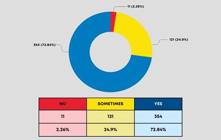
When I receive information, do I evaluate whether it is true before sharing it? Source: Survey data, 2024.
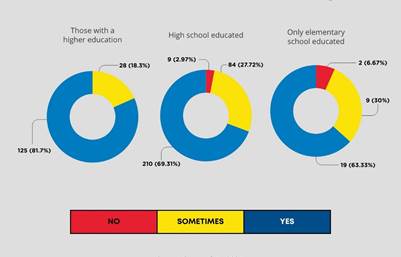
It was also evident that education makes a difference in this behavior, as in the TIC Domicílios 2023 study (CGI, 2024). Among those who have completed up to Elementary School, this statement rises to 36%; it drops to 30% among those who only went to High School (incomplete or complete) and falls to 18.3% among those with a higher education (Graph 2).
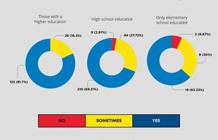
Education level of young people who, when receiving information, assess whether it is true before sharing it. Source: Survey data, 2024.
Although there is a risk of interference, to some extent, from the bias of responses considered socially acceptable, namely responding with what is expected in order to gain social approval (Almeida, 2009), these results reveal that the vast majority (72.84%) of those interviewed understand that it is important to check the veracity of information before circulating it. However, one third ignore taking care and responsibility in the face of the possibility of feeding the flow of misinformation.
These findings reinforce the urgent need to strengthen educational processes that include critical thinking regarding content and fostering a sense of shared responsibility for information ecosystems. Therefore, there is a need to create dialogical and formative opportunities to discuss with young people how to effectively assess the integrity of information.
Likewise, it is important to discuss the consequences of being passive when faced with information that is accessed and disseminated without adopting assessment criteria, in addition to the impacts of producing misinformation.
Criteria for evaluating information
Evaluating the integrity of information involves several skills and techniques aligned with critical thinking. In this article, we cover the following: source of information, authorship, date and context, as well as knowledge about fact-checking sites and interest in learning more about how to prevent and combat misinformation.
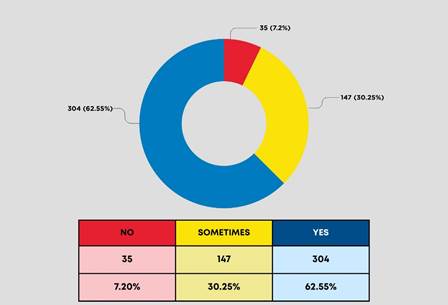
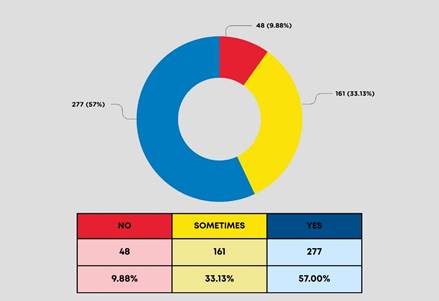
When young people from Salvador and Porto Alegre were asked whether they check the source of information for content they come across on the internet, 62.55% of young people from Salvador and Porto Alegre said they do; 30.2% sometimes do so and 7.2% admit that they do not (Graph 3). In this article, sources of information are understood as “potential vehicles that may contain certain information for a given subject to satisfy a given need” (Gomes; Dumont, 2015, p. 135).
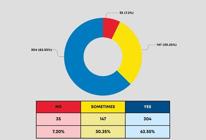
The need to evaluate sources of information to ensure the veracity of what is consumed has always existed. In the past, rigor in the production and dissemination of information was expected from large media companies and institutions that owned these processes due to the high costs of media production (Santaella, 2020a ) and information (Cunha, 2020).
In the current context, in which anyone can be a producer and disseminator, through various digital media and without any ethical control, the adoption of criteria for evaluating information becomes even more essential. The act of not verifying the source of information, therefore, exposes the individual to disproportionate risks.
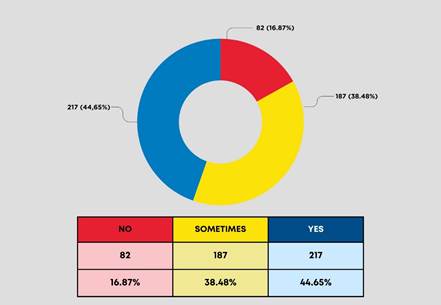
Regarding the authorship of the information, which can often be the same as the source of information in cases of posts made by individuals, the percentage of young people who said they check who produced the content was 44.6%. Less than half of the interviewees do not pay attention to this criterion as a way of checking whether the content is credible. Those who do this sometimes correspond to 38.4% and 16.8% never (Graph 4).
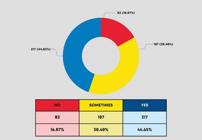
Both aspects (source and authorship) deserve to be discussed with young people, whether in formal or informal educational settings, or in the family or social context. Verifying the source of information and authorship should be done based on prior knowledge of these criteria and with a careful and critical eye. For example, it is necessary to determine whether the source and/or authorship exists, whether it is credible, and who attests to this legitimacy. It is necessary to check whether the information presented is based on scientific evidence and real facts.
Another aspect is related to the current context of political polarizations, fueled by denialist behavior, which has made the need for rigorous reading of content even more crucial. An example to demonstrate the high risk of misinformation occurred in November 2024, when a doctor stated on social media that breast cancer does not exist, in the middle of a month dedicated to massive awareness campaigns about prevention and care for the disease.
The doctor was contradicted by representatives of INCA (National Cancer Institute), SBM (Brazilian Society of Mastology) and other entities, in addition to being put under investigation 6. Behaviors like this occurred frequently during the Covid-19 pandemic and continue to do so at an alarming rate. The same occurs with countless relevant topics that are subject to denialist attacks, such as those that try to discredit the importance of vaccines and the causes of climate emergencies, just to name a few, the consequences of which can threaten human life.
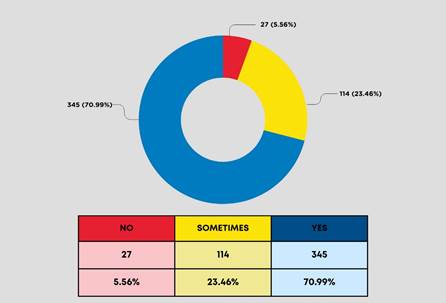
Another precaution is to pay attention to the date the content was published. This is because one of the strategies used to produce disinformation is to change the date of true content and/or its context. Respondents said they were less vigilant about the date (57%) - Graph 5 - than about the context (70.9%) - Graph 6. Both aspects, when left unnoticed, increase the risk of fueling disinformation.
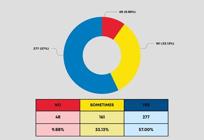
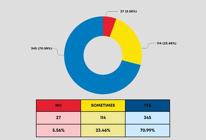
It is interesting to note that 72.4% of young people say they are cautious in checking information before passing it on, with the percentage decreasing as they are asked about the verification criteria: context (70.9%); source of information (62.5%); date (57%); author (44.6%). Among those who admit that they do not do so, the percentages are very low, ranging from 2% to 9%, reaching 16.8% only in relation to the authorship of the information, although this remains insignificant.
Possible overconfidence
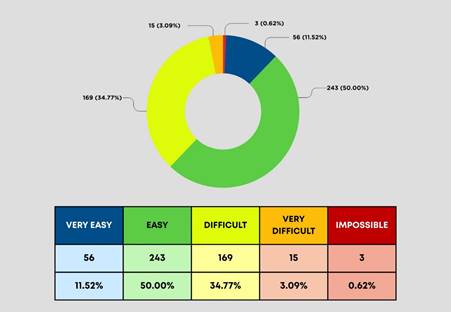
The responses of young people from Porto Alegre and Salvador may be influenced by the Dunning-Kruger effect, which is when a person's lack of knowledge and skill in a certain area causes them to overestimate their own knowledge. “In short, people are confident they are knowledgeable even when they appear to base their inferences on mistaken facts and erroneous opinions produced by faulty reasoning” (Dunning, 2018, p. 5).Another result that may corroborate the Dunning-Kruger effect theory is that the majority of respondents (61.5%) consider it easy to detect manipulated content. On the other hand, around 38% consider it difficult, very difficult or impossible to identify false information (Graph 7).
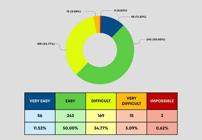
The possibility that the Dunning-Kruger effect may have occurred among young people should not be seen as an unsolvable problem. On the contrary, it creates opportunities to discuss the responses with this audience, to deepen the level of investigation into how they act in their daily lives, and to provide opportunities for the development of skills, critical thinking, and ethical reflections.
The definition of critical thinking varies according to the area of knowledge and context, according to Hollis (2019). The author highlights that in Library Science and Information Science, for example, there is a greater tendency to discuss Information literacy, while philosophers, psychologists and researchers in Education are more likely to discuss critical thinking, although there is a strong relationship between the concepts.
For the Chartered Institute of Library and Information Professionals (CILIP), information literacy is defined as " the ability to think critically and make balanced judgments about any information we find and use" (Hollis, 2019, p. 2).
In a systematic review of literature on critical thinking, Machete and Turpin (2020) found critical thinking to be an essential skill for assessing the veracity of content, as it allows us to analyze and evaluate arguments based on their consistency and credibility. For this reason, the studies indicated that academic institutions should include information literacy to encourage critical thinking.
Associated with critical thinking, methods of critical evaluation of information sources and content can be adopted, such as the CRAAP test. This acronym means attention to the following aspects of the content accessed: Currency, Relevance, Authority, Accuracy, and Purpose (Zak, 2024). Another method pointed out by the author and used by information literacy is RADAR, which highlights the importance of determining Relevance, Authority, Date, Appearance, and Reason, based on questions.
Another possibility is the SIFT method, aimed at investigating and verifying information during reading. “SIFT stands for Stop, Investigate, Find and Trace” (Zak, 2024, p. 7). The three methods have advantages and limitations in the face of the constant sophistication of misinformation, but they remain useful.
In workshops held by the author with young people up to 21 years old in public schools in Bahia in 2024 7, for example, different types of difficulties were observed among this audience in detecting disinformation strategies. Adulterated news was presented and most students considered the news item to be true. It was also noted that the more sophisticated the information distortion technique, the more difficult it is to detect the manipulation, especially with the use of artificial intelligence.
The findings served as input for working on content evaluation criteria. When verification resources are not sufficient for the individual to verify the information, another possible strategy is to compare the content in other sources of information and even on specialized fact-checking websites.
In Brazil, there are several of them with their own methodologies for verifying the veracity of information. Among the fact-checking agencies, the following stand out: Fato ou Fake 8; Aos Fatos 9; Agência Lupa 10; Comprova Estadão 11; UOL Confere 12. These were created as strategies to combat the proliferation of content that tries to disguise itself as news, imitating formats and exploring different languages. As Santaella (2020b, p. 12) says,
The mix of text types and multimedia hybrids that are posted on social networks has become increasingly dizzying. Anything goes and spreads with the lightning speed of mere taps on the current of the rivers of timelines, thanks to the ease of registering and becoming a member of gigantic networks of participation and sharing.
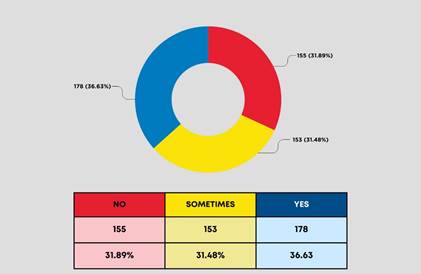
In light of these strategies used to deceive the public, fact-checking sites conduct a thorough investigation of false content that goes viral on the internet and make the results available online for free. Despite their existence, the survey of young people found that around a third (31.8%) of this audience do not use fact-checking agencies as a reference to confirm the authenticity of information. A very similar percentage of those interviewed (31.4%) use them sometimes and just over a third (36.6%) do not use specific fact-checking sites (Graph 8).
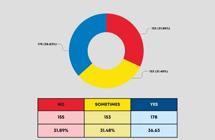
The data therefore reveal that it is not a very common practice for young people in Salvador and Porto Alegre to use specialized news verification sites. It is therefore clear that fact-checking agencies need to develop strategies to reach this audience, and this topic should be discussed more by education professionals with young people. In addition to relying on these free services, it is interesting to learn about the methodologies used and take advantage of techniques for your own individual or group investigations.
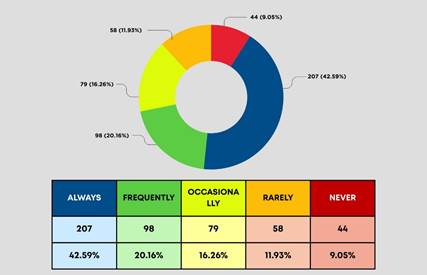
The survey also shows that young people are interested in improving their knowledge. More than two-thirds of respondents (62%) said they were always or frequently interested in learning how to prevent and combat misinformation. Only 9% said they had no motivation, and another 28% said they were rarely or occasionally interested (Graph 9).
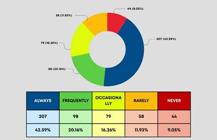
Interested in learning more about preventing and combating disinformation. Source: Survey data, 2024.
The fact is that young people need to be encouraged and provided with knowledge and skills that neutralize disinformation attacks. Knowing and adopting criteria to evaluate information are crucial behavior to avoid feeding the current harmful sides of digital ecosystems.
To this end, it is also important to escape the conventional wisdom that usually associates young people with experts in the digital world. Livingstone, Mascheroni and Stoilova (2023, p. 1178) warn that
children and young people are often considered 'digital natives', the problematic implication of which is that young people will spontaneously 'learn' the necessary digital skills without resource-intensive interventions. Researchers have dispelled this myth by showing that young people may not only lack valuable skills, but may also struggle to translate these skills into tangible outcomes.
Martín-Barbero (2011, p. 133) also warns that this is not just any formative process. “education must teach people to read the world in a civic manner”, based on the development of autonomous subjects who are free to think “with their own heads, and not with the ideas that circulate around them” (Martín-Barbero, 2011, p. 134) or in digital environments.
Therefore, although young people appear to have mastered the technical skills, they need improved, consistent and ethical competencies (skills, knowledge and attitudes). Their full development depends on a quality critical education so that they can produce, access, evaluate and disseminate content that is integral, credible and responsible. After all, what is published and consumed in digital environments interferes ubiquitously with life as a whole.
6 CONCLUSION
The challenges of today, marked by the intense mediation of digital technologies, require that the population, and especially young people, have the opportunity to continually improve their knowledge, skills and attitudes to counter misinformation. At the same time, information ecosystems need to be fed with healthy, inclusive and democratic content.
Efforts in this direction include the careful evaluation of the content which is accessed, produced and disseminated. In this article, we highlight the importance of young people in particular adopting criteria to check the veracity of information, through analysis of the source, authorship, date and context of the content.
Data from the survey with young people from Salvador and Porto Alegre show that it is necessary to strengthen knowledge and application of these content evaluation criteria among this audience, as well as to expand the repertoire of verification techniques and use of information checking websites.
In order to avoid producing and disseminating false content, it is necessary to pay close attention to any information or news and this requires reading the entire content critically. When not accessing official websites or social networks of renowned institutions and reliable news portals, it is necessary to confirm the source of information, authorship, date and context. It is also important to compare the content across different sources, including fact-checking websites.
Just as technological resources become more sophisticated, as is the case with the popularization of artificial intelligence, young people and the entire population need educational opportunities that guarantee the development of critical thinking, recognized as an essential skill for identifying false content (Machete, Turpin, 2020).
In addition to critical thinking, it is recommended to use methods for critically evaluating information sources and content, such as the CRAAP test, RADAR and SIFT (Zak, 2024). Despite being challenged by the constant sophistication of the phenomenon of disinformation, these methods remain important for unmasking false content.
It is through a set of well-founded knowledge, developed skills and ethical attitudes that it is possible for people to be more critical of the content that populates digital environments, advancing to make them more demanding in relation to individual and collective attitudes, as well as in relation to the responsibility of technology companies.
Critical citizens can also demand more education policies connected to contemporary demands. Young people who engage in discussions of collective interest will become adults who are more involved in proposing, implementing and evaluating digital environments better.
Acknowledgements:
I thank all the young people who participated in the research and strengthen science.
References
- Almeida, A. C. (2009). Errors in electoral and opinion polls. Record.
- Brazil. (2013). Law No. 12,852 of August 5, 2013. Institutes the Youth Statute and provides for the rights of young people, the principles and guidelines of public youth policies and the National Youth System - SINAJUVE Presidency of the Republic.
- Buckingham, D. (2023). Manifesto pela educação midiática Edições Sesc SP.
-
Comitê Gestor da Internet no Brasil (CGI). (2024). Survey on the use of information and communication technologies in Brazilian households: ICT Households 2023 Núcleo de Informação e Coordenação do Ponto BR. https://www.cgi.br/media/docs/publicacoes/2/20241104102822/tic_domicilios_2023_livro_eletronico.pdf.
» https://www.cgi.br/media/docs/publicacoes/2/20241104102822/tic_domicilios_2023_livro_eletronico.pdf. - Cunha, M. B. da (2020). Manual of information sources (2nd ed). Briquet de Lemos.
- D´Ancona, M. (2017). Post-truth: the new war against facts in times of fake news Faro Editorial.
-
Dayrell, J. (2003). Youth as a social subject. Brazilian Journal of Education, 24, 40-52. https://www.scielo.br/j/rbedu/a/zsHS7SvbPxKYmvcX9gwSDty/abstract/?lang=pt.
» https://www.scielo.br/j/rbedu/a/zsHS7SvbPxKYmvcX9gwSDty/abstract/?lang=pt. -
Dizikes, P. (2018, March 8). Study: On Twitter, false news travels faster than true stories MIT News https://news.mit.edu/2018/study-twitter-false-news-travels-faster-true-stories-0308
» https://news.mit.edu/2018/study-twitter-false-news-travels-faster-true-stories-0308 -
Dunning, D. (2018). The best option illusion in self and social assessment. Self and Identity, 18(4), 349-362. https://www.tandfonline.com/doi/abs/10.1080/15298868.2018.1465460
» https://www.tandfonline.com/doi/abs/10.1080/15298868.2018.1465460 -
Fallis, D. (2015). What is disinformation? Library trends, 63(3), 401-426. https://doi.org/10.1353/lib.2015.0014
» https://doi.org/10.1353/lib.2015.0014 - Festinger, L. (1975). Cognitive dissonance theory Zahar.
- Gil, A. C. (2008). Métodos e técnicas de pesquisa social. Editora Atlas.
-
Gomes, M. A., & Dumont, L. M. M. (2015). Possible relationships between the use of information sources and information literacy. TransInformação, 27(2), 133-143. https://www.transinformatica.com/ /www.scielo.br/j/tinf/a/6vCkPXhb6wVR6KSmTD6T8Pz/?lang=pt#
» https://www.transinformatica.com/ /www.scielo.br/j/tinf/a/6vCkPXhb6wVR6KSmTD6T8Pz/?lang=pt# - Hollis, H. (2019). Information literacy and critical thinking: Different concepts, shared conceptions University of Borås.
-
Instituto Brasileiro de Geografia e Estatística (IBGE). (2023). Census 2022 IBGE. https://www.ibge.gov.br/estatisticas/sociais/populacao/22827-censo-demografico-2022.html
» https://www.ibge.gov.br/estatisticas/sociais/populacao/22827-censo-demografico-2022.html -
Lewsey, F. (2023, June 29). The 'Very Online' Misinformation Susceptibility Test Gen Z and Millennials Are Most Vulnerable to Fake News. University of Cambridge https://www.cam.ac.uk/stories/misinformation-susceptibility-test
» https://www.cam.ac.uk/stories/misinformation-susceptibility-test -
Livingstone, S., & Mascheroni, G., & Stoilova, M. (2023). The outcomes of gaining digital skills for young people's lives and wellbeing: a systematic evidence review. New Media & Society, 25(5), 1176-1202. https://doi.org/10.1177/14614448211043189
» https://doi.org/10.1177/14614448211043189 -
Machete, P., & Turpin, M. (2020). The use of critical thinking to identify fake news: A systematic literature review. In: Hattingh, M., Matthee, M., Smuts, H., Pappas, I., Dwivedi, Y. K., & Mäntymäki, M. (Eds.) Responsible Design, Implementation and Use of Information and Communication Technology, I3E 2020. (Lecture Notes in Computer Science,12067). Springer. https://doi.org/10.1007/978-3-030-45002-1_20
» https://doi.org/10.1007/978-3-030-45002-1_20 - Martín-Barbero, J. (2011). Cultural challenges of communication in education. In: Citelli, A., & Costa, M. C. C. (Eds.). Educommunication: building a new area of knowledge (121-135). Paulinas.
- Morozov, E. (2018). Big tech: the rise of data and the death of politics Ubu.
- Novaes, R. (2019). The field of public youth policies: processes, achievements and limits. In: R. Montechiare. Youth and education: identities and rights FLACSO.
-
OECD (2024),Facts not Fakes: Tackling Disinformation, Strengthening Information Integrity, OECD Publishing. https://doi.org/10.1787/d909ff7a-en
» https://doi.org/10.1787/d909ff7a-en -
Passarelli, B. (2020). Young brazilians in continuous connectivity: studies and trends. Youth and Public Policy Journal, 1 (Special Edition), 1-16. https://doi.org/10.22477/rjpp.v1iEE.125
» https://doi.org/10.22477/rjpp.v1iEE.125 - Richardson, R. J. et al (2012). Pesquisa Social: métodos e técnicas Atlas.
- Santaella, L. (2020a). Is post-truth true or false? Estação das Letras e Cores.
-
Santaella, L. (2020b). The semiotics of fake news. Verbum, 9(2), 9-25. https://revistas.pucsp.br/verbum/article/view/50522
» https://revistas.pucsp.br/verbum/article/view/50522 - Selltiz, C. (1974). Métodos de pesquisa nas relações sociais EPU.
-
United Nations. (2023). Our Common Agenda - Policy Brief 8: Information Integrity on Digital Platforms United Nations. https://indonesia.un.org/en/234478-our-common-agenda-policy-brief-8-information-integrity-digital-platforms
» https://indonesia.un.org/en/234478-our-common-agenda-policy-brief-8-information-integrity-digital-platforms -
United Nations. (2024). United Nations Global Principles for Information Integrity United Nations. https://www.un.org/sites/un2.un.org/files/principios_globales_onu_integridad_informacion.pdf
» https://www.un.org/sites/un2.un.org/files/principios_globales_onu_integridad_informacion.pdf -
Wardle, C., & Derakhshan, H. (2017). Information disorder: Toward an interdisciplinary framework for research and policymaking Council of Europe.https://rm.coe.int/information-disorder-toward-an-interdisciplinary-framework-for-researc/168076277c
» https://rm.coe.int/information-disorder-toward-an-interdisciplinary-framework-for-researc/168076277c -
Zak, E. (2024). Three Years of Misinformation: A case study of information literacy methods.Dialogue: The Interdisciplinary Journal of Popular Culture and Pedagogy,
11(1), Article 2. https://digitalcommons.unl.edu/dialogue/vol11/iss1/2
» https://digitalcommons.unl.edu/dialogue/vol11/iss1/2