Conceptualizations in university student
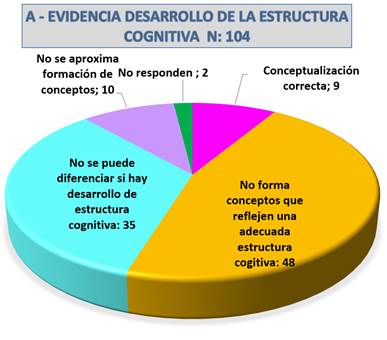
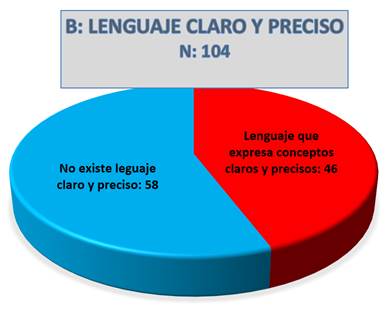
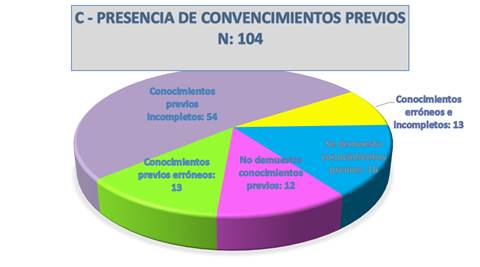
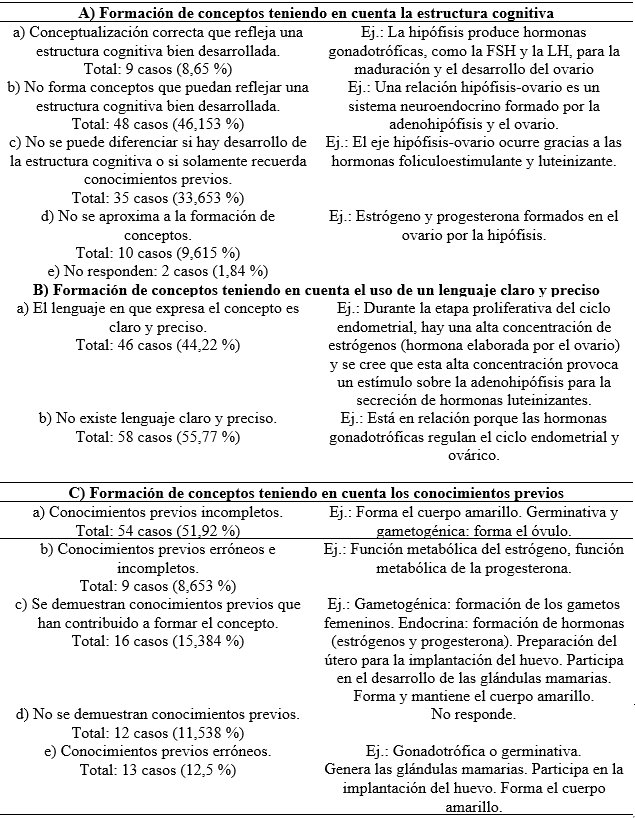
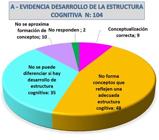
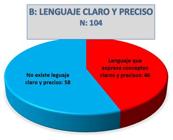
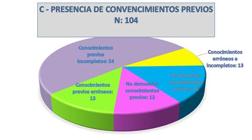
Concepts are essential to organize the variability of the world. 104 students who took a sample subject in 2019. They were presented with a written test, to determine the conceptualization on the subject and infer: a) if the expressions of the students reflect the development of their cognitive structure; b) if the language used is clear and precise, and c) the presence of previous knowledge. Results: A) a) Conceptualization that reflects a well-developed cognitive structure: 9 cases; b) Does not form concepts that can reflect a well-developed cognitive structure: 48 cases; c) It is not possible to differentiate if there is development of the cognitive structure or if it only remembers previous knowledge: 35 cases; d) It does not approach the formation of concepts: 10 cases; e) They do not respond: 2 cases. B) a) The language in which the concept is expressed is clear and precise: 46 cases; b) There is no clear and/or precise language: 58 cases. C) a) Incomplete previous knowledge: 54 cases; b) Erroneous and incomplete previous knowledge: 9 cases; c) Previous knowledge that has contributed to form the concept is demonstrated: 16; d) No prior knowledge is demonstrated; e) Previous erroneous knowledge: 13 cases. This work constitutes a contribution based on analyzes made by Delgado, Arrieta and Camacho (2012), where certain considerations made by Piaget, Vygotsky, and Ausubel are manifested.
Keywords:
cognitive structure; language; prior knowledge
 Thumbnail
 Thumbnail
 Thumbnail