Peer assessment and virtual university education
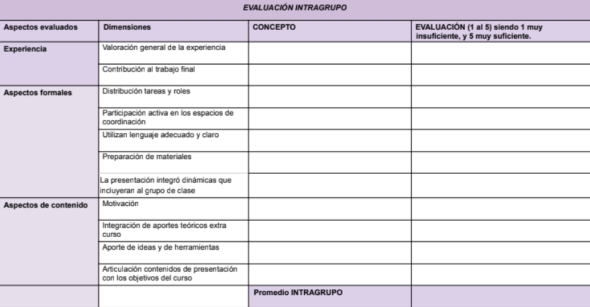
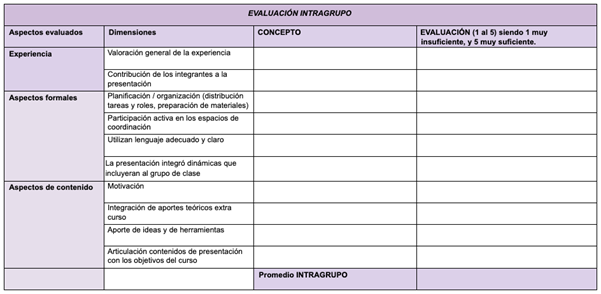
This article aims to systematize an experience of Peer Assessment (PE) carried out within the framework of the Learning Support Program of the Sectoral Commission for Teaching of the University of the Republic of Uruguay. It is presented as an innovative evaluation strategy in Higher Education (HE) within the framework of virtuality. The experience was carried out in the context of the COVID-19 pandemic, which involved a forced adaptation of teaching and learning devices that imposed the incorporation of Information and Communication Technology (ICT) tools into the classroom format. The article proposes a journey that contextualizes the proposal made in the year 2020, integrating the contributions and assessments of the undergraduate students of the Occupational Vocational Guidance Internship of the Faculty of Psychology of the University of the Republic. Where an information survey methodology was used through a semi-structured survey, aiming to have qualitative and quantitative data about the students’ experience. A theoretical and methodological review was carried out that supports this proposal based on the theory of cooperative learning. Likewise, the main results are presented, in terms of challenges and benefits for the student body and teaching team in the teaching and learning processes in virtual contexts, obtaining a positive assessment in the learning process of the student body that completed their pre-professional practice in virtual context of a forced virtuality.
Keywords:
peer assessment; virtual education; higher education