Using neurodidactics for design of a teaching improvement
Neurodidactic offers a valuable tool to guide the design of teaching improvements, analyzing the factors which determine learning from the neurophysiological reality of the subject. That’s why this research aims to evaluate a teaching improvement based on neurodidactic for the third-year pediatric subject of medicine at the Andrés Bello University.
Methodology: Neurodidactic assessment identified the state of attention and biological reward as the weakest factors. To improve them, it was modified the kind of activities, the teaching role and it was incorporated audiovisual material. The quantitative evaluation instruments are related to the ratings and the perception questionnaire for students with a five-level Likert scale. The qualitative results correspond to the emerging categories of the teacher discourse analysis.
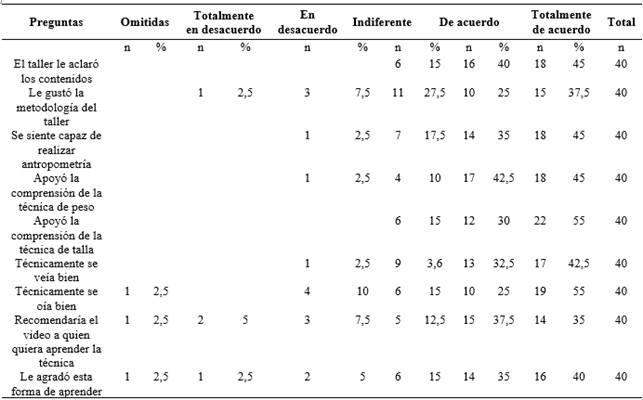
Results: The quantitative results yielded an 89 % correct rating. There was a positive perception of the methodology in 80 % and of the use and quality of the audiovisual tool in 85 %. For the qualitative results, the subcategories attention and work methodology defined the predefined category classroom climate. In addition, another main category emerged defined as teacher emotionality, whose subcategories corresponded to paradigm shift and teaching skills, evaluating positive the students’ content recovery after 18 months.
Conclusion: As a conclusion, neurodidactic assessment is effective for the design of teaching improvements, since it allows selecting and implementing the appropriate activities to achieve well-evaluated innovations and, at the same time, supports the conscious strengthening of teaching skills.
Keywords:
neurodidactic; teacher improvements; assessment