Characterization of the Quality of Work Life and Workplace Stress in Nursing Professionals in Public Hospitals in Ecuador
Abstract:
Introduction: Quality of work life and work-related stress are critical factors to assess among nursing professionals, who are recognized as a group particularly vulnerable to low quality of work life and high stress levels
Objective: To describe the quality of work life and work-related stress among nursing professionals from three public hospitals in Ecuador
Methodology: A quantitative, descriptive, and cross-sectional study was conducted with a stratified random sample of 217 nurses (population: 743). The Quality of Work Life Questionnaire (CVT-GOHISALO) and the Work Stress Evaluation Questionnaire III (Villalobos, 2010) were applied
Results: Quality of work life showed an overall trend toward low levels. Hospital 1 had the highest percentages in the Low category in almost all dimensions except Job Security; Hospitals 2 and 3 showed a similar trend, with better scores in Institutional Support and Job Security. An association was found between stress levels and hospital, with physiological symptoms predominating at very high levels
Conclusions: Variability was evident among hospitals, with a predominance of low quality of work life and high stress levels, especially in Hospital 1, affecting key dimensions such as institutional support, job security, workplace integration, satisfaction, well-being, personal development, and use of free time
Keywords:
quality of life; work; work-related stress; nursing
Resumen:
Introducción: La calidad de vida laboral y el estrés constituyen factores críticos a evaluar en el personal de enfermería, reconocido como un colectivo vulnerable a presentar niveles bajos de calidad de vida en el trabajo y elevados niveles de estrés
Objetivo: Describir la calidad de vida laboral y el estrés en profesionales de enfermería de tres hospitales públicos de Ecuador
Metodología: Estudio cuantitativo, descriptivo y transversal con muestra aleatoria estratificada de 217 enfermeros (población: 743). Se aplicaron el Cuestionario de Calidad de Vida en el Trabajo (GOHISALO) y el Cuestionario de Evaluación del Estrés III (Villalobos, 2010)
Resultados: La calidad de vida laboral mostró tendencia general a niveles bajos. El Hospital 1 presentó los porcentajes más altos en la categoría baja en casi todas las dimensiones, excepto seguridad en el trabajo; en los hospitales 2 y 3 la tendencia fue similar, con mejores puntajes en soporte institucional y seguridad. Se halló asociación entre nivel de estrés y hospital, predominando síntomas fisiológicos en nivel muy alto
Conclusiones: Se evidenció variabilidad entre hospitales, con predominio de niveles bajos de calidad de vida y altos de estrés, especialmente en el Hospital 1, con afectación en dimensiones clave como soporte institucional, seguridad, integración, satisfacción, bienestar, desarrollo personal y administración del tiempo libre
Palabras clave:
calidad de vida; trabajo; estrés laboral; enfermería
Resumo:
Introdução: A qualidade de vida no trabalho e o estresse são fatores críticos a serem avaliados no pessoal de enfermagem, reconhecido como um coletivo vulnerável que apresenta baixos níveis de qualidade de vida no trabalho e níveis elevados de estresse
Objetivo: Descrever a qualidade de vida no trabalho e o estresse em profissionais de enfermagem de três hospitais públicos do Equador
Metodologia: Estudo quantitativo, descritivo e transversal com amostra aleatória estratificada de 217 enfermeiros (população: 743). Foram aplicados o Questionário de Qualidade de Vida no Trabalho (GOHISALO) e o Questionário de Avaliação do Estresse III (Villalobos, 2010)
Resultados: A qualidade de vida no trabalho mostrou tendência geral a níveis baixos. O Hospital 1 apresentou os maiores percentuais na categoria baixa em quase todas as dimensões, exceto segurança no trabalho; nos hospitais 2 e 3 a tendência foi similar, com melhores escores em suporte institucional e segurança. Identificou-se associação entre nível de estresse e hospital, com predominância de sintomas fisiológicos em nível muito alto
Conclusões: Evidenciou-se variabilidade entre os hospitais, com predomínio de níveis baixos de qualidade de vida e altos de estresse, especialmente no Hospital 1, afetando dimensões-chave como suporte institucional, segurança, integração, satisfação, bem-estar, desenvolvimento pessoal e administração do tempo livre
Palavras-chave:
qualidade de vida; trabalho; estresse laboral; enfermagem
Introduction
The changes introduced by the new business and management paradigm in healthcare services have progressively permeated these areas, promoted a flexible restructuring of work environments and established a new political order in labor relations. These transformations shape the organizational structure of healthcare institutions and, consequently, influence aspects such as the modalities and length of the workday, payment, and forms of communication, among others. All these elements directly impact on quality of work life (QWL). 1
Quality of work life, according to González et al., is a multidimensional construct consisting of seven dimensions that, by satisfying needs for institutional support, security and job integration, promote well-being, personal development and adequate management of free time.2 When these factors are assumed as negative, they are associated with high levels of work stress, poor performance and higher costs for organizations.
In the healthcare setting, QWL and work stress are key variables, since professionals such as nurses constitute a group at high risk of presenting low QWL and high levels of stress. 3 Scientific evidence links these conditions with the quality of care, productivity and stability of health services. 4 In this regard, Espinoza et al. reported that 54.4 % of the nurses evaluated had a regular QWL, associated with regular job performance in 53.5 % and deficient in 6.1 % of the cases.5 In relation to work stress, Medrano and Fernández identified a significant inverse association between stress and QWL (p < 0.05), showing that the higher the level of work stress, the lower the QWL. 3
Work stress has been defined by Peiró as the “discrepancy that occurs between the stressors present in the organizational context and the individual, and the individual’s need to eliminate such discrepancy”. 6 In nursing, this discrepancy is linked to the complex health context, in which organizational and environmental factors converge, generating work pressures, role conflicts and communication deficiencies, conditioned by the characteristics and organization of health systems. In this regard, Calderón Izaguirre and colleagues indicated that the main work-related stress factors in nurses at a surgical center were work overload (78.6%), an unhealthy organizational climate (64.3%), pressure, demand, and content of tasks along with excessive supervision and control (74.3%), and a demanding work pace (54.3%). 7
The appearance of work-related stress can occur through physiological reactions (e.g., increased blood pressure), emotional reactions (anxiety), cognitive reactions (forgetfulness), and behavioral reactions (increased substance use). When these responses become chronic, they can lead to mental, physical, and immunological disorders, promoting the development of illness and increasing the risk of absenteeism and work disability. 8 Dapper et al. evaluated the level of stress in operating room nursing professionals and found that the predominant symptoms were psychological (60.9 %), followed by physical symptoms (26.1 %), with a greater presence of symptoms seen in women. 9
Ecuador has not been immune to changes in its health systems, driven by legal reforms that have generated inequalities and made the working conditions of health personnel more complex. These changes have negatively impacted the work environment of nurses, affecting their QWL and increasing the risk of stress. The main changes include the extension of the workday, salaries frozen for more than ten years without overtime or night shift pay, a lack of promotion opportunities, and diverse hiring systems that fail to guarantee labor rights or stability. 10 The International Labor Organization (ILO) has highlighted this deterioration in the working conditions of nurses in Ecuador. 11
This study evaluates the perceptions of QWL and work-related stress among nursing professionals at three public hospitals in Ecuador, providing empirical data that can serve as a basis for health, labor, union, and academic authorities to design strategies aimed at improving the work environment, promoting QWL, and preventing stress.
Materials and Methods
This is a study performed with a non-experimental design, but with a quantitative, descriptive and cross-sectional approach, carried out in three hospitals of the public health network of the city of Quito, Ecuador. The research had ethical permissions from the Scientific Committee of the School of Nursing and the Ethics, Bioethics and Biosafety Committee of the Vice-Rector’s Office for Research and Development of the University of Concepción, Chile, as well as from the Committee for Research in Human Beings or CEISH-UCE, Ecuador. The corresponding authorizations were processed at each of the participating institutions. The professionals included in the sample were informed about the objectives of the study, and once they agreed to participate, they signed the informed consent form, also indicating the possibility of withdrawing from the study at any time.
The study population consisted of 743 nurses from three public hospitals, Hospital 1 (H1), Hospital 2 (H2), and Hospital 3 (H3). These centers were selected because they are public health units that serve diverse population groups, have a large number of nursing professionals, and have no previous studies on QWL and work-related stress in this group. Hospital 1, a secondary care center, offers outpatient, specialized, and inpatient services for pediatric and adult populations, in 4 specialties and 33 subspecialties. Hospital 2, a tertiary care center, primarily serves the maternal and neonatal population, with specialized outpatient and inpatient services, and addresses highly complex health problems. Hospital 3, also a tertiary care center, provides specialized clinical and surgical care to the pediatric population, with outpatient and inpatient services in 35 subspecialties. The three hospitals are national referral centers.
The sample size obtained from the population was estimated with a confidence level of 95% and a maximum admissible error of ±5 %, resulting in a minimum sample size of 254 people. For the estimation, an expected proportion of 50% was considered, in order to maximize the sample size in the absence of previous history.
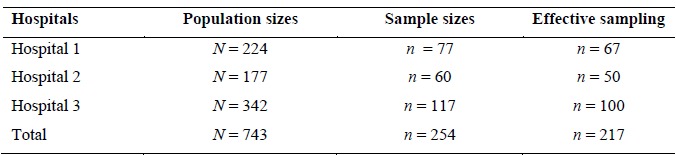
The sampling design was carried out in three stages, following the following route: Stratified-stratified and, finally, systematic. In the first stage, the total population was divided into three stages, one for each public hospital participating in the study. In the second stage (stratification by unit), three types of units were identified: Critical care areas, inpatient units, and outpatient units. Each unit was considered a sub-stage, which was applied to proportional allocations. Finally, the third stage included the acquisition of a systematic sample from the alphabetical lists of nurses by unit and hospital, which allowed for a homogeneous sweep to safeguard the representativeness of the sample. Randomization was performed by generating random numbers from the list of individuals in the population, both within the hospital and within the unit. Proportional allocations were made for each sub-stage. Furthermore, the stratification and systematization method helped maintain the representativeness of the sample and reduce potential biases resulting from the sampling structure. Table 1 shows the distribution of cases and total, where the actual participation of personnel was n = 217 (response rate of 85.4 %).
For data collection, three instruments were applied in each hospital, with the support of the nursing assistant directors, who coordinated with the nurse leaders and direct care personnel to invite them to participate in the study. Data collection took place during the COVID-19 pandemic, always ensuring compliance with the corresponding health measures.
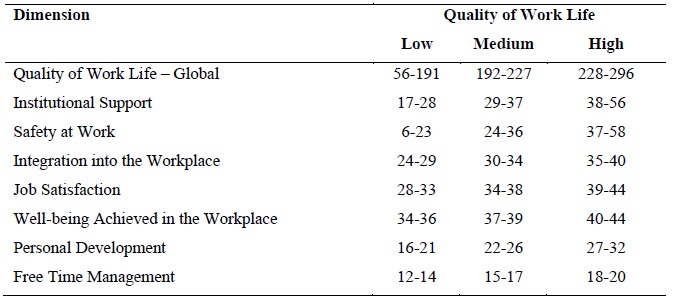
Subsequently, between June and November 2021, the main researcher applied the instruments in the following order: First, a questionnaire of sociodemographic and occupational variables to explore the biosociodemographic and occupational background of the nurses; second, the “CVT-GOHISALO” questionnaire, developed by González, Hidalgo, Salazar and Preciado, validated in physicians and nurses in Mexico with a Cronbach’s alpha of 0.9527. 12 This instrument consists of 74 items distributed across seven dimensions: Institutional Support for Work, Job Security, Job Integration, Job Satisfaction, Well-being Achieved through Work, Personal Development, and Free Time Management. The dimensions can be assessed independently and are rated using a Likert-type scale from 0 (worst) to 4 (best). The results allow interpreting the level of satisfaction by grouping the items by dimension, establishing scores for low, medium, and high satisfaction, as reported by the authors of the instrument. T2
The CVT-GOHISALO Questionnaire establishes a pattern of multiple interactions between the individual and their environment, where three levels can be combined: The individual level, the individual level with the work relationship, and the individual level with the main groups with which they interact. The first level includes those aspects related to the worker’s private or public life, which, although not part of their work environment, have a significant influence, as they are not stuck behaviors. The dimensions identified in this level are the worker’s Personal Development and Free Time Management, with aspects ranging from achievements, expectations for improved living standards, personal recognition, coexistence and family care, among others.12
The second level relates to the individual and their immediate relationship with work, as well as the relationship between the worker and other members of the workforce, forming a central factor in personal and organizational health. The dimensions that, as a whole, reflect these conditions are: Job Satisfaction and Well-being Achieved Through Work. Both dimensions refer to the environment where most work interactions occur, where people contribute their time, skills, abilities, and attitude in a microclimate and, at the same time, provide feedback on what they contribute to others, forming a system of expectations that is where the organizational culture and climate are reflected.
Moreover, on a third level, the dimensions that address this aspect are more related to the object of work itself, that is, the one that makes up a particularly important environment in terms of Institutional Support for work, Job Security, and Integration into the Workplace, dimensions that are themselves identified in the instrument.
The third instrument was the Stress Assessment Questionnaire, Third Edition, 2010. This instrument assesses symptoms revealing the presence of stress reactions, with 31 items grouped into 4 dimensions: Physiological symptoms (8 questions); social-behavioral symptoms (4 questions); intellectual and occupational symptoms (10 questions); and psychoemotional symptoms (9 questions). It is a Likert-type response scale with response options such as always, usually, sometimes, and never. The results are interpreted as very low, low, high, and very high stress levels. It has been validated with a Cronbach’s alpha of 0.889. 13 For interpretation, this scale includes a score with values ranging from 0 to 9. These values are used to estimate the raw score for the questionnaire. Once the scores are obtained, they must be transformed by comparing them with the corresponding scales, identifying the level of stress they represent. Each level has the following interpretations:
-
- Very low: The absence of stress symptoms or a very rare occurrence that does not require intervention, but rather programs to keep the frequency of symptoms low.
-
- Low: The frequency of stress symptoms is low, with minimal impact on health. Interventions are appropriate to keep stress symptoms low.
-
- Medium: Presence of moderate stress, which requires interventions for the most frequent and critical symptoms to prevent adverse health effects. It is recommended to identify psychosocial risk factors within and outside of work that may be related to the indicated effects.
-
- High: The number and frequency of symptoms indicate a high stress response. Epidemiological surveillance of the most frequent and critical symptoms is necessary. It is necessary to identify psychosocial risk factors, both within and outside the workplace, which may be related to the aforementioned effects.
-
- Very High: The number of symptoms and their frequency of occurrence demonstrate a severe and detrimental health stress response. Epidemiological surveillance is necessary; it is urgent to identify psychosocial risk factors within and outside the workplace that may be related to the aforementioned effects.
In this research, all the steps described by the authors of the scale were followed, starting with the application of the instrument. Subsequently, the results were scored and interpreted: The items were scored, the raw score was obtained, this score was transformed, compared with the total score transformed using the scale tables, and the stress level and symptoms were interpreted. In this study, the CVT-GOHISALO and Stress III Edition 2010 Questionnaires were submitted to pilot testing, obtaining a Cronbach’s Alpha of 0.969 and 0.912 respectively. A descriptive analysis of the data was performed with estimation of frequencies and percentages, measures of central tendency and variability (mean, mode, median), minimum and maximum ranges, standard deviation, and χ2 (Chi-square) association measures. Statistical calculations were performed using Jamovi (2023), v. 2.4.
Results
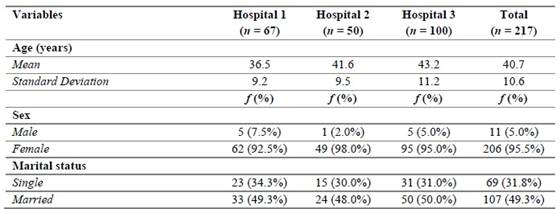
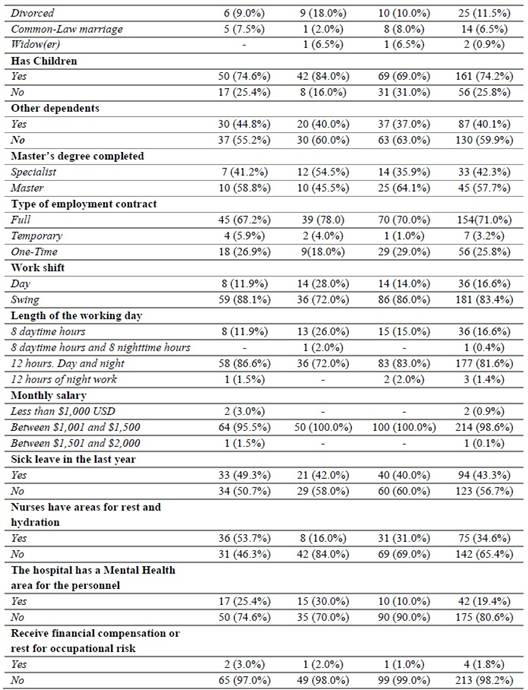
The results of the study showed that 95.5 % of the respondents (n = 62) were women, with a mean age of 40.7 years (SD = 10.6). Regarding marital status, 49.3 % were married (n = 107), 74.2 % reported having children (n = 161), and 40.1 % had other dependents (n= 87). Regarding employment variables, 57.7 % (n= 45) had postgraduate studies, with a predominance of Master’s degrees. Regarding contract type, 29 % (one-time 25.8 %, n= 56; temporary 3.2 %, n = 7) worked under a contract other than full; 83.4 % (n= 181) worked on a swing shift. The duration of the majority of the workdays was 12 hours during the day and 12 hours at night in the three healthcare institutions, with percentages exceeding 70 %. Regarding payment, 98.6 % (n = 214) received a salary ranging from $1,001 to $1,500 dollars per month. 43.3 % (n = 94) reported some absence due to illness during the last year. Regarding whether there was a rest and hydration area, 65.4 % (n = 142) indicated that there was no such area. 80.6 % (n = 175) indicated that there was no mental health area, and 98.2 % (n= 213) indicated that they did not receive financial compensation or time off due to occupational hazards. T3 .
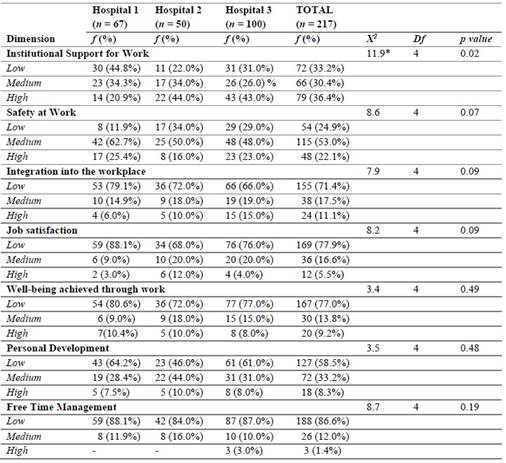
Table 4 shows the behavior of QWL for each of the dimensions and by hospital, for the total sample and distributed by hospital. In the Institutional Support dimension, high levels predominate in H2 (44 %, n = 22) and H3 (43 %, n = 43) and low levels in H1 (44.8 %, n = 30), with statistically significant differences (χ² (4) = 11.9, p = 0.02). In the Workplace Safety dimension, the medium level predominated in all three hospitals in H1 (62.7 %, n= 42) and H2 (50 %, n= 25), and was relatively higher in H3 (48.0 %, n= 48), but with no significant association (χ² (4 )= 8.6, p = .07).
In the remaining dimensions, a greater presence of low levels has been identified for the three hospitals, that is: Integration into the Workplace (H1, 79.1 %, n =53; H2, 72.0 %, n =36; H3, 71.4 %, n =155, χ²(4) = 7.9, p =.09); Job Satisfaction (H1, 88.1 %, n =59; H2, 68.0 %, n =34; H3, 76.0 %, n =76, χ²(4) = 8.2, p =.09); Well-being Achieved Through Work (H1, 80.6 %, n =54; H2, 72.0 %, n =36; H3, 77.0 %, n =77, χ²(4) = 3.4, p =.49); Personal Development (H1, 64.2 %, n =43; H2, 46 %, n =23; H3, 61.0 %, n =61, χ²(4) = 3.5, p =.48); and Free Time Management (H1, 88.1 %, n =59; H2, 84 %, n =42; H3, 87.0 %, n =87, χ²(4) = 8.7, p =.19). For these cases, no significant variations in the percentages were recorded, which can be explained as a random occurrence.
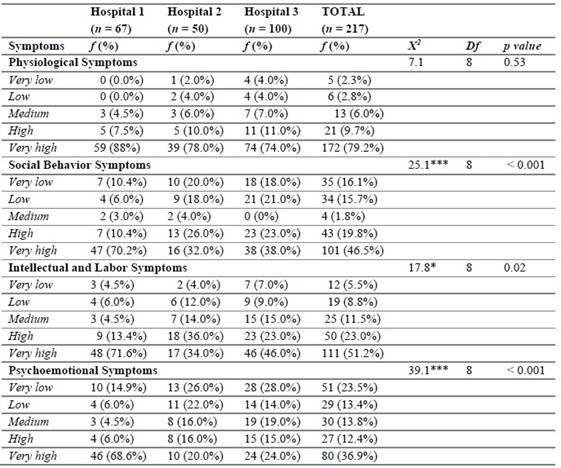
Data in Table 5 report percentage distributions according to physiological, social behavioral, intellectual/work-related, and psychoemotional stress symptoms. Inferences were made using the chi-square test, with its corresponding p value. Overall, differences in distributions were found. Indeed, such differences did not occur in the physiological symptoms of stress dimension (χ2= 7.1, df= 8, p <.53), while they appeared for social-behavioral symptoms of stress (χ2= 25.1, df= 8, p <.001), intellectual and occupational symptoms (χ2= 17.8, df= 8, p <.02), and psycho-emotional symptoms (χ2= 39.1, df= 8, p <.001). However, despite the p-value, the evidence suggests that the differences seen between hospitals may be attributable to chance.
Regarding physiological symptoms, the three hospitals showed a distribution with narrow percentage margins ranging from 74.0 to 88.0 %. Regarding social behavioral symptoms of stress, H1 had a high number of workers with very high levels (70.2 %), H2 had a lower rate of 32.0 %, and H3 had a lower rate of 38.0 %, with the percentage being more evenly distributed across the samples. For intellectual symptoms, H1 has a high majority in very high stress (71.6 %), but in H2 it is distributed between high and very high 36.0 % and 34.0 % respectively (70.0 %) and 23.0 % and 46.0% in H3. In psychoemotional symptoms of stress, H1 has 68.6 % concentrating on very high, while 36 % in H2 presented symptoms between high and very high, and 49 % in H3 (high and very high).
Discussion
The present study is one of the first approaches in the context of Ecuadorian public health related to QWL and work-related stress in professional nursing, professionals recognized by the WHO as the backbone of health services.14
Among the findings of this research, one of the most significant was that 29 % of nurses were employed under temporary or one-time contracts, considered atypical forms of employment as they differ from full contracts and are associated with job insecurity and instability. The literature indicates that job stability influences both job satisfaction and organizational commitment among the personnel, which is considered a key factor for QWL.15-17 However, the processes of globalization and labor flexibility have negatively impacted this stability and the quality of employment, promoting low wages and new contractual forms.18 These transformations have fostered precariousness, with restrictive employment relationships that generate perceptions of low quality of life, dissatisfaction, and stress. This context also affects health services in Ecuador, where nurses have moved from full contracts to flexible and temporary arrangements, exposing them to turnover, layoffs, insecurity in their working conditions, uncertainty, and loss of contractual rights.12 Full contract, in contrast, guarantees stability, monthly payments, social security, possibility of promotions and accumulation of experience, aspects that can also affect the quality of care provided.
In relation to the work shift, the majority of nurses (83.4 %) work in swing shifts, a result similar to that reported by Dos Santos Ribeiro and collaborators in a hospital in Brazil, where 41 % of the nursing personnel worked under this system.15 Health services require atypical working arrangements that ensure continuous coverage of jobs.19 Evidence indicates that shift work can have both organizational and staff health repercussions, by altering biological rhythms and increasing the risk of neuropsychological disorders, cardiovascular and gastrointestinal diseases. 20 Furthermore, shift work impacts the social and family life of nurses and can compromise the quality of care. Salas and collaborators observed that long work shifts alter circadian rhythms, deteriorate sleep quality, generate stress and are associated with deficiencies in the quality of care. 20 Thus, both the number of hours and their distribution influence QWL and stress. In this study, in addition to the daytime or swing shift system, the length of the workday stands out: 81.4 % of the personnel work shifts comprised of 12 hours in the day and 12 hours at night.
Regarding the QWL by hospital and by dimension, the results show a predominance of the Low category in the three hospitals, except in Hospital 1, where the Workplace Safety dimension reached a medium level. In Hospitals 2 and 3, the Institutional Support dimension presented a high level, and Work Safety a medium level. A previous study in Ecuador, performed by Cedeño Tapia and collaborators, found similar results for the dimension Safety at work (medium level), although divergent in Institutional Support, which presented a low level there, compared to the high level seen in Hospitals 2 and 3 of the present study. (21
These results show areas for improvement in all dimensions of QWL in Hospital 1 and in six dimensions in Hospitals 2 and 3. The low level reflects dissatisfaction among nursing personnel due to the lack of essential elements for performance, and even though some dimensions reached a medium level, limitations persist in achieving good QWL. These differences could be linked to the specific characteristics of each unit, which affect the QWL of the personnel. 22 Hospital 1, for example, is a national referral unit with high demand and high complexity, which provides specialty and subspecialty care to pediatric and adult populations throughout the country. Regarding the Institutional Support dimension, which shows significant differences between Hospital 1 and Hospitals 2 and 3, the results reflect different forms of institutional management, despite belonging to the same health system. Nurses at Hospital 1 perceive low institutional support, which generates dissatisfaction due to inadequate supervision, little support from superiors, limited opportunities for professional and personal development, few opportunities to express opinions, and restrictions on promotion. 23
Opportunities for improvement in this dimension are fundamental, since they are directly related to job satisfaction and contribute to personnel retention in institutions. Evidence indicates that dissatisfaction favors absenteeism, lateness, and resignations without apparent cause, while job satisfaction promotes commitment, loyalty, permanence, and better personnel performance. 24 In this regard, Al-Dossary’s study on the relationship between QWL, organizational loyalty, and job performance in hospitals in Saudi Arabia showed statistically significant differences between nurse managers and ward nurses. 24 The former presented high levels of QWL, loyalty and performance, while the latter showed low levels in these aspects. According to the author, these differences are associated with the lower workload of direct patient care and the higher salaries received by nurse managers compared to direct care personnel.
In addition, Poku et al. analyzed QWL and intention to leave the job in nursing professionals in Ghana, finding that general well-being, control, and job satisfaction, along with working conditions and stress at work, were significant predictors of turnover intention (p = 0,05). 25
In this context, an example of an intervention with positive results in improving institutional support is the experimental study on QWL carried out by Arguelles et al. 26 In this study, strategies such as an organizational integration course, the development of a procedures manual, and an employee recognition program were implemented, which allowed satisfaction with institutional support to increase from 24 % to 49 %.
Occupational safety represents another essential dimension. The WHO has urged governments and health authorities to address persistent threats to the health and safety of health workers by implementing measures that protect their mental health and safeguard them from physical and biological risks. 27,28 Occupational safety strengthens the bond between nursing personnel and the institution and creates a safe and healthy work environment, in which risks that could cause accidents and occupational diseases are identified, evaluated and controlled. From a negative perspective, the absence of these conditions is reflected in lower levels of satisfaction with QWL, as seen in this study, where personnel reported low and medium levels in this dimension. This situation highlights a complex labor context, conditioned by sustained cuts in investment in public health (from $353 million USD in 2017 to $302 million USD in 2018 and $186 million USD in 2019, remaining at similar figures to date). 29 ILO has noted that this reduction has affected the availability of necessary supplies and equipment, which is a recurring problem in Ecuador and prevents health personnel from having adequate resources to carry out their work. 12 ILO also reports that the working conditions of health personnel in Ecuador have been affected by instability, work overload, layoffs and salary reductions, a situation in which 69.1 % of the nurses have reported that they perceive there is no job security. These conditions contribute to dissatisfaction with job security and reflect a heterogeneous panorama in Latin America, linked to the quantity, quality and efficiency of health services.30 Regarding payment, the same Organization reported that the income of health personnel in Ecuador is concentrated below two minimum living wages (USD $800), with a downward trend since 2018, and that only 68 % have a full contract. 16 Added to this is the increase in monthly working hours from 120 to 160 hours, without the right to compensation for overtime or night hours. (11 This situation highlights the need to implement policies for the payment of overtime and night hours, as well as job reclassification processes, which nurses currently do not have access to.
As a whole, these factors have made the working conditions of nurses in Ecuador more precarious, deteriorating their QWL, a situation that intensified during the pandemic. This scenario directly affects safety at work, an aspect that the WHO recognizes as an essential component to guarantee both the safety of health workers and the proper operation of health systems and the safety of patients. 31
Therefore, promoting a safe and healthy work environment for nurses, as a fundamental principle and right, is essential, given that adverse work environments increase the risk of accidents and occupational diseases, with an impact on mortality and high associated costs. It is estimated that around 3 million people die annually from work-related causes. 32 This situation is also evident in Ecuador, that is, between 2010 and 2015, the registration of occupational accidents and diseases showed an upward trend, which was reduced between 2016 and 2019, which fell again in 2020 due to the context of the pandemic, although with underreporting that limits the specific understanding of the situation in the health sector. 33 In 2023, the Ecuadorian Social Security Institute reported 20,597 occupational accidents, of which 50.6% occurred in the workplace, with the health sector being one of the most affected, although significant underreporting in occupational health persists. 34
The information indicates that occupational safety protects the health of nurses and promotes their performance, minimizing the occurrence of harm and risks, as stated by the International Council of Nurses. 35 Given the average levels of occupational safety reported by nurses in this study, it is necessary for the Ministry of Labor, the Ministry of Public Health, the nurse’s guild and academia to conduct a joint analysis to establish comprehensive regulatory frameworks that guarantee the labor rights of nursing personnel. These frameworks shall ensure that, regardless of the type of contractual relationship, the fundamental rights enshrined in Article 326, paragraph 5, of the Ecuadorian Constitution are respected: “Everyone shall have the right to carry out their work in an adequate and favorable environment that guarantees their health, integrity, safety, hygiene, and well-being” 36 in Article 23 of the LOSEP (Organic Law of Public Service), 11 including conditions such as adequate wages, reduced working hours, accident prevention, risk control, and be sensitive to psychosocial risks.
Regarding work-related stress, the results show significant differences between hospitals, where Hospital 1 showed the highest levels in all four dimensions of stress symptoms. This finding is consistent with the low QWL reported by nurses working in this hospital, characterized by deficiencies in institutional support, safety, and job satisfaction, which are essential components for creating an adequate work environment that prevents stress. Among the symptoms, physiological symptoms were the most frequent, a result that matches the results reported by Sarsosa-Prowesk et al. in their study on work-related stress in healthcare personnel at four Level III healthcare institutions in Cali, Colombia, where a very high stress level was found. 37 This level indicates the frequent and intense presence of symptoms that constitute a severe and harmful stress response, including neck and back pain, muscle tension, and gastrointestinal disorders, among others.
Given the presence of very high physiological symptoms reported by nurses, it is a priority to implement actions from an epidemiological surveillance perspective and early intervention strategies, since their persistence can trigger cardiovascular, myocardial, gastrointestinal, neurological, musculoskeletal and autoimmune diseases. 38 Several studies estimate that between 10 % and 40 % of workers present work-related stress and, as a consequence, have a higher risk of developing cardiovascular diseases. 39 This risk can be reduced by reducing exposure to high-stress work environments, the imbalance between effort and reward, sedentary work, long shifts and harmful physical and chemical exposures.
According to Müllen, hospitals are “one of the most stressful workplaces”, where nurses face multiple organizational, psychological, and social stressors on a daily basis. 40 This situation is reflected in the findings of the present study, which show very high levels of stress associated with low and medium levels of QWL, characterized by demotivation, unmet basic needs, and limited opportunities for self-realization. Nurses attribute this situation to inadequate working conditions, increased workload, loss of job security, lack of supplies, low wages, and a shortage of professional nursing personnel, all factors linked to work-related stress.
These are modifiable conditions that require coordinated efforts between government authorities and health institutions to implement compensation systems that improve the perception of satisfaction of nursing personnel with their QWL, prevent stress and, consequently, contribute to raising the quality of care provided to patients.
Limitations
It should be noted that the COVID-19 pandemic was a major limitation, as it halted the development of the research for more than a year, and data collection was conducted during the pandemic. Given the circumstances under which the data was collected, even during the pandemic, the results must be handled with great caution.
Likewise, the delay in the processing of the Ethics Committees of Chile and Ecuador, with their differences, such as informed consent and the respective evaluation periods, which meant prolongation and delay for the progress of the study, also influenced by the extraordinary experience that was being lived.
Conclusion
The study shows the impact that QWL has on nurses in the three hospitals, where a low level prevails in 6 of the 7 dimensions of QWL for Hospital 1, and in 5 of the 7 dimensions for Hospitals 2 and 3. Regarding work stress, in the 4 dimensions for Hospital 1, the very high level predominated, while for Hospitals 2 and 3 the levels ranged between high and very high, except for psychoemotional symptoms where the level was low.
The results raise the need for urgent interventions to improve QWL and reduce work-related stress levels among nurses in the three hospitals. In this regard, this study provides a baseline capable of supporting the development of these interventions, focusing on improving QWL and preventing stress. This requires improving physical, psychological, and contractual working conditions by controlling risks and general workplace characteristics, raising awareness and training nurses in health promotion and prevention, and developing epidemiological surveillance processes, given the very high levels of stress found through medical examinations, risk factor monitoring, and case management in the presence of cardiovascular disorders in nurses. These measures can impact their health, the quality of care, and the costs associated with occupational accidents and diseases.
References
-
1. Quintana P. Impacto de las reformas del sector de la salud sobre los recursos humanos y la gestión laboral. Rev Panam Salud Pública (Internet). 2000 (citado 2025 jun 16);8(1-2):43-54. Disponible en: Disponible en: https://www.scielosp.org/pdf/rpsp/2000.v8n1-2/43-54/es
» https://www.scielosp.org/pdf/rpsp/2000.v8n1-2/43-54/es -
2. González Baltazar R, Hidalgo Santacruz G, Salazar Estrada JG, Preciado Serrano M de L. Elaboración y validación del instrumento para medir calidad de vida en el trabajo “CVT_GOHISALO”. Cienc Trab (Internet). 2010 (citado 2025 jun 14);12(36):332-340. Disponible en: Disponible en: https://fiso-web.org/articulos-profesionales/3089.pdf
» https://fiso-web.org/articulos-profesionales/3089.pdf -
3. Collana Medrano GE, Cardenas de Fernández MH. Estrés y Calidad de Vida Laboral del personal de Enfermería del Hospital de Vitarte, Lima. Ciencia Latina Revista Cientifica Multidisciplinar (Internet) 2023 (citado 2025 jun 14);7(6):7158-7171. doi: 10.37811/cl_rcm.v7i6.9250
» https://doi.org/10.37811/cl_rcm.v7i6.9250 -
4. Javanmardnejad S, Bandari R, Heravi-Karimooi M, Rejeh N, Sharif Nia H, Montazeri A. Happiness, quality of working life, and job satisfaction among nurses working in amergency departments in Iran. Health Qual Life Outcomes (Internet). 2021 (citado 2025 jun 14); 19:112. doi: 10.1186/s12955-021-01755-3
» https://doi.org/10.1186/s12955-021-01755-3 -
5. Espinoza EMM, Quiroz NMF, Rivera FFL, Galarza CRC, Fierro YEC, Bernal LRV, et al. Calidad de vida laboral y desempeño del personal en un Hospital Materno Infantil de Perú. Vive Rev Salud (Internet). 2023 (citado 2024 jun 22):6(16):129-141. doi: 10.33996/revistavive.v6i16.212
» https://doi.org/10.33996/revistavive.v6i16.212 -
6. Merin Reig J, Cano Vindel A, Miguel Tobal JJ. El estrés laboral: bases teóricas y marco de intervención. Ansiedad y Estrés (Internet). 1995 (citado 2025 jun 14);1(2-3):113-130. Disponible en: Disponible en: https://www.ansiedadyestres.es/sites/default/files/rev/ucm/1995/anyes1995a9.pdf
» https://www.ansiedadyestres.es/sites/default/files/rev/ucm/1995/anyes1995a9.pdf -
7. Calderón Izaguirre GK, Rivas Díaz LH, Calderón Izaguirre GK, Rivas Díaz LH. Factores laborales y nivel de estrés en enfermeras de centro quirúrgico. Rev Cuba Enferm (Internet). 2021 (citado 2025 jun 12);37(4):e4143. Disponible en: Disponible en: http://scielo.sld.cu/pdf/enf/v37n4/1561-2961-enf-37-04-e4143.pdf
» http://scielo.sld.cu/pdf/enf/v37n4/1561-2961-enf-37-04-e4143.pdf -
8. Organización Mundial de la Salud (OMS). Sensibilizando sobre el estrés laboral en los países en desarrollo: un riesgo moderno en un ambiente tradicional de trabajo: consejos para empleadores y representantes de los trabajadores (Internet). 2008 (citado 2025 jun 14). Disponible en: Disponible en: https://www.who.int/es/publications/i/item/924159165X
» https://www.who.int/es/publications/i/item/924159165X -
9. Dapper AS dos S, Barros JP, Mariot MDM, Cicolella D de A, Estresse: uma realidade vivenciada pelos colaboradores de enfermagem no centro cirúrgico REAS (Internet). 2021 (citado 2024 jun 13);13(4):e6918. doi: 10.25248/REAS.e6918.2021
» https://doi.org/10.25248/REAS.e6918.2021 -
10. Ecuador. Ley Orgánica del Servicio Público (LOSEP). Lexis SA, 2010 (citado 2025 jun 12). Disponible en: Disponible en: https://www.oas.org/juridico/pdfs/mesicic5_ecu_ane_mdt_4.3_ley_org_ser_p%C3%BAb.pdf
» https://www.oas.org/juridico/pdfs/mesicic5_ecu_ane_mdt_4.3_ley_org_ser_p%C3%BAb.pdf -
11. Organización Internacional del Trabajo. Trabajadores de la salud en Ecuador: condiciones de empleo, salud y seguridad en el trabajo (Internet). 2022 (citado 2025 jun 12). Disponible en: Disponible en: https://www.ilo.org/es/publications/trabajadores-de-la-salud-en-ecuador-condiciones-de-empleo-salud-y-seguridad
» https://www.ilo.org/es/publications/trabajadores-de-la-salud-en-ecuador-condiciones-de-empleo-salud-y-seguridad -
12. Pando Moreno M, González Baltazar R, Aranda Beltran C, Elizalde Núñez F. Fiabilidad y validez factorial del instrumento para medir calidad de vida en el trabajo “CVT-GOHISALO” (versión breve). Salud Uninorte (Internet). 2018 (citado 2025 jun 12);34(1):68-75. Disponible en: Disponible en: https://www.redalyc.org/journal/817/81759538007/html/
» https://www.redalyc.org/journal/817/81759538007/html/ -
13. Ministerio de Protección Social. Batería-instrumentos para la evaluación de factores de riesgo psicosocial (Internet). 2010 (citado 2025 jun 13). Disponible en: Disponible en: https://posipedia.com.co/wp-content/uploads/2019/08/bateria-instrumento-evaluacion-factores-riesgo-psicosocial.pdf
» https://posipedia.com.co/wp-content/uploads/2019/08/bateria-instrumento-evaluacion-factores-riesgo-psicosocial.pdf -
14. Organización Panamericana de la Salud. La importancia estratégica de la inversión nacional en los profesionales de enfermería en la Región de las Américas (Internet). 2022 (citado 2025 jun 12). Disponible en: Disponible en: https://iris.paho.org/bitstream/handle/10665.2/56055/OPSHSSHR220012_spa.pdf?sequence=1&isAllowed=y
» https://iris.paho.org/bitstream/handle/10665.2/56055/OPSHSSHR220012_spa.pdf?sequence=1&isAllowed=y -
15. Dos Santos Ribeiro E, Vieira da Silva EK, de Albuquerque Jatobá L, Nogueira Andrade W, Nogueira Miranda L, dos Santos Ribeiro E, et al. Calidad de vida en el trabajo de enfermeros de instituciones hospitalarias de la red pública. Enferm Glob. (Internet). 2021 (citado 2025 jun 12);20(63):461-501. doi: 10.6018/eglobal.456911
» https://doi.org/10.6018/eglobal.456911 -
16. Aguilar-Hernández P, Acosta-Tzin J, Raudales-García E, Andino-González P, Sarmiento-Matute R. Factores de influencia en la calidad de vida laboral. Revista de Estudios Interdisciplinarios en Ciencias Sociales (Internet). 2023 (citado 2025 jun 13):25(3):638-656. doi: 10.36390/telos253.06
» https://doi.org/10.36390/telos253.06 -
17. Gómez Vélez M. Sobre la flexibilidad laboral en Colombia y la precarización del empleo. Diversitas: Perspectivas en Psicología (Internet). 2025 (citado 2025 jun 15);(2):43-64. Disponible en: Disponible en: http://www.scielo.org.co/scielo.php?script=sci_abstract&pid=S1794-99982014000100008&lng=en&nrm=iso&tlng=es
» http://www.scielo.org.co/scielo.php?script=sci_abstract&pid=S1794-99982014000100008&lng=en&nrm=iso&tlng=es -
18. Vásquez-Yañez J, Guzmán-Muñoz E, Vásquez-Yañez J, Guzmán-Muñoz E. Calidad de vida, Burnout e indicadores de salud en enfermeras/os que trabajan con turnos rotativos. Univ Salud (Internet). 2021 (citado 2025 jun 13);23(3):240-247. doi: 10.22267/rus.212303.237
» https://doi.org/10.22267/rus.212303.237 -
19. Sánchez-Sellero MC. Impacto del trabajo a turnos sobre la salud y la satisfacción laboral de los trabajadores en España. Soc. Estado (Internet). 2021 (citado 2025 jun 15);36(01):109-131. doi: 10.1590/s0102-6992-202136010006
» https://doi.org/10.1590/s0102-6992-202136010006 -
20. Salas Marco E, illamor Ordozgoiti A, Zabalegui A, Salas Marco E, Villamor Ordozgoiti A, Zabalegui A. Condicionantes de calidad de los cuidados enfermeros durante el turno de noche. Rev Cuba Enferm (Internet). 2022 (citado 2025 jun 15);38(1):e4047. Disponible en: Disponible en: http://scielo.sld.cu/scielo.php?script=sci_abstract&pid=S0864-03192022000100015&lng=es&nrm=iso&tlng=es
» http://scielo.sld.cu/scielo.php?script=sci_abstract&pid=S0864-03192022000100015&lng=es&nrm=iso&tlng=es -
21. Cedeño Tapia S, Zegarra-Lima S, Loza Sosa JM. Dimensiones de la calidad de vida en el trabajo de la Enfermería ecuatoriana. Rev Cubana Enferm (Internet). 2024 (citado 2025 jun 15);40:e6164. Disponible en: Disponible en: https://revenfermeria.sld.cu/index.php/enf/article/view/6164
» https://revenfermeria.sld.cu/index.php/enf/article/view/6164 -
22. Salazar GL, Melo AYP, Hernández HML. Calidad de Vida en el Trabajo: Un Modelo de Desarrollo Organizacional en una Empresa Comercial. Cienc Lat Rev Científica Multidiscip (Internet). 2022 (citado 2025 jun 12);6(4):4750-4768. doi: 10.37811/cl_rcm.v6i4.2974
» https://doi.org/10.37811/cl_rcm.v6i4.2974 -
23. Díaz D. Calidad de vida objetiva y la satisfacción del personal de un centro de investigación. Análisis percepcional. Estrateg Gest Univ (Internet). 2024 (citado 2025 jun 16);12(0):153-175. doi: 10.5281/zenodo.10651593
» https://doi.org/10.5281/zenodo.10651593 -
24. Al-Dossary RN. The Relationship Between Nurses’ Quality of Work-Life on Organizational Loyalty and Job Performance in Saudi Arabian Hospitals: A Cross-Sectional Study. Front Public Health. (Internet). 2022 (citado 2025 jun 15);10:918492. doi: 10.3389/fpubh.2022.918492
» https://doi.org/10.3389/fpubh.2022.918492 -
25. Poku CA, Donkor E, Naab F. Impacts of Nursing Work Environment on Turnover Intentions: The Mediating Role of Burnout in Ghana. Nurs Res Pract. (Internet). 2022 (citado 2025 jun 15);2022:1310508. doi: 10.1155/2022/1310508
» https://doi.org/10.1155/2022/1310508 -
26. Arguelles Ma L, García RAQ, Maldonado JAS, Fajardo MJ, Medina DEM. Estudio experimental de la calidad de vida laboral en mipymes turísticas (Internet). 2015 (citado 2025 jun 14);3(1):1-16. Disponible en: Disponible en: https://papers.ssrn.com/abstract=2498716
» https://papers.ssrn.com/abstract=2498716 -
27. Neves HCC, Souza ACS e, Medeiros M, Munari DB, Ribeiro LCM, Tipple AFV. La seguridad de los trabajadores de enfermería y los factores determinantes para adhesión a los equipamientos de protección individual. Rev Lat Am Enfermagem (Internet). 2011 (citado 2025 jun 16);19:354-361. doi: 10.1590/S0104-11692011000200018
» https://doi.org/10.1590/S0104-11692011000200018 -
28. Moreno MP, Baltazar RG, Beltrán CA, Núñez FE. Fiabilidad y validez factorial del instrumento para medir calidad de vida en el trabajo “CVT-Gohisalo” (versión breve). Rev Salud Uninorte (Internet). 2018 (citado 2025 jun 16);34(1):68-75. Disponible en: Disponible en: https://www.redalyc.org/journal/817/81759538007/html/
» https://www.redalyc.org/journal/817/81759538007/html/ -
29. Tenorio Rosero MLT, Veintimilla Almeida DGV, Reyes Herrera MAR. La crisis económica del COVID-19 en el Ecuador: implicaciones y proyectivas para la salud mental y la seguridad. Investig Desarro (Internet). 2021 (citado 2025 jun 15);13(1):88-102. doi: 10.31243/id.v13.2020.1008
» https://doi.org/10.31243/id.v13.2020.1008 -
30. García-Mogollón AM, Malagón-Sáenz E, García-Mogollón AM, Malagón-Sáenz E. Salud y seguridad en el trabajo en Latinoamérica: enfermedades y gasto público. Rev ABRA (Internet). 2021 (citado 2025 jun 16);41(63):55-76. doi: 10.15359/abra.41/63.3
» https://doi.org/10.15359/abra.41/63.3 -
31. Organización Mundial de la Salud. Garantizar la seguridad de los trabajadores de la salud para preservar la de los pacientes (Internet). 2020 (citado 2025 jun 15). Disponible en: Disponible en: https://www.who.int/es/news/item/17-09-2020-keep-health-workers-safe-to-keep-patients-safe-who
» https://www.who.int/es/news/item/17-09-2020-keep-health-workers-safe-to-keep-patients-safe-who -
32. Organización Internacional del Trabajo. Casi 3 millones de personas mueren por accidentes y enfermedades relacionadas con el trabajo (Internet). 2023 (citado 2025 jun 15). Disponible en: Disponible en: https://www.ilo.org/es/resource/news/casi-3-millones-de-personas-mueren-por-accidentes-y-enfermedades
» https://www.ilo.org/es/resource/news/casi-3-millones-de-personas-mueren-por-accidentes-y-enfermedades -
33. Gómez García AR, Suasnavas Bermúdez PR. Incidencia de accidentes de trabajo declarados en Ecuador en el período 2011-2012. Cienc Amp Trab (Internet). 2015 (citado 2025 jun 15);17(52):49-53. doi: 10.4067/S0718-24492015000100010
» https://doi.org/10.4067/S0718-24492015000100010 -
34. Redacción La Hora. Ecuador enfrenta desafíos en seguridad laboral según datos del IESS (Internet). Loja, Ecuador: Diario La Hora; 2024 (citado 2025 jun 15). Disponible en: Disponible en: https://www.lahora.com.ec/loja/Ecuador-enfrenta-desafios-en-seguridad-laboral-segun-datos-del-IESS-20240514-0016.html
» https://www.lahora.com.ec/loja/Ecuador-enfrenta-desafios-en-seguridad-laboral-segun-datos-del-IESS-20240514-0016.html -
35. Consejo Internacional de Enfermeras. Salud y seguridad de las enfermeras (Internet). 2017 (citado 2025 jun 16). Disponible en: Disponible en: https://www.icn.ch/sites/default/files/inline-files/ICN_PS_Occupational_health_and_safety_Sp.pdf
» https://www.icn.ch/sites/default/files/inline-files/ICN_PS_Occupational_health_and_safety_Sp.pdf -
36. Ecuador. Constitución de la República del Ecuador. Lexis SA; 2008 (citado 2025 jun 14). Disponible en: Disponible en: https://www.defensa.gob.ec/wp-content/uploads/downloads/2021/02/Constitucion-de-la-Republica-del-Ecuador_act_ene-2021.pdf
» https://www.defensa.gob.ec/wp-content/uploads/downloads/2021/02/Constitucion-de-la-Republica-del-Ecuador_act_ene-2021.pdf -
37. Sarsosa-Prowesk K, Charria-Ortiz VH. Estrés laboral en personal asistencial de cuatro instituciones de salud nivel III de Cali, Colombia. Univ Salu (Internet); 2018 (citado 2025 jun 14);20(1):44-52. Disponible en: Disponible en: http://www.scielo.org.co/scielo.php?script=sci_abstract&pid=S0124-71072018000100044&lng=en&nrm=iso&tlng=es
» http://www.scielo.org.co/scielo.php?script=sci_abstract&pid=S0124-71072018000100044&lng=en&nrm=iso&tlng=es -
38. Canda P, Cárdenas A, Rodríguez Hurtado D, Chimeno Viñas M, Patiño M, Gómez Mendoza R, et al. Estrés y enfermedad cardiovascular. Med B Aires (Internet); 2023 (citado 2025 junio 15); 83:29-31. doi: 10.22267/rus.182001.108
» https://doi.org/10.22267/rus.182001.108 -
39. Ogunmoroti O, Osibogun O, Allen NB, Okunrintemi V, Commodore-Mensah Y, Shah AJ, et al. Work‐Related Stress Is Associated With Unfavorable Cardiovascular Health: The Multi‐Ethnic Study of Atherosclerosis. J Am Heart Assoc (Internet). 2024 (citado 2025 jun 14);13:e035824:1-8. doi: 10.1161/JAHA.124.035824
» https://doi.org/10.1161/JAHA.124.035824 -
40. Mullen K. Barriers to Work-Life Balance for Hospital Nurses. Workplace Health Saf. (Internet). 2015 (citado 2025 jun 16);63(3):96-99. doi: 10.1177/2165079914565355
» https://doi.org/10.1177/2165079914565355