Factors Associated with the Risk and Fear of Falling in Older Adults with Hypertension
Objective: To investigate the association between sociodemographic and health variables and the risk and fear of falling in the presence of systemic arterial hypertension among older adults
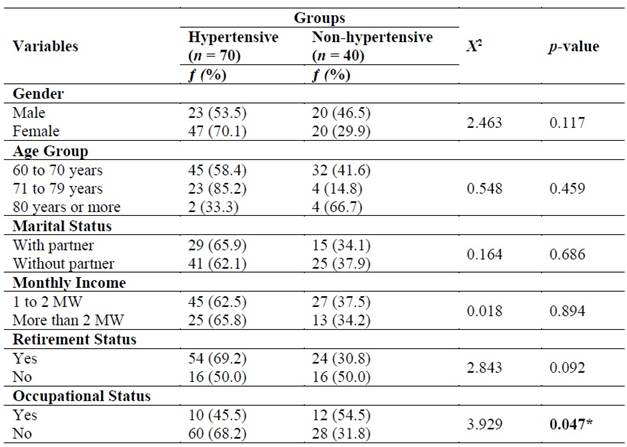
Methods: This cross-sectional study was conducted with 110 older individuals of both sexes, users of a Medical Specialty Center in Sapezal, Mato Grosso, Brazil, including 70 hypertensive patients on antihypertensive medication and 40 non-hypertensive individuals. A sociodemographic and health questionnaire, the Timed Up and Go (TUG) test, and the Falls Efficacy Scale-International (FES-I) were administered. Data were analyzed using the Chi-square test, binary logistic regression, and the Hosmer-Lemeshow test. A significance level of p < 0.05 was considered
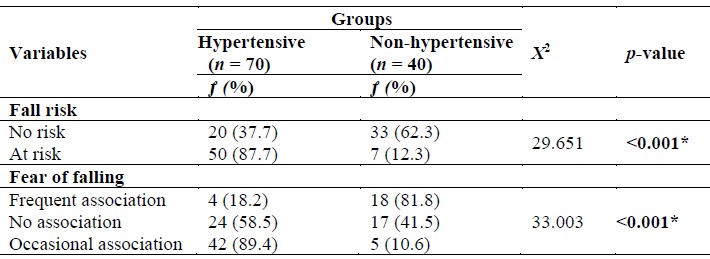
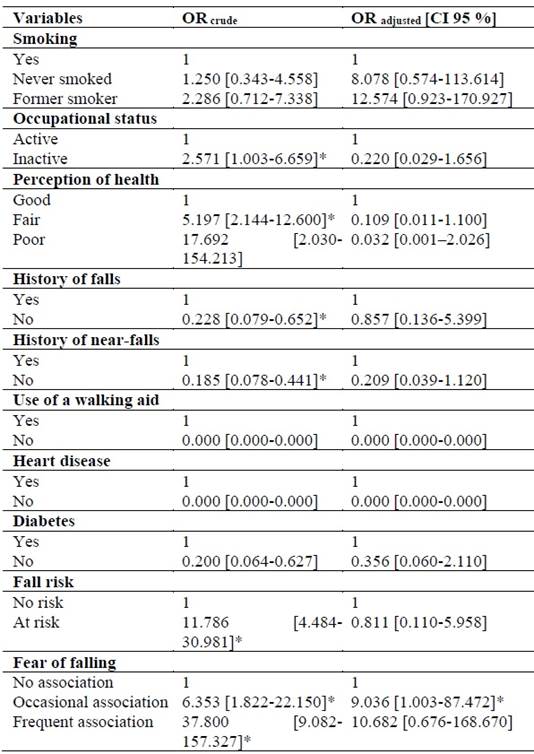
Results: A significant difference was found when comparing proportions of hypertensive and non-hypertensive older individuals in terms of fall risk (p < 0.001) and fear of falling (p < 0.001), showing a higher proportion of individuals with fall risk and fear of falling associated with recurrent falls who are hypertensive. Additionally, older adults with a fear of falling associated with sporadic falls are 9.036 times more likely (95 % CI = 1.003-87.472) to be hypertensive compared to those with a fear of falling without associated falls
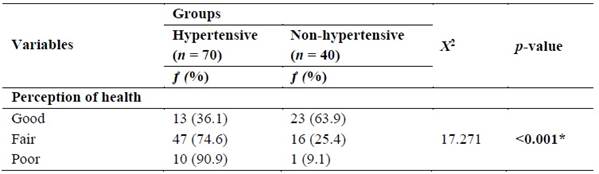
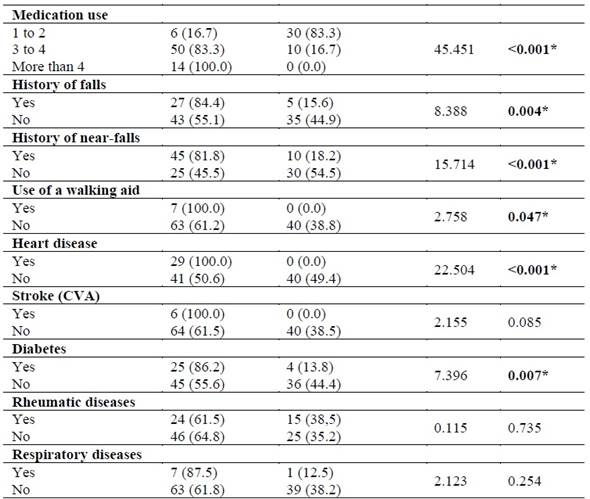
Conclusion: The findings highlight a significant association between multiple sociodemographic, health, and behavioral factors and hypertension in older adults
Keywords:
aging; hypertension; falls; fear of falling