Including Families in the Care of Newborns Admitted to Neonatal Intensive Care Units
Abstract:
Objective: To know Nursing teams’ perspective regarding inclusion of the family in the care of newborns admitted to Neonatal Intensive Care Units (NICU)
Methodology: A qualitative research study conducted with professionals from the NICU of a school hospital in southern Brazil. The participants were nine Nursing team members that were selected through intentional sampling; the data were collected in interviews, subsequently organized in a qualitative data analysis software program and analyzed by means of thematic analysis
Results: The results indicate that the main difficulty is related to infrastructure, as the hospital lacks a suitable space to welcome parents. The practicalities pointed out were as follows: encouragement for breastfeeding, the Kangaroo method and parents’ participation. In relation to the strategies used to enhance family inclusion, the professionals highlighted creating WhatsApp groups, as well as dialog and welcoming
Conclusions: It is necessary to enhance family inclusion in the care provided to newborns in the Neonatal Intensive Care Unit, improving the infrastructure so as to provide more comfort. In addition to that, using digital strategies and including health education extension actions for parents prove to be promising in improving the care provided by families to neonates. The research results allowed aligning joint actions between the education and assistance spheres by means of university extension programs
Keywords:
neonatal intensive care units; nursing team; family; newborn
Resumo:
Objetivo: Conhecer a perspectiva da equipe de enfermagem sobre a inserção da família no cuidado ao recém-nascido na Unidade de Terapia Intensiva Neonatal (UTIN)
Metodologia: Pesquisa qualitativa realizada com profissionais de uma UTIN de um hospital escola do sul do Brasil. Participaram nove profissionais da equipe de enfermagem, selecionados por amostragem intencional, sendo os dados coletados por meio de entrevistas, posteriormente, organizados em software de análise qualitativa de dados e analisados por meio da análise temática
Resultados: Os resultados indicam que a principal dificuldade está relacionada à infraestrutura, sendo que o hospital não tem um espaço adequado para receber os pais. Como facilidades foram apontados o estímulo ao aleitamento materno, o método canguru e a participação dos pais. Em relação às estratégias usadas para ampliar a inserção da família, os profissionais ressaltaram a criação de grupos de WhatsApp, bem como o diálogo e o acolhimento
Conclusões: É necessário ampliar a inserção da família no cuidado ao recém-nascido na Unidade de Tratamento Intensivo Neonatal, melhorando a infraestrutura de forma a proporcionar maior conforto. Além disso, o uso de estratégias digitais, bem como, a inserção de ações extensionistas de educação em saúde para os pais mostram-se promissores para melhorar o cuidado das famílias ao neonato. Os resultados da pesquisa permitiram o alinhamento de ações conjuntas entre a academia e a assistência por meio da extensão universitária
Palavras-chave:
unidades de terapia intensiva neonatal; equipe de enfermagem; família; recém-nascido
Resumen:
Objetivo: Comprender la perspectiva del equipo de enfermería sobre la inclusión de las familias en el cuidado de recién nacidos en unidades de cuidados intensivos neonatales (UCIN)
Metodología: Investigación cualitativa realizada con profesionales de una UCIN de un hospital universitario del sur de Brasil. Participaron nueve miembros del personal de enfermería, seleccionados mediante muestreo intencional, cuyos datos fueron recolectados a través de entrevistas, posteriormente organizados mediante un software de análisis de datos cualitativos y analizados mediante análisis temático
Resultados: Los resultados indican que la principal dificultad está relacionada con la infraestructura, ya que el hospital no cuenta con un espacio adecuado para recibir a los padres. Los aspectos prácticos favorables incluyen el fomento de la lactancia materna, el método canguro y la participación de los padres. En relación con las estrategias utilizadas para ampliar la inclusión de la familia, los profesionales destacaron la creación de grupos de WhatsApp, así como el diálogo y la acogida
Conclusiones: Es necesario ampliar la participación de las familias en el cuidado de recién nacidos en la unidad de cuidados intensivos neonatales, mejorando la infraestructura para brindar mayor comodidad. Además, el uso de estrategias digitales, así como la inclusión de programas de educación para la salud para padres, son prometedores para mejorar el cuidado de los recién nacidos. Los resultados de la investigación permitieron coordinar acciones conjuntas entre las áreas académica y de la asistencia a través de programas de extensión universitaria
Palabras clave:
unidades de cuidados intensivos neonatales; equipo de enfermería; familia; recién nacido
Introduction
Intensive care units are places that require special attention, as they raise strong feeling in family members and teams, as well as conflicts between them. It is worth noting that newborns (RNs) hospitalized in Neonatal Intensive Care Units (NICUs) are not always ill: they are physiologically immature in most of the cases. 1
NICU planning and organization, such as choice of materials, devices, human resources and physical facilities should be exclusively thought for neonatal care, mainly for premature newborns. The need to accommodate parents so that the actively take part in the care provided to the children should also be noted. 2
In this sense, NICU care has undergone changes throughout the years, widely discussing the importance of families participating in the care provided to neonates and pointing to the need to assist them in the hospitalization context, with due support from health teams and grounded on a care model that contributes physical and emotional benefits for both .3 Thus, Family-Centered Care (FCC) steps in since, from this Nursing care perspective, assistance goes beyond the neonates’ clinical aspects, incorporating the families’ emotional, affective and social issues and developing a relationship based on a trustful and respectful bond between teams and families, in addition to encouraging the parents’ autonomy for them to actively take part in the care provided to their children. 3,4
FCC seeks to establish a solid bond between health professionals and families by means of adequate welcoming and effective communication. 3,4,5 However, weakness or absence of such bond can result in unfavorable perceptions among the parents as for the assistance offered. Consequently, this scenario distances them from engaging in the care process for the NBs. In addition to that and regarding the parents staying in the NICU, there are factors related to families themselves that can impair their continuous permanence, such as distance from their house to the hospital, work activities and financial conditions, as well as responsibilities and requirements with their other children. 6
It is noted that FCC in an NICU is a comprehensive approach with acknowledged benefits in the literature 3,4,6 and presenting several advantages, such as minimizing the parents’ distress through their participation and autonomy, encouraging breastfeeding and reducing the number of complications resulting from prematurity. 6
However, many professionals are relatively resistant to adopting such approach, reporting the perception of being evaluated by the families and, thus, disagreeing in including companions in planning the care to be provided to NBs. 7 In addition to that, many professionals believe that, for requiring time and attention, family participation results in increased workloads. In addition, some nursing technicians report facing obstacles to include families at certain moments, such as during complications or when performing invasive procedures. 6
After conducting an integrative review, it was identified that, when adequate, infrastructure and material and human resources can favor family inclusion in the care process, but they can also be hindering elements for that inclusion when failing to meet the demand. 8 Therefore, team training and sensitization are indispensable for family inclusion, an aspect that is to be worked on in permanent education for NICU professionals. It is noted that this review was developed aiming to detect gaps in publications in order to prepare the project that gave rise to the current research study; therefore, issues related to the strategies used by the professionals to include families in the care process were added, in addition to assessing the influence exerted by the pandemic period on this inclusion process.
Considering the importance of including families in the care provided to newborns admitted to an NICU and the role of Nursing teams for that to become a reality, it was deemed necessary to expand knowledge about Nursing teams’ perspectives regarding family inclusion, as well as about the strategies used to such end. Consequently, the objective was to know Nursing teams’ perspective regarding inclusion of the family in the care of newborns admitted to Neonatal Intensive Care Units. The following research question was prepared for that end: Which is the Nursing teams’ perspective regarding inclusion of the family in the care of newborns admitted to Neonatal Intensive Care Units
Methods
This is a basic, descriptive and exploratory research study in which the Consolidated criteria for Reporting Qualitative research (COREQ) guide 9 were followed to enhance reliability of the process. Basic qualitative research studies do not follow pre-established philosophical or methodological assumptions; however, they still seek to understand perspectives and phenomena. 10 The exploratory approach aims at expanding knowledge about the problem in question; in turn, the descriptive approach seeks to detail events and attributes of a given context. 11
Considering the COREQ guide and referring to the interviewer’s characteristics, she was an undergraduate Nursing student, member of the research group and previously trained by an advisor (a PhD professor with vast experience in qualitative research). This undergraduate student had previous contact with the participants for having undergone her academic internship in the sector where the research was developed. Therefore, the participants were aware of her personal objectives and of the reasons to develop the study; in addition, the interviewer was familiar with the setting.
The research was conducted at the NICU of a school hospital located in a municipality from the Brazilian South region. Choice of the participants was intentional, selecting Nursing team professionals from the unit in question according to the relevant specific characteristics to meet the study objectives. The research participants were nine Nursing team members (from a total of 13 nurses and 33 nursing technicians) working in the morning, afternoon and night shifts. The research inclusion criteria were being a Nursing team professional and having worked in the NICU for at least six months, as they would already have undergone the experience-gaining period and know the unit’s routines. The Nursing professionals excluded were those that were away from work, on leave or under medical certificates during the data collection period. Two nurses were under medical certificates during the collection period. In addition to that, 14 professionals did not answer the invitation messages, even when forwarded more than once, and 21 reported not wishing to take part in the research.
Although the number of participating professionals was low considering the total of eligible subjects, data saturation was detected on the seventh interview, as it was possible to identify in the results that similar answers were repeated in all the questions asked. In addition, it is understood that there may be bias in the results, considering that the participating professionals may have a more inclusive view about parents taking part in the care process, when compared to the professionals that refused to participate, which represents a study limitation that precludes generalizing the results.
The research study was in consonance with the ethical precepts set forth in Resolution No. 466/2012 by the National Health Council belonging to the Ministry of Health, 12 respecting Bioethics-related issues such as autonomy, non-maleficence, beneficence, fairness and equality. In line with the ethical norms set forth in Resolution No. 466/12, the project was submitted to Plataforma Brasil and approved under CAAE 50537721.0.0000.5316 and Opinion No. 4,910,780. The audio-recorded data were transcribed and stored in the undergraduate student’s PC, where they will remain for a 5-year period. The free and informed consent form, which was read and handed in in paper format to each participant and signed in two copies (the researcher keeping one and each participants, the other), contained a detailed description of the research objectives and question, as well as the voluntary nature of participation and consent withdrawal at any study moment.
In turn, semi-structured interviews were conducted for data collection. These interviews were based on a script with characterization questions and others related to the professionals’ perspectives about including families in the care provided to neonates in the NICU (the professionals’ view about including families in the care process; difficulties and practicalities found in including families in the care process; living with families in the NICU; and strategies used to include families in the care provided to neonates). It is noted that the interview script was prepared based on a literature review in which the main findings about the topic were identified, as well as on the researchers’ experience in the care provided to neonates in an NICU. The interviews were conducted between October and December 2021. Due to the social distancing condition imposed by COVID-19 coping efforts at the collection time, the interviews were conducted by means of videocalls in the Google Meet platform.
The interviews were recorded and subsequently manually transcribed for a comprehensive data analysis, double-checking the transcriptions. The undergraduate student and a Scientific Initiation scholarship fellow took part in this stage, both previously trained to such end. It is noted that the transcriptions were sent to the participants for their validation; however, no requests to modify the texts forwarded were made, as all of them agreed to the transcribed contents. The interviews lasted a mean of twenty minutes and had been previously scheduled with the participating professionals. They were conducted by means of videocalls in which both the participants and the interviewer were alone in respective private spaces, preserving each participant’s privacy during the interviews.
It is noted that the research results were subsequently presented at an open research group meeting with the heads of the sector where the research was developed and to which the study participants were invited. Applicability of the results to devise strategies to enhance and improve family inclusion in the care provided to neonates in the NICU was also discussed in that meeting.
The data collected were entered into WebQDA (Qualitative Data Analysis) to organize them.13 Using this program, it was possible to create a cloud with the 100 words most frequently found in the interviews (Figure 1). It is noted that the following criteria were applied: words with more than three characters and excluding some adjectives, pronouns, adverbs, verbs and indefinite pronouns (for example: that, no, have for, with more, them, by, I_think, but, one, then, times, that, also, there, how, go and very, among others) that added nothing to the intended meaning.
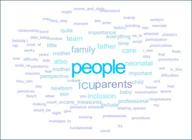
The main study topics were prepared based on the word cloud created by the software program and on the diverse information contained in the interviews, dividing the excerpts from the interviews according to the topics listed. The following words stand out among the most frequent terms: ICU, family, parents, care, newborn, professional, inclusion, presence, perspective, neonatal, care and pandemic, which represent the initial codes that guided the categorization process. Thematic analysis14 was used, consisting in identifying, analyzing and reporting the topics found in the data collected and following six steps: familiarization; code generation; creation of topics; topic review phase; and the report review and production phases.
The researchers gained familiarity with the data by transcribing, reading and checking the interviews. The initial codes were generated by creating the word cloud in WebQDA, which analyzes the sources included (interviews) indicating the most frequent words that constitute the initial codes. The topics were created by grouping similar data, identified in the sources (interviews), and imported into WebQDA. After this stage, the topics were reviewed by evaluating their coherence and depth regarding the data. Finally, the report was written in the form of an interpretation of the results categorized in the topics defined and their discussion against the scientific literature. It is noted that all the stages described were double-checked by the undergraduate student and her advisor, aiming at credibility, reliability and transferability of the results.
Therefore, four thematic categories were created based on gathering the initial codes to present the results, namely: The professionals’ perspective about including families in the care provided to NBs in the NICU; Difficulties experienced regarding family inclusion in the care of NBs in the NICU; Practicalities experienced for family inclusion in the care of NBs in the NICU; and Strategies used by the professionals to include families in the NICU context.
Results
Eight of the nine Nursing team professionals that took part in the research were women and one was a man, and their ages varied between 30 and 40 years old. Seven were working as nurses and two, as nursing technicians. As for the professionals’ time working in the NICU, five of them had done so for five years, six had worked there for three years, one for four and a half years, one for six years and another one for eleven years. In relation to their training time, it was as follows: 15 years (1), 12 years (2), 11 years (2), 10 years (2), 7 years (1) and 5 years (1).
The professionals’ perspective about including families in the care provided to NBs in the NICU
This topic included the testimonies given by the participants who acknowledged that it is fundamental for families to be included in the NICU routine, with most of them highlighting their importance in newborn care:
I think it is essential to include families in care, in seeing how it is provided, in taking part in it, in implementing the care measures. (...) it’s not even the fact of the parents assuming care sometimes, but that they can see that care, that they can be there and see their child being cared for. (P6)
I think it’s fundamental, it makes the whole difference for both, for the family, to feeling closer, more important, more useful, and for the baby too in studies that show the importance of their presence, of listening to their voice. (P9)
The testimonies allow evidencing the perception that family participation in the care provided to newborns in the NICU is indispensable, where this participation goes beyond implementing and seeing care measures but also includes follow-up. Therefore, even if the families are not directly providing care, the simple fact of being there and seeing how their children are being assisted already makes a large difference. In this context, the participants understand that the affective bond between families and NBs is fundamental, with the consequent possibility of reducing emotional stress both in the children and in the family members:
It’d be kind of assembling even more this issue both of touch and presence of the bond, (...) increase the bond. (...) it’d be important that they could spend most of the time, that’d be fundamental for the NBs. (P1)
Bonding between father and child, between parents and child. Participating in the care provided, participation in those children’s healing and recovery processes, the parents’ participation in the ICU is also linked the team, with trusting the team too. (P5)
The reports provided by P1 and P5 point to the importance of bonding between parents and children; in addition, it is fundamental for the NBs that their parents spend more time in the NICU, as well as for them to take part in the care provided. In addition to that, the parents’ presence and participation in care also enhances their relationship with the team, contributing to them trusting in it and exerting an influence on the neonates’ healing and recovery processes. Another issue highlighted by the participants refers to the importance of touch, of the parents’ physical contact with the NBs, as shown in the following testimonies:
I see children that hardly receive a visit from their mothers, they just look and go out and other mothers stay there, talk to them and touch them with their hand, (...) and they maintain that contact, it already makes a big difference, for the children to get better. (P2)
Including families in the care provided to newborns in the NICU (...), to establish that affective bond, to get used to the new reality they’re living with that little baby. Touching, talking, warm words; the whole context is important for that little baby to recover and for emotional health, too. (P3)
In these testimonies, it can be seen that the professionals understand the parents’ need to be with the children in the NICU and that their presence favors getting acquainted with the new life reality, thus contributing to bonding with the newborns. Therefore, touching and talking (in other words, effective presence) make a large difference for parents, but especially for the neonates, assisting the parents’ and newborns’ emotional health.
Difficulties experienced regarding family inclusion in the care of NBs in the NICU
This category presents the testimonies related to the difficulties experienced by the professionals when including families in the care of NBs. These difficulties are especially related to infrastructure deficits, which do not allow adequately accommodating the parents in the NICU. In addition to that, there is also the parents’ fear of remaining in the unit and touching their children, due to their frail state.
It’s difficult (...) poor organization of the unit, of the unit’s physical space. (...) the unit’s structure doesn’t allow, for example, for us to put a chair for the fathers or the mothers to be with the babies at night (...) to take care of those little babies and follow-up their care. Another thing I feel it’s missing is an appropriate place for the parents to stay, with a bed, a sofa, a fridge. Because it’s a child (...) on exclusive breastfeeding, then comes a time at night that he’s got no more milk from the mother. (P5)
There’s a structural aspect: the ICU ends up being too small, then sometimes that thing of the mothers talking to their children, (...) it improves the bond, touch ends up a little impaired due to the physical structure, the mothers have no place to stay. (...) there’s no accommodating structure (...) because we only have some chairs now, if all the mothers stayed with their children both shifts (...) it’d be really complicated. (P7)
Based on the reports, certain difficulty related to the infrastructure is noticed as for including families in NB care, as the NICU lacks a suitable space to welcome family members; it does not even have an adequate room for the parents that want to stay in the hospital to rest at night. That ends up directly interfering in the care provided, such as in terms of providing breast milk and, especially, constancy of the bond. Other hindering factors mentioned by the participants were related to the parents’ feelings, such as fear, insecurity, doubts and wishes of handling their NBs and taking care of them:
Not all of them want to be included in the care process, some people are afraid of handling the NBs, sometimes you ask them to touch (...) the babies and they don’t want to do so all the same, (...) due to their size, (...) for being an ICU or due to the children’s unstable conditions. (...) these parents are not prepared, so that they can also be active. (P4)
This report shows that the professional beliefs that parents are oftentimes fearful about taking part in the care provided to their children in the NICU. It is a fact that intensive care units generate significant distress in family members; this is even more potentiated when it comes to newborns, who are extremely frail and oftentimes premature. This frailty is intensified due to the family members not being familiar with the environment, the procedures and the care provided to NBs in the NICU; therefore, it is indispensable for the professionals working in the sector to provide support with clear, objective and comprehensive guidelines, solving doubts and offering emotional support.
In addition, it was identified that the COVID-19 pandemic deepened the difficulties to include families in the care of NBs in the NICU, limiting access to the unit with check-in times and number of people allowed:
At this pandemic moment, only parents are allowed to enter the NICU. Siblings, grandparents and godparents are still not allowed. (P3)
Visits have been restricted since COVID started (...), then we only had parents at night. (...) it quite hindered that bonding aspect, because there’s a fixed time now and you’re not always available, you have limited time to stay there. (P7)
The testimonies allow identifying that the pandemic context limited access to the unit, as fixed times were stipulated for the parents to check-in (which was an unrestricted aspect before). In addition to that, other family members (grandparents and uncles, among others) had their access banned, which also interfered in the parents’ support network, as they enjoyed less family support, undergoing deeper distress when facing the complexity generated by the neonates’ NICU hospitalization. The professionals understand that these issues weaken bonds and even presence of the parents in the sector. Complementarily, schedule restrictions also lead to greater difficulties for the professionals to implement the care measures since, at various moments when there is an urgency, presence of the parents ends up being banned. Added to these situations related to check-in time restriction is unavailability of the support the professionals can provide to the parents and the time the parents are allowed to stay in the NICU.
Practicalities experienced for family inclusion in the care of NBs in the NICU
This category presents the testimonies related to the practicalities experienced by the professionals when including families in the care provided to NBs, with encouraging breastfeeding, the Kangaroo Method and the parents’ participation standing out as the main ones.
One of the practicalities is the team encouraging (...) breastfeeding (...), this seeks to bring the mother in, she offers stimulus on her lap, the Kangaroo method (...) the Kangaroo position both for the mother and for the father, the team understands how important it is, stimulating as much as possible. (P9)
This report allows noticing the importance granted by the team to breastfeeding and to the Kangaroo method, which are stimulated in the parents aiming at enhancing their participation in the care provided to the NBs. On the other hand, P8 understands that the facilitating aspect is due to the professionals’ allowing the parents to access the service:
The practicalities to include the parents (...) it’s just good faith from the employees. (...) only allowing already eases for the moms and dads to always be there willing to get in. (P8)
According to this report, it is observed that the professionals perceive that the parents’ absence and non-participation in neonatal care is oftentimes directly related to the professionals’ unavailability (good will), as they fail to encourage this participation, which affects the parents and can impair their relationship with their children. Complementarily, the participants understand that the parents are interested in knowing about the care provided to their children and comprehend how the team works:
What eases our job is that most of the parents manage to understand when we can manage to ease their minds in relation to how the patients are handled (...) that helps caring for the babies and they get better a lot faster. Then I think that talking (...) that trust parents end up building with the team. (P4)
I think that the practicalities start in themselves (...) they’re really interested, they want to know how their children are, know how those little babies are going to be cared for. (P5)
These reports evidence the importance of the team welcoming and communicating with the parents, which are facilitating elements in the relationship between professionals and parents, as they generate trust. Therefore, it is indispensable that the professionals are available to solve doubts in honest and welcoming conversations, which exerts an influence on the parents’ interest in taking part and being present in the care provided to their children.
Strategies used by the professionals to include families in the NICU context
This category presents the testimonies related to the strategies used by the professionals to include families in the NICU context, with the following among the main ones: parents’ interaction with the NBs; WhatsApp groups; welcoming; incorporating the parents to the care process from the NBs’ NICU admission; and training of the professionals.
We’ve already made large steps forward in terms of strategy (...) the team implemented, (...) beyond free time (...) the issue of them starting in addition to the mother’s lap (...) starting participation there in the NICU, because that participation only began there (referring to the ward) in Kangaroo before, (...) the parents have unrestricted access. Then we started introducing that to Neo (NICU) (...) overcoming that barrier, diaper exchanges, accompanying to the bathroom (...). I think it’d be important, (...) the ideal thing would be a group of parents (...) in WhatsApp, for example. (P1)
This testimony allows identifying that certain evolution was made in the NICU during the last few years. The professionals are more sensitive to the families’ demands and seek strategies to expand their participation in the care provided to the NBs. This is a reflection of the public policies related to including families in the care process, worked on by the heads of the units and by the research groups involved, who hold deep discussions with the professionals about the importance of integrated and family-centered care and its repercussions for the neonates’ development. In addition to that, with the advent of virtual social networks, groups such as WhatsApp emerge as integrating care tools, enabling collectively sharing information, experiences and support. Complementarily, the participants state the importance of welcoming the families from the NBs’ admission to the unit with an initial welcoming:
From the moment those little babies arrive at the NICU, we already have to include the parents in the care provided, so that they can go home more at ease. When the little babies are discharged, the parents are already more independent, they are more confident then in taking care of those little babies on their own. (P5)
The way in which parents are welcomed in the unit determines how an interpersonal relationship is established, which can turn to be harmonious or not. This relationship exerts an influence on the parents’ participation and presence, with the possibility of favoring the care provided to the neonates both during hospitalization and after discharge. In this context, the testimony offered by P6 is also noted; it points out training the professionals so that they can increasingly perceive the importance of including parents in the care provided to newborns as a strategy:
Training is always important, to keep recalling everyone about the importance, resuming with the team, (...) it’s an important strategy (...), to always emphasize what was good at that moment, talking about the assistance. (P6)
In addition to the strategies already resorted to by the professionals, a number of proposals such as organizing groups of family members and meetings with the families were pointed out:
I think there should be, (...) kind of a family group, something like that (...) a meeting (...) to explain what the function of the family is. (...) some health education (...) perhaps with a different professional each week so that each one teaches their stuff. Talking about the general and the specific in their area, (...) it’d be good, even for people to relate. (P2)
The testimony by P2 evidences the need for interdisciplinarity in health education, understood as an important tool both for the professionals and for the family members, enhancing support in the care provided to the neonates. In addition to what has already been pointed out, the participants also reported the importance of preparing informational materials like pamphlets and videos:
Having some document, some pamphlet, anything that can be a guide for the parents because we offer the unit’s routine guidelines, as to what to do in the first visit. It’s just that the first visit to the ICU is already a stressful environment (...) an unknown environment for the parents, and they’re there at that moment, they’re worried (...) they not always take up all that information so well. (P7)
It’d be interesting to make some videos, educational and very simple videos for the moms and dads and show them on that screen while they wait for some visit times and when sometimes there’s a round and they can’t come in. (...) then they’d watch the instructional video, what to do, about breastfeeding, the importance of breast milk in the ICU, and the mothers would interact with each other, talk, exchange ideas. (P8)
In these testimonies, the participants highlight several proposals that may favor including parents in the care provided to neonates, such as creating a group for families to better understand the unit’s routine, as well as to produce educational videos and pamphlets. It is noted that several of these ideas were implemented in the unit after the research results were shared in the research group, especially instructional videos and institutional folders that were handed in to the parents in paper format. In addition to that, development of the activities linked to a university extension project was also expanded. These activities involve weekly visits to the unit by students, who provide guidelines about neonatal care including topics such as hygiene, vaccines, alert signs and breastfeeding, among others.
Discussion
Based on the results presented, the study novelty becomes evident, as it provided links regarding family inclusion in the care provided to neonates in the NICU of a school hospital in the midst of a pandemic. The data point to the need to not only improve the infrastructure (enlarging the space to welcome families and effectively incorporate them to the care process) but also to devise knowledge translation strategies such as instructional videos and folders, enhancing these families’ understanding and minimizing their distress for their neonates’ NICU hospitalization, especially in a pandemic context. These strategies show knowledge advancement, complementing the publications previously assessed in the integrative review 8 that was the basis to prepare this research project. In addition, it also evidences the need to provide training and support to the professionals with interdisciplinary approaches, aiming at fostering more integrated and welcoming care management.
The importance of including the fathers in NB care and follow-up in an NICU should be signaled as an aspect that goes beyond mere support for the mothers. As fathers are a family nucleus component, their presence reinforces the paternal bond for the children, thus enabling exchanges of cognitive and perceptive experiences, in addition to affective ones. 15 It is worth noting that contact between fathers and NBs can emerge as the main source of well-being, confidence and effectiveness. Thus, NBs are provided with the ability to seek new experiences, also influencing all the other relationships they will have during their entire life. 16
In addition to that, the participants also noted that enhancing the parents’ relationship with the team itself favors trust in the care developed in the unit. Therefore, the following stands out to minimize the traumatic effects and the adversities experienced in the NICU: paying attention to the parents’ bonds with the newborns, to the professionals’ relationships with the neonates and with the families, to the interdisciplinary team members’ inter-relations and to the teams’ relationship with the managers. 17
As evidenced in a study, 18 family participation in the care process yields more favorable results for family members and NBs alike. In this context, FCC not only assists in reducing stress and anxiety in the families but also fosters strengthening the bonds between them and the neonates, contributing to their healthy development.
Mother-newborn contact in a NICU presents several benefits, such as reducing stress in the NBs, adaptation to the hospital environment, promotion of neurological and sensory development, improved hormone responses and emotional control. In addition, anxiety and stress are reduced when mothers are offered psychological support, favoring breastfeeding and providing the necessary emotional support in the face of prematurity or other clinical conditions. 19 It is worth noting that, when parents enjoy unrestricted access to their children’s hospitalization and to the procedures, they can better accept their health conditions. 5
The results showed that not having a space for the parents in the NICU interferes both in them following-up the care process and in health professionals teaching them, as well as in their comfort, which limits their presence at their children’s side. In this context, it is necessary to reorganize spaces so that parents can feel welcomed and comfortable in the NICU and, thus, be able to effectively take part in the care provided to their children, favoring preparedness for post-discharge care and bonding, aiming at the newborns’ full physical and emotional development.
Various barriers hinder the implementation of humanization practices in the NICU environment. 20 The following stand out among them: lack of professional autonomy; insufficient time; technical insecurity; insufficiency of human resources; busy and noisy environment; resistance in some professionals to initiate skin-to-skin contact with extremely small newborns; lack of adequate training; lack of support from the medical team to implement humanized care measures; lack of managerial support; unawareness regarding the Kangaroo Method (KM); and physical space limitations. 20
NICU hospitalizations are a difficult experience that can exert various impacts both on the families and on the NBs, with the consequent possibility of generating a rupture in the family unit that may lead to imbalance in its functioning capacity, with the possibility of conflicts and distancing arising among its members. 5 In addition to that, the hospitalization of a newborn in a Neonatal Intensive Care Unit (NICU) generates in the families a complex combination of feelings such as distress, fear, anxiety, sadness, faith and hope, in response to the newborns’ unstable clinical conditions. 21
In this context, welcoming families contributes to minimizing negative aspects, enhancing their relationship with the health teams and allowing improvements in the assistance provided to the NBs. Family inclusion in the care provided to hospitalized NBs was implemented aiming at strengthening their participation during the neonates’ hospitalization time, with the professionals bearing the responsibility of guiding and situating them as for the care measures on course, thus turning them into a component of the care process. 22
It is noted that the social distancing period imposed by the pandemic also interfered in the support provided to the families with children hospitalized in the NICU, as the parents could not count on the in-person support of other family members, which may have intensified their physical and emotional burdens. The social and psychological consequences associated with isolation can be potentiated as a result of the moment experienced by each person, such as in the case of families undergoing their NBs’ NICU hospitalization process. Social isolation measures exert direct effects on people’s everyday life, influencing what they do, how they live, the activities they perform and how they get involved. 23
In addition to the fact that the parents were not allowed to stay 24 hours a day with their children in the NICU due to the social isolation imposed by the pandemic, the situation was potentiated as a result of the contingency plan adopted by the municipalities and by the institutions where the newborns were hospitalized. The hospitals implemented restrictions as for the number of people and their circulation in health services, limiting or suspending visits. 24
In some units, only fathers or mothers were allowed to be present with restricted times, solely mothers in many cases. Although necessary, these measures generated a significant loss for newborns and parents alike, as the latter’s presence contributes important physical and emotional benefits for both. 25
Among the practicalities to include families in NB care in the NICU, the professionals highlighted encouraging breastfeeding and the Kangaroo Mother Method. The Kangaroo Mother Method emerges as an important tool in the assistance provided by Nursing teams, stimulating breastfeeding and the mother-newborn bond, in addition to contributing to infection control and improving NBs’ recovery.26 The families also benefit from this method, as the lower time distanced from the newborns strengthens the affective ties and their participation in the care provided to the children.
In addition, the current study showed that communication and interaction between teams and families are also indispensable to foster family participation in the care provided to NBs in NICUs. They are fundamental instruments in implementing Nursing care. 3 Therefore, it is up to the teams to establish effective communication with the family members from the first moment they arrive at the unit, fostering welcoming and relationships that contribute to improving the sensation of confidence and trust in the care provided. 24
Encouraging touch and assistance in diaper exchanges were highlighted among the strategies used by the professionals to enhance family participation in the care process. According to the study participants, these measures allow families to better cope with their children’s conditions and help provide confidence when taking the newborns home. It is up to Nursing professionals to ensure that the families fully comprehend their children’s health status; they also should notice if the parents understand the care provided and are making efforts to clarify their doubts, thus being able to assist in reducing anxiety in those families. 27
Complementarily, using digital tools like WhatsApp also stood out to improve communication between the team and the families, as well as among the families of the NBs hospitalized in the NICU, by creating mutual help groups. Cell phone use in neonatal units has been restricted for many years; however, it is now seen as an important tool that can be helpful at delicate moments (such as the pandemic experienced), reducing distances between families and newborns. Messages recorded or lead by the team can be sent, thus favoring the involvement of other family members like grandparents and siblings. Video and photograph records can be sent to the parents, mitigating pain and stimulating the bond. 28
The results also indicate that the way in which parents are welcomed in the NICU will determine the interaction and relationship that will be established between the team and the neonates’ families. Consequently, it is indispensable to provide an adequate welcoming from the moment each neonate is hospitalized. This helps each family to better adapt to the hospital environment, fosters establishing a trustful relationship, eases understanding the hospital routine and encourages participation in the decisions and care measures related to the newborns. This empathetic approach by the team considers the vulnerability moment experienced by the families, with the objective of rendering the hospitalization process the least distressing possible, emerging as fundamental for the parents’ and neonates’ well-being. 29
Consequently, it is necessary for health institutions to continue investing in professional training and development programs, qualifying professionals to adopt and implement family-centered measures. 18 Only through this collaborative and compassionate approach can it be ensured that neonates and their families are offered the necessary care, both during their NICU hospitalization and after discharge.
Finally, the professionals highlighted several strategies to enhance family inclusion in the care provided to neonates in the NICU, such as creating a group for the families to better understand the unit’s routine and producing educational videos and pamphlets. In this context, support groups are fundamental as care and support spaces for family members in an NICU. 30 They promote sharing of experiences, strengthen bonds among the participants and provide essential information, exerting a positive effect on the patients’ hospitalization process and on their family members. In addition to that, they contribute to humanization in the hospital setting, strengthening relationships between health professionals and family members.
Complementarily, it is currently identified that using multimedia materials can in fact contribute to learning in the health area. 31 Therefore, educational videos have now been incorporated in various spheres, and the Nursing area has gradually adopted this technology as a support instrument, especially in educational initiatives. 32 Thus, audiovisual technologies emerge as an appealing tool to promote health, education and learning.
It is also noted that the study was planned based on gaps identified by the research group, of which the undergraduate student and advisor are part. This group comprised by NICU professionals, heads, undergraduate and graduate students and professors working at the university linked to the school hospital holds monthly discussions related to the care offered in the unit and ways to improve family inclusion and offer support to the professionals. These discussions helped ground the question and objectives of this research. Based on this, surveys, lectures, academic events and events for families were organized, as well as awareness raising instances with professionals, in addition to in loco health education activities for the families.
Conclusions
The study offers important contributions to rethinking the care practice. These contributions involve management of the services, reassessing infrastructures and material resources seeking ways to provide more space and time for welcoming, comfort and permanence of the parents in the NICU. As for the human results, a need for improvements in training was identified, aiming at the professionals enjoying more support and listening spaces. In addition to that, the study also evidenced the need to devise institutional strategies (videos, folders, health education), fostering greater family inclusion in the care provided to NBs in the NICU and a conversational welcoming that enables sharing information and experiences among the families and between them and the professionals working in the unit, such as creating family groups and using digital communication tools (WhatsApp).
The following can be mentioned as a contribution to university extension: the possibility of assembling multidisciplinary groups of students attending various health area courses (Nursing, Medicine, Nutrition, Psychology) that expand the health education approach for parents of NBs in NICUs. For research, it is suggested to conduct future studies including parents and family members of these NBs, aiming at assessing specific interventions for their requirements and at enhancing their participation in the care process in an NICU, considering FCC. where families are comprised by multiple elements in concomitant interaction and are the primary unit of the care provided to the neonates, therefore being responsible for promoting their health and preventing diseases.
As for study limitations, the social distancing situation to cope with the COVID-19 pandemic during the data collection period stands out, which hindered approaching the participants, with the need for several attempts to conduct the interviews online and contributing to having recruited fewer participants.
References
-
1. Mendonça LCAM, Pedreschi JP, Barreto CA. Cuidados de enfermagem em UTI neonatal. Rev Saúde Foco (Internet). 2019 (citado 2022 Fev 09);1(11):551-559. Disponível em: Disponível em: https://portal.unisepe.com.br/unifia/wp-content/uploads/sites/10001/2019/05/049_CUIDADOS-DE-ENFERMAGEM-EM-UTI-NEONATAL.docx.pdf
» https://portal.unisepe.com.br/unifia/wp-content/uploads/sites/10001/2019/05/049_CUIDADOS-DE-ENFERMAGEM-EM-UTI-NEONATAL.docx.pdf - 2. Tamez R. Enfermagem na UTI neonatal: assistência ao recém-nascido de alto risco. 6ª ed. Rio de Janeiro: Guanabara; 2017.
-
3. Fonseca SA, Silveira AO, Franzoi MA, Motta E. Cuidado centrado na família na unidade de terapia intensiva neonatal (UTIN): experiências de enfermeiras. Enfermería: Cuidados Humanizados. 2020;9(2):170-190. doi: 10.22235/ech.v9i2.1908
» https://doi.org/10.22235/ech.v9i2.1908 -
4. Rodrigues BC, Uema RTB, Rissi GP, Felipin LCS, Higarashi IH. Cuidado e prática centrados na família na unidade de terapia intensiva neonatal. Rev Rene. 2019;20:e39767. doi: 10.15253/2175-6783.20192039767
» https://doi.org/10.15253/2175-6783.20192039767 -
5. Nascimento ACST, Morais AC, Amorim RC, Santos DV. The care provided by the family to the premature newborn: analysis under Leininger’s Transcultural Theory. Rev Bras Enferm. 2020;73:e20190644. doi: 10.1590/0034-7167-2019-0644
» https://doi.org/10.1590/0034-7167-2019-0644 -
6. Costa JS, Moraes ES, Carmona EV, Mendes-Castillo AMC. O cuidado centrado na família em unidade de terapia intensiva neonatal: Conceções dos técnicos de enfermagem. Rev Enf Ref. 2022;6(1):1-8. doi: 10.12707/RV21144
» https://doi.org/10.12707/RV21144 -
7. Boyamian TMDL, Mandetta MA, Balieiro MMFG. Nurses’ attitudes towards families in neonatal units. Rev. Esc. Enferm. USP. 2021;55:e03684. doi: 10.1590/S1980-220X2019037903684
» https://doi.org/10.1590/S1980-220X2019037903684 -
8. Lopes CF, Gabatz RIB, Milbrath VM, Ferreira VA, Specht AL. Perspectiva da equipe de enfermagem sobre o cuidado da família ao recém-nascido. J. Nurs. Health. 2023;13. doi: 10.15210/jonah.v13i.24924
» https://doi.org/10.15210/jonah.v13i.24924 -
9. Souza VR, Marziale MH, Silva GT, Nascimento PL. Translation and validation into Brazilian Portuguese and assessment of the COREQ checklist. Acta Paul Enferm. 2021;34:eAPE02631. doi: 10.37689/acta-ape/2021AO02631
» https://doi.org/10.37689/acta-ape/2021AO02631 - 10. Gil AC. Como fazer pesquisa qualitativa. 1. ed. Barueri (SP): Atlas; 2021.
-
11. Guerra ALR. Metodologias e classificação das pesquisas científicas. Recima 21 (Internet). 2024 (citado 2026 Fev 12);5(8):1-18. doi: 10.47820/recima21.v5i8.5584
» https://doi.org/10.47820/recima21.v5i8.5584 -
12. Brasil Ministério da Saúde. Conselho Nacional de Saúde Resolução 466/12. Sobre pesquisa envolvendo seres humanos (Internet). 2012 (citado 2021 Jun 29). Disponível em: Disponível em: https://bvsms.saude.gov.br/bvs/saudelegis/cns/2013/res0466_12_12_2012.html
» https://bvsms.saude.gov.br/bvs/saudelegis/cns/2013/res0466_12_12_2012.html -
13. WebQDA: software de análise de dados qualitativo (Internet). 2019 (citado 2021 Jun 29). Disponível em: Disponível em: https://www.webqda.net/?lang=en
» https://www.webqda.net/?lang=en - 14. Braun V, Clarke V, Hayfield N, Terry G. Thematic Analysis. In: Liamputtong P, editor. Handbook of Research Methods in Health Social Sciences. Australia: Springer; 2019, p. 843-860.
-
15. Santos RP, Guarany NR. A experiência do pai na unidade de tratamento intensivo neonatal. Rev Interinst Bras Ter Ocup. 2019;3(2):230-46. doi: 10.47222/2526-3544.rbto21248
» https://doi.org/10.47222/2526-3544.rbto21248 -
16. Bispo PRR, Amaral ILPS, Santos MCL, Alcoforado JMSG, Vasconcelos MGL. Cuidado centrado na família do recém-nascido: alegações dos profissionais de saúde. Enfermagem Brasil. 2019;18(1):85-94. doi: 10.33233/eb.v18i1.2504
» https://doi.org/10.33233/eb.v18i1.2504 -
17. Candaten MB, Custodio ZAO, Boing E. Promoção do vínculo afetivo entre mãe e recém-nascido pré-termo: percepções e ações de uma equipe multiprofissional. Contextos Clín. 2020;13(1):60-85. doi: 10.4013/ctc.2020.131.04
» https://doi.org/10.4013/ctc.2020.131.04 -
18. Leal WO, Franco PAF. Cuidados de enfermagem centrados na família na unidade de terapia intensiva neonatal. Rev. Foco. 2024;17(4):e4886. doi: 10.54751/revistafoco.v17n4-140
» https://doi.org/10.54751/revistafoco.v17n4-140 -
19. Moreira FRS, Almeida GSF, Botelho RM. O papel da relação entre genitora e recém-nascido na unidade de terapia intensiva neonatal: a importância do binômio mãe-bebê. Revista JRG. 2024;7(14):e141075. doi:10.55892/jrg.v7i14.1075
» 10.55892/jrg.v7i14.1075 -
20. Luz SCL, Backes MTS, Rosa R, Schmit EL, Santos EKA. Kangaroo Method: potentialities, barriers and difficulties in humanized care for newborns in the Neonatal ICU. Rev Bras Enferm. 2022;75(2):e20201121. doi: 10.1590/0034-7167-2020-1121
» https://doi.org/10.1590/0034-7167-2020-1121 -
21. Arruda CP, Gomes GC, Juliano LF, Nornberg PKO, Oliveira SM, Nicoletti MC. Reações e sentimentos da família frente à internação do recém-nascido na unidade neonatal. REAS. 2019;11(15):e1444. doi: 10.25248/reas.e1444.2019
» https://doi.org/10.25248/reas.e1444.2019 -
22. Leite PIAG, Pereira FG, Demarchi RF, Hattori TY, Nascimento VF, Terças-Trettel ACP. Humanização da assistência de enfermagem em unidade de terapia intensiva neonatal. Rev Enferm Atenção Saúde. 2020;9(1):90-102. doi: 10.18554/reas.v9i1.3649
» https://doi.org/10.18554/reas.v9i1.3649 -
23. Rocha ALS, Dittz ES. As repercussões no cotidiano de mães de bebês internados na Unidade de Terapia Intensiva Neonatal no isolamento social devido à COVID-19. Cad. Bras. Ter. Ocup. 2021;29:e2158. doi: 10.1590/2526-8910.ctoAO2158
» https://doi.org/10.1590/2526-8910.ctoAO2158 -
24. Silva EM, Cavalcante LS, Lúcio IML, Rodrigues IA, Freitas ASF. Percepção da família sobre o cuidado de enfermagem em Unidade de Terapia Intensiva Neonatal. Research Society and Development. 2021;10(11):e262101119597. doi: 10.33448/rsd-v10i11.19597
» https://doi.org/10.33448/rsd-v10i11.19597 -
25. Galeano SPO, Maya ÁMS. Experiences of parents of preterm children hospitalized regarding restrictions to interact with their children imposed because of the COVID-19 pandemic. Investig Educ Enferm. 2021;39(2):1-15. doi: 10.17533/udea.iee.v39n2e10
» https://doi.org/10.17533/udea.iee.v39n2e10 -
26. Lima Filho CA, Sousa CF, Souza MAF, Santana Neto SA, Horta WG, Bernardino AO. Kangaroo Method: perception of the nursing team in a high-risk maternity hospital. Rev. Pesqui. (Univ. Fed. Estado Rio J., Online). 2024;16:e-12975. doi: 10.9789/2175-5361.rpcfo.v16.12975
» https://doi.org/10.9789/2175-5361.rpcfo.v16.12975 -
27. Uema RTB, Rodrigues BC, Rissi GP, Felipin LCS, Higarashi IH. Family-centered care in neonatology: health workers’ and families’ perceptions. Rev Enferm UERJ. 2020;28:e45871. doi: 10.12957/reuerj.2020.45871
» https://doi.org/10.12957/reuerj.2020.45871 -
28. Chaves AFL, Rocha RS, Gomes MCR, Leonacio MS, Cavalcante MA, Medeiros PM, Sales NIS. Visitas virtuais nas unidades neonatais durante pandemia Covid-19: experiência da equipe de saúde. Rev. Enferm. Atual In Derme. 2021;95(36):e-021150. doi: 10.31011/reaid-2021-v.95-n.36-art.1177
» https://doi.org/10.31011/reaid-2021-v.95-n.36-art.1177 -
29. Araújo CF, Cunha JXP, Mendes LS, Biondo CS. Acolhimento à família de neonatos internados em Unidade de Terapia Intensiva: uma revisão integrativa da literatura. Rev. Enferm. Atual In Derme. 2021;95(34):e-021063. doi: 10.31011/reaid-2021-v.95-n.34-art.1014
» https://doi.org/10.31011/reaid-2021-v.95-n.34-art.1014 -
30. Morais AC, Mascarenhas JS, Araujo JC, Souza MJ, Amorim RC, Lima IS. Significados de grupo de apoio para familiares na Unidade de Terapia Intensiva Neonatal. Rev Enf Contemp. 2020;9(2):168-176. doi: 10.17267/2317-3378rec.v9i2.2819
» https://doi.org/10.17267/2317-3378rec.v9i2.2819 -
31. Nazario AP, Lima VF, Fonseca LMM, Leite AM, Scochi CGS. Development and evaluation of an educational video for families on the relief of acute pain in babies. Rev Gaúcha Enferm. 2021;42:e20190386. doi: 10.1590/1983-1447.2021.20190386
» https://doi.org/10.1590/1983-1447.2021.20190386 -
32. Leal AB, Alberti TF, Reginatto AA. Vídeo educativo como estratégia para acolhimento de familiares de Recém-nascidos internados em UTIN. Revista Contexto & Saúde. 2021;21(43):240-255. doi: 10.21527/2176-7114.2021.43.11663
» https://doi.org/10.21527/2176-7114.2021.43.11663