Non-Pharmacological Interventions for Pain Relief during Childhood Vaccination: An Integrative Review
Abstract:
Introduction: The hospitalization of a newborn in the Neonatal Intensive Care Unit (NICU) is a stressful experience for families. Nurses play a central role in this scenario in mediating between technical care and the needs of family members.
Objective: To describe the meanings attributed to welcoming families in the NICU from the perspective of mothers and nurses.
Methodology: This is a descriptive study with a qualitative approach, grounded in the theoretical framework of Symbolic Interactionism. It was conducted with 9 mothers of newborns hospitalized in the NICU of a public teaching hospital in Brasília, DF, and with 5 nurses working in the unit. Data collection took place from February to May 2022, using in-depth open-ended interviews.
Results: Mothers and nurses construct the meaning of care based on their lived experiences. The core of care for mothers lies in alleviating suffering, interpersonal sensitivity, and practical support. Nurses define care from a technical, organizational, and philosophical perspective, linking it to family-centered care, humanization, and the development of parental autonomy.
Conclusion: Care in the NICU cannot be reduced to institutional protocols; it requires flexibility and sensitivity and is configured as a continuous interactive process between mothers, family members, and healthcare professionals.
Keywords:
family; neonatal intensive care unit; nurses; mothers; family nursing
Resumo:
Introdução: A hospitalização do recém-nascido na Unidade de Terapia Intensiva Neonatal (UTIN) é uma experiência desgastante para as famílias. Nesse cenário, o enfermeiro é central na mediação entre o cuidado técnico e as necessidades dos familiares.
Objetivo: Descrever os significados atribuídos ao acolhimento da família na UTIN, na perspectiva de mães e enfermeiras.
Metodologia: Estudo descritivo, de abordagem qualitativa, sob o referencial teórico do interacionismo simbólico. Desenvolvido com 9 mães de neonatos hospitalizados em UTIN de uma instituição pública, de ensino, de Brasília-DF, e com 5 enfermeiras atuantes na unidade. Coleta de dados ocorreu no período de fevereiro a maio de 2022, por meio da entrevista aberta em profundidade.
Resultados: As mães e as enfermeiras constroem o significado do acolhimento a partir da experiencia vivida. Para as mães a centralidade do acolhimento está no alívio do sofrimento, na sensibilidade interpessoal e no suporte prático. As enfermeiras definem o acolhimento a partir de uma perspectiva técnica, organizacional e filosófica, articulando-o ao cuidado centrado na família, a humanização e ao desenvolvimento da autonomia parental.
Conclusão: O acolhimento na UTIN não pode se reduzir a protocolos institucionais, ele exige flexibilidade, sensibilidade e configura-se como um processo interacional contínuo entre mães, familiares e profissionais de saúde.
Palavras-chave:
família; unidade de terapia intensiva neonatal; enfermeiros; mães; enfermagem familiar
Resumen:
Introducción: La hospitalización del recién nacido en la Unidad de Cuidados Intensivos Neonatales (UCIN) es una experiencia agotadora para las familias. En este contexto, el personal de enfermería desempeña un papel central en la mediación entre la atención técnica y las necesidades de los familiares.
Objetivo: Describir los significados atribuidos a la acogida de la familia en la UCIN, desde la perspectiva de las madres y las enfermeras.
Metodología: Estudio descriptivo, de enfoque cualitativo, bajo el marco teórico del interaccionismo simbólico. Realizado con 9 madres de neonatos hospitalizados en la UCIN de una institución pública de enseñanza de Brasilia (DF) y con 5 enfermeras que trabajan en la unidad. La recopilación de datos se llevó a cabo entre febrero y mayo de 2022, mediante entrevistas abiertas en profundidad.
Resultados: Las madres y las enfermeras construyen el significado de la acogida a partir de la experiencia vivida. Para las madres, la esencia de la acogida radica en el alivio del sufrimiento, la sensibilidad interpersonal y el apoyo práctico. Las enfermeras definen la acogida desde una perspectiva técnica, organizativa y filosófica, articulándola con la atención centrada en la familia, la humanización y el desarrollo de la autonomía parental.
Conclusión: La acogida en la UCIN no puede reducirse a protocolos institucionales, exige flexibilidad y sensibilidad, y se configura como un proceso interactivo continuo entre madres, familiares y profesionales de la salud.
Palabras clave:
familia; unidad de cuidados intensivos neonatales; enfermeros; madres; enfermería familiar
Introduction
Immunization plays a central role in Primary Health Care (PHC), being recognized as a fundamental right and one of the most effective public health promotion strategies. Vaccines are essential not only for prevention but also for controlling infectious disease outbreaks, contributing decisively to global health security and the fight against antimicrobial resistance. Considered one of public health's most successful interventions, immunization saves between 3.5 and 5 million lives per year, preventing diseases such as diphtheria, tetanus, pertussis, influenza, and measles. 1
In the Brazilian context, the National Immunization Program (PNI) is recognized as an international reference, standing out for its structure, scope, and universal coverage. Since its creation, the PNI has significantly expanded the free availability of immunobiologicals for different age groups and risk groups, strengthening equity in health access and consolidating itself as a pillar of primary care in the Unified Health System (SUS). (2
Despite these advances, a concerning decline in vaccination coverage has been observed in recent decades, both in Brazil and in other countries. World Health Organization 3 data indicate that in 2022, approximately 25 million children worldwide missed at least one dose of essential vaccines, compromising global efforts to control vaccine-preventable diseases. In Brazil, the VacinaBR 4 Yearbook points to a systematic reduction in adherence to childhood calendar vaccines between 2015 and 2023, with no vaccine reaching coverage targets in all states in 2023.
Among the factors contributing to this scenario, vaccine hesitancy stands out as a growing challenge. Characterized by refusal, delay, or doubt regarding vaccination, it is driven by issues such as fear of adverse events, misinformation, lack of professional qualification, undue contraindications, and the influence of social networks and peer groups. 5 Pain at the time of vaccine administration and local adverse effects, such as swelling and redness, also represent significant barriers to vaccine adherence, directly affecting coverage rates and, consequently, collective immunity. The discomfort experienced by children and their caregivers during the procedure may reinforce vaccine hesitancy and contribute to the spread of preventable diseases. Despite technological advances, virtually all vaccines, with the exception of the oral rotavirus vaccine, still rely on needle-based administration. 5,6
Pain associated with injectable vaccines is recognized as one of the main causes of vaccination resistance and is reported as a concern by up to 40 % of parents. 7 In this context, continuous training of healthcare professionals becomes essential so that they are able to recognize, prevent, and manage both pain and anxiety related to the procedure. A welcoming and humanized approach not only improves the users’ experience but also promotes adherence to vaccination schedules and may help reframe previous negative experiences, strengthening the bond between families and healthcare services. 8
Strategies such as providing a welcoming environment, ensuring clear communication about vaccines, and using pain relief devices and methods have been shown to be effective in minimizing discomfort and making the vaccination experience more positive for children and their caregivers. These measures directly contribute to increased adherence and reduced vaccine hesitancy.8
The persistence of pain as a central element of the childhood vaccination experience represents a significant challenge for healthcare services, especially in the current context of declining vaccination coverage and increasing vaccine hesitancy. Painful experiences during childhood may trigger anxiety, stress, and avoidance behaviors in future vaccinations, in addition to influencing parents’ perceptions of the vaccination process. Studies indicate that fear related to injections and vaccination pain may contribute to vaccine delay or hesitancy, particularly when associated with previous negative experiences and the absence of adequate pain management strategies. In this context, interventions aimed at promoting greater comfort and reducing children’s suffering become essential to improve the vaccination experience and encourage adherence to immunization programs. 9
Although several non-pharmacological interventions have the potential to minimize pain and make the procedure more humanized, there remains a gap in the systematization of these strategies and in their regular application in clinical practice. Therefore, conducting this integrative review is justified, as it seeks to synthesize the available knowledge, identify effective methods, and support the implementation of evidence-based practices capable of improving the quality of care, strengthening the bond with users, and contributing to the expansion of vaccination coverage.
In this context, the present study aims to identify, through the scientific literature, the available evidence on methods and devices used to reduce pain and discomfort during childhood vaccination, considering their impact on the user experience and adherence to vaccines.
Method
This is an integrative review study conducted in accordance with the guidelines of the Preferred Reporting Items for Systematic Reviews and Meta-Analyses (PRISMA 2020), 10 aiming to identify scientific evidence regarding the use of methods and devices intended to reduce pain and discomfort during childhood vaccination.
To develop the guiding research question, the PICo strategy was adopted, considering: “P” (population) - children undergoing vaccination; “I” (intervention) - the use of methods and devices to reduce pain and discomfort during the vaccination procedure; and “Co” (context) - vaccination in healthcare services. Based on this strategy, the following guiding question was formulated:
The following research question was formulated: “Which methods and devices have been used to reduce pain and discomfort related to childhood vaccination, and what benefits do these interventions provide during the vaccination procedure?” In this study, benefits were understood as outcomes related to the reduction of pain, fear, anxiety, stress, and childhood discomfort, all of which were considered components associated with the same construct of a positive vaccination experience.
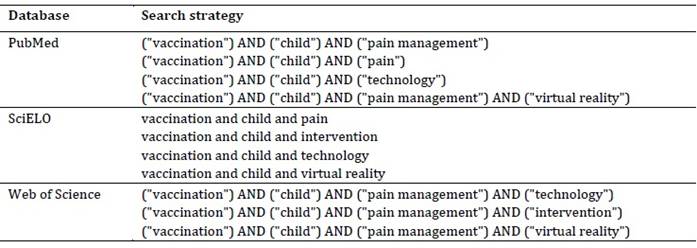
The search for studies was conducted in the SciELO, PubMed, and Web of Science (WoS) databases between August 5 and 27, 2025, as these platforms are widely recognized for their relevance and broad coverage in indexing health-related research. The search strategy combined the Boolean operator “AND” with the Health Sciences Descriptors (DeCS), as presented in Table 1.
Studies published between 2019 and 2025 in Portuguese, English, and Spanish were included if they addressed methods, devices, or strategies used to reduce pain, fear, anxiety, and discomfort during childhood vaccination. Studies with different methodological designs were considered eligible, including intervention, qualitative, cross-sectional, and cohort studies, provided they contributed to the understanding of the effectiveness, applicability, or perception of the strategies used in the vaccination context.
The inclusion of different methodological designs was justified due to the complexity and multifactorial nature of the painful and emotional experience related to childhood vaccination, allowing for a more comprehensive analysis of the strategies employed and their impacts on care.
The following studies were excluded: (a) those published before 2019; (b) those not freely available in full text; and (c) those published in scientific event proceedings or presented as undergraduate final papers, reviews, dissertations, or theses.
The selection of studies was carried out independently by two reviewers, with any disagreements resolved through consensus, following three successive stages: title reading, abstract screening, and full-text reading of the studies. To assist in this process, the Rayyan software was used, a digital tool developed to support systematic and scoping reviews by enabling reference organization, duplicate identification, and independent and blinded screening of studies among reviewers.
The methodological quality assessment of the 14 included studies was conducted using the Joanna Briggs Institute (JBI) tools, 11 according to each study design. Most of the evidence (n = 9) presented a low risk of bias, especially the randomized clinical trials published between 2024 and 2025. Five studies were classified as presenting a moderate risk of bias, mainly due to limitations inherent to non-pharmacological interventions, such as the impossibility of blinding participants and providers in physical distraction and virtual reality techniques.
Results
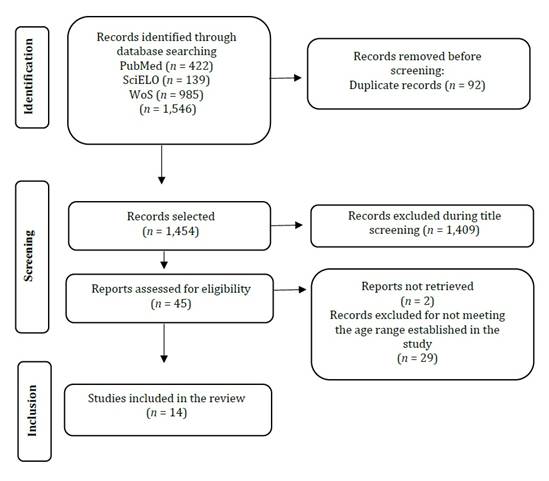
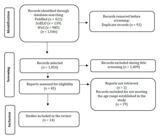
Initially, the search was conducted using the descriptors and their combinations, employing Boolean operators in the selected databases. After applying the publication year filter (2019-2025), 1,546 potential studies were identified. Subsequently, 92 duplicate articles were excluded with the assistance of the Rayyan software.
During the title screening stage, 1,409 studies were excluded for not meeting the previously established eligibility criteria; therefore, 45 articles remained for abstract reading. After this stage, 30 studies were excluded, two due to the unavailability of the full text and 28 because they included a pediatric population incompatible with the defined eligibility criteria.
The reasons for exclusion at each stage of the selection process are presented in detail in Figure 1, according to the flowchart recommended by the PRISMA guidelines.
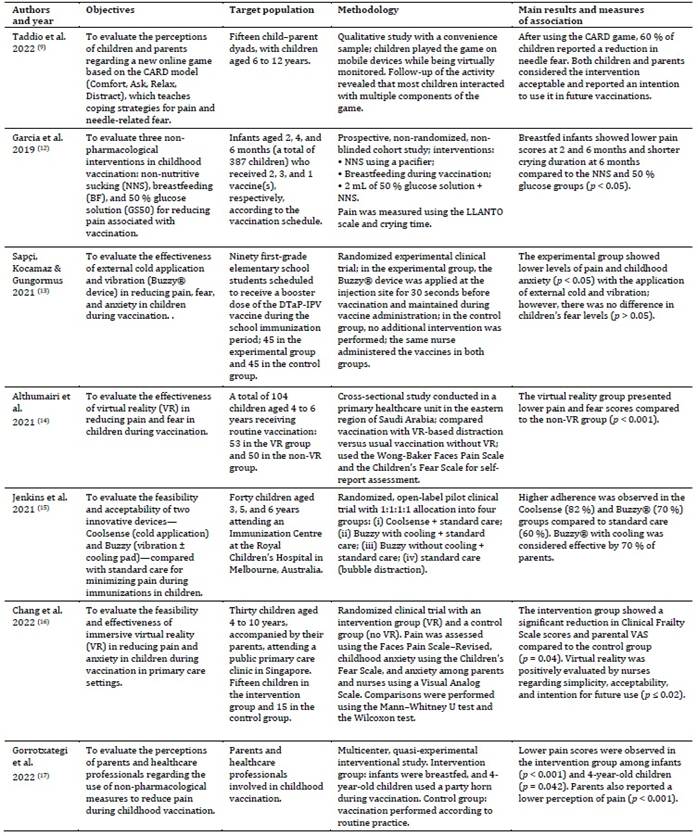
Data extraction was conducted using a structured model that included the following variables: authors and year of publication, study population, methodological design, and main results. The information obtained was organized in an electronic spreadsheet and analyzed qualitatively based on a thematic approach, which made it possible to identify the methods and devices used to reduce pain and discomfort during childhood vaccination. The synthesis of the selected studies is presented in Table 2 .
The 14 studies included in this review 9,12,13,14,15,16,17,18,19,20,21,22,23,24 were published between 2019 and 2025 and addressed non-pharmacological interventions aimed at reducing pain, fear, and anxiety during childhood vaccination. The investigations involved infants, preschoolers, and school-aged children ranging from 2 months to 12 years of age, and explored strategies such as breastfeeding, non-nutritive sucking, sweet solutions, vibration, cold application, virtual reality, digital games, behavioral distraction techniques, maternal singing, as well as visual and audiovisual stimuli.
Most of the studies were randomized clinical trials, followed by quasi-experimental studies, prospective cohort studies, and one qualitative study. Outcome measurements were performed using recognized and validated pain scales, including the Face, Legs, Activity, Cry, Consolability (FLACC) scale, the Wong-Baker Faces Pain Rating Scale, the Modified Behavioral Pain Scale, as well as scales for assessing children’s fear and anxiety.
The findings converged toward a significant reduction in pain and discomfort in children when distraction and comfort strategies were used. In infants, methods such as breastfeeding during vaccination and non-nutritive sucking showed positive effects. 12 Among older children, interventions combining cold and vibration, such as the Buzzy® device, consistently demonstrated pain reduction.13,15,21
Virtual reality, present across different study designs, emerged as one of the most promising techniques, reducing pain, fear, and anxiety compared with standard care. 14,16,22,23 Other behavioral interventions, such as the use of balloons, cards, tablets, or games based on the CARD model, were also effective in reducing fear and promoting greater child engagement. 9,18 Simple and low-cost resources, such as kaleidoscopes, 19 maternal singing, 20 and cartoon videos, 24) were likewise effective, reinforcing the importance of accessible strategies within healthcare services.
Overall, the analyzed studies demonstrate that non-pharmacological methods are effective, safe, and feasible interventions to reduce pain, fear, and anxiety during childhood vaccination, regardless of age group or care setting. The diversity of identified devices and techniques-ranging from advanced technological resources, such as virtual reality, to simple and low-cost approaches, such as maternal singing and videos-highlight the potential for adapting strategies to different healthcare realities, contributing to an improved vaccination experience and potentially promoting greater adherence to immunization programs.
Discussion
This integrative review sought to synthesize the most recent evidence on the methods and devices used to reduce pain and discomfort during childhood vaccination. The findings confirm the relevance of non-pharmacological strategies in improving care quality and promoting positive experiences during the procedure. 7,24 The results converge on the understanding that the painful experience associated with vaccination is one of the main factors contributing to needle fear and, consequently, to vaccine hesitancy, a growing phenomenon in several countries. 9 Thus, interventions that make the procedure less aversive have a direct impact not only at the time of vaccine administration but also on the future behavior of children and their caregivers, promoting adherence to vaccination schedules.
Affective-Behavioral and Bonding Strategies
Among the identified interventions, affective-behavioral strategies stood out, characterized by providing emotional support, distraction, and comfort during the vaccination procedure.
In infants, strategies such as breastfeeding, skin-to-skin contact, and non-nutritive sucking remain among the most recommended and result in a consistent reduction in crying and pain scores. 12 These practices are aligned with international recommendations and reinforce the importance of parental participation during the vaccination procedure.
In addition, behavioral distraction interventions, including colorful images, digital games, maternal singing, and preferred videos, also demonstrated effectiveness. The simplicity, low cost, and high acceptability of these methods make them accessible options, especially in resource-limited settings such as primary healthcare units. 18,19,20,23 The findings reinforce that playful and supportive strategies can significantly contribute to making vaccination less traumatic for children and their families.
Interventions with Devices and Technologies
Among device- and technology-based interventions, virtual reality (VR) stood out for the consistency of results and its ability to cognitively engage the child, diverting attention away from the painful stimulus. 14,16,21,22 The studies included in this review reported a significant reduction in pain and fear during vaccination with the use of VR, making it a highly effective distraction tool during pediatric invasive procedures.
Cold- and vibration-based methods, such as the Buzzy® device, also showed robust evidence of effectiveness. These findings support the physiological “gate control” theory of pain, according to which sensory stimuli compete with nociceptive signals, reducing their perception. 12,13,15 Its practical and straightforward application facilitates implementation in public healthcare services.
Although technological interventions may require greater resource availability and additional costs, the results suggest significant potential for improving the pediatric vaccination experience, especially in children with higher levels of anxiety or needle fear.
Accessible Strategies and Clinical Applicability
Overall, the analyzed studies demonstrate that non-pharmacological methods are effective, safe, and feasible interventions for reducing pain, fear, and anxiety during childhood vaccination, regardless of age group or care setting. The diversity of identified devices and techniques shows that simple and accessible strategies can be incorporated into routine vaccination services, contributing to the humanization of care.
By integrating studies with different methodological designs, the integrative review not only enables the identification of effective interventions but also provides an understanding of their context of application, reported challenges, and the perceptions of children, parents, and healthcare professionals. This broader approach allows for a more comprehensive understanding of the feasibility and acceptability of the strategies, which are essential elements for their routine adoption.
However, it is important to acknowledge that some studies presented small sample sizes or methodological limitations, such as lack of blinding or insufficient standardization of assessment instruments. These aspects highlight the need for multicenter clinical trials with greater methodological rigor to confirm effectiveness and support practical recommendations.
In summary, the evidence suggests that the incorporation of non-pharmacological methods into vaccination practice can improve the child’s experience, strengthen the bond with healthcare services, increase family satisfaction, and contribute to addressing vaccine hesitancy. Thus, the adoption of these interventions represents a promising strategy to enhance the quality of primary care and promote equity in access to immunization.
Finally, the implementation of these interventions in primary healthcare requires nurses and managers to assess the feasibility and cost of each method, selecting low-cost and highly applicable strategies such as mobile device videos, or technologies like virtual reality in settings with greater resource availability. The safety of these non-pharmacological practices is high; however, their effectiveness depends on staff training in behavioral management and appropriate use according to the child’s age group, prioritizing bonding-based methods for infants and cognitive distraction strategies for older children. These implications reinforce that organizing the workflow in vaccination rooms and ensuring professional preparedness are essential to humanize care and reduce vaccine hesitancy.
Limitations
This study presents some limitations that should be considered when interpreting its results. First, the literature search was conducted in three international databases (SciELO, PubMed, and Web of Science), which, although they include important sources of scientific literature in the health field, may not encompass all available publications on the topic.
The exclusion of articles not freely available in full text may have introduced availability bias and restricted access to potentially relevant evidence. In addition, the non-inclusion of gray literature, such as undergraduate theses, dissertations, doctoral theses, and conference proceedings, may have resulted in publication bias, as relevant studies not published in indexed journals may not have been captured in the analysis.
The adopted time frame (2019-2025) may have limited the inclusion of potentially relevant earlier studies, although this period was intentionally chosen to identify more recent scientific evidence on strategies for pain relief during childhood vaccination.
Another limitation relates to the possible exclusion of relevant studies due to the search strategies and eligibility criteria adopted, which are inherent to the selection process in literature reviews.
Despite these limitations, it is believed that the results presented contribute to the systematization of recent scientific knowledge on non-pharmacological interventions for pain relief during childhood vaccination, providing relevant support for healthcare practice and for the development of future research in the field.
Conclusion
The non-pharmacological interventions identified in this review demonstrated potential to reduce pain, fear, anxiety, and discomfort during childhood vaccination. Affective-behavioral strategies, such as breastfeeding, distraction, and non-nutritive sucking, as well as device- and technology-based interventions, such as virtual reality and vibration and cooling devices, showed positive results in children’s vaccination experience.
It is noteworthy that many of these interventions are low-cost, easy to implement, and have the potential to be incorporated into vaccination services, contributing to the humanization of care and more positive vaccination experiences. Furthermore, the findings reinforce the importance of adopting pain management strategies during childhood vaccination, considering their potential influence on family adherence to immunization schedules.
It is recommended that further studies with greater methodological rigor and evaluation across different care settings be conducted in order to expand the evidence on the effectiveness and applicability of these strategies in the context of childhood vaccination.
References
- 1. World Health Organization. Immunization agenda 2030: A global strategy to leave no one behind. Geneva: WHO; 2025.
- 2. Brasil. Ministério da Saúde. Programa Nacional de Imunizações: 50 anos. Brasília: Ministério da Saúde; 2021.
- 3. World Health Organization. Global vaccination coverage estimates. Geneva: WHO ; 2023.
- 4. UNICEF. Anuário VacinaBR 2025. Brasília: UNICEF; 2025.
-
5. Fernandes EG, Pércio J, Marciel ELN. Cobertura e hesitação vacinal no Brasil: inquérito revela a realidade e oferece subsídios para a Política Nacional de Imunizações. Epidemiol. Serv. Saúde. 2024;33(esp2):e2024638. doi: 10.1590/S2237-96222024v33e2024638.especial2.pt
» https://doi.org/10.1590/S2237-96222024v33e2024638.especial2.pt -
6. Sato APS. What is the importance of vaccine hesitancy in the drop of vaccination coverage in Brazil? Rev. Saúde Pública. 2018;52:96. doi: 10.11606/S1518-8787.2018052001199
» https://doi.org/10.11606/S1518-8787.2018052001199 - 7. World Health Organization. Reducing pain at the time of vaccination: WHO guideline. Geneva: WHO ; 2015.
-
8. Maciel EAF, Santos BP, Maciel EVO, Silva SM da, Carvalho TV, Pena L, et al. Vaccination pain and anxiety reduction: Integrative literatute review. Res Soc Dev. 2021;10(8):e15610816508. doi: 10.33448/rsd-v10i8.16508
» https://doi.org/10.33448/rsd-v10i8.16508 -
9. Taddio A, Ilersich ANT, Bucci L, McMurtry CM, Gudzak V, Ipp M, et al. Letting kids play their CARDs (Comfort, Ask, Relax, Distract) to help cope with needle-related fear and pain: Results from user testing. Vaccine. 2022;40(52):7667-7675. doi: 10.1016/j.vaccine.2022.09.035
» https://doi.org/10.1016/j.vaccine.2022.09.035 -
10. Page MJ, McKenzie JE, Bossuyt PM, Boutron I, Hoffmann TC, Mulrow CD, et al. The PRISMA 2020 statement: an updated guideline for reporting systematic reviews. BMJ. 2021;372. doi: 10.1136/bmj.n71
» https://doi.org/10.1136/bmj.n71 -
11. Moola S, Munn Z, Tufanaru C, Aramatarwan E, Sears K, Scheckel M, et al. Systematic reviews of etiology and risk. Em: Aromataris E, Munn Z, editors. JBI Manual for Evidence Synthesis. Adelaide: JBI; 2020. Disponível em: https://synthesismanual.jbi.global
» https://synthesismanual.jbi.global -
12. Garcia NA, Tornero OB, Sancho JM, Alberola-Rubio J, Rubio MEL, Sirventi LP. Evaluación del dolor en niños de 2, 4 y 6 meses después de la aplicación de métodos de analgesia no farmacológica durante la vacunación. An Pediatr (Barc). 2019;91(2):71-138. doi: 10.1016/j.anpedi.2018.10.002
» https://doi.org/10.1016/j.anpedi.2018.10.002 -
13. Sapçi H, Kocamaz H, Gungormus Z. Effects of applying external cold and vibration to children during vaccination on pain, fear and anxiety. Complement Ther Med. 2021;58:102688. doi: 10.1016/j.ctim.2021.102688
» https://doi.org/10.1016/j.ctim.2021.102688 -
14. Althumairi A, Sahwan M, Alsaleh S, Alabduljobar Z, Aljabri D. Virtual Reality: Is It Helping Children Cope with Fear and Pain During Vaccination? J Multidiscip Healthc. 2021;14:2625-2632. doi: 10.2147/JMDH.S327349
» https://doi.org/10.2147/JMDH.S327349 -
15. Jenkins N, Orsini F, Elia S, Perrett K. Minimising Immunisation Pain of childhood vaccines: The MIP pilot study. J Paediatr Child Health. 2021;57(3):376-382. doi: 10.1111/jpc.15229
» https://doi.org/10.1111/jpc.15229 -
16. Chang ZY, Kang GC, Koh EYL, Fong RJK, Tang J, Goh CK, et al. Immersive Virtual Reality in Alleviating Pain and Anxiety in Children During Immunization in Primary Care: A Pilot Randomized Controlled Trial. Front Pediatr. 2022;10:847257. doi: 10.3389/fped.2022.847257
» https://doi.org/10.3389/fped.2022.847257 -
17. Gorrotxategi PG, Rueda AZ, Pascual AU, Galdeano PA, Irureta SJ, et al. Nonpharmacological pain management in vaccination. Perception of paediatricians, patients and guardians. An Pediatr (Engl Ed). 2022;97(3):199-205. doi: 10.1016/j.anpede.2022.07.002
» https://doi.org/10.1016/j.anpede.2022.07.002 -
18. Teles GL, Junior ALC. Distraction of Children Undergoing Vaccination. Paidéia (Ribeirão Preto). 2022;32:e3205. doi: 10.1590/1982-4327e3205
» https://doi.org/10.1590/1982-4327e3205 -
19. Dilek S, Figen Y, Merve G, Hatice EO, Seyma KT. Technology versus nostalgia; A randomized controlled trial of the effect of virtual reality and kaleidescope on pediatric pain, fear and anxiety management during immunization. J Pediatr Nurs. 2024;78:e383-e388. doi: 10.1016/j.pedn.2024.07.029
» https://doi.org/10.1016/j.pedn.2024.07.029 -
20. Monaci MG, Caruzzo CM, Spagnuolo C, Benedetti BC, Grandjean D, et al. Maternal singing reduced pain indexes in 2-month-old infants and increased proximity during vaccinations. Acta Paediatr. 2024;113(7):1664-1671. doi: 10.1111/apa.17121
» https://doi.org/10.1111/apa.17121 -
21. Düzkaya DS, Uysal G, Siktas I, Karacul A, Açikgöz A. Effects of the Helfer skin tap technique and Buzzy® application on the levels of pain and fear experienced by children during vaccination: A randomized controlled trial. J Pediatr Nurs. 2024;79:e278-e284. doi: 10.1016/j.pedn.2024.10.037
» https://doi.org/10.1016/j.pedn.2024.10.037 -
22. Herrera LM, Fuster-Casanovas A, Catalina MQ, Mensa CM, Guitart IV, Sedeño AA, et al. Use of virtual reality in the reduction of pain after the administration of vaccines among children in primary care centers in Central Catalonia: Randomized clinical trial. PLoS One. 2025;20(5):e0322840. doi: 10.1371/journal.pone.0322840
» https://doi.org/10.1371/journal.pone.0322840 -
23. López MISS, Vidal ML, Zaldibar CR, Saura IT, Fleta MIM, Alonso GG, et al. The effect of virtual reality versus standard-of-care treatment on pain perception during paediatric vaccination: A randomised controlled trial. J Clin Nurs. 2025;34(3):1045-1062. doi: 10.1111/jocn.17287
» https://doi.org/10.1111/jocn.17287 -
24. Li F, Yu TT, Wang CM, Lu HY, Lu Y, Li LL. Effectiveness of Watching Cartoons in Reducing Pain in Children Receiving Vaccine Injection: A Randomized Controlled Trial. Public Health Nurs. 2025;42(5):1687-1693. doi: 10.1111/phn.70002
» https://doi.org/10.1111/phn.70002