Pelvic Mobility Exercises in Labor and Delivery: A Scoping Review
Introduction: A variety of exercises and positions used in assisting women during labor are associated with reducing labor time and promoting vaginal delivery.
Objective: To map and characterize the use of pelvic mobility exercises in labor and delivery care.
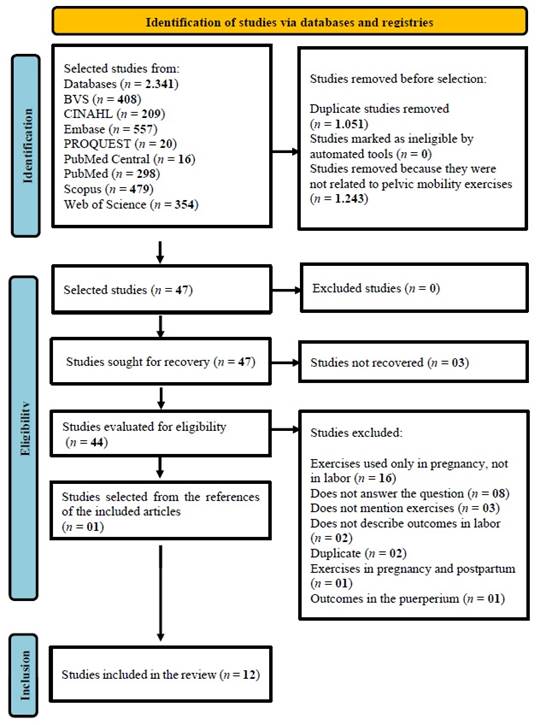
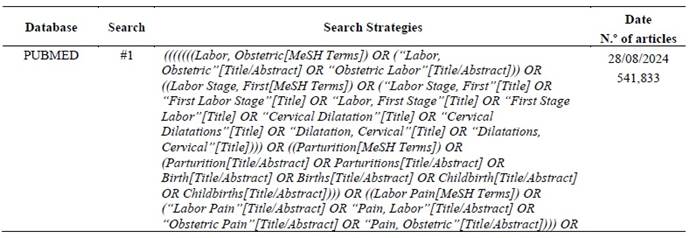
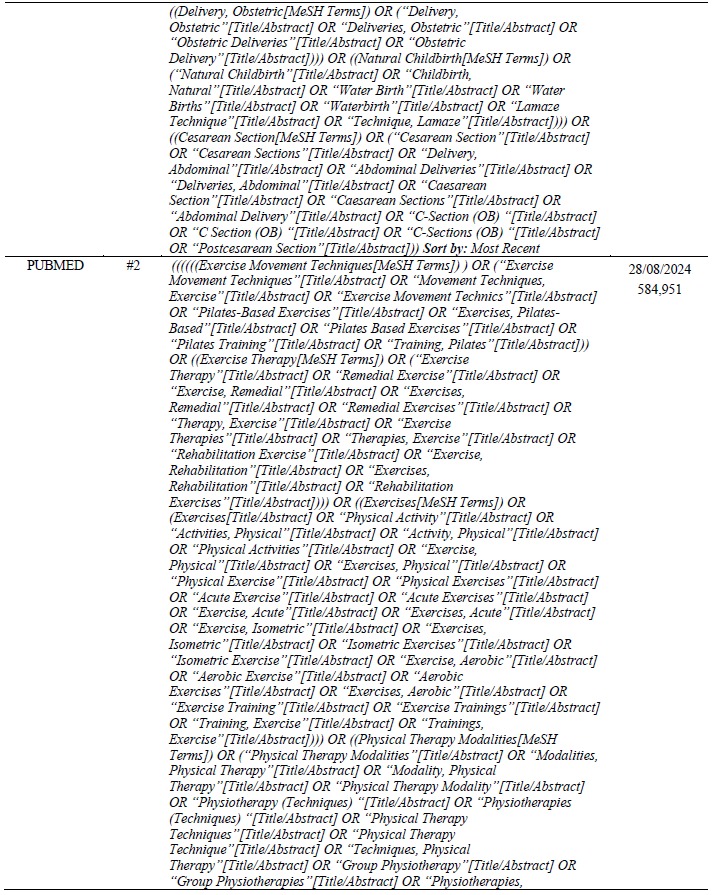
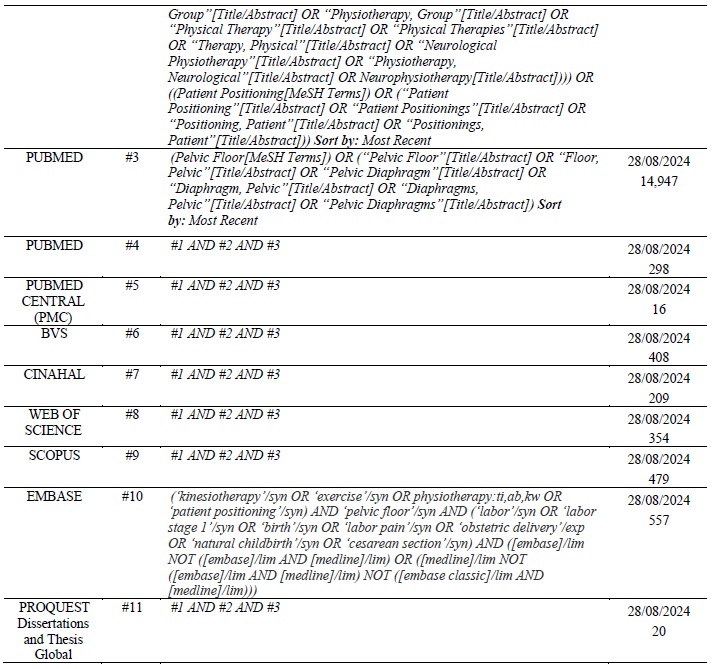
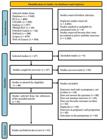
Methodology: A scoping review, outlined according to the Joanna Briggs Institute methodology and described in line with the PRISMA-ScR checklist. The inclusion criteria covered scientific articles, editorials, research notes, dissertations, and theses published up to August 2024, with no language restrictions. The search was conducted in electronic databases, as well as in dissertation and thesis repositories. The publications were selected using the Rayyan Web software by two independent reviewers in a blinded mode, and any potential conflicts were resolved by a third reviewer.
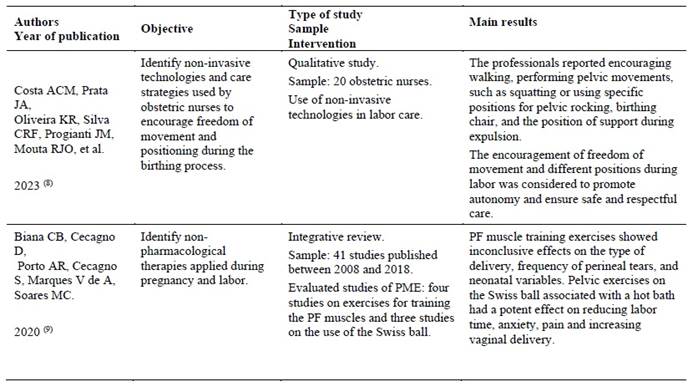
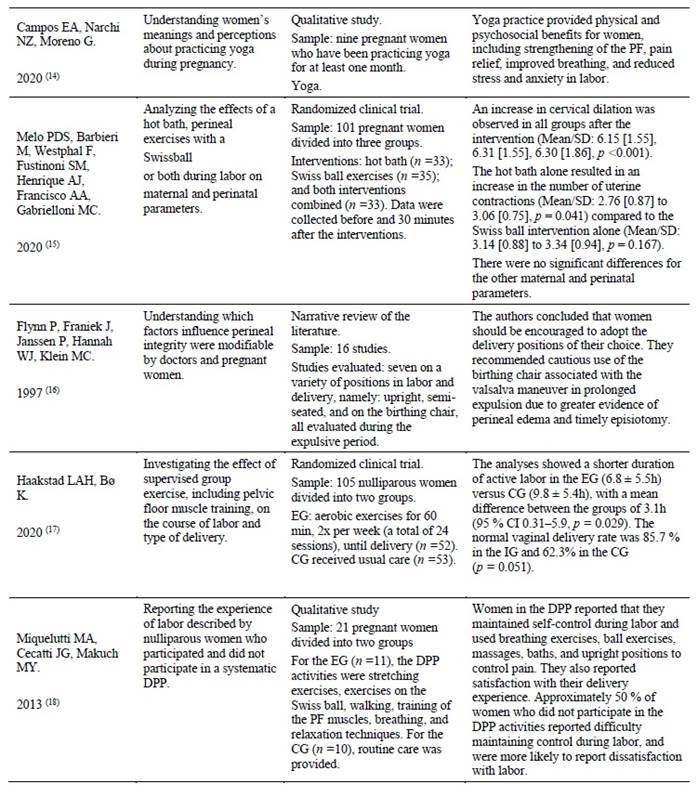
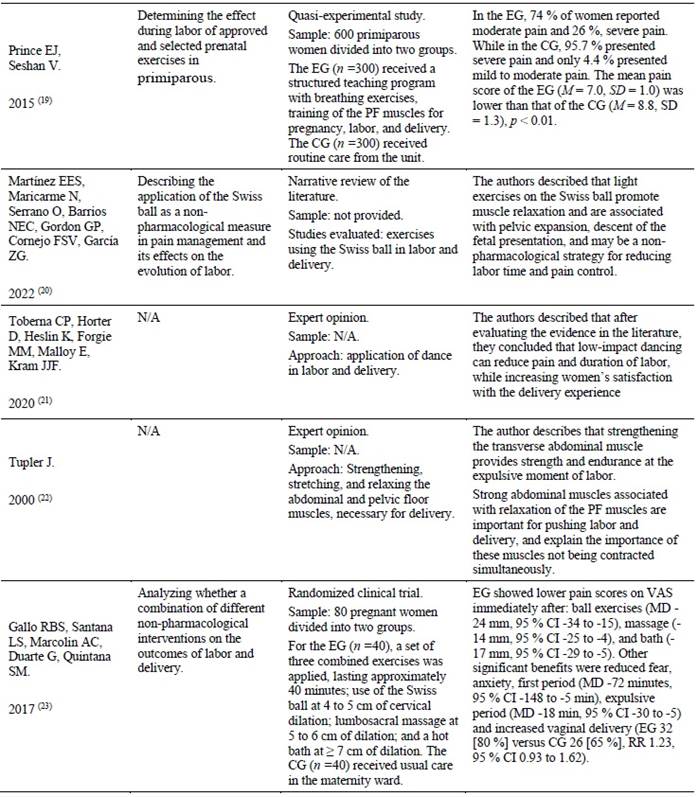
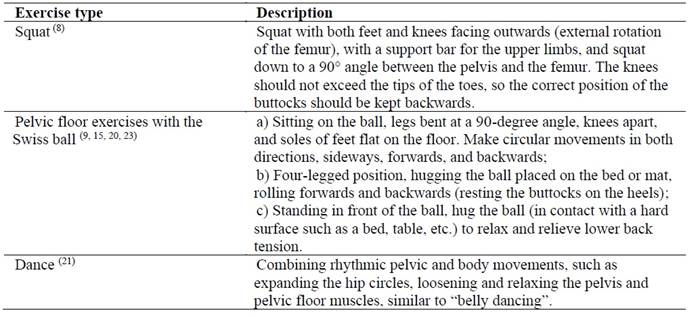
Results: Twelve publications were identified that evaluated Swiss ball exercises, aerobic exercises, walking, squats, freedom of movement and upright positions, yoga, dance, abdominal and pelvic floor muscle training.
Final considerations: The described pelvic mobility exercises showed results in reducing labor time, pain, and anxiety.
Keywords:
pregnant women; exercise and movement techniques; pelvic diaphragm; labor, obstetric; complementary therapies
 Thumbnail