Assessment Instruments in Individuals at the End-of-life: An Integrative Review
Abstract:
Introduction: The clinical assessment of individuals at the terminal stage of illness requires valid and reliable instruments to identify complex needs in highly vulnerable contexts. International evidence shows conceptual and methodological heterogeneity among available tools and limited adaptation to Latin American settings
Objective: To identify, classify, and analyze the characteristics and psychometric properties of instruments used in the healthcare of people at the end of life
Methodology: An integrative review was conducted following INTEGRA criteria. The search was performed between September 2024 and May 2025 in PubMed, Scopus, Web of Science, and EBSCO, including studies published between 2015 and 2025. Study selection followed PRISMA 2020 guidelines, and methodological quality was assessed using MMAT. Data were synthesized through thematic categorization
Results: Fourteen articles were included, reporting 28 instruments applied to end-of-life populations. Tools focused primarily on functional status, clinical condition, and psychological dimensions, whereas spirituality, existential needs, interpersonal relationships, and advanced-care planning were less represented. Most instruments demonstrated acceptable validity and reliability, although variability was observed in theoretical foundations, development processes, and cross-cultural validation
Conclusions: Although a wide range of assessment instruments is available for terminal care, their practical use is limited by conceptual heterogeneity, lack of standardization, and insufficient cultural adaptation. Strengthening comprehensive assessment through locally validated instruments is essential to improve end-of-life care quality
Keywords:
terminally ill; terminal care; surveys and questionnaires; psychometrics
Resumen:
Introducción: La evaluación clínica de personas en etapa terminal requiere instrumentos válidos y confiables para identificar necesidades complejas en contexto de alta vulnerabilidad. La evidencia internacional muestra heterogeneidad conceptual y metodológica en las herramientas disponibles y escasa adaptación a realidades latinoamericanas
Objetivo: Identificar, clasificar y analizar las características y propiedades psicométricas de los instrumentos utilizados en la atención de salud en personas al final de la vida
Metodología: Revisión integrativa conforme a criterios INTEGRA. La búsqueda se efectuó entre septiembre 2024 y mayo 2025 en PubMed, Scopus, Web of Science y EBSCO, considerando estudios publicados entre 2015-2025. La selección se realizó según PRISMA 2020 y la calidad metodológica se evaluó mediante MMAT. La síntesis se desarrolló mediante categorización temática
Resultados: Se analizaron 14 artículos que reportaron 28 instrumentos utilizados en personas al final de la vida. Predominaron herramientas orientadas a evaluar funcionalidad, estado clínico y dimensiones psicológicas. En contraste, espiritualidad, necesidades existenciales, relaciones interpersonales y planificación anticipada fueron menos representadas. La mayoría de los instrumentos presentó niveles adecuados de validez y confiabilidad, aunque con variabilidad en fundamentos teóricos, procesos de desarrollo y validación transcultural
Conclusiones: Existe amplia disponibilidad de instrumentos, pero su aplicación se limita por heterogeneidad conceptual, escasa estandarización y baja adaptación cultural. Fortalecer la evaluación integral con instrumentos validados localmente es esencial para fortalecer la calidad del cuidado al final de la vida
Palabras clave:
enfermo terminal; cuidado terminal; encuestas y cuestionarios; psicometría
Resumo:
Introdução: A avaliação clínica de pessoas em fase terminal requer instrumentos válidos e confiáveis para identificar necessidades complexas em contexto de alta vulnerabilidade. A evidência internacional demonstra heterogeneidade conceitual e metodológica nas ferramentas disponíveis e escassa adaptação às realidades latino-americanas
Objetivo: Identificar, classificar e analisar as características e propriedades psicométricas dos instrumentos utilizados na atenção à saúde de pessoas no final da vida
Metodologia: Revisão integrativa conforme aos critérios INTEGRA. A busca foi realizada entre setembro de 2024 e maio de 2025 nas bases PubMed, Scopus, Web of Science e EBSCO, considerando estudos publicados entre 2015 e 2025. A seleção foi realizada seguindo as diretrizes PRISMA 2020 e a qualidade metodológica foi avaliada por meio do MMAT. A síntese foi desenvolvida mediante categorização temática
Resultados: Foram analisados 14 artigos que reportaram 28 instrumentos aplicados a pessoas no final da vida. Predominaram ferramentas orientadas a avaliar funcionalidade, estado clínico e dimensões psicológicas. Em contrapartida, espiritualidade, necessidades existenciais, relações interpessoais e planejamento antecipado foram menos representados. A maioria dos instrumentos apresentou níveis adequados de validade e confiabilidade, embora com variabilidade nos fundamentos teóricos, nos processos de desenvolvimento e na validação transcultural
Conclusões: Existe ampla disponibilidade de instrumentos, mas sua aplicação é limitada pela heterogeneidade conceitual, pela escassa padronização e pela baixa adaptação cultural. Fortalecer a avaliação integral com instrumentos validados localmente é essencial para aprimorar a qualidade do cuidado no final da vida
Palavras-chave:
doente terminal; cuidado terminal; inquéritos e questionários; psicometria
Introduction
The sustained increase in people passing through advanced states of chronic and progressive illnesses that lead to terminal illness (TI) has generated a growing demand for palliative care at a global level. 1 The World Health Organization (WHO) has documented that this phenomenon is associated with the ageing of the population and the increase in chronic advanced pathologies, which has intensified the need for strategies for end-of-life care. 2 At a regional level, the Pan American Health Organization (PAHO)3) and the Latin American Association of Palliative Care (ALCP) 4 have indicated important gaps in access, coverage, and development of palliative care, especially in Latin America, which underlines the need to strengthen planning and evaluation in care in this stage of life.
In this context, it is essential to distinguish between people who need wide-ranging palliative care and those who are specifically in the terminal stage. This latter condition is understood as an advanced, progressive, incurable illness with scarce response to treatment and limited prognosis, generally weeks or months.(5 This differentiation is crucial as it determines clinical priorities, orients complex ethical decisions, and demands interventions centered on comfort, accompaniment, and end-of-life quality.
In this scenario, the assessment instruments used internationally in the care of people at the end of life are understood as structured, validated, and reliable tools, designed to measure clinical, functional, psychological, spiritual, relational, and quality-of-life dimensions that characterize the terminal stage.6 The literature indicates that these instruments are central inputs for clinical practice, management of services, and research, as long as they have solid psychometric foundations and rigorous transcultural adaptations for the contexts where they are applied.7
However, a series of relevant gaps have been reported, among which the following are highlighted: the dispersion of the instruments, conceptual variability between regions, transcultural differences in the comprehension of the terminal phase, and the scarce adaptation of these tools to Latin American contexts.8,9 This heterogeneity makes them difficult to apply clinically and represents an additional barrier for professionals in the healthcare area, who, due to care demands, have little time to search for, select, and apply instruments that allow them to evaluate specific health parameters.10
Therefore, the objective of this study is to identify, classify, and analyze the psychometric properties of the instruments used internationally in the healthcare of people at the end of life in order to orient clinical practice and favor evidence-based decisions, as well as contribute to the development and selection of culturally pertinent instruments for the care of people in the terminal stage.
Method
This is a systematic review, the objective of which is to synthesize research or literature with heterogeneous study designs.(11 To conduct this review, we followed the recent INTEGRA methodological update principles for integrative reviews,12 which consist of the following phases: (I) research idea or problem: the central problem was identified as the dispersion and psychometric variability of the instruments; (N) research question or objective: the objective was formulated to identify, classify, and analyze the psychometric properties of these instruments; (T) search strategy: a structured strategy was designed using MeSH and DeCS vocabulary and free-text terms, combined with Boolean operators, to maximize search sensitivity and specificity; (E) search execution: the search was conducted by four researchers over a 9-month period in selected databases, covering the past 10 years; (G) quality assessment of results: evaluated using the Mixed Methods Appraisal Tool (MMAT), 13 to ensure the methodological soundness of the evidence; (R) filtered results: applying the guidelines of the PRISMA 2020 statement, 14 the authors independently conducted the screening process by title and abstract, followed by full-text evaluation; (A) Analysis and discussion: the results were analyzed through a thematic categorization process, which allowed for a structured and coherent synthesis. The sequential application of this methodological framework ensured the transparency of the process, the logical coherence of the analysis, and the quality of the results obtained.
To formulate the research question the acronym PIO 15 was used, incorporating the following terms: (P) Population: people at the end of life; (I) Intervention: assessment tools used in their clinical care; (O) Outcome: characteristics, uses, and properties of these tools. This exercise led to the following research question: What are the instruments used internationally in the health care of people at the end of life, published between 2015 and 2025, and what are their characteristics, assessed dimensions, and psychometric properties?
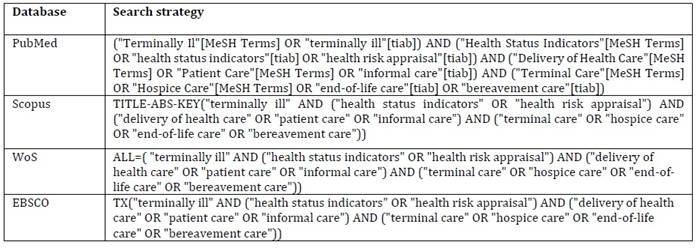
To answer this research question, the search strategy was designed systematically and reproducibly. A search was made for relevant studies on the Scopus, Web of Science (WOS), PubMed, and EBSCO electronic databases, selected for their multidisciplinary coverage and their relevance in the healthcare area. For the retrieval of evidence, a combination of controlled terms from Medical Subject Headings (MeSH) and Descriptores en Ciencias de la Salud (DeCS) were used, combined with free terms and OR and AND Boolean operators, adapting the syntax to the specific requirements of each database (Table 1). Filters were applied to restrict the results to studies published between the years 2015 and 2025, with complete text available in English or Spanish, and carried out on an adult population. The search was executed by the authors between September 2024 and June 2025.
The following inclusion criteria were established in this review: complete articles available electronically in English or Spanish, that dealt with assessment instruments applied to adults in the terminal stage of their illness or end of life in an intra or extra-hospital context, with a quantitative or mixed design. On the other hand, articles of care of patients that were not in the condition of a terminal illness, i.e., not in the final stage of life, review articles, gray literature, and articles with pediatric populations were excluded.
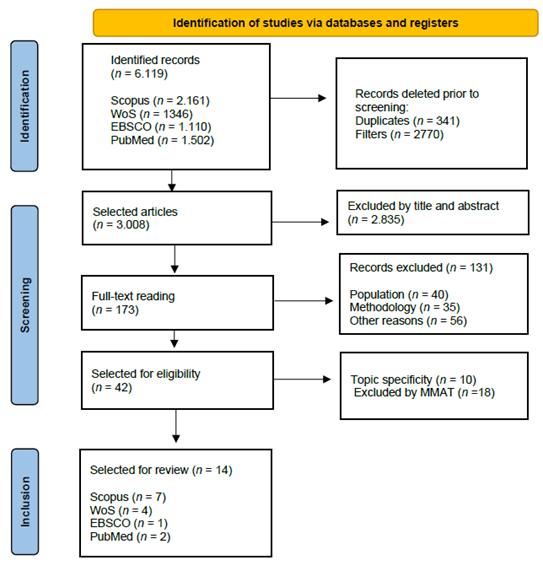
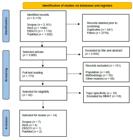
The process of identification, selection, and inclusion of the studies was represented through a flowchart (Figure 1) based on the PRISMA 2020 14 guidelines. This flowchart allows us to visualize sequentially the number of records identified, duplicates, studies excluded following reading of the title and abstract, evaluation of the full text, and the final inclusion of the analyzed articles. The studies were selected by 4 researchers independently and simultaneously, who evaluated first by title and abstract and then by complete text applying the eligibility criteria. The discrepancies in any of the phases were resolved through discussion and it was not necessary to refer them to a consultant.
For the data extraction, an adaptation was used of the data collector suggested by the International Network of Nursing in Occupational Health (RedENSO), 16) collecting the following variables: author, title in its original language, year, journal/quality, database, key words, place of study, study objective, specific objectives, design, sample and instruments, and study conclusions.
The methodological quality of the studies included was evaluated using the scale of the Mixed Methods Appraisal Tool (MMAT). 13 This tool permitted the evaluation of the empirical research using studies with qualitative, quantitative, and mixed approaches. Each study was evaluated with 7 items, 2 common and 5 specific ones for each of the designs. Each item is responded to with a “yes”, “no”, or “cannot be determined”, thus obtaining a percentage of quality determined by the number of affirmative responses obtained in the evaluation items. The authors decided to include in the review all those articles that met more than 90 % of the methodological quality criteria established by MMAT. To guarantee the robustness and reliability of the review and the MMAT process, the 4 authors evaluated their studies methodologically, with additional random verification to ensure consistency. Differences were resolved by consensus.
Finally, the analysis of the selected articles was conducted by the four researchers, who participated actively and collaboratively in all stages of the analysis, under the supervision of two faculty researchers. Once the selection process was complete, a thematic analysis was carried out using categorization to identify, organize, and synthesize the assessment tools used internationally in end-of-life care. To avoid conceptual ambiguities, a “person in the terminal/end-of-life stage” was defined as an individual with an advanced and irreversible illness, unresponsive to treatment, and with a limited life expectancy, distinguishing this from the broader category of palliative care, which was not the focus of this study.
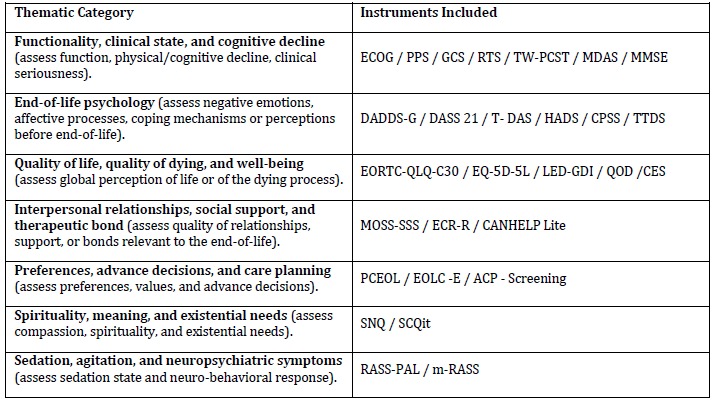
Following this, the findings were compared and consensus was reached in group work sessions, which allowed the construction of final thematic categories that support the presentation of the results. Each dimension was constructed grouping instruments that shared a main measuring objective and conceptual nucleus, in accordance with the evaluated variables and the purpose declared in the original studies. Along these lines, the dimension of functionality, clinical state, and cognitive decline includes instruments aimed at evaluating functional performance, clinical seriousness and compromise in people at the end of life. The dimension of end-of-life psychology encompasses tools designed to measure emotional distress, anxiety, depression, and coping mechanisms in the face of the dying process. The dimension of quality of life, quality of dying, and well-being includes instruments that comprehensively assess the subjective perception of well-being and the end-of-life experience. The dimension of interpersonal relationships, social support, and therapeutic bond brings together instruments that explore the quality of meaningful relationships and perceived support. The dimension of preferences, advance decisions, and care planning includes tools to identify values, wishes, and decisions related to end-of-life care. The dimension of spirituality, meaning, and existential needs groups together instruments aimed at assessing transcendence, meaning of life, and spiritual needs. Finally, the dimension of sedation, agitation, and neuropsychiatric symptoms comprises instruments designed to assess behavioral disturbances characteristic of the advanced stages of the dying process.
Results
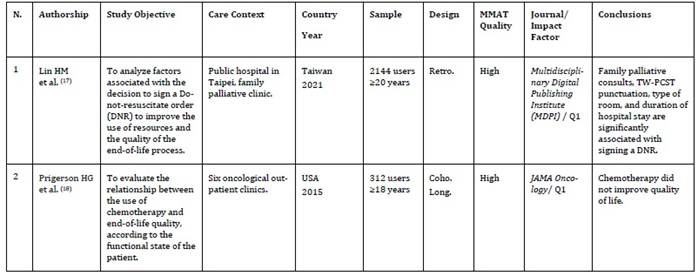
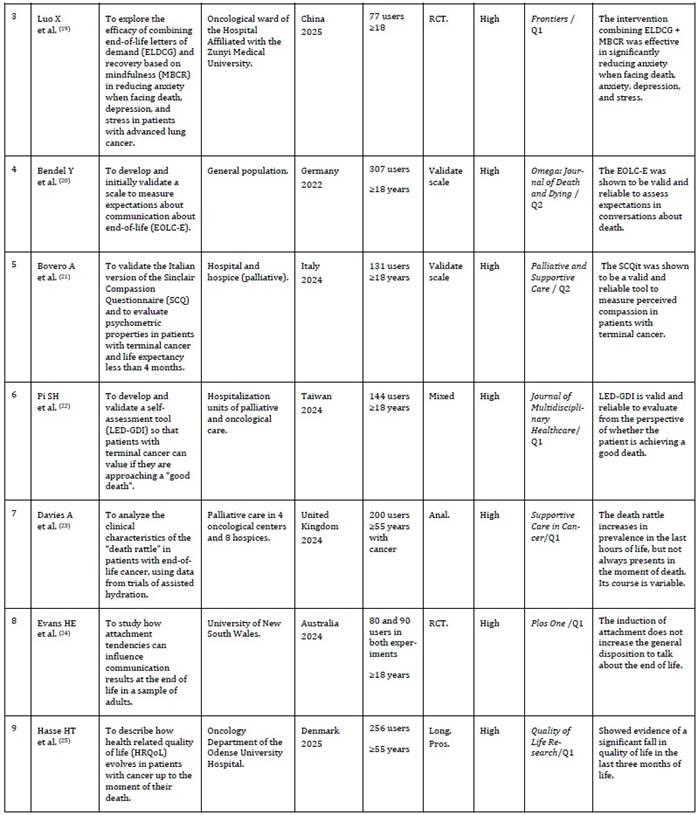
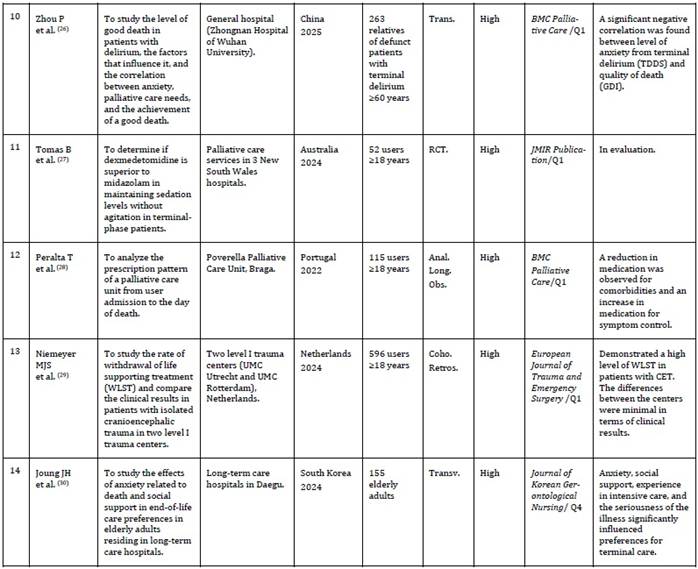
Following the exhaustive review of the literature, Table 2 . . presents the 14 articles in which the instruments used for care of the terminal patient were found.
The review included a total of 14 articles, 17-30 published between 2015 and 2025, coming from ten countries, all of which focused on terminal-stage patients. The predominant grouping was research developed in Asia, mainly China, Taiwan, and Japan, which together represented 46 % of the total. It was observed that 66 % of the articles were published in the years 2024-2025, which reflects a highly up-to-date bibliography that is coherent with contemporary trends in end-of-life care.
It is worth noting that the majority of the clinical assessments and clinical decisions with patients in the terminal stage were done in hospital surroundings (66 %), followed by hospices (20 %), and residential care homes (6.7 %). In terms of methodological designs, observational and analytical studies dominated (53 %), followed by clinical trials and instrument validation studies (40 %), while 6.7 % corresponded to mixed studies. In relation to the size of the sample, 46 % of the studies included between 101-300 participants, 33 % evaluated populations equal to or below 100 persons, and 20 % were more than 300 participants. It is relevant to highlight that the majority of the articles were published in journals located in Q1 (73 %), followed by 20 % in Q2, and only 6.7 % in Q4. All of the articles have high methodological quality according to the MMAT instrument. Finally, the population under study corresponded mainly to adults in the terminal stage, with 20 % of the studies centered in elderly adults, consistent with the epidemiology of the end of life.
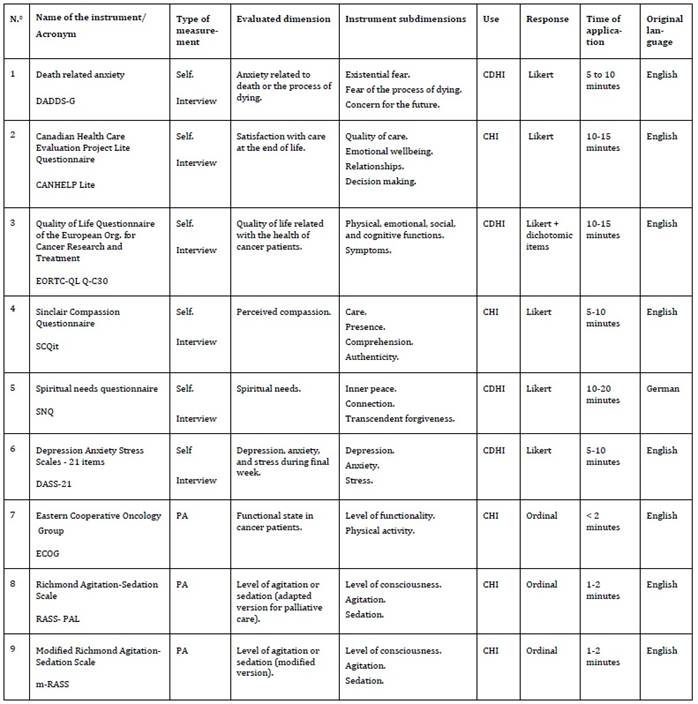
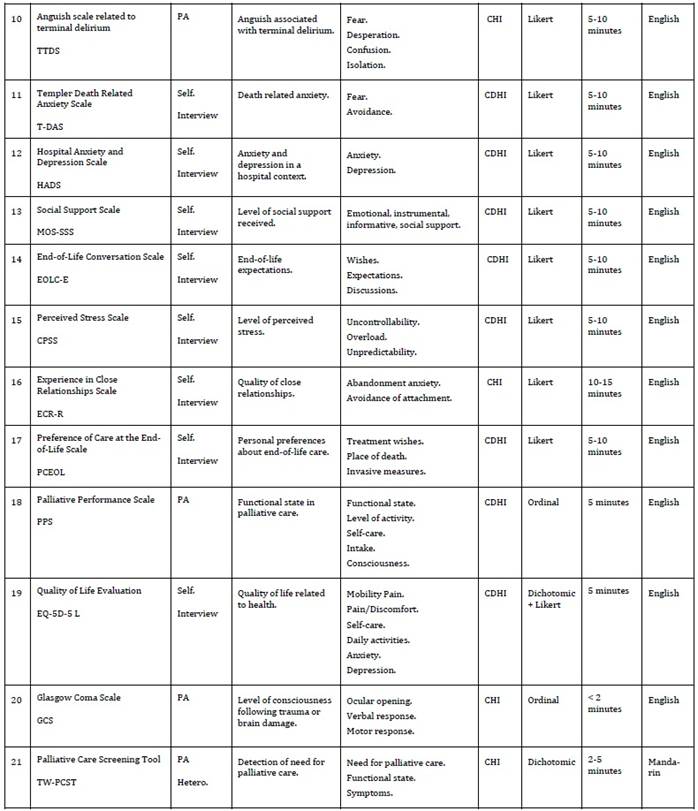
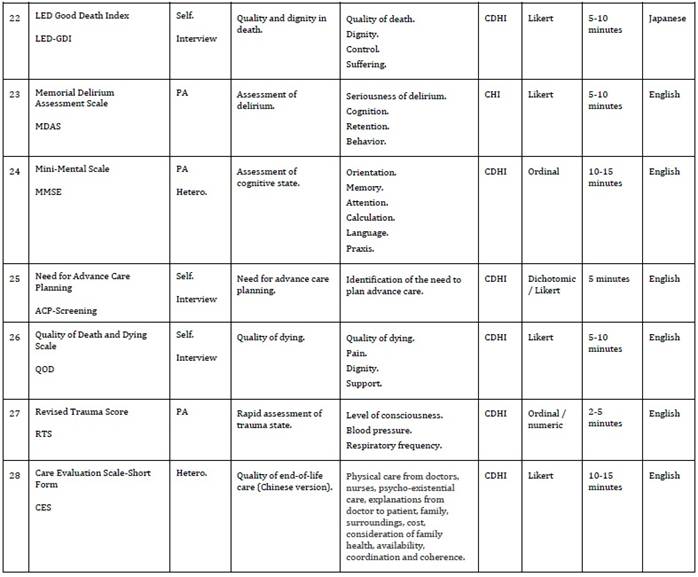
In relation to meeting the objectives, 28 instruments used in the healthcare of the terminally ill patient were found, and they are laid out in Table 3 . .
In terms of the general characteristics of the instruments, diversity was observed in the mode of application. Approximately 67.8 % of the instruments are self-applied or administered through interviews, reflecting a tendency to measure perceptions, symptoms, and experiences directly from the terminal patient. 31 % require professional assessment and observation.
In relation to type of measurement, Likert type scales dominate (71.4 %), with dichotomic formats in a lesser proportion (3.6 %), which shows a preference for tools that are sensitive to nuances, experiences, and terminal symptomatology. In relation to the dimensions evaluated, psychological and emotional constructs are highlighted with 35.7 % of the instruments oriented towards measuring death related anxiety, stress, depression, and attitudes towards death, while 25 % are centered in quality of life and death, 21 % are directed to valuing functionality, cognitive state, and only 17 % of the instruments dealt with relational and spiritual dimensions. In terms of application times, 75 % require between 5 and 10 minutes, demonstrating the need for brief, clinically feasible instruments. Finally, in the analysis of the original language, there was a clear predominance of English, showing a theoretical development in Anglo-Saxon and European contexts.
Table 4 presents the classification of the 28 instruments analyzed, according to the thematic categories that were developed following the analysis of the selected articles.
Table 4 reveals a heterogeneous distribution that is nonetheless consistent with the most relevant conceptual domains of end-of-life care. The most frequently represented dimension was functionality, clinical status, and cognitive decline, accounting for 25 % of the total, which indicates that the assessment of functional and cognitive decline remains a priority for clinical decision-making at the end of life. Second, the end-of-life psychology dimension accounted for 21 % of the instruments, highlighting the growing importance attributed to emotional components such as stress, anxiety, etc. Third, the quality of life, quality of dying, and well-being dimension accounted for 17 % of the instruments, confirming the importance of measuring the patient’s subjective experience. Meanwhile, the dimensions of interpersonal relationships, social support, and therapeutic bond, as well as preferences, advance decisions, and care planning, each accounted for 10 % of the instruments. Finally, the least represented dimensions were spirituality, meaning, and existential needs, and sedation, agitation, and neuropsychiatric symptoms, with 7 % each, despite the fact that both constitute critical components of comprehensive end-of-life care.
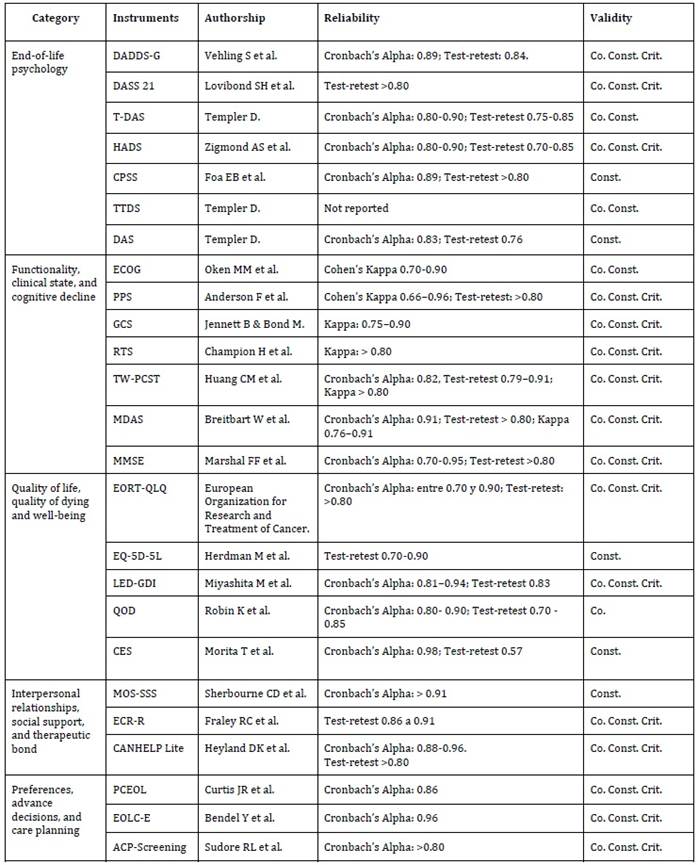
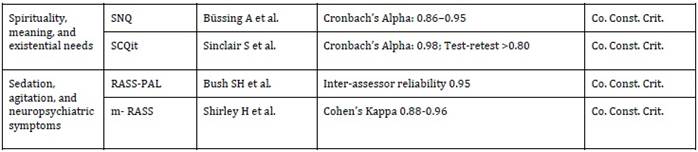
Table 5. presents the instruments included in this literature review according to their psychometric properties, primarily reliability and validity.
According to the evidence found, 100 % of the instruments report at least one psychometric property (reliability, validity, or both), which suggests a minimum psychometric base for their application in the context of terminal-stage patients.
In relation to reliability, the most reported measure was Cronbach’s Alpha with 71 % of the instruments, suggesting a robust evaluation of internal consistency. This is followed, with 57 % of the instruments, by measures of temporal stability through Test-retest, with coefficients above 0.80, which indicates acceptable stability between measurements. In the same vein, Cohen’s Kappa coefficient was reported in 21 % of the instruments, reporting coefficients above 0.75, showing an adequate level of Inter-assessor concordance.
In relation to validity, validity of the content was the most frequently used (85 %), present in 24 instruments, validity of the construct was observed in 85 % of the instruments, while the validity of the criteria was reported in 53 %, generally in scales that sought to correlate with diagnostic or clinical standards.
Therefore, the evidence shows that the instruments have a solid psychometric foundation, although there is variability in the depth of the validation processes reported in the different themes.
Discussion
This literature review offers a comprehensive view of internationally used instruments in the healthcare of people in the terminal stage, which is a phase characterized by elevated clinical, emotional, and decisional complexity. In this way, this review responds to the urgent need to optimize clinical assessment in a scenario in which chronic and terminal illness are on the rise around the globe. 31 In this context, the results of this integrative review show the diversity of instruments used internationally in the care of the person at the end of life, with a predominance of tools centered in the assessment of functionality, clinical state, and psychological aspects. This pattern is consistent with the bibliography developed in high-income countries, mainly in Asia, Europe, and North America, where functional and clinical assessment have been historically prioritized in models of palliative care attention.8,9
In the same vein, the findings show a lesser representation of instruments oriented towards relational, spiritual, and advance care planning dimensions. This gap has been previously indicated in reports and recommendations from international organizations, such as the WHO and PAHO, that highlight the need to incorporate more holistic assessments that are centered on the person in order to improve quality of end-of-life care. 32,33
When contrasting the results of this review with the international literature, it is relevant to consider the geographical and institutional contexts of the studies included. The selected literature is composed mainly of research carried out in high-income countries, mainly in Asia (China, Taiwan, South Korea), Europe (England, Germany, Italy, Denmark, and Portugal), Australia, and the United States, which are contexts where instruments centered on functional and clinical assessment of the person at the end of life predominate, with emphasis on prognosis and symptom control. On the other hand, reports emitted by the WHO, PAHO, and the Latin American Association of Palliative Care (ALCP) contribute a conceptual framework that makes the gaps existing in Latin America visible and emphasizes the need for multi-dimensional and culturally pertinent instruments, especially in contexts where palliative care and thus, end-of-life care present gaps in access and development. This diversity of approaches reinforces the importance of interpreting the results considering the origin of the evidence and its applicability in different healthcare contexts.
While it is true that the literature retrieved reports a wide range of instruments used internationally in the care of the patients in the terminal stage, the identified diversity confirms a fragmented and not very systematic use of these tools, where multiple scales coexist without a standardized selection framework or global recommendations for clinical usage.1 In this context, the instruments that predominate are self-applied or administered through interviews, which reflects a view leaning towards subjective assessment of patient wellbeing and symptoms. However, the wide variety of purposes, application times, and assessed dimensions of the instruments indicates the absence of a homogenous measuring route, which makes it difficult to compare studies and, in this way, limits the establishment of international standards, as has been indicated by EAPC (European Association for Palliative CARE) 34 and IASP (International Association for the Study of Pain). 35 In relation to this, it is important to highlight that the majority of the articles are concentrated in high-income countries, while the evidence coming from low- and middle-income countries continues to be scarce. This characteristic limit the global applicability of the results, as has been reported by other authors. 36
The characterization of the instruments included in this review made it possible to organize them into seven main categories, based on their purposes and implementation. It was shown that there exists a predominance of tools centered on managing the global state of functionality, clinical state, and cognitive decline, as well as the end-of-life psychology of the terminal-stage person. These results coincide with previous studies that report that the functional assessment and the emotional impact of the end of life constitute the most consolidated pillars in the international literature. 37 In spite of this, critical dimensions for truly holistic care were shown, including spirituality, existential needs, and advance planning, although they showed a markedly smaller representation. These results align with recent authors that emphasize the invisibilization of these domains in contemporary research. 38 This observed conceptual dispersion reinforces the need to move towards an integrating care model, overcoming the biomedical view that still predominates in current tools.
In terms of the psychometric properties of the instruments, it was shown that all the instruments reported at least one validity or reliability property, which is a relevant strength. The predominance of Cronbach’s Alpha suggests that the authors are concerned with evaluating internal consistency, although it is not always with a robust factorial analysis. In the same vein, the frequent use of test-retest and Kappa coefficients reflects efforts to guarantee temporal stability and reliability among assessors. However, criteria validity, which is key to evaluating correlation with diagnostic or clinical standards, was less frequent. These reports coincide with other authors who warn of insufficient comparative evaluation between instruments and objective clinical parameters. 39 On the other hand, the evidence emphasizes the importance of transcultural adaptation of the instruments in the healthcare area, ensuring their linguistic and cultural pertinence in order to guarantee the reliability and validity of the measurements,(40, 41) and this is an element that also emerges as a need in the findings of this review.
From a clinical perspective, these results have significant implications. The predominance of functional and psychological instruments to the detriment of the spiritual and advance planning dimensions can limit the healthcare team in providing holistic care, as well as affecting decision making, communication, and emotional preparation of the patient and their family. Along the same lines, the absence of transcultural validations limits the applicability of several instruments in Latin American contexts where there are sociocultural factors that influence the meaning of a terminal illness.
Among the relevant limitations of this review is, firstly, in the design of the integrative review because while it does allow the synthesis of heterogeneous studies, it does not include procedures for meta-analysis nor comparative quantitative estimations. This limits the probability of evaluating the magnitude of the effects of the instruments identified. Secondly, the temporal cut-off point applied to the search, restricted to studies published between 2020 and 2025, could have excluded instruments developed before this period but that are still being used in clinical practice. In the same way, the inclusion of articles only in Spanish and English can generate a language bias, potentially excluding instruments developed in other linguistic contexts. Additionally, the review was based solely on indexed databases and this implies a possible publication bias from not considering gray literature nor non-indexed reports. Finally, some psychometric properties of the instruments were not reported in depth, and this could restrict a more exhaustive analysis.
From these findings, it is suggested that future research could advance in the transcultural validation of the instruments, especially in Latin American contexts where the evidence is scarce. In the same way, future studies could develop tools that integrate the under-represented dimensions like spirituality, advance planning, and family needs. The creation of international consensus to orient the selection and use of instruments, as well as comparative studies that evaluate sensitivity to change and real clinical usefulness would constitute essential steps in strengthening the holistic assessment of the terminal-stage patient.
Finally, this review contributes to systematizing a fragmented field, identifying available instruments, their central dimensions, and psychometric bases. However, challenges remain to achieve holistic, culturally pertinent, and clinically applicable assessments. This highlights the need to advance towards frameworks of measurement that are consensual and sensitive to the diversity of end-of-life paths.
Conclusion
This integrative review has allowed us to identify and classify instruments used internationally in the care of end-of-life patients, showing a wide heterogeneity of approaches to assessment, dimensions dealt with, and psychometric properties reported. The data retrieved confirms that the majority of the instruments concentrate on measuring functionality, clinical state, and psychological aspects, while the dimensions of spirituality, existential needs, and advance planning remain scarcely represented.
From a clinical practice perspective, by providing a structured overview, these findings can guide healthcare professionals in making informed choices about assessment tools, taking into account their purpose, dimensions, and psychometric validity. In the same vein, the thematic classification proposed here facilitates the identification of relevant tools, according to the specific clinical needs of the end-of-life person, contributing to more holistic, person-centered care. From a research perspective, gaps are revealed in the availability of validated and culturally adapted instruments, which opens lines of future research oriented towards the development, transcultural adaptation, and psychometric assessment of the instruments used with end-of-life people.
References
-
1. Runzer Colmenares F, Parodi J, Perez-Agüero C, Echegaray K, Samamé JC. Las personas con enfermedad terminal y la necesidad de cuidados paliativos: una deuda pendiente de los servicios de salud. Acta Médica Peruana (Internet). 2019 (citado 2025 jun 26);36(2):134-144. Disponible en: Disponible en: http://www.scielo.org.pe/scielo.php?script=sci_arttext&pid=S1728-59172019000200010&lng=es&nrm=iso&tlng=es
» http://www.scielo.org.pe/scielo.php?script=sci_arttext&pid=S1728-59172019000200010&lng=es&nrm=iso&tlng=es -
2. Worldwide Hospice Palliative Care Alliance; World Health Organization. Global Atlas of Palliative Care (Internet). 2da ed. London: WHPCA; 2020 (citado 2025 dic 15). Disponible en: Disponible en: https://www.paho.org/es/node/75063
» https://www.paho.org/es/node/75063 -
3. Pan American Health Organization; World Health Organization. Cuidados Paliativos-OPS/OMS (Internet). Washington, DC: PAHO/WHO; 2015-2019 (citado 2025 dic 13). Disponible en: Disponible en: https://www.paho.org/es/temas/cuidados-paliativos
» https://www.paho.org/es/temas/cuidados-paliativos -
4. Asociación Latinoamericana de Cuidados Paliativos. Atlas de Cuidados Paliativos en Latinoamérica 2020 (Internet). 2da ed. Houston: IAHPC Press; 2021 (citado 2025 dic 16). Disponible en: Disponible en: https://cuidadospaliativos.org/uploads/2021/8/Atlas%20de%20Cuidados%20Paliativos%20en%20Latinoamerica%202020.pdf
» https://cuidadospaliativos.org/uploads/2021/8/Atlas%20de%20Cuidados%20Paliativos%20en%20Latinoamerica%202020.pdf -
5. Sociedad Española de Cuidados Paliativos. Cuidados paliativos: definición de enfermedad terminal (Internet). Madrid: SECPAL; 2005 (citado 2026 abr 15). Disponible en: Disponible en: https://www.bioeticaweb.com/cuidados-paliativos-recomendaciones-de-la-sociedad-espaapola-de-cuidados-paliativos-secpal/
» https://www.bioeticaweb.com/cuidados-paliativos-recomendaciones-de-la-sociedad-espaapola-de-cuidados-paliativos-secpal/ -
6. Bausewien C, Daveson BA, Currow Dc, Dowing J, Deliens L, Radbruch L, et al. EAPC White paper on outcome measurement in palliative care: improving practice, attaining outcomes and delivering quality services. Recommendations from the European Association for Palliative care (EAPC) Task Force on Outcome Measurement. Palliat Med (Internet). 2026 (citado 2025 dic 16);30(1):6-22. doi: 10.1177/0269216315589898
» https://doi.org/10.1177/0269216315589898 -
7. Gomez CB, Marcelino PAW, Capelas ML. Compassion assessment instruments in palliative care: a scoping review of available tools and their psychometric characteristics. BMC Palliat care (Internet). 2025(citado 2025 dic 16); 24:118. doi: 10.1186/s12904-025-01870-8
» https://doi.org/10.1186/s12904-025-01870-8 -
8. Albers G, Echteld MA, De Vet HC, Onwuteaka-Philipsen BD, Van Der Linden MH, Deliens L. Evaluation of quality-of-life measures for use in palliative care: a systematic review. Palliat Med (Internet). 2010 (citado 2025 dic 14);24(1):17-37. doi: 10.1177/0269216309346593
» https://doi.org/10.1177/0269216309346593 -
9. Antunes B, Rodrigues PP, Higginson IJ, Ferreira PL. Outcome measurement-a scoping review of the literature and future developments in palliative care clinical practice. Ann Palliat Med (Internet). 2018 (citado 2025 dic 14);7(Suppl 3):S196-206. doi: 10.21037/apm.2018.07.03
» https://doi.org/10.21037/apm.2018.07.03 -
10. Hurley E, May P, Matthews S, Normand C, Johnston BM. What gets measured in palliative care? A review and synthesis of routine data collection in 16 countries. Health Policy Open (Internet). 2025 (citado 2025 dic 14); 8:100141. doi: 10.1016/j.hpopen.2025.100141
» https://doi.org/10.1016/j.hpopen.2025.100141 -
11. Knafl K, Whittemore R. Top 10 tips for undertaking synthesis research. Res Nurs Health (Internet). 2017 (citado 2025 may 20);40(3):189-193. doi: doi: 10.1002/nur.21790
» 10.1002/nur.21790 -
12. Valencia-Contrera M, Vilchez-Barboza V, Do Carmo Cruz Robazzi ML, Quintana-Zavala M, Castro-Bastidas J, Ardiles-Irarrazabal R-A, et al. INTEGRA methodology for the development of integrative reviews: origins, guidelines, and recommendations. Data and Metadata (Internet). 2024 (citado 2025 mar 15);3. doi: 10.56294/dm2024.401
» https://doi.org/10.56294/dm2024.401 -
13. Hong QN, Fàbregues S, Bartlett G, Boardman F, Cargo M, Dagenais P, et al. The Mixed Methods Appraisal Tool (MMAT) version 2018 for information professionals and researchers. Education for Information (Internet). 2018 (citado 2025 mar 18);34(4):285-291. doi: 10.3233/EFI-180221
» https://doi.org/10.3233/EFI-180221 -
14. Page MJ, McKenzie JE, Bossuyt PM, Boutron I, Hoffmann TC, Mulrow CD, et al. The PRISMA 2020 statement: An updated guideline for reporting systematic reviews. The BMJ (Internet). 2021 (citado 2025 jun 11);372. doi: 10.1136/bmj.n71
» https://doi.org/10.1136/bmj.n71 -
15. Sánchez-Martín M, Pedreño Plana M, Ponce Gea AI, Navarro-Mateu F. And, at first, it was the research question… The PICO, PECO, SPIDER and FINER formats. Espiral Cuadernos del Profesorado (Internet). 2023 (citado 2025 mar 16);16(32):126-136. doi: 10.25115/ecp.v16i32.9102
» https://doi.org/10.25115/ecp.v16i32.9102 -
16. Marziale MHP. Instrumento para recolección de datos revisión integrativa (Internet). 2015 (citado 2025 nov 26). Disponible en: Disponible en: https://gruposdepesquisa.eerp.usp.br/sites/redenso/wp-content/uploads/sites/9/2019/09/Instrumiento_revision_litetarura_RedENSO_2015.pdf
» https://gruposdepesquisa.eerp.usp.br/sites/redenso/wp-content/uploads/sites/9/2019/09/Instrumiento_revision_litetarura_RedENSO_2015.pdf -
17. Lin HM, Liu CK, Huang YC, Ho CW, Chen M. Investigating key factors related to the decision of a do-not-resuscitate consent. Int J Environ Res Public Health (Internet). 2022 (citado 2025 sep 15);19(1). doi: 10.3390/ijerph19010428
» https://doi.org/10.3390/ijerph19010428 -
18. Prigerson HG, Bao Y, Shah MA, Elizabeth Paulk M, LeBlanc TW, Schneider BJ, et al. Chemotherapy use, performance status, and quality of life at the end of life. JAMA Oncol. (Internet). 2015 (citado 2025 sep 11);1(6):778-784. doi: 10.1001/jamaoncol.2015.2378
» https://doi.org/10.1001/jamaoncol.2015.2378 -
19. Luo X, Miao X, Ding N, Fu Z, Wang X, Li Y. Application of the end-of-life demands card game and mindfulness-based cancer recovery program for reducing negative emotion in patients with advanced lung cancer: a randomized controlled trial. Front Psychol (Internet). 2025 (citado 2025 jul 26);16. doi: 10.3389/fpsyg.2025.1476207
» https://doi.org/10.3389/fpsyg.2025.1476207 -
20. Bendel Y, Pinquart M, Schulz-Quach C, von Blanckenburg P. Expectations in the Communication About Death and Dying: Development and Initial Validation of the End-of-Life Conversations - Expectations Scale. Omega (United States) (Internet). 2022 (citado 2025 dic 16);90(2), 710-725. doi: 10.1177/00302228221110726
» https://doi.org/10.1177/00302228221110726 -
21. Bovero A, Fraoni A, Urru S, Berchialla P, Cotardo F, Di Girolamo I, et al. Measuring compassion in end-of-life cancer patients: The Italian validation of the Sinclair Compassion Questionnaire (SCQit). Palliat Support Care (Internet). 2024 (citado 2025 nov 16);22(5). doi: 10.1017/s1478951524001202
» https://doi.org/10.1017/s1478951524001202 -
22. Pi SH, Li IF, Li PY, Lai YL, Fang CK. Psychometric Evaluation of the Good Death Index from Patients with Terminal Cancer’s Perspectives: A Mixed-Methods Study. J Multidiscip Healthc (Internet). 2024 (citado 2025 mar 11); 17:6031-6041. doi: 10.2147/jmdh.s464198
» https://doi.org/10.2147/jmdh.s464198 -
23. Davies A, Waghorn M, Skene S. Clinical features of audible upper airway secretions (“death rattle”) in patients with cancer in the last days of life. Supportive Care in Cancer (Internet). 2024 (citado 2025 jun 11);32(7):423. doi: 10.1007/s00520-024-08634-9
» https://doi.org/10.1007/s00520-024-08634-9 -
24. Evans HE, Sansom-Daly UM, Bryant RA. Attachment as a mechanism influencing end-of-life communication: An analogue investigation. PLoS One (Internet). 2024 (citado 2025 dic 16);19(7):e0303652. doi: 10.1371/journal.pone.0303652
» https://doi.org/10.1371/journal.pone.0303652 -
25. Hasse HT, Kjær T, Kristensen SR. Trajectory of quality of life among patients with cancer at the end of life: a longitudinal survey study. Quality of Life Research (Internet). 2025 (citado 2025 jun 6);34:1695-1707. doi: 10.1007/s11136-025-03923-0
» https://doi.org/10.1007/s11136-025-03923-0 -
26. Zhou P, Tang C, Wang J, Zhang C, Zhong J. Assessing the relationship between the distress levels in patients with irreversible terminal delirium and the good quality of death from the perspective of bereaved family. BMC Palliat care (Internet). 2025 (citado 2025 oct 26);24(1):14. doi: 10.1186/s12904-025-01652-2
» https://doi.org/10.1186/s12904-025-01652-2 -
27. Thomas B, Barclay G, Lo WSA, Mullan J, Mansfield K. Dexmedetomidine Versus Midazolam for End-of-Life Sedation and Agitation: Protocol for a Randomized Controlled Trial (The DREAMS Trial). JMIR Res Protoc (Internet). 2024 (citado 2025 mar 16);13:e55129. doi: 10.2196/55129
» https://doi.org/10.2196/55129 -
28. Peralta T, Castel-Branco MM, Reis-Pina P, Figueiredo IV, Dourado M. Prescription trends at the end of life in a palliative care unit: observational study. BMC Palliat care (Internet). 2022 (citado 2025 mar 16);21(1):65. doi: doi: 10.1186/s12904-022-00954-z
» 10.1186/s12904-022-00954-z -
29. Niemeyer MJS, Jochems D, Van Ditshuizen JC, de Kanter J, Cremers L, van Hattem M, et al. Clinical outcomes and end-of-life treatment in 596 patients with isolated traumatic brain injury: a retrospective comparison of two Dutch level-I trauma centers. European Journal of Trauma and Emergency Surgery (Internet). 2024 (citado 2025 jun 16);50(4):1249-1259. doi: 10.1007/s00068-023-02407-5
» https://doi.org/10.1007/s00068-023-02407-5 - 30. Joung JH, Park H. The effects of death anxiety and social support on the preferences for care near the end of life in older adults staying at long-term care hospitals: A cross-sectional, descriptive study. Journal of Korean Gerontological Nursing (Internet). 2024 (citado 2025 oct 16);26(1):102-112. doi: 10.17079/jkgn.2023.00199
-
31. Zaalberg T, Barten DG, van Heugten CM, Klijnsma P, Knarren L, Hiemstra Y, et al. Prevalence and risk factors of burden among caregivers of older emergency department patients. Sci Rep (Internet). 2023 (citado 2025 nov 6);13(1):7250. doi: 10.1038/s41598-023-31750-1
» https://doi.org/10.1038/s41598-023-31750-1 -
32. Organización Panamericana de la Salud. Cuidados paliativos (Internet). Washington, DC: OPS; 2023 (citado 2026 abr 15). Disponible en: Disponible en: https://www.paho.org/es/temas/cuidados-paliativos
» https://www.paho.org/es/temas/cuidados-paliativos -
33. Worldwide Hospice Palliative Care Alliance; World Health Organization. Global Atlas of Palliative Care the end of life (Internet). Geneva: WHO; 2014 (citado 2025 dic 16). Disponible en: Disponible en: https://www.iccp-portal.org/sites/default/files/resources/Global_Atlas_of_Palliative_Care.pdf
» https://www.iccp-portal.org/sites/default/files/resources/Global_Atlas_of_Palliative_Care.pdf -
34. European Association for Palliative Care. About us - EAPC (Internet). (citado 2025 oct 26). Disponible en: Disponible en: https://eapcnet.eu/about-us/
» https://eapcnet.eu/about-us/ -
35. International Association for the Study of Pain. International Association for the Study of Pain (Internet). (citado 2025 jun 6). Disponible en: Disponible en: https://www.iasp-pain.org/
» https://www.iasp-pain.org/ -
36. World Health Organization. World health statistics 2021: monitoring health for the SDGs, sustainable development goals (Internet). 2021 (citado 2025 mar 6). Disponible en: Disponible en: https://www.who.int/publications/i/item/9789240027053
» https://www.who.int/publications/i/item/9789240027053 -
37. Bezerra TPP, Nobre TTX, Pennafort VP dos S, Graça JRV da, Barra IP, Holanda G de OM, et al. Instrumentos para Avaliacao de pacientes Hospitalizados en Cuidados Paliativos: Revisao Integrativa. Cogitare Enfermagem (Internet). 2024 (citado 2025 dic 6);29:e95032. doi: 10.1590/ce.v29i0.95032
» https://doi.org/10.1590/ce.v29i0.95032 -
38. Büssing A. The Spiritual Needs Questionnaire in Research and Clinical Application: a Summary of Findings. J Relig Health (Internet). 2021 (citado 2025 mar 1);60(5):3732-3748. doi: 10.1007/s10943-021-01421-4
» https://doi.org/10.1007/s10943-021-01421-4 -
39. Jimam NS, Ismail NE, Dayom WD. Evaluation of Psychometric Quality of EQ-5D-5L Scale for Assessing Health-Related Quality of Life of Malaria Patients. Value Health Reg Issues (Internet). 2020 (citado 2025 jul 6);22:15-22. doi: 10.1016/j.vhri.2019.08.478
» https://doi.org/10.1016/j.vhri.2019.08.478