Patient Perception of Risk Factors That Violate Human Dignity During Hospitalization: A Cross-Sectional Study in a Public Hospital in Tamaulipas, Mexico
Introduction: The human being who gets sick, sometimes needs to be hospitalized to establish his homeostasis. This process makes him/her vulnerable, as he/she assumes the “patient status”, which also affects psycho-affective aspects and can make him/her feel like an object due to the treatment of health professionals, which is sometimes not very empathetic. This produces negative emotions that generate health conditions and prolong recovery, which in turn increases the cost associated with days of hospitalization
Objective: To identify risk factors that violate the human dignity of hospitalized patients. Methodology: Descriptive, quantitative study. Risk factors perceived by patients were identified through the Hospitalized Patient Dignity Perception Questionnaire and the NANDA-I nursing diagnosis “Risk of compromise of human dignity 00174”
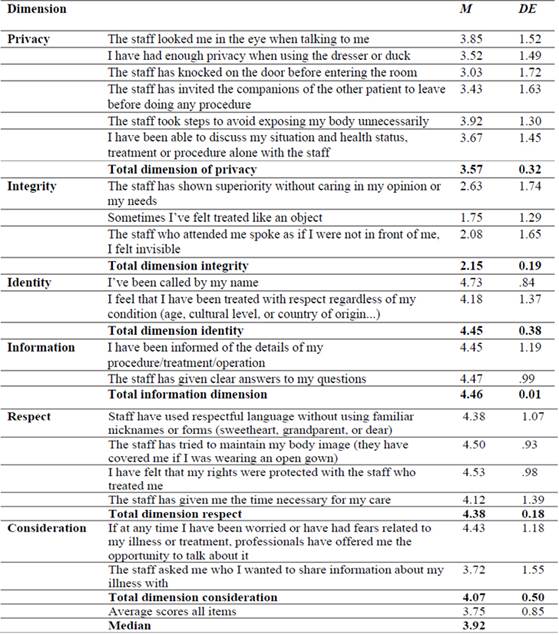
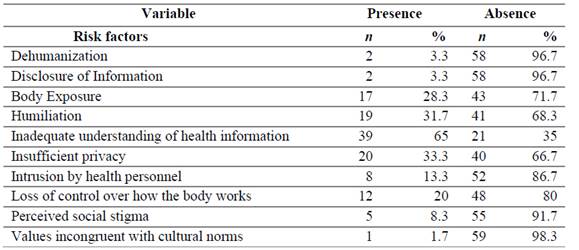
Results: Of the sample of 60 patients (16 men and 44 women), the item with the highest score was “I have been called by name” (M = 4.73; SD = 0.84) and the lowest, “I have sometimes felt like an object” (M = 1.75; SD = 1.29). Likewise, the risk factor “inadequate understanding of health information” was the most present (65 %) and “values incongruent with cultural norms” the least present (1.7 %).
Conclusion: The risk factors most perceived by patients in the health unit were related to their intimacy, integrity, understanding of information and privacy, so it is important to study this variable and intervene in it
Keywords:
dignity; nursing; nursing diagnosis; humanization of assistance