Construction of paternal attachment in the context of Neonatal Intensive Care
Abstract:
Introduction: Newborn hospitalization in Neonatal Intensive Care Units (NICU) can significantly impact the development of paternal attachment, with repercussions for newborn health and family structure
Objective: To understand how the development of paternal attachment with premature newborns occurs in Neonatal Intensive Care Unit (NICU) environments during the hospitalization period
Methodology: This is an observational, cross-sectional study using a quantitative-qualitative approach. Data were simultaneously collected through specific instruments for characterizing participants: a quantitative instrument for assessing paternal attachment and semi-structured interviews. Statistical analysis was conducted focusing on the development of paternal attachment, and the interviews were analyzed through thematic content analysis
Results: Forty-seven fathers of newborns hospitalized in the NICU were interviewed. The analysis included five representative statements from the paternal figure, which were correlated with the obtained data. The scales used in the study did not show significant values that interfered with the development of paternal attachment. Paternal stress was more pronounced in fathers who, in some way, were unable to develop a healthy attachment with newborns
Conclusions and implications for practice: The study showed that variables such as education level, length of stay in the NICU, and municipality of residence did not negatively influence fathers who made an effort to be present throughout the process. Fathers who actively participated in newborn care in the NICU demonstrated the development of a healthy attachment
Keywords:
neonatal intensive care units; premature newborns; father-child relationships; neonatal nursing
Resumo:
Introdução: A hospitalização de recém-nascidos em Unidades de Cuidados Intensivos Neonatais (UCIN) pode impactar de forma significativa a construção do apego paterno, com repercussões para a saúde do recém-nascido e para a estrutura familiar
Objetivo: Compreender como ocorre a construção do apego paterno com o recém-nascido prematuro no ambiente da Unidade de Terapia Intensiva Neonatal (UTIN) durante o período de internação
Metodologia: Estudo observacional, transversal, com abordagem quanti-quali. Os dados foram coletados simultaneamente por meio de instrumentos específicos para caracterização dos participantes, um instrumento quantitativo para avaliação do apego paterno e entrevistas semiestruturadas. A análise estatística foi realizada com foco na construção do apego paterno, e as entrevistas foram analisadas por meio da pesquisa de conteúdo temático
Resultados: Foram entrevistados 47 pais de recém-nascidos internados na UTIN. A análise incluiu cinco falas representativas da figura paterna, que foram correlacionadas aos dados obtidos. As escalas utilizadas no estudo não apresentaram valores significativos que interferissem na construção do apego paterno. O estresse paterno foi mais acentuado em pais que, de certa forma, não conseguiram desenvolver um apego saudável com o recém-nascido
Conclusões e Implicações para a prática: O estudo evidenciou que variáveis como escolaridade, tempo de permanência na UTIN e município de residência não influenciaram negativamente os pais que se empenharam em estar presentes durante todo o processo. Pais que participaram ativamente do cuidado ao recém-nascido na UTIN demonstraram a construção de um apego saudável
Palavras-chave:
unidades de terapia intensiva neonatal; recém-nascido prematuro; relações pai-filho; enfermagem neonatal
Resumen:
Introducción: La hospitalización de recién nacidos en Unidades de Cuidados Intensivos Neonatales (UCIN) puede impactar significativamente en la construcción del apego paternal, con repercusiones para la salud del recién nacido y para la estructura familiar
Objetivo: Comprender cómo ocurre la construcción del apego paternal con el recién nacido prematuro en el ambiente de la Unidad de Terapia Intensiva Neonatal (UTIN) durante el período de hospitalización.
Metodología: Estudio observacional, transversal, con enfoque cuantitativo-cualitativo. Los datos fueron recolectados simultáneamente mediante instrumentos específicos para caracterizar a los participantes, un instrumento cuantitativo para evaluar el apego paternal y entrevistas semiestructuradas. El análisis estadístico se realizó con enfoque en la construcción del apego paternal, y las entrevistas fueron analizadas mediante la investigación de contenido temático
Resultados: Se entrevistaron a 47 padres de recién nacidos hospitalizados en la UTIN. El análisis incluyó cinco declaraciones representativas de la figura paterna, que fueron correlacionadas con los datos obtenidos. Las escalas utilizadas en el estudio no mostraron valores significativos que interfirieran en la construcción del apego paternal. El estrés paternal fue más acentuado en padres que, de alguna manera, no lograron desarrollar un apego saludable con el recién nacido
Conclusiones e Implicaciones para la práctica: El estudio evidenció que variables como el nivel educativo, el tiempo de permanencia en la UTIN y el municipio de residencia no influyeron negativamente en los padres que se esforzaron por estar presentes durante todo el proceso. Los padres que participaron activamente en el cuidado del recién nacido en la UTIN demostraron la construcción de un apego saludable
Palabras clave:
unidades de terapia intensiva neonatal; recién nacido prematuro; relaciones padre-hijo; enfermería neonatal
Introduction
The birth of a baby is characterized by a period that demands intense care that instinctively directs the formation of a bond with the closest human figure. From this perspective, as their needs are met, affective bonds are formed based on the connection of a biological nature called the attachment figure. In the case of at-risk and/or preterm newborns (NBs), this bond suffers a negative impact from the first relationships of coexistence. 1
Attachment Theory, conceived by John Bowlby (1907-1991), a pioneering British physician and psychoanalyst, explores the innate attraction of human beings to the formation of affective bonds that are fundamental for survival and protection, provided by the attachment figure during early development. Moreover, it investigates the repercussions of these bonds throughout adult life, influencing crucial aspects of individuals’ psychological and emotional development. 2
Although originally based on the affective relationships between mother and baby, there was the need to include fathers in the context of care, given their essential role in NB development. 3 Although there is a growing understanding of the importance of paternal involvement, there are still significant gaps in understanding how fathers’ active presence impacts infants’ attachment and emotional development, especially in the context of preterm births. In this regard, it is understood that the arrival of a premature baby can adversely affect the initial establishment of emotional bonds. However, a healthy paternal attachment, especially in preterm or high-risk births, can promote NBs’ weight gain and improve their cognitive functions throughout growth. 4
Although it is already known that paternal presence can positively influence premature infants’ physical and emotional health, specific studies that explore the dynamics of building this attachment during hospitalization in the Neonatal Intensive Care Unit (NICU), as well as the strategies that can be implemented to promote this bond, are scarce. 5 Premature births have shown significant growth on a global scale. In Brazil, 11.2 out of every 100 live births are classified as preterm, thus placing the country in 10th place among countries with a high incidence of premature births. (⁵) According to the Ministry of Health (MoH), in 2020 alone, there were 308,702 premature live births in Brazil, accounting for 11.3% of total births. 6
The length of stay of a high-risk baby in NICUs is determined by several critical factors, such as adequate weight gain, autonomous sucking ability, breathe and swallow, and cardiorespiratory function stability. Therefore, babies may also require hospitalization for varying periods, ranging from days to months, depending on their health status and specific needs, such as respiratory tract diseases, low weight and development of infections. 7
The MoH describes the at-risk NB according to several factors related to birth, which increase the chances of mortality and morbidity occurring. 8 These include low birth weight, gestational age less than 37 weeks, Apgar score below 7 at the fifth minute of life with risk of severe respiratory complications, motherhood during adolescence (mothers under 18 years of age), low maternal education, poor and unsanitary housing conditions, family history of infant death, as well as unexpected events during pregnancy, such as maternal hospitalization. 9
In the scenario of a hospitalized NB, mothers are traditionally recognized as the main source of care and support to ensure babies’ survival. However, recognition of the presence and involvement of fathers becomes essential in consolidating emotional bonds with babies. 10 Currently, there are predictors that may indicate that stressful situations and changes in family structure and organization interfere with the construction of paternal attachment and that they are little considered in neonatal intensive care practices and routines. The lack of clear strategies to promote paternal involvement during hospitalization, especially in NICUs, demonstrates a critical gap that may affect paternal attachment quality. Regarding this line of reasoning, it is understood that the lack of incentives in the formation of this bond intensifies the vulnerability of family ties and, consequently, paternal attachment. 11
Therefore, it is clear that there is a need to encourage the construction of paternal attachment in NICU environments, in addition to the implementation of specific policies and practices that promote this interaction, both in hospitals and in homes, areas that are still little explored in existing literature. Thus, the following research question was defined: What are the contexts and determinants for the construction of paternal attachment with their NBs during hospitalization in the NICU? Thus, the general objective of the research was established to analyze the determinants for the construction of paternal attachment with NBs in NICU environments during the hospitalization period.
Methodology
This is an observational study, using a cross-sectional design and a quantitative-qualitative approach. 12 This study is part of a project entitled “Parental care in neonatal intensive care: individual, family and social repercussions”, which had as participants in the project parents (father and/or mother) of NBs who attended the NICU at least three times before data collection, whose children were hospitalized in the NICU between 5 and 15 days. The minimum and maximum period of hospitalization of NBs, at the time of data collection, was predetermined according to the guidance of the data collection instrument for assessing the construction of attachment, in addition to allowing greater homogeneity of experiences lived by participants during the hospitalization of their children.
Parents of NBs admitted directly to conventional intermediate care units or kangaroo care were excluded, as it was considered that in such less complex units, they could present differences related to the scales/instruments included in the study as well as in paternal attachment. Individuals under 18 years of age at the time of the invitation to participate in the study or who did not have cognitive conditions to respond to the data collection instrument, as considered by the health team, were excluded from the study. At the end of the study, a total of 47 fathers of NBs participated. This number was reached as a six-month data collection period was established, and all those who met the selection criteria and agreed to participate in the study were included. Participants had daily access to the data collection field and were invited to participate in the quantitative stage.
Data collection took place in two hospitals in Rio Grande do Sul, Brazil, one of which was philanthropic in nature, with 10 NICU beds, with an average of 20 monthly admissions. The other institution, which accepts all types of health insurance plans, has a total of 10 beds and an average of 18 monthly admissions. Data collection took place from August to December 2021, with couples or father and mother of NBs in the NICU, depending on the eligible population in the period, individually, after approval by the Universidade Federal de Santa Maria Research Ethics Committee and respecting the ethical precepts for research involving human beings in Brazil, according to Resolution 466/12. 13
Physical forms were made available for in-person data collection, but in order to facilitate access and also as a way of preventing COVID-19, online forms were made available. In the quantitative phase, collection instruments were used, consisting of four parts: four instruments aimed at fathers and three instruments aimed at mothers.
The characterization instrument is a document created by the researchers themselves, containing sociodemographic data, obstetric and neonatal characterization, and length of stay of fathers in the NICU. For the present study, the construction of paternal attachment was used as the outcome variable analyzed, classified as “healthy attachment” and “unhealthy”. 14 The Escala de Verificação de Apego em Pais (Attachment Verification Scale for Parents) is an instrument used to verify attachment in fathers during the postpartum period. Moreover, it aims to understand how men become attached to their children. It is a validated instrument developed in Brazil, and consists of 31 questions, to which the interviewee has answer options from “1 - totally disagree” to “5 - totally agree”. They were classified according to the content between “father’s investments in the baby” and “feelings, attitudes and expectations towards the baby”. 15
For the independent variables for comparison with the outcome analyzed, in addition to the aforementioned characterization instrument, parental stress 16 and family-centered care assessment was used. 17
The Parental Stress Scale: Neonatal Intensive Care Unit aims to assess parental stress in the NICU in relation to psychosocial and physical stressors. This instrument addresses questions about “sights and sounds”, “baby looks and behaves” and “changes in parental role”. It contains response options with scores from 1 (“non-stressing”) to 5 (“extremely stressing”), in addition to “not applicable”. 15 This version was translated, adapted and validated for the Brazilian population. 16
The Perceptions of Family Centered Care - Parent is a scale composed of questions about family-centered care. It contains questions from 1 to 20, with four alternatives, with the options “never”, “sometimes”, “usually” and “always”. It aims to measure and compare parents’ perspectives on family-centered care in different pediatric contexts, 16 which has been translated and validated for Brazilian Portuguese. 17,18
In the qualitative stage, a semi-structured interview was used, consisting of 17 questions, which addressed parents’ perception of length of stay and participation in the NICU as well as the constitution of family social support. 19 Participants were invited after collaborating in the quantitative part, resulting in a total of 14 interviews with mothers and fathers who met the inclusion criteria; of these, only excerpts of fathers’ statements were used. Since the focus was on paternal attachment, of these 14, only five were fathers and were therefore the ones chosen to present statements. To maintain confidentiality, fathers were identified with the letter F, followed by numbers in ascending order: F1, F2… F5 (fathers).
The interviews could be with a couple (father and mother) or individually. Mothers were also interviewed, but only paternal interviewees were chosen for this study. The interviews took place virtually, through digital platforms (Google Meet and video calls via WhatsApp), lasting an average of 15 minutes (minimum of 10 and maximum of 20 minutes), and were recorded and then transcribed by the researchers. The data study was embodied based on three stages, such as pre-analysis, material recognition with encryption, and interpretation of results, according to the technique proposed by Bardin (2011). 20 In the presentation of qualitative results, speech extracts were used, with thematic recurrence and that were relevant to the object of study. The analytical comments were constructed in addition to qualitative analysis, an approximation with quantitative data, according to the characteristics that could have implications in facilitating or hindering the creation of paternal attachment.
Subsequently, quantitative data were analyzed through descriptive and analytical statistics, using the Statistical Package for the Social Sciences version 17.0. The recommendations of the authors who validated the instruments for this analysis purpose were followed.
In the description of the data related to paternal attachment, a chart was constructed, where variables were presented according to the proposed data collection instrument, using a Likert-type scale for interpretation and presentation of responses. On this scale, a score of 1 to 5 was used for the responses, where 1 corresponded to lesser attachment and 5 to greater attachment.
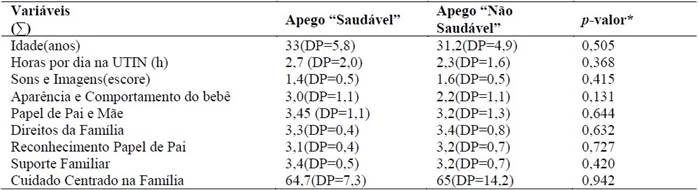
The first table classifies the 47 fathers as having “healthy” or “unhealthy” attachment and was stratified into two groups for comparison. This stratification was based on the average score of 3.91, as indicated by the authors of the scale, as a “healthy” or “unhealthy” construction. 14) For comparison, frequency comparison tests (Fisher’s exact test) were used for the categorical comparison variables. In the comparison of the outcome with quantitative independent variables, the mean comparison, Student’s t-test, was used, considering the normality of the analyzed data. The second table was constructed with numerical variables, also comparing the two groups, with variables on healthy attachment and unhealthy attachment. A significance level of 95% was used to test the hypotheses.
Results
In the quantitative phase, 47 fathers of NBs who were hospitalized at the time of data collection participated in the study. On average, fathers were 33 years old (SD ± 5.8), with a maximum of 43 and a minimum of 23 years. The average time that fathers spent in the NICU per day was 2.6 hours (SD ± 2 hours), a minimum of 0.5 hours and a maximum of 8 hours per day. Approximately 70% of fathers spent less than 2.5 hours per day with their children in the NICU.
Recognizing that the length of stay in the NICU can be considered a factor that contributes to the construction of attachment, the statements regarding length of stay and its influence on the construction of attachment stand out. It is worth noting that the pandemic period may be associated with restrictions on visits imposed by COVID-19 prevention and precaution protocols. This relationship can be seen in the following statements by the fathers interviewed:
They didn’t give us that option, they just said that because of the pandemic, there would be a limit of one hour per shift, morning and afternoon (...) with these reduced hours, it’s really hard to be there, (...) I think the only way to take care of him and get closer to him is to always be there with him, always asking the doctor for information, something like that (F5).
In another case, when asked about his participation in caring for NB during hospitalization, this father made the following statement:
This time restriction is due to the pandemic. You can only go to the hospital once and stay for one hour during the visit. And this issue of changing and bathing, I think that this is also not being done by the parents because of the pandemic, because I think the normal thing is to let the parents go at whatever time they think is necessary. And at whatever time they can go, but the restriction is due to the pandemic, I’m sure (F1).
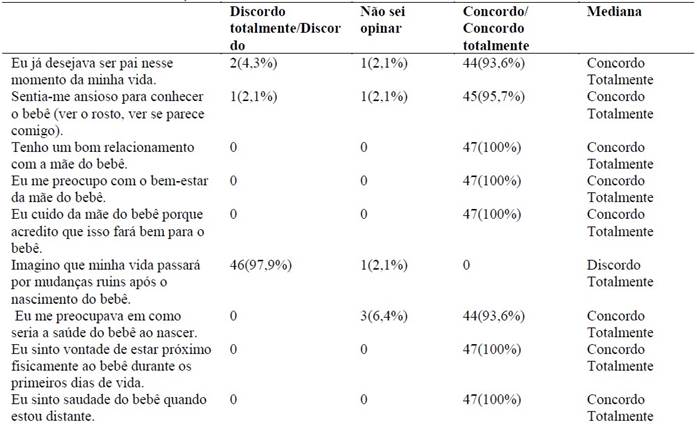
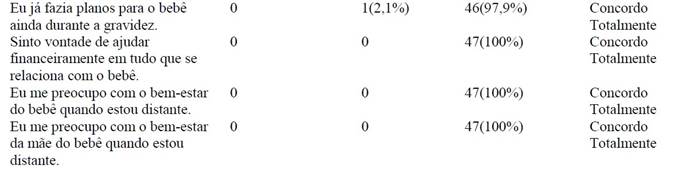
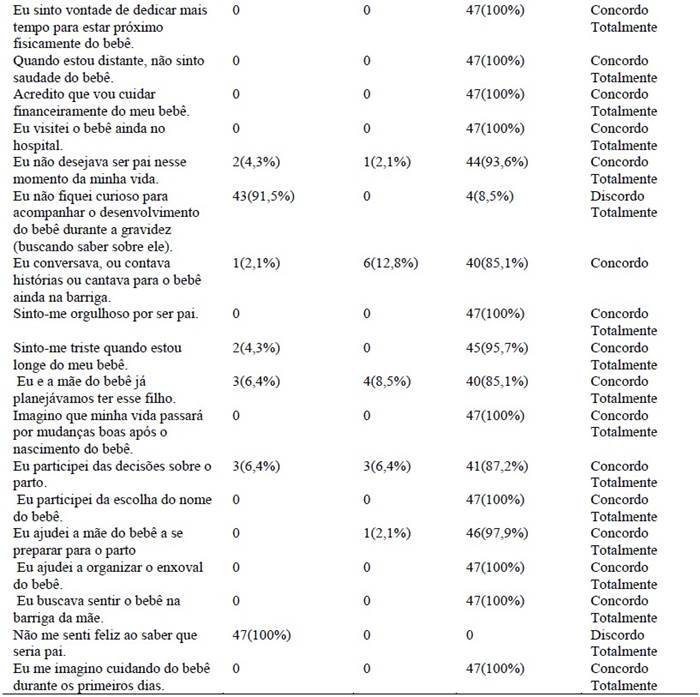
These statements highlight the context of restricted stay within the NICU, which may not have influenced quantitative findings, given the medians of the responses on the construction of paternal attachment in Table 1 . ..
Answers to questions about elements of paternal attachment construction in fathers of newborns admitted to neonatal intensive care (Palmeira das Missões, RS, Brazil, 2022)
For the most part, there is a strong bond with fathers, given the median score (totally agree) in almost all the experiences and perceptions analyzed. The negative statements regarding the bond obtained a median of 1 (totally disagree), which represents a healthy attachment. It is worth noting that interaction with, still in the gestational phase, had the lowest score presented under the median (Median=4). This interaction/bond with babies in singing/telling stories, still in gestation, remained subtle, but present, during hospitalization, as presented in the statement.
In agreement with the bond demonstrated in the table above, a greater attachment can be perceived through the following statements by fathers when asked if they talked and sang to their baby, always highlighting the neonatal, not the gestational/fetal experience:
The first day I saw her in the first time slot, then in the second time slot, I went to see her again. I got there and she was crying, I even filmed it and then when I got there (...) when I started talking to her, I put my hand on her face and she stopped crying right away (F3).
We talked a lot. It was such a beautiful feeling, amazing (F5).
Regarding skin-to-skin contact between the father-child dyad and how much this can influence the construction of paternal attachment, F4’s statement stands out.
On the first day, I didn’t touch them, but then of course on the following days, I would go there, open them a little, sanitize my hands and touch them. Now it’s not the same feeling as holding them in your arms, it’s something different from just holding their little hand there inside the incubator (F4).
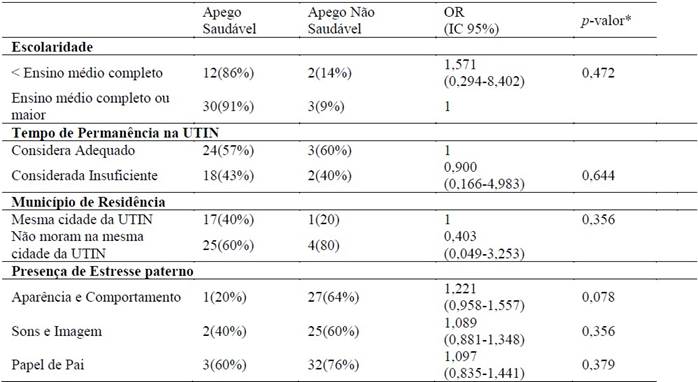
These speech extracts corroborate the fact that attachment is strengthened by touch, interaction with babies in the NICU, as well as participation in the birth process, which favors parenting and the construction or strengthening of attachment. As for factors associated with the construction of healthy attachment, it is worth noting that 89% (n=42) presented healthy attachment (score greater than or equal to 3.91). The stratification of the two groups of healthy or “unhealthy” attachment and their characteristics is described in Table 2, with this comparison.
There was no significant difference in the comparison between the groups analyzed, highlighting that for this population, factors such as education, length of stay in the NICU and place of residence were not related to the construction of paternal attachment. Regarding the presence of paternal stress in the NICU, significantly, in the “unhealthy” attachment group.
A justification for why living in another city was not characteristic for building unhealthy attachment is presented in F1’s speech.
We don’t live in (the city where the NICU is located), we rented an apartment to stay here until the baby could leave, right? So, we rented an apartment that is very close, about five blocks away. But we live in another city that is 200 km away (F1).
In relation to paternal variables associated with the comparison groups between “healthy” and “unhealthy” attachment, Table 3 stands out.0
Comparison between variables of education, length of stay, place of residence, parental stress and attachment style of fathers in a Neonatal Intensive Care Unit (Palmeira das Missões, RS, Brazil, 2022)
When comparing the mean attachment scores with age and hours of parental stay in the NICU, there was no difference between groups. Family-centered care as well as parental stress did not present a significant difference in the construction of healthy attachment for this population (p>0.05).
Discussion
During the prenatal period, paternal presence is influenced by a complexity of variables, which include cultural and family factors, to which men are or have been historically linked. Thus, partners’ involvement in this context often results in the revision of their beliefs, which are often restrictive, and consequently in the dissociation from the “alpha male” stereotype. The inclusion of the father figure increases the likelihood of partners actively participating in the perinatal process, from prenatal care to the moment of birth. Therefore, the unique experience of fatherhood, from the preparatory process for the arrival of a NB, is fundamental for the construction of the attachment figure. 21
It is widely recognized in literature that the development of paternal bond constitutes a significant connection that is established from the preconception period and continues throughout pregnancy. When responding to the instrument that assessed paternal attachment during the postpartum period, participants assigned scores ranging from 1 (“totally disagree”), indicating an unhealthy attachment, up to 5 (“totally agree”), reflecting a healthy attachment. The median score was 5, suggesting an adequate paternal attachment in aspects such as the desire for fatherhood, concerns about the child’s well-being, care for the baby’s mother, desire for closeness, as well as other dimensions related to care and participation during pregnancy.
It is worth noting that interaction with the baby during the gestational phase obtained the lowest score, below the median (Median=4). This relationship, such as singing or telling stories to the baby during pregnancy, was subtle but present during hospitalization, where the connection between father and fetus remained tenuous. Although premature birth may indicate an interruption in the formation of the bond with fathers, hospitalization in the NICU temporarily eliminates the possibility of close contact until the baby recovers. However, it is important to highlight that there are processes that facilitate the emotional relationships between parents and NBs, such as touch, cuddling and the ability to recognize the baby’s basic needs. 22
The kangaroo method, for instance, is considered one of the best ways for fathers to be directly involved in caring for their NBs, providing warmth, reducing the risk of apnea and bradycardia, reducing stress and pain levels, and contributing to increased weight gain and improved cardiac and motor development in children. In this way, fathers’ participation brings physiological benefits to NBs and significantly improves their general condition during hospitalization. 23
Economic factors also interfere in fathers’ daily lives with their children, since a premature baby generates a higher cost when compared to a full-term baby, causing mixed feelings between professional life, home and NB. In addition, many institutions have assigned fathers the role of someone who goes to the hospital to visit the baby, not as a caregiver. 24
Therefore, it is crucial that the team encourages partners to interact with NBs, participating in the kangaroo method, holding NBs in their arms, informing them about the condition of premature babies, and using other strategies that promote recognition and integration of fathers in parental role. 25
In the context of this study, contact between parents and NBs was largely mediated by social distancing measures implemented during the COVID-19 pandemic. These practices may not have had a significant influence on promoting healthy attachment, as evidenced by the fact that approximately 90% of parents reported establishing a bond classified as “healthy”.
On the scale used to assess paternal stress in NICU environments, participants’ responses were analyzed to investigate their influence on the formation of attachment bonds classified as healthy or unhealthy. Aspects such as education, length of stay in the NICU, and place of residence did not demonstrate a significant association with the construction of paternal attachment. Furthermore, variables related to perceived stress and family-centered care practice also did not show a correlation with the construction of paternal bonds.
The results of a study conducted using the Paternal Postnatal Attachment Scale in a NICU in New York revealed that paternal attachment was assessed based on five factors: patience, tolerance, affection, pleasure and pride. The demographic data of fathers, as in this study, did not demonstrate a significant interference in the quality of the bond between father and child. However, it was observed that low birth weight and a lower gestational age negatively influenced the construction of a healthy paternal attachment. 24
Similarly, another study involving parents of babies born before the 37th week of gestation in several countries observed that early tactile stimulation and skin-to-skin contact, encouraged from the first days of the baby’s life, have the potential to reduce paternal stress, improve emotional relationships with children and promote the development of skills in NB care. 26 These results indicate a significant contribution to paternal mental health and the strengthening of the emotional bond between father and child. 26
Genuine and active paternal commitment from the gestational period facilitates the formation of a healthy attachment, the establishment of bonds and, consequently, the consolidation of paternity. From this perspective, the importance of paternal empathy is emphasized, thus avoiding feelings of disconnection, abandonment or loneliness in the process of building paternal attachment, especially considering the transformations in family dynamics in contemporary society. 26 Therefore, it is essential to help partners understand the changes in their partners’ body physiology during pregnancy and the postpartum period. Therefore, developing an attentive and informed view plays an essential role in fathers’ active participation, especially in the specific needs of each phase.
Conclusion and implications for practice
The construction of a “healthy” attachment was the most frequent in the study population, in which there was a predominance of fathers physically present in the NICU. It is recognized that encouraging the construction of attachment is a practice that should be emphasized even in the pre-conception and gestational phase. Strategies created by fathers to reduce the physical distance between them and their baby may have reduced the risk of building an “unhealthy” attachment.
Despite the difficulties and challenges imposed by a NICU length of stay, parents often unexpectedly feel positive and hopeful about their children’s recovery. Some factors were considered to limit closer contact, such as restrictions in COVID-19 prevention protocols, but this did not diminish fathers’ desire and commitment to participate in their children’s care.
It is suggested that nursing encourage early participation of parents in the care of their children in NICU environments, providing health professionals and anyone else who may be interested with material to study interventions that facilitate and promote healthy attachment. The study contributed positively by demonstrating that the variables mentioned above did not have a negative influence on fathers who wanted to be present at all moments of pregnancy.
This study has as a limitation the restricted inclusion of fathers who were physically present in the NICU context, which may distort the representation of those who were unable to visit their children. This, in turn, may impact the understanding of less healthy attachment dynamics. For future research, it is suggested that the sample be expanded in order to allow for a more comprehensive analysis of the data. Furthermore, it is important to consider that participation in the study was conditional on the availability of technological resources, which may introduce a bias related to social selection and familiarity with technology among participants.
References
-
1. Abreu MQ de S, Duarte ED, Dittz E da S. Construção do apego entre o binômio mãe e bebê pré-termo mediado pelo posicionamento canguru. R Enferm Cent O Min (Internet). 2020 dez 31 (acesso em 2023 mai 31);10. Disponível em: Disponível em: http://seer.ufsj.edu.br/recom/article/view/3955
» http://seer.ufsj.edu.br/recom/article/view/3955 -
2. Sesti Becker AP, Vieira ML, Aparecida Crepaldi M. Apego e parentalidade sob o enfoque transcultural: uma revisão da literatura: Attachment behavioral and parenting definitions, based on a cross-cultural approach: a review of the literature. Psicogente (Internet). 2019 jun 11 (acesso em 2023 jun 1);22(42):1-25. Disponível em: Disponível em: https://revistas.unisimon.edu.co/index.php/psicogente/article/view/3507
» https://revistas.unisimon.edu.co/index.php/psicogente/article/view/3507 -
3.Miranda LL, Silva RS, Ferrari RAP, Assunção RC, Zani AV. Fatos em fotos: significado paterno sobre o filho prematuro na unidade neonatal. Brazilian Journal of Development (Internet). 2021 jan 7 (acesso em 2023 jun 3);7(1):2-15. doi: doi:10.34117/bjdv7n1-001
» 10.34117/bjdv7n1-001 -
4. Fermino V, Mattos K, Emidio SCD, Mendes-Castillo AMC, Carmona EV. Sentimentos paternos acerca da hospitalização do filho em unidade de internação neonatal. Revista Mineira de Enfermagem (Internet). 2019 mar 24 (acesso em 2023 jun 4);e1280. doi: doi: 10.5935/1415-2762.20200009
» 10.5935/1415-2762.20200009 -
5. Dias BAS, Leal M do C, Martinelli KG, Nakamura-Pereira M, Esteves-Pereira AP, Santos ET Neto. Prematuridade recorrente: dados do estudo “Nascer no Brasil”. Revista de Saúde Pública (Internet). 2022 abr (acesso em 2023 jun 7);56(7). doi: doi: 10.11606/s1518-8787.2022056003527
» 10.11606/s1518-8787.2022056003527 -
6. Ministério da Saúde (BR). Banco de dados do Sistema Único de Saúde - DATASUS (Internet). (acesso em 2022 jun 1). Disponível em: Disponível em: https://datasus.saude.gov.br/
» https://datasus.saude.gov.br/ -
7. Yu G, Yu Y, Yang Q, Song W, Fu M. Risk factors for length of NICU stay of newborns: A systematic review. Front Pediatr. 2023;11:1121406. doi: 10.3389/fped.2023.1121406
» 10.3389/fped.2023.1121406 -
8. Formiga CKMR, Silva LP, Linhares MBM. Identification of risk factors in infants participating in a Follow-up program. Revista CEFAC (Internet). 2018 mai-jun (acesso em 2023 jun 10);20(3):333-341. doi: doi: 10.1590/1982-021620182038817
» 10.1590/1982-021620182038817 -
9. Silva Torres Nascimento AC, Cedraz Morais A, de Lima Souza S, Ortiz Whitaker MC. Percepção da prematuridade por familiares na unidade neonatal: estudo Transcultural. Revista Cuidarte (Internet). 2021 dez 13 (acesso em 2023 jun 8);13(1). Disponível em: Disponível em: https://revistas.udes.edu.co/cuidarte/article/view/1043
» https://revistas.udes.edu.co/cuidarte/article/view/1043 -
10. Rodrigues JMS. Reflexões sobre o impacto da hospitalização de bebês na construção da paternidade (Trabalho de conclusão de curso). Rio de Janeiro (RJ): Maternidade Escola, Universidade Federal do Rio de Janeiro; 2019 (acesso em 2023 jun 12). Disponível em: Disponível em: https://pantheon.ufrj.br/bitstream/11422/15576/1/JMdSRodrigues.pdf
» https://pantheon.ufrj.br/bitstream/11422/15576/1/JMdSRodrigues.pdf -
11. Mathiolli C, Ferrari RAP, Parada CMGL, Zani AV. O cuidado paterno ao filho prematuro no ambiente domiciliar: representações maternas. Esc Anna Nery (Internet). 2021 (acesso em 2023 jun 10);25(3). doi: doi: 10.1590/2177-9465-EAN-2020-0298
» 10.1590/2177-9465-EAN-2020-0298 -
12. Tatagiba AB, Creswell, John W. Projeto de pesquisa: métodos qualitativo, quantitativo e misto. Cad Ling Soc (Internet). 2012 jul 3 (acesso em 2023 jun 10);13(1):205-8. doi: 10.26512/les.v13i1.11610
» https://doi.org/10.26512/les.v13i1.11610 -
13. Brasil. Aprova as diretrizes e normas regulamentadoras de pesquisa envolvendo Seres Humanos. Resolução nº 466, de 12 de dezembro de 2012 (BR). Diário oficial da União. Brasília(DF), 2012. Disponível em: https://conselho.saude.gov.br/resolucoes/2012/Reso466.pdf
» https://conselho.saude.gov.br/resolucoes/2012/Reso466.pdf -
14. Cabrera NJ, Volling BL, Barr R. Fathers are parents, too! Widening the lens on parenting for children’s development. Child Development Perspectives (Internet). 2018 (acesso em 2024 jul 14);12(3):152-157. doi: 10.1111/cdep.12275
» https://doi.org/10.1111/cdep.12275 -
15. Miles MS, Funk SG, Carlson J. Parental Stressor Scale: neonatal intensive care unit. Nursing Research (Internet). 1993 mai-jun (acesso em 2023 jun 6);42(3):148-152. Disponível em: Disponível em: https://pubmed.ncbi.nlm.nih.gov/8506163/
» https://pubmed.ncbi.nlm.nih.gov/8506163/ -
16. Souza SR, Dupas G, Balieiro MMFG. Adaptação cultural e validação para a língua portuguesa da Parental Stress Scale: Neonatal Intensive Care Unit (PSS: NICU). Acta Paulista de Enfermagem (Internet). 2012 mai (acesso em 2022 jun 3);25(2):171-6. doi: 10.1590/S0103-21002012000200003
» https://doi.org/10.1590/S0103-21002012000200003 -
17. Shields L, Mamun AA, Flood K, Combs S. Measuring family centered care: working with children and their parents in two second level hospitals in Australia. European Journal for Person Centered Healthcare (Internet). 2014 mar (acesso em 2022 jun 7);2(2):206-211. Disponível em: Disponível em: http://www.ejpch.org/ejpch/article/view/735
» http://www.ejpch.org/ejpch/article/view/735 -
18. Silva TON, Alves LBO, Balieiro MMFG, Mandetta MA, Tanner A, Shields L. Adaptação transcultural de instrumentos de medida do cuidado centrado na família. Acta Paulista de Enfermagem (Internet). 2015 abr (acesso em 2022 jun 9);28(2):107-12. doi: 10.1590/1982-0194201500019
» https://doi.org/10.1590/1982-0194201500019 - 19. Minayo MCS. O desafio do conhecimento - pesquisa qualitativa em saúde. 14ª ed. São Paulo (SP): Hucitec Editora; 2014.
- 20. Bardin L. Análise de conteúdo. São Paulo: Edições 70; 2016.
-
21. Lindstedt J, Korja R, Vilja S, Ahlqvist-Björkroth S. Fathers’ prenatal attachment representations and the quality of father-child interaction in infancy and toddlerhood. Journal of Family Psychology (Internet). 2021 (acesso em 2024 jul 13);35(4):478-488. doi: 10.1037/fam0000813
» https://doi.org/10.1037/fam0000813 -
22. Kim AR, Kim S, Yun JE. Attachment and relationship-based interventions for families during neonatal intensive care hospitalization: a study protocol for a systematic review and meta-analysis. Systematic Reviews (Internet). 2020 mar (acesso em 2022 jun 15);9(61). doi: 10.1186/s13643-020-01331-8
» https://doi.org/10.1186/s13643-020-01331-8 -
23. Afonso GA, Francisco NFX, Castro RBC. Participação paterna na unidade de terapia intensiva neonatal segundo a concepção da equipe de enfermagem. Rev Enferm Contemp (Internet) 2021 (acesso em 2025 abr 04);10(2). doi: 10.17267/2317-3378rec.v10i2.3815
» https://doi.org/10.17267/2317-3378rec.v10i2.3815 -
24. Garnica-Torres Z, Gouveia Jr. A, Pedroso JS. Attachment between father and premature baby in kangaroo care in a neonatal unit of a public hospital. Journal of Neonatal Nursing (Internet). 2020 (acesso em 2025 abr 04);27(5). doi: 10.1016/j.jnn.2020.12.005
» https://doi.org/10.1016/j.jnn.2020.12.005 -
25.Taing R, Galescu O, Noble L, Hand IL. Factors influencing paternal attachment among preterm infants in an urban neonatal intensive care unit. Cureus (Internet). 2020 jun (acesso em 2022 jun 14);12(6). doi: 10.7759/cureus.8476
» https://doi.org/10.7759/cureus.8476 -
26. Filippa M, Saliba S, Esseily R, Gratier M, Grandjean D, Kuhn P. Systematic review shows the benefits of involving the fathers of preterm infants in early interventions in neonatal intensive care units. Acta Paediatr (Internet). 2021 mai (acesso em 2022 jun 15);110(9):2509-2520. doi: 10.1111/apa.159614
» https://doi.org/10.1111/apa.159614