Realistic simulation as a training strategy for the health team
Objective:
To assess realistic simulation as a training strategy for nursing technicians and ambulance drivers in the primary assessment of trauma cases
Method:
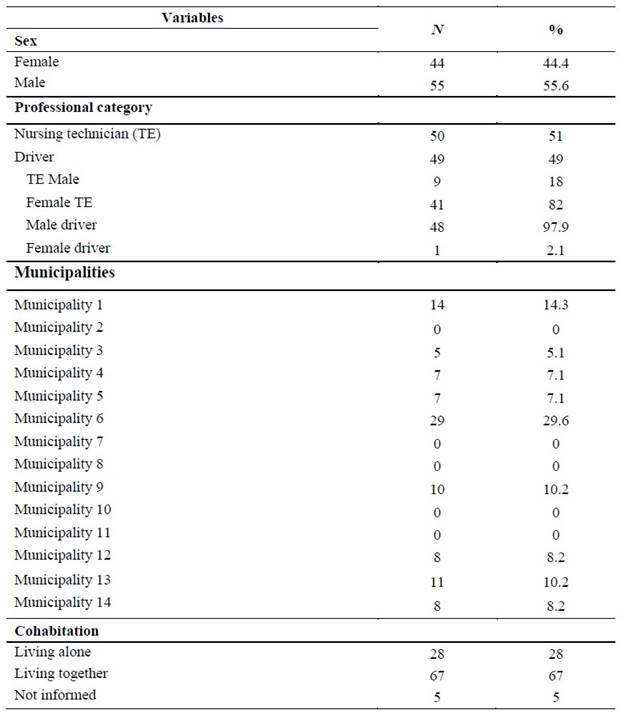
A quasi-experimental study, before-and-after design, with a quantitative approach, conducted between December 2021 and March 2022. The study population consisted of 98 professionals from 14 municipalities within the Northern region of the State of Paraná, who are part of the Regulatory Complex of the Mobile Emergency Care Service. A knowledge test consisting of 10 questions was administered before and after the simulation. Data were analyzed in terms of central tendency and dispersion. Pre-test and post-test correct answers were compared as percentages. The mean and standard deviation of correct answers were assessed using the Shapiro-Wilk test to determine whether the data followed a normal distribution. The Wilcoxon test was also employed to identify differences in mean correct answers between the research phases, with a significance level of 0.050.
Results:
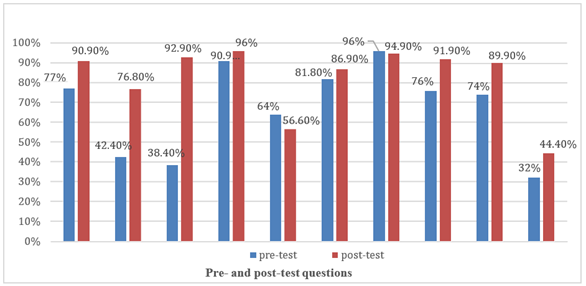
Among the proposed questions, those related to trauma kinematics, stages of primary victim assessment, treatment planning, victim immobilization, assessment during care, and recognition of shock achieved a 90% correct response rate after the training. Questions about primary patient assessment and airway management also yielded significant results
Conclusion:
The assimilation of knowledge through realistic simulation led to a significant improvement in correct answer rates for the questions
Keywords:
simulation training; training; trauma; licensed practical nurses; ambulance drivers
 Thumbnail