Original articlesRural Nursing in Latin America: Caring in Adversity in the last 10 years. Systematic Review
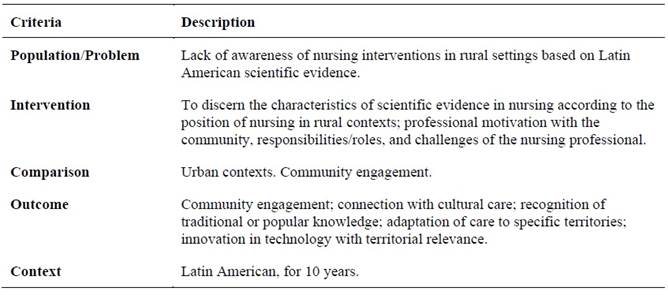
Introduction: The processes of health, illness, care and attention in rural contexts in Latin America are of great importance for Nursing, given the socioeconomic and political conditions that affect these territories and the challenges inherent to professional practice. This systematic review aims to analyze the development of Nursing in rural Latin American contexts based on scientific evidence from the last ten years
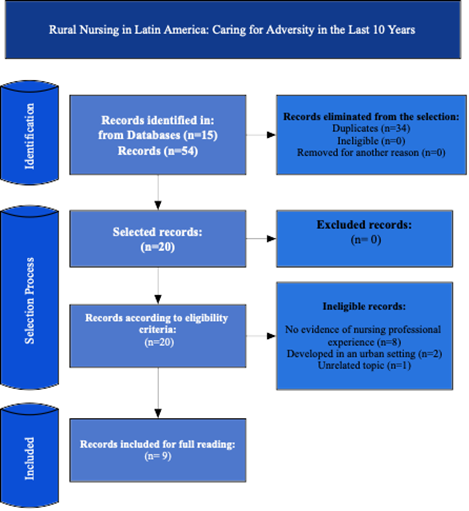
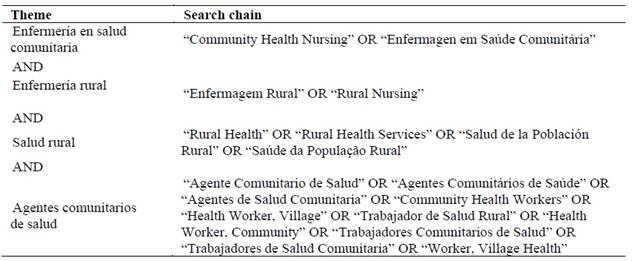
Method: A search was conducted in scientific databases (CINAHL Complete, Dialnet, DOAJ, Dynamed, Elsevier, Enfermería al Día, Health Source: Nursing/Academic Edition, JSTOR, MEDLINE, Nursing Reference Center Plus, PubMed Central, Redalyc, SciELO, ScienceDirect, Scopus and Web of Science), using MeSH and DeCS descriptors related to Rural Nursing, Community Health Nursing, Rural Health and Community Health Agents, in English, Portuguese and Spanish. The search ended in August 2023
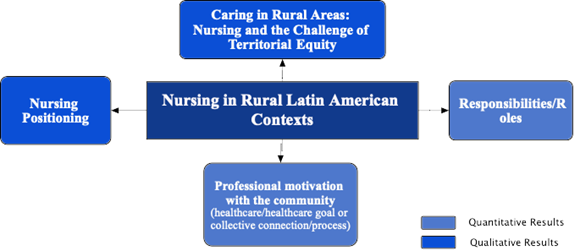
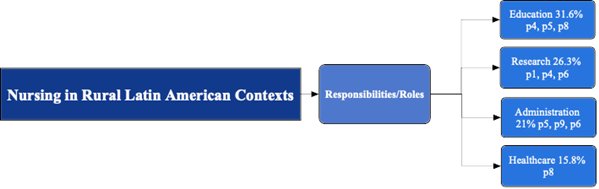
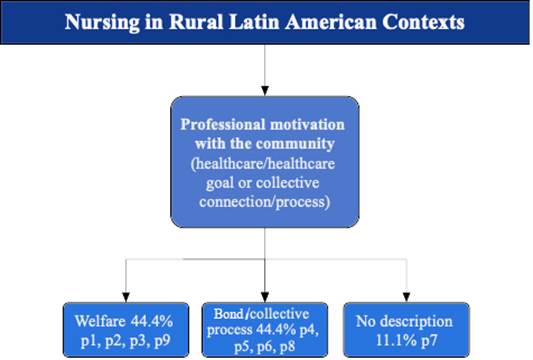
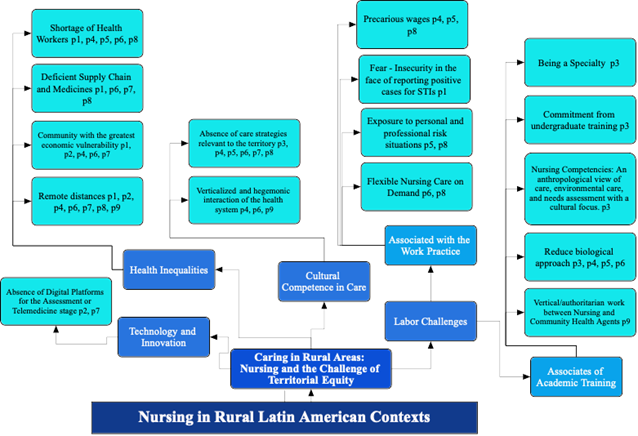
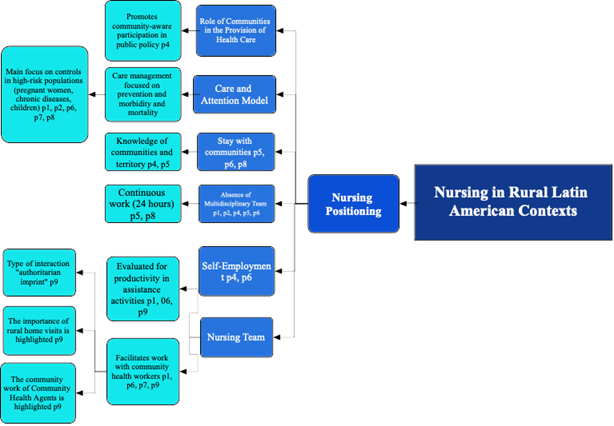
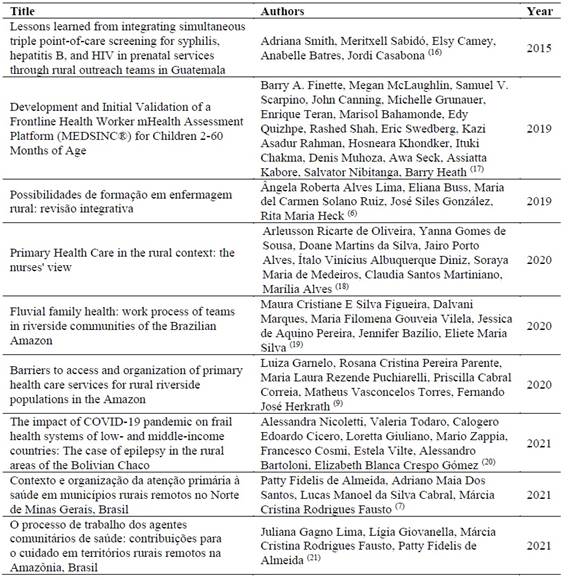
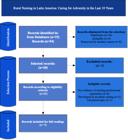
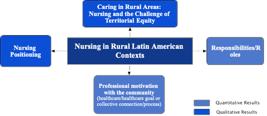
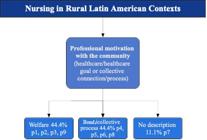
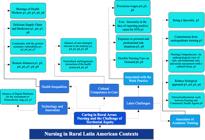
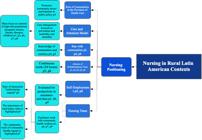
Results: 54 articles were identified, from which, after applying the PRISMA 2020 inclusion criteria, 9 studies focused on primary health care were selected. These were analyzed according to three categories: Responsibility of the Nursing Professional, Professional Intentionality (welfare vs. collective approach) and Propositional Characteristics for Rural Nursing
Conclusion: The conditions of the territory, the work dynamics and the standardization of rural and urban care reflect the commercialization of health, which represents a key professional challenge: reducing health inequalities in rural communities
Keywords:
rural nursing; primary health care; rural health; community health workers
 Thumbnail
 Thumbnail
 Thumbnail
 Thumbnail
 Thumbnail
 Thumbnail