Use of Hormonal Oral Contraceptives in Adolescence in School Services and Primary Health Care: A Scoping Review
Abstract:
Objectives: To map studies on the use of hormonal oral contraceptives in adolescence in school health services and primary health care; identify types of contraceptive pills most used by adolescents, effectiveness rate and side effects; and, describe how the use and storage takes place
Methodology: Scoping Review, based on the procedures of the Joanna Briggs Institute. Searches were carried out in seven databases without time and language cut. Of the 8,122 studies found, nine were selected
Results: Emergency contraception was the predominant option among adolescents. Other types of contraceptives mapped were combined oral contraceptives. No studies have addressed the effectiveness rate, and misconceptions about its efficacy may allow for inappropriate use. The absence of more robust studies addressing this aspect of oral hormonal contraceptives reveals a gap in the literature. Side effects observed include nausea, headache, menstrual irregularities, and reduced libido. The analysis also identified erroneous beliefs, such as the need to take the pill minutes before intercourse and that it is safe to take three pills at once after forgetting two doses. No studies addressed the storage of oral contraceptives
Conclusion: The lack of information on efficacy and storage can compromise adherence and prevention of unwanted pregnancies, highlighting the importance of sexual and reproductive health education in schools and primary care, for informed decisions and autonomy of adolescents
Keywords:
adolescents; hormonal oral contraceptives; primary health care; school health services
Resumo:
Objetivos: Mapear estudos sobre uso de anticoncepcionais orais hormonais na adolescência em serviços de saúde escolar e na atenção primária à saúde; identificar tipos de pílulas anticoncepcionais mais utilizados por adolescentes, taxa de efetividade e efeitos colaterais; e, descrever como se dá a utilização e armazenamento
Metodologia: Scoping Review, baseado nos procedimentos do Joanna Briggs Institute. Realizou-se buscas em sete bases de dados sem recorte temporal e de idioma. Dos 8.122 estudos encontrados, nove foram selecionados
Resultados: A contracepção de emergência foi opção predominante entre adolescentes. Outros tipos de contraceptivos mapeados foram os orais combinados. Nenhum estudo abordou a taxa de efetividade, e equívocos sobre sua eficácia podem possibilitar uma utilização inadequada. A ausência de estudos mais robustos que abordem esse aspecto dos contraceptivos hormonais orais revela uma lacuna na literatura. Efeitos colaterais observados incluem náuseas, cefaleia, irregularidades menstruais e redução da libido. A análise também identificou crenças errôneas, como a necessidade de tomar pílula minutos antes da relação e de que é seguro tomar três pílulas de uma vez após esquecer duas doses. Nenhum estudo abordou o armazenamento dos anticoncepcionais orais
Conclusão: A falta de informações sobre eficácia e armazenamento pode comprometer a adesão e prevenção de gravidezes indesejadas, destacando a importância da educação em saúde sexual e reprodutiva nas escolas e na atenção primária, para decisões informadas e autonomia das(os) adolescentes
Palavras-chave:
adolescentes; anticoncepcionais orais hormonais; atenção primária à saúde; serviços de saúde escolar
Resumen:
Objetivos: Mapear estudios sobre el uso de anticonceptivos orales hormonales en la adolescencia en los servicios de salud escolar y atención primaria de salud; identificar los tipos de píldoras anticonceptivas más utilizadas por adolescentes, la tasa de efectividad y los efectos secundarios; y describir cómo se lleva a cabo el uso y el almacenamiento
Metodología: Revisión de alcance, basada en los procedimientos del Instituto Joanna Briggs. Se realizaron búsquedas en siete bases de datos sin corte de tiempo e idioma. De los 8,122 estudios encontrados, se seleccionaron nueve
Resultados: La anticoncepción de emergencia fue la opción predominante entre las adolescentes. Otros tipos de anticonceptivos mapeados fueron anticonceptivos orales combinados. Ningún estudio ha abordado la tasa de efectividad, y los conceptos erróneos sobre su eficacia pueden permitir un uso inadecuado. La ausencia de estudios más sólidos que aborden este aspecto de los anticonceptivos hormonales orales revela una brecha en la literatura. Los efectos secundarios observados incluyen náuseas, dolor de cabeza, irregularidades menstruales y disminución de la libido. El análisis también identificó creencias erróneas, como la necesidad de tomar la píldora minutos antes del coito y que es seguro tomar tres píldoras a la vez después de olvidar dos dosis. Ningún estudio abordó el almacenamiento de anticonceptivos orales
Conclusión: La falta de información sobre la eficacia y el almacenamiento puede comprometer la adherencia y la prevención de embarazos no deseados; se destaca la importancia de la educación en salud sexual y reproductiva en las escuelas y la atención primaria para la toma de decisiones informadas y la autonomía de los adolescentes
Palabras clave:
adolescentes; anticonceptivos orales hormonales; atención primaria de salud; servicios de salud escolar
Introduction
Adolescence is a stage of human development characterized by profound biopsychosocial transformations, representing the transition between childhood and adult life. The World Health Organization (WHO) classifies as adolescent individuals aged between 10 and 19 years and delimits this period from puberty until the moment when their development and personality are consolidated. 1,2
Thus, it is in this phase of life that there is a greater expression and experience of sexuality, built on the basis of different social standards. Adolescents usually experience the first sexual intercourse, taking barrier contraceptives and hormonal oral contraceptives (HOC) as a possibility to avoid unwanted pregnancy, increase autonomy and safety in the management of their sexual and reproductive health (SRH). 3
To do so, it is essential to respect the National Guidelines for Comprehensive Health Care of Adolescents and Young People, which guarantee adolescents not only access to HOC, but also to other contraceptive methods, as well as consultations that ensure privacy and confidentiality. Furthermore, they guarantee the right to obtain adequate information on the use of contraceptives and to choose the method that is most suitable for them. This promotes sexual and reproductive well-being, respecting the rights of adolescents and encouraging self-care and informed decisions about their health. 4,5
Associated with this, there is a need to disseminate knowledge about HOC, a class of contraceptive methods that still generates numerous doubts in the adolescent public. HOC are known to be steroids used alone or in combination with the primary purpose of preventing conception. These drugs can be classified into two main groups: combined oral contraceptives (COCs), which contain estrogen and progesterone in their composition; and only with progesterone, also known as mini-pills. 6
There is still emergency contraception (EC), which refers to interventions to prevent a pregnancy after unprotected intercourse or in case of failure of the contraceptive method used. EC options include levonorgestrel alone, ulipristal acetate and the Yuzpe method, which uses combined ethinylestradiol and levonorgestrel pills. 7
HOC are highly effective. COCs and mini-pills have an effectiveness rate above 90 %. In relation to the different types of EC, the effectiveness can be greater than 98 % when taken in a timely manner, but it tends to decrease progressively as the hours pass. (8, 9)
However, COCs and progesterone-based contraceptives can cause headaches, mastalgia and changes in the menstrual cycle. Specific side effects of COCs include mood instability, nausea, dizziness, intermenstrual bleeding and melasma. EC can cause similar symptoms, in addition to vomiting, abdominal pain and fatigue, which usually disappear within 24 hours. 10,11 It should be noted that both COCs and mini-pills should be used daily, preferably at the same time. The EC is an emergency method to prevent pregnancy after unprotected sexual intercourse or failure of contraceptive method, and should be taken within 72 or 120 hours, depending on the option chosen. 12
It is imperative to highlight that the HOC must be packed in clean and dry shelves, below 30°C, preferably in the manufacturer’s case, because in addition to being developed to preserve quality, it is also important to know the name, batch and validity if necessary. 13 Therefore, the choice for these methods must be carefully guided through a link established between the adolescent and the health professional, especially in the scenario of Primary Health Care (PHC) and school services, so that self-care and security regarding the use of HOC occur. 14,15
The mapping of evidence that may support decision-making, the construction of care protocols or even identify absence or insufficiency of studies on the use of HOC among adolescents justifies the conduct of this review. This can be verified when, in accordance with the methodological recommendations of the Joanna Briggs Institute (JBI), a preliminary search was carried out in the month of January 2024 in the databases National Library of Medicine (PubMed), not being identified any review in progress or carried out on the subject of this scoping review. Thus, the development of this bibliographical research made it possible to gather data in order to offer an integrated view, and then promote actions for the safe and informed use of HOC, improving the quality of reproductive health care in this age group.
Given the above, the general objective of this review was to map, according to the scientific literature, studies with adolescents related to HOC developed in school health services and PHC. The specific objectives were to identify types of contraceptive pills most used for adolescents, rate of effectiveness and side effects; and describe how the use and storage of hormonal oral contraceptives by adolescents occurs.
Method
This is a Scoping Review study, according to the review method proposed by JBI: (1) establishment of the research question; (2) identification of relevant studies; (3) selection and inclusion of studies; (4) organization of data; (5) compilation, synthesis and reporting of results. (16) The protocol of this review was registered on the website Open Science Framework (OSF), through the DOI: 10.17605/OSF.IO/7HZAE.
To construct the research question, we used the strategy Population, Concept and Context (PCC) for a scoping review. We defined: P- adolescents; C- studies on the use of HOC and C- in school health services and primary health care. Based on these definitions, the main guiding question was established: “What are the studies on the use of HOC in adolescence in school health services and primary health care?” In addition to this were established as secondary questions: Which types of hormonal pills are most used by adolescents? What is the rate of effectiveness referred to in these studies?; What side effects identified in these studies?; and In relation to the use and storage of HOC, what are the reported results?
The inclusion criteria for selection of evidence were: scientific publications that provide information on adolescents and HOC in school health services and PHC, whose participants are adolescents, aged 10 to 19 years, according to the parameters established by the WHO 1, without time-frame, without language or territorial delimitation. No linguistic cuts were made in order to reduce the loss of material, since the number of publications on the subject is scarce. Were excluded publications involving natural contraceptive methods, barrier, and other hormonal as: injectable, implant, hormonal intrauterine device (IUD) or any other reproductive technology based on hormones that do not meet the object of research and research question, out of the school environment and PHC and gray literature.
In this sense, the bibliographic survey was carried out between February and April 2024, initially, with the descriptors: Adolescent, Contraceptives, Oral, School Health Service, Primary Health Care, via the Capes Periodicals Portal through CAFe access through the Federal University of Recôncavo da Bahia in the databases: Medical Literature Analysis and Retrieval System Online (MEDLINE) via PubMed, Cochrane Library, Virtual Health Library (VHL), Web of Science (WOS), Cumulative Index to Nursing and Allied Health Literature (CINAHL), Scopus and Excerpta Medica Database (Embase).
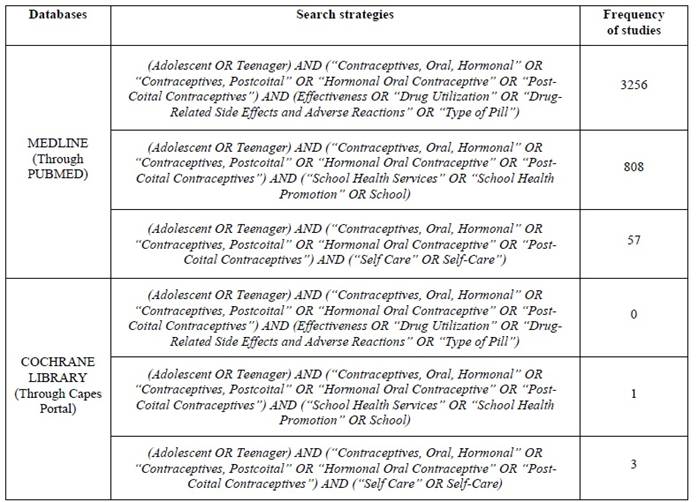
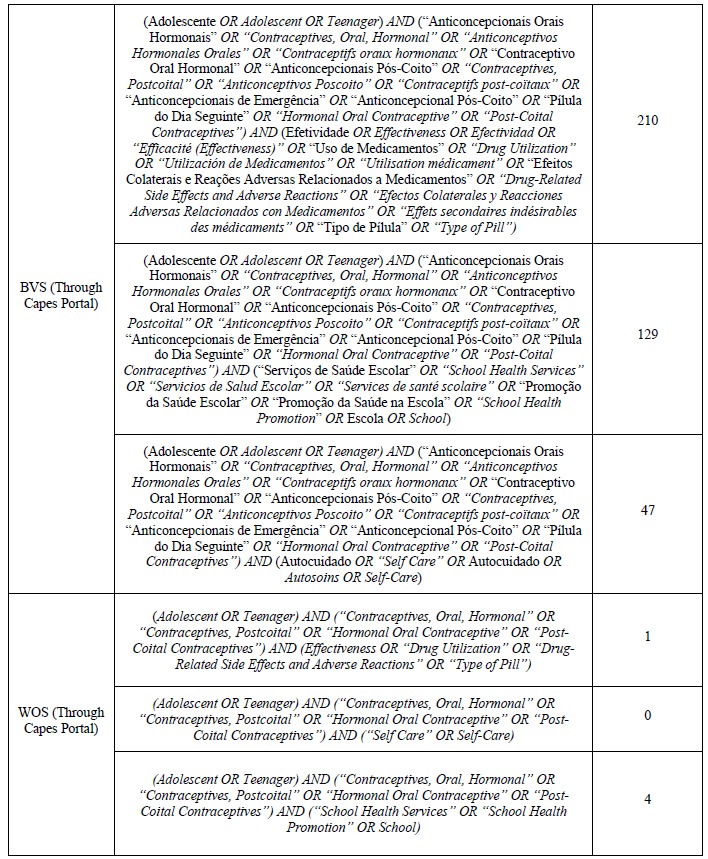
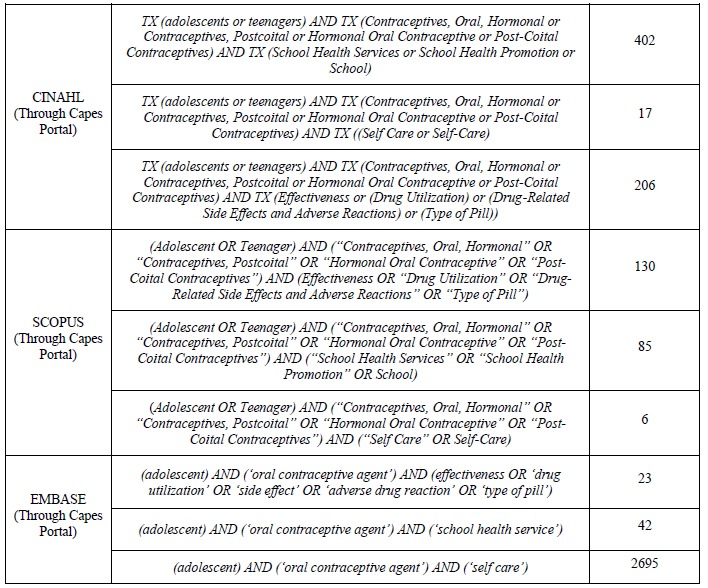
In the construction of the strategies, there was the participation of a librarian from the Federal University of Minas Gerais (UFMG) who used descriptors and synonyms extracted from the Health Sciences Descriptors (DeCS) and the Medical Subject Headings (MeSH). Being crossed in different search strategies using the Boolean operator AND, trying better results of studies that contemplate the objective of the research. We also analyzed the reference lists of all studies included in the sample and declared the final sample of the research. T1 . .
To aid in screening the studies, the Rayyan Intelligent Systematic Review (online version) application (Qatar Foundation Research, Qatar) was used. 17 Search results were imported directly from the databases into Rayyan and analyzed independently by two researchers. The selection process began with the exclusion of duplicates, using a 95 % similarity percentage interval as the automatic elimination method, according to the program’s own recommendations. The remaining studies were eliminated one by one by the pair of reviewers, simultaneously, following verification of titles, authorship, journal, and abstract.
The title and summary were then analyzed, thus excluding those that did not suit the objective of the study by applying the eligibility criteria. A third reviewer contributed to the analysis of divergence and consolidation of the final study sample.
After the selection of studies, these were analyzed by reading in full. To determine the variables to be considered in data extraction, aspects guided by JBI Data Extraction Form for Review for Systematic Reviews and Research Syntheses were considered,16,18 however the heterogeneity between the studies was not evaluated as a limiting factor.
For the analysis of the results was used the method of thematic analysis, in a process of reduction, display, comparison of data, design of conclusion and verification, 19 building categories from themes that emerged from the included studies. The data are presented in the format of summary tables.
Even if the proposal to develop the scoping review according to JBI guidelines does not establish an obligation for methodological quality assessment of the included studies,16 the level of evidence in each study was classified. 20 The purpose was to provide additional subsidies for the interpretation of the results.
The research did not require the approval of the Research Ethics Committee (REC), since public domain data was used.
Results
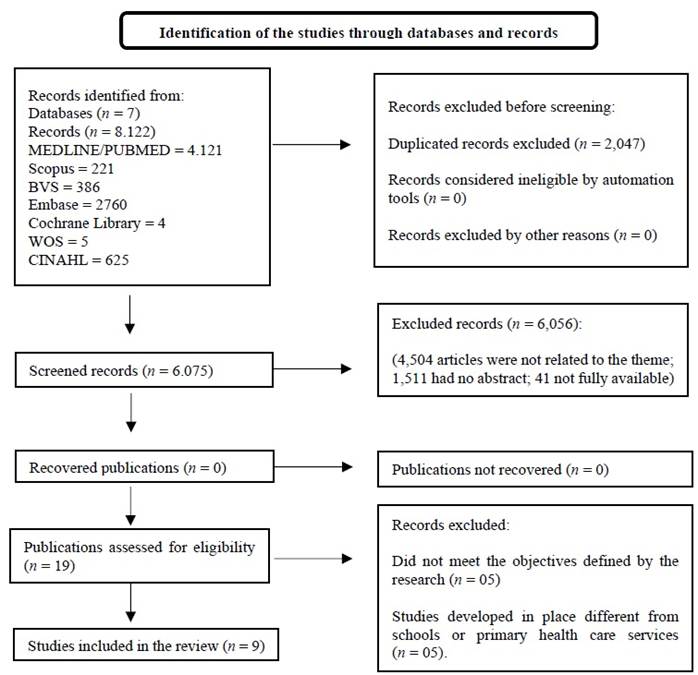
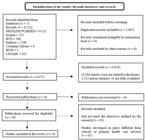
Of the 8,122 studies found, 2,047 were excluded because they were duplicate records. Of the 6,075 remaining articles, after reading the titles and abstracts, 6,056 were eliminated, with emphasis on the causes: 4,504 had no relation to the theme; 1,511 did not have abstracts; and 41 were unavailable in full. Therefore, 19 studies met the previously established inclusion criteria. Among these, five were not aligned with the objectives of the research and five were carried out in different environments of schools or primary care services, having been discarded. Thus, the final sample was limited to nine selected studies, which were duly analyzed.
The process of searching and selecting studies for this review is presented in the Flowchart (Figure 1), following the recommendations of the JBI and the checklist adapted from the Preferred Reporting Items for Systematic Reviews and Meta-Analyses (PRISMA).
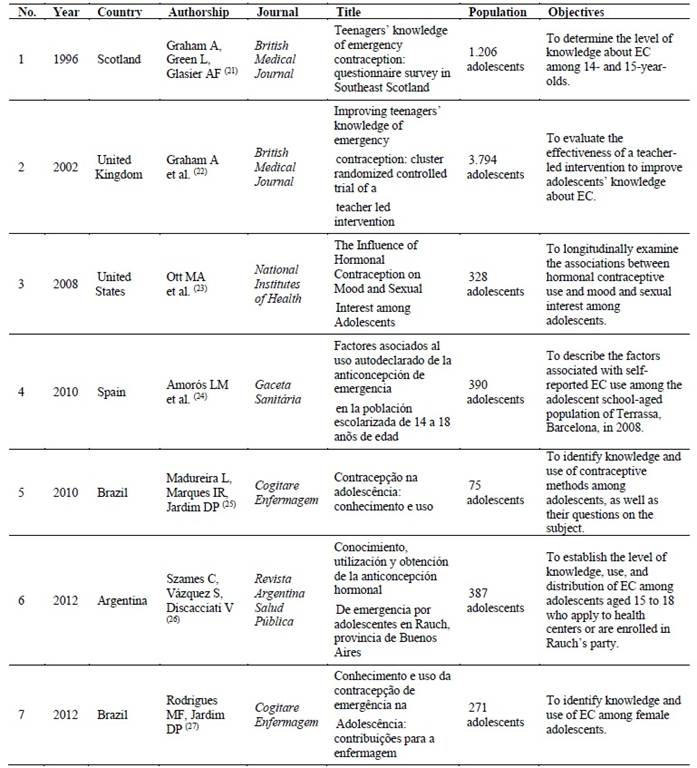
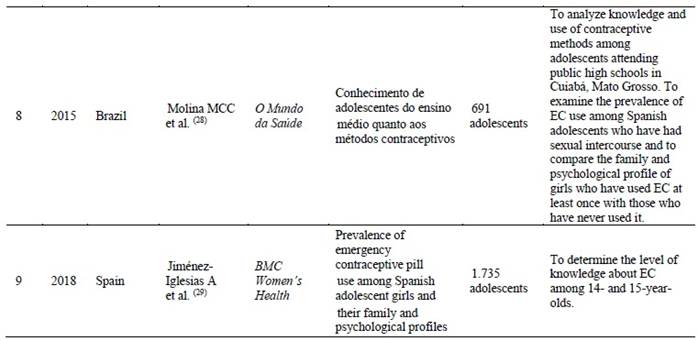
The nine studies included in this review were published and/or made available between 1996 and 2018, all being scientific articles, and covered quantitative, qualitative or qualitative-quantitative approaches (Table 2) .
In terms of theoretical reference, most studies were based on the analysis of behaviors and attitudes regarding the use of HOC. The data collection instruments varied from self-applicable questionnaires to structured interviews, allowing a comprehensive collection of information on the studied population.
About the most analytical forms found in the studies, univariate was detected to characterize the population studied in terms of age, sex and indication of contraceptive method and bivariate that tested associations between variables such as sex and age of the first sexual intercourse, sex and maternity/paternity, and current use of contraceptive methods.
The studies had as objectives: to identify factors associated with the use of EC; to describe, evaluate the knowledge about EC and the effectiveness of educational interventions to improve the use among adolescents; to examine the prevalence of EC use and the psychological impact among young people; and analyze longitudinal associations between the use of hormonal contraceptives, mood and sexual interest in adolescents.
Study 1, quantitative and descriptive, evidence level VI, was developed in a school service in Scotland and had the participation of 1,206 adolescents aged 14-15 years. A questionnaire was used that investigated the knowledge about the EC, including the time limit for use, sources of information, and perceptions about the associated risks and safety. The study evaluated different theoretical domains. Regarding the types of pills, the study mentions the use of EC, but does not detail about other types of oral contraceptive pills. As for the effectiveness rate, although it has not been discussed directly, most students believed that EC would be effective in preventing pregnancy. About the side effects, a part of the participants believed that the use of EC could lead to infertility. Concerning the use and storage, the study showed limited knowledge, especially regarding correct use within the maximum period of 72 hours after sexual intercourse, and did not provide information on how these methods should be stored. 21
Study 2, randomized type, evidence level II, was conducted in a school service and included a sample of 3,794 adolescents aged 14 to 15 years from the United Kingdom. The 10th year students actively participated in a single class on EC, taught by teachers previously trained in the service. The theoretical domains evaluated included: types of pills, with specific focus on EC as a method of contraception; effectiveness rate, highlighting that EC is more effective when used soon after unprotected intercourse, although it remains effective up to 72 hours after without presenting a specific rate; side effects were not mentioned in the research; and use and storage, with reference to the maximum term of use of EC up to 72 hours after the relationship, but no information about its storage. (22
In turn, Study 3, Level of evidence VI, longitudinal and prospective, was conducted in the United States with a sample of 328 adolescents aged between 14 and 17 years, in the context of primary care. The objective was to investigate the relationship between mood, sexual interest and use of hormonal contraceptives, with a main focus on combined oral contraceptives. Among the theoretical domains evaluated, the type of pill stands out, with general analysis of combined oral contraceptives; rate of effectiveness, which was not directly addressed; side effects, with emphasis on mood variations, since users reported more positive and less negative mood during the continuous use of the methods, although no significant changes in sexual interest between groups were observed; and use and storage, in which the importance of regular use of combined oral contraceptives was stressed, without, however, addressing aspects related to storage. (23
In Study 4, cross-sectional, Level of evidence VI, a sample of 390 adolescents between 14 and 18 years old was used and conducted in a Spanish school service. The researchers collected data on the use of CE and its relationship with variables such as drug and alcohol consumption, sexual behavior and other associated characteristics. The theoretical domains evaluated were the type of pill, focusing on the use of EC, whose index among girls was 28.2 %; effectiveness rate, not directly mentioned, although the study points to the usefulness of EC for pregnancy control; side effects, which were not discussed; and storage, with emphasis on the association between the use of EC and the high frequency of sexual intercourse without a condom, in addition to the family influence on contraceptive behavior. There was no mention about method storage. (24
For the Descriptive and Exploratory Study 5, Level of Evidence VI, 75 adolescents in the age group from 12 to 16 years old were required to access school services in Brazil. An educational lecture was organized to clarify questions of the students about contraception and offer basic information on sexuality. In relation to the theoretical domains evaluated, regarding the types of pills, the study mentions the “conventional pill” and the “morning after pill”. For the effectiveness rate, there was no direct specification and on side effects the text does not directly address this type of effect for the morning-after pill or other oral contraceptive methods, but indicates a concern of adolescents about the impact of hormones on health. Regarding use and storage, it was evidenced that adolescents are likely to start using oral hormonal contraceptives after entering a relationship, and there is no mention about the storage of the method. (25
In relation to the descriptive and cross-sectional study 6, Level of evidence VI, conducted in Argentina with 387 adolescents aged 15 to 18 years from school service and primary care, we investigated the awareness of adolescents about EC, including knowledge about its use, effectiveness and possible side effects. It also evaluated the access and use of EC by adolescents. The theoretical domains addressed presented the following information: for the types of pills, it is mentioned the use of EC, a post-coital method. In the effectiveness rate, the efficacy of EC is directly related to the time of its administration after sexual intercourse. The earlier it is taken, the greater its effectiveness. Only 47 % of respondents were aware of this fact. No specific side effects of EC were described. However, it was highlighted an incorrect perception among adolescents that EC could cause abortion, with 90% of respondents not knowing or responding incorrectly on this point. Regarding use and storage, the study showed that EC was acquired mainly in pharmacies, and adolescents reported having easy access to the method, however, only a small portion used it. There was no approach on storage. 26
Study 7, descriptive and exploratory, Level of evidence VI, was conducted in the primary care service in Brazil and included a total of 271 adolescents, between 10 and 19 years. We examined the knowledge of adolescents about EC, its use practices and the sources of information used to learn about the method. The theoretical domains evaluated showed that in relation to the types of pills, two types were mentioned: the single-dose pill and the two-dose pill. The majority of adolescents (74.3 %) opted for two pills, while 25.6 % used a single dose. The second pill should be taken 12 hours after the first. The effectiveness rate of the morning-after pill is not specified directly in the study, but it is mentioned that efficacy is higher as soon as it is used, ideally up to 24 hours after unprotected intercourse. However, it can be used for up to 72 hours and is less effective as time goes on. 27
Also in relation to study 7, the side effects described by the adolescents were the following: alteration of the menstrual cycle (68.2 %), headache (28.4 %), nausea and vomiting (22.1 %), sore breasts (13.6 %), abdominal pain (9.2 %). Related to use and storage, the use of CE should be emergency, recommended after unprotected sex or failure of other contraceptive methods. The method should not be used continuously, as there is a risk of harm to health and decrease its effectiveness. In EC with 2 tablets, the first one should be taken within the initial 72h and the second pill should be taken 12 hours after the first. It was not possible to identify an approach on method storage. (27
In Study 8, cross-sectional and descriptive, evidence level VI, also conducted in Brazil, this time with 691 adolescents aged 10 to 19 years who used the school service, we investigated the knowledge of adolescents about various contraceptive methods, including male and female condoms, oral and injectable contraceptives, tablet, morning after pill, interrupted coitus and combinations of these methods. In the theoretical domains evaluated two types of pills were found: the Oral Contraceptive, a common method, but the adolescents showed misinformation about its proper use and the need for prescription, and the Morning After pill, indicated for emergency use, but there is confusion about the time limit for starting its use. 28
The text of this study does not specify the exact effectiveness rate of the contraceptive methods mentioned. It does not point out the side effects, but highlights the conception of adolescents. In it, 64.5 % know that there are different hormonal dosages, 53.5 % understand that the pill prevents ovulation, 37.5 % believe that the pill causes abortion, 48.7 % disagree that the pill causes weight gain, 36.8 % have uncertainty about health risks such as high blood pressure and breast cancer, 41.7 % disagree that prolonged use causes infertility. The use of the contraceptive pill should be daily, preferably at the same time and the morning-after pill should be used as an emergency, as in cases of condom rupture, and should be taken preferably as soon as possible, within 72 hours after unprotected intercourse. The study also does not provide data on method storage. (28
Study 9, cross-sectional, evidence level VI, performed in primary care with 1,735 Spanish adolescents aged 15 to 18 years, focused on emergency contraceptive pills, specifically those of levonorgestrel and ulipristal acetate, investigating their association with family, psychological and mental health factors. The theoretical domains evaluated show that in relation to the types of pills, the text mentions EC but does not specify other types of pills. The study also does not provide a specific rate of effectiveness of EC, but points out that it is most effective when used immediately after unprotected intercourse and can still be used up to 72 hours later. There are concerns among women and teachers about the safety of the use of CE, which may discourage its use, but there is no direct mention of side effects. About use and storage, EC should be used up to 72 hours after unprotected sexual intercourse. Knowledge about this term is crucial for its effectiveness, although the text does not specifically address the storage of the pill. (29
After the systematization of the themes, 4 categories were obtained: HOC typing; effectiveness rate, side effects and use and storage, described below.
Discussion
The choice of type of pill depends on several factors, including medical history and personal preference, and proper advice from a healthcare professional is essential to ensure the best decision. COCs are widely preferred by many adolescents due to its high efficacy and relatively better knowledge about its functioning and side effects, although in this review, it was evidenced that EC, especially the two-dose version, is routinely used between adolescents, despite doubts about its use and effectiveness. 23,27 It is also noteworthy that the HOC are subdivided into monophasic, biphasic and triphasic. In the monophasic, the dose of steroids is constant in all 21 active tablets or 28 tablets, being six or seven placebo tablets, which contain no hormones. The two-phase, with 22 pills, and the three-phase, with 21, contain two or three types of tablets, respectively, with variations in hormonal proportions throughout the cycle. 12
On the other hand, mini-pills represent a viable option for adolescents who do not tolerate estrogen, but they are less common because they require accuracy in the daily intake schedule to ensure efficacy and are usually available in packs of 28 or 35 tablets. 12
In addition, there is the EC that can be made with levonorgestrel, in two doses of 0.75 mg or in a single dose of 1.5 mg. ulipristal acetate with 30 mg in a single dose. The Yuzpe method is performed with two doses of 0.1 mg ethinylestradiol and 0.5 mg levonorgestrel.23 investigation on the use of contraceptives in Spanish adolescents revealed that 30.65 % of young women preferred to use emergency pills instead of HOC and mini-pills, identifying factors associated with this choice, such as family and psychological influences. 28
The family influence demonstrates a significant role in the use of EC. Girls with greater knowledge and communication with their parents were less likely to use this method, reflecting a family environment that offers supervision and protection against sexual risk behaviors. On the other hand, its repeated use is associated with less structured family relationships, with less parental knowledge, reduced communication and less maternal affection, indicating greater vulnerability in these circumstances. 24
Psychological factors are also relevant for this use. Girls who used EC only once showed greater satisfaction with life and a high sense of coherence, indicating better psychological resources for critical decisions. In contrast, those who used it repeatedly presented greater depressive symptomatology, suggesting greater psychological vulnerability, which may decrease self-care, such as reduced use of condoms. These findings indicate a cycle of vulnerability and risk behavior associated with frequent use. 29
HOCs have an effectiveness rate of 99.9 % in the first year with correct use, that is, when taken exactly as prescribed, and from 92 % to 94 % in usual use, which includes forgetfulness or irregular schedules. The mini-pills have an effectiveness of 99.5 % with correct use and 99 % in normal use. The combined oral contraceptive pills (estrogen + progestin), for example, when used under typical use, have a failure rate between 3 % and 9 % per year, which corresponds to an effectiveness of 91 % to 97 %. These methods are widely recommended in adolescence due to their high accessibility and low cost compared to other contraceptive methods. Thus, they are a viable option for adolescents, especially with guidance on correct use and adequate support. 21,31,32
The ECs act delaying ovulation or preventing fertilization, being more effective when administered quickly after unprotected intercourse or failure of contraceptive method. Studies show that if taken in the first 24 hours, both the isolated levonorgestrel and the Yuzpe method have an efficacy of 98 %; however, it falls to 95.9 % between 25 and 48 hours and to 95.3 % between 49 and 72 hours. Ulipristal acetate, when used correctly up to 72 hours after intercourse, can prevent up to 98 % of pregnancies and may be administered up to 120 hours later. In a study in Argentina, only 47 % of adolescents answered that they knew about this time limit and 43 % correctly identified the protection period. 9,26,30
As for side effects, according to a study conducted in the United States, the use of HOCs and mini-pills was associated with less variability in negative mood, suggesting that hormonal stabilization may have a positive impact on the emotional well-being of but on the other hand can cause acne and risk of decreased bone calcification in children under 18 years. In addition, a national survey found that some symptoms such as nausea, headache, menstrual irregularity, breast tenderness and reduced sexual interest were also reported.12,23,27
The following side effects are also included in EC: alteration of the menstrual cycle, mentioned by 68.2 % of users; headache (28.4 %), nausea and vomiting (22.1 %), sore breasts (13.6 %) and abdominal pain (9.2 %). These effects vary in intensity depending on the type of EC and may occur soon after use. 27
A study conducted in the United States to evaluate the continued use of an oral contraceptive in adolescents showed important benefits for menstrual health, such as improvement or resolution of symptoms of dysmenorrhea and pelvic pain. In addition, users achieved amenorrhea, with low rate of side effects and good general acceptance of the method. The use of oral contraceptive proved to be an effective and well-tolerated option for pain management and menstrual cycle control in this population. 33
About the use of HOC, most adolescents believe that they should be taken with a prescription. However, many mistakenly think that the pill should be taken around the time of intercourse and believe it is acceptable to take three pills together if they forget to take it for two days. Despite these misconceptions, a large proportion of study participants agreed that the pill, both combined and isolated, should be taken daily and preferably at the same time. 28
Therefore, it is evident that the HOCs should be started preferably between the first and fifth day of the menstrual cycle, while the minipill can be started at any time, as long as it is sure that the woman is not pregnant. The use of EC should occur within 72 hours with levonorgestrel or the Yuzpe method and up to 120 hours with ulipristal acetate after unprotected sex or failure of a contraceptive method. 30
After 21 tablets of the HOCs, a break of seven days is made; after 22, a break of six days, and some include placebo tablets. If menstruation does not occur in this interval, the user must start a new chart and perform a pregnancy test. The mini-pill should be taken daily at the same time, without breaks between pills. 34
In case of forgetting the HOCs, if it is only one pill, it should be taken immediately and continue to use normally; if there are two or more, it is necessary to take one and use additional protection for seven days. In the case of the mini-pill, delays greater than three hours or forgetfulness, it is necessary to take as soon as possible and use a condom or avoid sexual intercourse for two days. 12 In cases of vomiting within one hour after taking the HOCs or mini-pill, it is convenient to take another pill from an extra tablet; if there is severe diarrhea or prolonged vomiting, additional protection should be used for seven days after recovery. 12
Parte inferior do formulário
Moreover, there are different perceptions about HOC, both isolated and combined: 64.5 % know that there are different hormonal dosages, 53.5 % understand that it prevents ovulation, but 37.5 % believe that it causes abortion. The majority (48.7 %) disagree that the pill causes weight gain, and there is uncertainty about health risks such as high blood pressure and breast cancer (36.8 %). In addition, 41.7 % disagree that prolonged use causes infertility. 28
As for storage, none of the studies addressed this issue. However, it is important to note that it is a crucial factor to be considered, since inadequate storage conditions can compromise the effectiveness of hormonal oral contraceptives. Therefore, it is important that all guidelines are provided by health professionals during the consultation, ensuring the effectiveness of the medications used by adolescents.
Therefore, to ensure the effectiveness and safety of HOC, it is essential to store them in dry and cool places, inside their original packaging for easy identification, as well as regularly checking the expiration date to avoid using expired pills. These measures are essential to ensure that they are used safely and effectively in preventing pregnancy. 13
In this sense, the importance of appropriate HOC guidelines for adolescents is perceived. Based on the analysis of the productions selected in this review, it is noted that the school context is a strategic location for education in sexual and reproductive health, aligned with the ongoing actions of PHC. 25
That said, the results indicate an incipient knowledge about the use of HOC among adolescents, with many unaware or misinformed about the method. And, therefore, there is a need for specific preventive interventions that address both risky sexual behavior and the importance of open communication between parents and daughters on the subject in order to promote healthier behaviors. 22
Although most of the studies included in this review have been conducted in Brazil and Spain, the findings may lead to broader implications. Adolescents’ preference for emergency contraception, misconceptions about the effectiveness of oral contraceptives and erroneous beliefs about dosage and storage may reflect patterns observed in other geographic and cultural contexts (see especially in countries with similar characteristics and access to information and contraceptive methods. However, the absence of studies on effectiveness rate and storage limits the direct generalization of results, highlighting the need for more research in different populations and environments to verify the global consistency of these findings. Understanding these factors is crucial to guide public health policies and more effective educational interventions on a global scale, as well as ensuring the protagonism of adolescents in adopting self-care measures in reproductive health despite their nationalities. Although the importance of reproductive health education is undeniable and widely recognized, future research should be conducted more specifically to fill the gaps identified in this review. Studies focused on the effectiveness of oral contraceptives among adolescents, investigations on adherence factors related to the correct storage of medicines and evaluations of structured educational interventions with measurement of concrete results are necessary to guide more effective policies and clinical practices. Thus, the inclusion and training of health professionals and teachers in the school context is crucial for discussions on sexuality and contraception. In addition, sex education in school curricula should be encouraged in order to promote informed decisions among adolescents, especially regarding the use of HOC.
In formulating the specific objectives of this review, an investigation was included on the reported efficacy rate as well as the results regarding the use and storage of hormonal oral contraceptives. Although no studies have been found that directly address these aspects, this absence does not represent a methodological limitation, but rather a more relevant finding of the research. The lack of information exposes an important gap in the scientific literature, pointing to the need for future studies that cover these topics. Thus, the specific objectives remain relevant, since they allowed the identification of not only the available data, but also the absence of certain types of existing knowledge on the subject.
The included studies made it possible to map the production on HOC in school health services and PHC being adolescent participants, as well as types of contraceptive pills most used for adolescents, effectiveness rate, side effects, the use and storage of oral hormonal contraceptives by adolescents. These were published in the period 1996-2018, characterized by various approaches (quantitative, qualitative, qualitative-quantitative) and in several countries. This heterogeneity made it possible to build a panorama on the theme from various perspectives.
The limitations concern the problems arising from databases and digital repositories, such as registration of the same article separately in different languages, making it difficult to detect duplicates, something that was overcome by the verification carried out by two reviewers and the methodological rigor of the JBI proposal. In addition, the included studies were developed in North American, South American and European countries, but the theme of the use of HOC by adolescents, in the established perspective, is still little investigated, the lack of from Asia and Oceania demonstrates a possible risk of bias in primary studies.
Conclusions
It was possible to conclude that EC remains the main choice among HOC due to its high effectiveness. However, there are still misconceptions about its use among adolescents, such as the belief that the pill should be taken only minutes before sexual intercourse, the mistaken idea that in cases of two-day forgetfulness, it is acceptable to take three daily pills at once, and the notion that the pill causes abortion. Such elements can lead to inappropriate use and compromise the rate of effectiveness, which has not been addressed in any study, which may contribute to low adherence to the use of HOC. As for side effects, both benefits and harms were observed with the use of HOC. On the one hand, there was hormonal stabilization and consequent reduction of menstrual flow, which can bring relief from symptoms such as cramps and discomfort. On the other hand, increased nausea, headache and decreased libido were reported, which may negatively impact the experience with contraceptives. It is important to consider that as the response to these side effects varies from person to person, follow-up becomes essential to manage possible adverse reactions and adjust treatment as needed. Regarding the storage of HOC, the absence of approaches in the studies analyzed suggests that this issue does not receive the necessary attention. Inadequate storage conditions can compromise their effectiveness, so the importance of storing them in dry and cool places and informing adolescents. Therefore, this study points to the need for a continuous and integrated educational conduct for the sexual and reproductive health of adolescents, through information based on scientific evidence about types, use and storage, rate of effectiveness and side effects, contributing to an assertive choice and with protagonism of the target audience, in this case, adolescents.
References
-
1. Organização Mundial de Saúde. Saúde do adolescente (Internet). 2024 (acesso 2024 abr 14). Disponível em: Disponível em: https://www.gov.br/saude/pt-br/assuntos/saude-de-a-a-z/s/saude-do-adolescente
» https://www.gov.br/saude/pt-br/assuntos/saude-de-a-a-z/s/saude-do-adolescente - 2. Santos ACF, Vador RMF, Cunha FV, Silva ADA. Abordagem do Enfermeiro na Gravidez na Adolescência. Braz J Hea Rev (Internet). 2020;3(6):17438-17456. doi: 10.34119/bjhrv3n6-161
- 3. Farias RV, Soares CFS, Araújo RS, Almeida VRS de, Leitão DS, Santos JS, et al. Gravidez na adolescência e o desfecho da prematuridade: uma revisão integrativa de literatura. REAS (Internet). 2020;v.sup.(56):3977. doi: 10.25248/reas.e3977.2020
-
4. Brasil. Nota Técnica nº 2/2024-CACRIAD/CGACI/DGCI/SAPS/MS. Brasília: Ministério da Saúde, 2024. Disponível em: https://www.gov.br/saude/pt-br/composicao/saps/publicacoes/notas-tecnicas/nota-tecnica-no-2-2024-cacriad-cgaci-dgci-saps-ms
» https://www.gov.br/saude/pt-br/composicao/saps/publicacoes/notas-tecnicas/nota-tecnica-no-2-2024-cacriad-cgaci-dgci-saps-ms -
5. Sociedade Brasileira de Pediatria. Atualização sobre métodos efetivos de contracepção na adolescência. Rio de Janeiro: Sociedade Brasileira de Pediatría; 2023. Disponível em: https://www.sbp.com.br/fileadmin/user_upload/24200f-GPA_ISBN-_Atualiza_MetodosEfetivos_Contracepcao_Adl.pdf
» https://www.sbp.com.br/fileadmin/user_upload/24200f-GPA_ISBN-_Atualiza_MetodosEfetivos_Contracepcao_Adl.pdf -
6. Andrade SMC, Alves AFS, Lima IF, Rocha LO, Cunha MAS, Nogueira NS, et al. Os impactos dos contraceptivos orais no corpo feminino: uma revisão integrativa da literatura. Pesquisa, Sociedade e Desenvolvimento. RSD (Internet). 2023;12(1):e21512139587. doi: 10.33448/rsd-v12i1.39587
» https://doi.org/10.33448/rsd-v12i1.39587 -
7. Silva GA, Pillati GRC, Dal Piva R. Contraceptivos de emergência: uma revisão teórica do tipo narrativa para identificar evidências da farmacodinâmica e do uso desses medicamentos. REASE (Internet). 2021;7(10):1276-1287. doi: 10.51891/rease.v7i10.2661
» https://doi.org/10.51891/rease.v7i10.2661 -
8. Garcia ACFV, Souza BZ, Oppenheimer D. Falha de métodos contraceptivos hormonais em mulheres brasileiras: uma revisão de literatura. Pesquisa, Sociedade e Desenvolvimento. RSD (Internet). 2023;12(10):e97121043546. doi: 10.33448/rsd-v12i10.43546
» https://doi.org/10.33448/rsd-v12i10.43546 -
9. Costa BMS, Baiense ASR. Atenção farmacêutica no uso de contraceptivos de emergência. . Rev Ibero-Americana de Humanidades, Ciências e Educação REASE (Internet). 2023;9(4):1745-1757. doi: 10.51891/rease.v9i4.9511
» https://doi.org/10.51891/rease.v9i4.9511 -
10. Guedes I, Silvério ACK, Santos RA, Maia JS. Influência dos anticoncepcionais orais hormonais na saúde da mulher. Rev Brasileira Multidisciplinar. RBM (Internet). 2022;25(1):726-30. doi: 10.25061/2527-2675/ReBraM/2022.v25i1.995
» https://doi.org/10.25061/2527-2675/ReBraM/2022.v25i1.995 -
11. Barbian J, Kubo CY, Balaguer CS, Klockner J, Costa LMV, Ries EF, et al. Anticoncepção de emergência em universitárias: prevalência de uso e falhas no conhecimento. Rev Saúde Pública (Internet). 2021;55(1ed):74. doi: 10.11606/s1518-8787.2021055003076
» https://doi.org/10.11606/s1518-8787.2021055003076 -
12. Secretaria de Saúde do Estado da Bahia. Métodos contraceptivos na atenção básica (Internet). 2023 (acesso 2024 jun 29). Disponível em: Disponível em: https://telessaude.saude.ba.gov.br/wp-content/uploads/2023/03/20230328-Cartilha-metodos-contraceptivos.pdf
» https://telessaude.saude.ba.gov.br/wp-content/uploads/2023/03/20230328-Cartilha-metodos-contraceptivos.pdf -
13. Agência Nacional de Vigilância Sanitária. Orientações sobre cuidados de conservação de medicamentos (Internet). Webinar Seminários virtuais; 2019 (acesso 2024 jul 15). Disponível em: Disponível em: https://www.gov.br/anvisa/pt-br/assuntos/educacaoepesquisa/webinar/medicamentos/arquivos/2755json-file-1
» https://www.gov.br/anvisa/pt-br/assuntos/educacaoepesquisa/webinar/medicamentos/arquivos/2755json-file-1 -
14. Secretaria de Atenção Primária à Saúde. Governo Federal realiza segunda edição da Campanha Nacional de Prevenção da Gravidez na Adolescência. Brasília: Ministério da Saúde ; 2021 (acesso 2024 jul 7). Disponível em: Disponível em: https://www.gov.br/saude/pt-br/assuntos/noticias/2021/janeiro/governo-federal-realiza-segunda-edicao-da-campanha-nacional-de-prevencao-da-gravidez-na-adolescencia
» https://www.gov.br/saude/pt-br/assuntos/noticias/2021/janeiro/governo-federal-realiza-segunda-edicao-da-campanha-nacional-de-prevencao-da-gravidez-na-adolescencia -
15. Medeiros NM, Mourão LCCB, Miranda LL. Entre a igualdade e a diferença nos discursos do projeto saúde e prevenção nas escolas. Psicol Soc (Internet). 2020;32:e173553. doi: 10.1590/1807-0310/2020v32173553
» 10.1590/1807-0310/2020v32173553 -
16. Aromataris E, Lockwood C, Porritt K, Pilla B, Jordan Z. JBI Manual for Evidence Synthesis; 2024. doi: 10.46658/JBIMES-24-01
» https://doi.org/10.46658/JBIMES-24-01 -
17. Yu F, Liu C, Sharmin S. Performance, usability, and user experience of rayyan for systematic reviews. Proc Assoc Inf Sci Technol (ASIS&T) (Internet). 2022;59(1):843-844. doi: 10.1002/pra2.745
» https://doi.org/10.1002/pra2.745 -
18. Peters MDJ, Godfrey C, McInerney P, Munn Z, Tricco AC, Khalil H. Scoping reviews. Em: Aromataris E, Lockwood C, Porritt K, Pilla B, Jordan Z, editors. JBI Manual for Evidence Synthesis ; 2020. doi: 10.46658/JBIMES-24-09.
» https://doi.org/10.46658/JBIMES-24-09. -
19. Whittemore R, Knalf K. The integrative review: updated methodology. J Adv Nurs. 2005;52(5):546-553. doi: 10.1111/j.1365-2648.2005.03621.x
» https://doi.org/10.1111/j.1365-2648.2005.03621.x - 20. Melnyk BM, Fineout-Overholt E. Evidence-based practice in nursing & healthcare: a guide to best practice. Philadelphia: Lippincott Williams & Wilkins; 2024.
-
21. Graham A, Green L, Glasier AF. Teenagers' knowledge of emergency contraception: questionnaire survey in south east Scotland. BMJ (Internet). 1996;312(7046):1567-1569. doi: 10.1136/bmj.312.7046.1567
» https://doi.org/10.1136/bmj.312.7046.1567 -
22. Graham A, Moore L, Sharp D, Diamond I. Improving teenagers' knowledge of emergency contraception: cluster randomised controlled trial of a teacher led intervention. BMJ (Internet). 2002;324(7347):1179-1184. doi: 10.1136/bmj.324.7347.1179
» https://doi.org/10.1136/bmj.324.7347.1179 -
23. Ott MA, Shew ML, Ofner S, Tu W, Fortenberry JD. The influence of hormonal contraception on mood and sexual interest among adolescents. Arch Sex Behav. 2008;37(4):605-613. doi: 10.1007/s10508-007-9302-0
» https://doi.org/10.1007/s10508-007-9302-0 -
24. Amorós LM, Schiaffino A, Moncada A, Pérez G. Factores asociados al uso autodeclarado de la anticoncepción de emergencia en la población escolarizada de 14 a 18 años de edad. Gac Sanit (Internet). 2010;24(5):404-409. doi: 10.1016/j.gaceta.2010.05.010
» https://doi.org/10.1016/j.gaceta.2010.05.010 -
25. Madureira L, Marques IR, Jardim DP. Contracepção na adolescência: conhecimento e uso. Cogitare Enferm (Internet). 2010;15(1):100-105. Disponível em: http://www.revenf.bvs.br/pdf/ce/v15n1/v15n1a15.pdf
» http://www.revenf.bvs.br/pdf/ce/v15n1/v15n1a15.pdf -
26. Szames C, Vázquez S, Discacciati V. Conocimiento, utilización y obtención de la anticoncepción hormonal de emergencia por adolescentes en Rauch, Provincia de Buenos Aires. Rev Argent Salud Pública (Internet). 2012;3(11):16-22. Disponível em: https://rasp.msal.gov.ar/index.php/rasp/article/view/348
» https://rasp.msal.gov.ar/index.php/rasp/article/view/348 -
27. Rodrigues MF, Jardim DP. Conhecimento e uso da contracepção de emergência na adolescência: contribuições para a enfermagem. Cogitare Enferm (Internet). 2012;17(4):724-729. doi: 10.5380/ce.v17i4.30381
» https://doi.org/10.5380/ce.v17i4.30381 -
28. Molina MCC, Stoppiglia PGS, Martins CBG, Alencastro LCS. Conhecimento de adolescentes escolares do ensino médio quanto aos métodos contraceptivos. O Mundo da Saúde (Internet). 2015;39(1):22-31. doi: 10.15343/0104-7809.201539012231
» https://doi.org/10.15343/0104-7809.201539012231 -
29. Jiménez-Iglesias A, Moreno C, García-Moya I, Rivera F. Prevalence of emergency contraceptive pill use among Spanish adolescent girls and their family and psychological profiles. BMC Womens Health (Internet). 2018;18(1):67-74. doi: 10.1186/s12905-018-0560-x
» https://doi.org/10.1186/s12905-018-0560-x -
30. Silva PB, Rodrigues JFA, Orssatto CS. Riscos do uso indiscriminado da contracepção de emergência. RNACTI (Internet). 2024;6(1):11-24. Disponível em: https://jiparana.emnuvens.com.br/riacti/article/view/1126/767
» https://jiparana.emnuvens.com.br/riacti/article/view/1126/767 -
31. Rios AR, Sena AD, Krug BR, Dantas EKO, Ferronato ECB, Bomfim JQ, et al. Fatores relacionados à escolha de métodos contraceptivos na adolescência: uma revisão de literatura. REAS (Internet). 2021;13(5):e6942. doi: 10.25248/reas.e6942.2021
» https://doi.org/10.25248/reas.e6942.2021 -
32. Margaritis K, Margioula-Siarkou G, Margioula-Siarkou C, Petousis S, Galli-Tsinopoulou A. Contraceptive methods in adolescence: a narrative review of guidelines. Eur J Contracept Reprod Health Care (Internet). 2023;28(1):51-57. doi: 10.1080/13625187.2022.2162336
» https://doi.org/10.1080/13625187.2022.2162336 -
33. Garbo G, Barrera E, Shim JY, Boskey ER, Grimstad FW. Use of continuous oral drospirenone for menstrual suppression in adolescents. J Adolesc Health (Internet). 2025;76(1):148-53. doi: 10.1016/j.jadohealth.2024.09.004
» https://doi.org/10.1016/j.jadohealth.2024.09.004 -
34. Federação Brasileira das Associações de Ginecologia e Obstetrícia. Contraceptivos orais: como orientar a escolha desse método e aumentar a adesão ao uso. Femina. 2021;49(8). Disponível em: https://www.febrasgo.org.br/media/k2/attachments/Femina Z2021Z49Z08ZWeb.pdf
» https://www.febrasgo.org.br/media/k2/attachments/Femina Z2021Z49Z08ZWeb.pdf