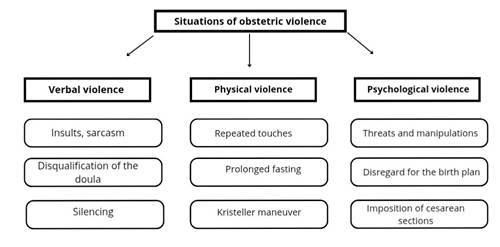
Situations of Obstetric Violence Identified by Doulas in Brazil
Introduction: Obstetric violence is defined as any act committed against a woman during pregnancy, childbirth, the postpartum period, or abortion that causes physical, psychological, sexual, or moral harm.
Objective: To analyze instances of obstetric violence identified by doulas in Brazil.
Methodology: A descriptive and exploratory qualitative study grounded in the theory of social representations, conducted between August 2024 and February 2025 in southern Bahia. The study included doulas selected according to pre-established criteria. Data collection was conducted through semi-structured interviews and snowball sampling. Socioeconomic and professional profiles were analyzed using descriptive statistics, and discourses were analyzed using Bardin’s content analysis.
Results: Participants were between 29 and 59 years old, had between 2 and 10 years of experience, 80 % worked in home and hospital settings, and their monthly incomes ranged from 1 to 6 minimum wages. The situations identified were grouped into verbal, physical, and psychological violence. The accounts reveal a lack of respect for autonomy, verbal insults, impositions, and interventions without consent, reflecting a technocratic and authoritarian model of care.
Conclusion: Despite the adversities, doulas act as agents of support and empowerment for women, promoting a respectful and humanized birth experience.
Keywords:
obstetric violence; doulas; social representation
 Thumbnail