Situations of Obstetric Violence Identified by Doulas in Brazil
Abstract:
Introduction: Obstetric violence is defined as any act committed against a woman during pregnancy, childbirth, the postpartum period, or abortion that causes physical, psychological, sexual, or moral harm.
Objective: To analyze instances of obstetric violence identified by doulas in Brazil.
Methodology: A descriptive and exploratory qualitative study grounded in the theory of social representations, conducted between August 2024 and February 2025 in southern Bahia. The study included doulas selected according to pre-established criteria. Data collection was conducted through semi-structured interviews and snowball sampling. Socioeconomic and professional profiles were analyzed using descriptive statistics, and discourses were analyzed using Bardin’s content analysis.
Results: Participants were between 29 and 59 years old, had between 2 and 10 years of experience, 80 % worked in home and hospital settings, and their monthly incomes ranged from 1 to 6 minimum wages. The situations identified were grouped into verbal, physical, and psychological violence. The accounts reveal a lack of respect for autonomy, verbal insults, impositions, and interventions without consent, reflecting a technocratic and authoritarian model of care.
Conclusion: Despite the adversities, doulas act as agents of support and empowerment for women, promoting a respectful and humanized birth experience.
Keywords:
obstetric violence; doulas; social representation
Resumo:
Introdução: A violência obstétrica configura-se como qualquer ato praticado contra a mulher durante a gestação, parto, puerpério ou abortamento resultando em prejuízos físicos, psicológicos, sexuais ou morais
Objetivo: Analisar as situações de violência obstétrica identificadas pelas doulas no Brasil
Metodologia: Estudo descritivo e exploratório, qualitativo, ancorado na teoria das representações sociais e desenvolvido entre agosto de 2024 e fevereiro de 2025 no sul da Bahia. Participaram doulas segundo critérios de inclusão e exclusão previamente estabelecidos. A coleta de dados foi realizada através de um roteiro de entrevista semiestruturado, e amostragem em bola de neve. O perfil socioeconômico e profissional foi analisado por meio de estatística descritiva e os discursos, por meio da análise de conteúdo de Bardin
Resultados: As participantes tinham entre 29 e 59 anos, entre 2 e 10 anos de experiência, 80 % atuavam em ambientes domiciliares e hospitalares, e sua renda mensal variava entre 1 e 6 salários mínimos. As situações identificadas foram agrupadas em violência verbal, física e psicológica. Os relatos evidenciam falta de respeito à autonomia, ofensas verbais, imposições e intervenções sem consentimento, expressando um modelo de atendimento tecnocrático e autoritário
Conclusão: Apesar das adversidades, as doulas atuam como agentes de apoio e empoderamento da mulher, promovendo um parto respeitoso e humanizado
Palavras-chave:
violência obstétrica; doulas; representação social
Resumen:
Introducción: La violencia obstétrica se define como cualquier acto cometido contra la mujer durante el embarazo, el parto, el puerperio o el aborto que provoque daños físicos, psicológicos, sexuales o morales
Objetivo: Analizar las situaciones de violencia obstétrica identificadas por doulas en Brasil
Metodología: Estudio descriptivo y exploratorio, cualitativo, fundamentado en la teoría de las representaciones sociales y desarrollado entre agosto de 2024 y febrero de 2025 en el sur de Bahía. Participaron doulas seleccionadas según criterios previamente establecidos. La recolección de datos se realizó mediante entrevistas semiestructuradas y muestreo bola de nieve. El perfil socioeconómico y profesional se analizó mediante estadística descriptiva y los discursos, mediante análisis de contenido de Bardin
Resultados: Las participantes tenían entre 29 y 59 años, entre 2 y 10 años de experiencia, el 80 % actuaba en ámbitos domiciliarios y hospitalarios, y sus ingresos mensuales variaban entre 1 y 6 salarios mínimos. Las situaciones identificadas se agruparon en violencia verbal, física y psicológica. Los relatos evidencian falta de respeto a la autonomía, ofensas verbales, imposiciones e intervenciones sin consentimiento, expresando un modelo de atención tecnocrático y autoritario
Conclusión: Pese a las adversidades, las doulas actúan como agentes de apoyo y empoderamiento de la mujer, favoreciendo un parto respetuoso y humanizado
Palabras clave:
violencia obstétrica; doulas; representación social
Introduction
The pregnancy-puerperal period is marked by maternal-fetal physiological, psychological, behavioral, emotional, and social transformations caused by gestation, childbirth, and birth. This period faced by pregnant women, women in labor, and postpartum women goes far beyond a state of transience, and although it may seem like a time of tranquility and happiness, this journey often does not unfold with all the care and respect that is expected. In this scenario, the fragility and vulnerability of this phase, combined with factors such as lack of knowledge of their rights and lack of information, enable the occurrence of obstetric violence. 1
Obstetric violence, in turn, is defined as any act of violence committed against women during pregnancy, childbirth, the postpartum period, and in situations of abortion, resulting in physical, psychological, sexual, interpersonal, and moral harm. 2 Furthermore, it must be understood as a manifestation of gender violence, since it is based on historically unequal power relations between men and women, expressing itself through the control of the female body, the delegitimization of its autonomy, and the naturalization of authoritarian practices in reproductive health care. Thus, its occurrence is not limited to care failures, but integrates a broader structural phenomenon of gender inequality, which reinforces its relevance as a social and public health problem. 3 The health team often acts with excessive exercise of power and lack of empathy, leading to female submission, loss of autonomy and decision-making power over their bodies, especially since this is a moment of great vulnerability for women. A study conducted with pregnant Afro-descendant women in southern Bahia revealed that many of them do not fully understand what obstetric violence is, limiting its definition to the moment of childbirth, which contributes to making these practices normal and veiled in the daily routine of obstetric care. 4
The study “Nascer no Brasil” showed that the occurrence of this practice varies according to the profile of the women and the institutional contexts, revealing worrying numbers of interventions. In this study, it was observed that more than half of the women underwent episiotomy, 91.7 % experienced lithotomy, about 40 % were subjected to the administration of oxytocin or amniotomy, and 37 % experienced the Kristeller maneuver. 5 To overcome and mitigate this problem, there is the movement in favor of the humanization of childbirth and birth, through dignified and qualified assistance to pregnant women, women in labor and postpartum women, reducing the pathological approach to childbirth, unnecessary interventions and violations of women's rights with the presence of a doula. 6 The role of doulas is highly valued in several countries.
In the United States, despite not having federal regulation, there are several institutions that offer certifications, such as Doulas of North America (DONA) International, which defines requirements for ethical principles and training for the practice of doula work. 7
In Brazil, the work of doulas has been gaining legal support, especially with Law Project (LP) No. 77/2022, which provides for the exercise of the activity of doulas and aims to establish the regulation of the profession throughout the national territory. 8 In addition, it ensures doula work as an integral part of multidisciplinary care during the pregnancy-puerperal period. The Bill characterizes the doula as a professional who provides physical, emotional and informational support during pregnancy, childbirth, and the postpartum period, without performing any activity of a clinical nature. 9
The practice of doula work is known to provide physical and emotional support for the pregnant person and their support network, contributing to a healthy gestational evolution and a positive outcome at the time of delivery. Considering the high demand on the UHS and its particularities, the doula's role becomes an instrument to complement obstetric care in its different stages, in line with the guidelines of the Ministry of Health (MH), which strengthens the comprehensiveness and humanization of women's health care. 10 In addition to restoring the protagonism and empowerment of women, improving care during the pregnancy-puerperal period. 11
However, doulas are immersed in an obstetric model that is not always conducive to a safe pregnancy, childbirth and postpartum period, making it necessary to be aware of the situations of obstetric violence that they identify in their daily lives, humanizing the health team of which they are a part and enabling welcoming and respectful care.
Thus, the following research question was formulated: What situations of obstetric violence have been identified by doulas in Brazil? In this sense, the objective was defined as: to analyze the situations of obstetric violence identified by doulas in Brazil.
In view of the above, the social and scientific relevance of this research is based on revealing the practices considered obstetric violence identified by doulas, allowing new strategies to be implemented to prevent new cases of obstetric violence, such as: training for women to exercise autonomy in their reproductive rights; strengthening doulas in assisting the pregnancy-puerperal period; providing information based on scientific evidence for decision-making by health managers, with a view to improving the planning of care during pregnancy, childbirth and the postpartum period.
Method
This is a descriptive and exploratory study, with a qualitative design, anchored in the Theory of Social Representations (TSR), which seeks to understand social phenomena in depth from the perspective of individuals, valuing their personal experiences, meanings and cultural environments. 12 The TSR encompasses knowledge that is collectively constructed and disseminated, with the purpose of explaining reality, guiding actions and facilitating communication among the members of a group. Thus, it becomes an essential tool for the study of social phenomena, highlighting how individuals generate and exchange meanings about certain objects or events. 13
The study was conducted in a doula company located in Brazil. The company was chosen because it is the only institution in the region that provides continuing education for doulas with regular support for pregnant women, women in labor and postpartum women, operating in home and hospital settings (public and private). This institution, through its training process, allows doulas to carry out diverse and comprehensive work, enabling the unveiling of institutional practices characterized as obstetric violence from various perspectives. The choice of location is based on diverse regional criteria, such as ethnic diversity, composed of indigenous and Quilombola populations, which implies specific cultural practices and distinct social representations. 14 In the state and epidemiological context, there are disproportionate rates of maternal mortality, with 85.15 % of maternal deaths related to Afro-descendant women, considered the greatest victims of obstetric violence in the country. 15 It is also worth noting that the institution was founded three years ago by a doula and offers annual training depending on availability and demand. To date, six courses have been held with approximately 60 trained doulas, through instruction by psychologists, other doulas, obstetric nurses and midwives, with lectures and practical classes.
The study participants were doulas who met the following inclusion criteria: over 18 years of age, with a proven doula training course and experience in prenatal care, childbirth, or postpartum care. The exclusion criterion was: being on medical leave during the data collection period. The sampling was non-probabilistic, characterized as intentional sampling, since the participants were selected based on previously established criteria and the relevance of their experiences to the object of investigation. The chain sampling technique, also known as Snowball sampling, was used, in which the first participant was selected by convenience and subsequently indicated other doulas who met the inclusion criteria, progressively expanding the group. It should be noted that this strategy is not considered convenience sampling, as the selection did not occur solely due to ease of access, but also due to the theoretical and experiential relevance of the participants in relation to the phenomenon studied. 16 The researcher provided the Informed Consent Form (ICF), and all interviews were recorded after authorization from the participants, transcribed and analyzed, being kept for at least five years, after which they will be deleted.
Data collection was conducted remotely via the Google Meet platform between August 2024 and February 2025. A semi-structured interview guide was used as an instrument, including age, average time, and location of work; religion; level of education; marital status; race/ethnicity and monthly income, in addition to guiding questions containing the concept; significant experiences of obstetric violence; the professionals who most perpetrate obstetric violence and what constitutes such practices. The interviews lasted an average of 30 to 50 minutes. The number of participants was defined by the criterion of theoretical saturation, with data collection ending when the interviews began to show recurrence of information, without the emergence of new elements relevant to the analytical categories of the study. The analysis was conducted concurrently with data collection, making it possible to identify the moment of saturation. No formal feedback was provided to the participants; however, the reliability of the analyses was ensured through full transcription of the interviews and careful review of the thematic categories.
The analysis of socioeconomic and professional profile data of doulas was processed using descriptive statistics, and the discursive part of the interviews was supported by content analysis, according to Bardin's methodological framework, through three chronological poles: pre-analysis, analysis and treatment of the results obtained, and interpretation. 17 The pre-analysis consisted of structuring the corpus (the testimonies) and a dynamic reading of the interviews allowing for a better understanding for selection. The exploratory phase of the material comprised the organization of the testimonies, highlighting and grouping the statements by similarity and creating categories referring to socioeconomic factors, professional life, religion, and place of work. In short, the analysis of the information allowed us to understand the categories and the meaning of doula work in the group perspective, anchored in TSR. To ensure methodological rigor, the criteria of credibility, transferability, reliability, and confirmability were adopted. Credibility was guaranteed by recording, full transcription, and systematic analysis of the interviews; transferability, by the detailed description of the context and the participants; reliability was ensured through the explicit explanation of the methodological steps; and confirmability through fidelity to the transcribed statements. No subsequent validation with the participants was conducted, considering that the analytical rigor and the use of complete transcripts ensured interpretative consistency.
The research was submitted to the Research Ethics Committee (REC) of the State University of Santa Cruz (UESC), having obtained approval under opinion number 7.083.094, based on Resolutions N. 466/2012, N. 510/2016 and Law N. 14874. 18,19,20) Participants were assured of anonymity, having been identified by the letter P followed by a cardinal number.
Results
Ten doulas participated, aged between 29 and 59 years, with 50 % married, 40 % single, and 10 % divorced. Regarding education, 40 % had completed high school, 10 % had incomplete higher education, 30 % have completed higher education, and 20 % have a master's degree. As for race/ethnicity, there was a predominance of mixed-race individuals (50 %), followed by white (40 %) and black (10 %), reflecting racial diversity in the group.
Furthermore, 40 % of the doulas declare themselves to be without religion, while 20 % are Spiritists, 10 % Catholic, 10 % Evangelical, 10 % Christian, and 10 % Candomblé practitioners. Monthly income ranged from one to six minimum wages, with half of the participants (50 %) in the range of up to one minimum wage. Regarding professional activity, 70 % perform other activities alongside doula work, the most common being: nursing technician, nurse, teacher, and photographer. The training time varies between two and 11 years, with 50 % between four and six years, 30 % up to three years, and 20 % more than six years. The time of practice is distributed between two and 10 years, with 50 % up to three years, 40 % between four and six years, and only 10 % more than six years. Finally, 80 % work in home and hospital settings, and 20 % only in hospitals, demonstrating versatility in the care provided.
The assessment of the sociodemographic and professional characteristics of doulas helps in understanding significant elements that affect how doulas represent situations of obstetric violence. The greater presence of mixed-race women with higher levels of education indicates a greater social awareness and a critical perspective on institutional practices related to pregnancy, childbirth, and the postpartum period, which can facilitate the identification and reporting of abusive behaviors. Furthermore, the fact that doulas perform various professional roles and have variable incomes highlights the financial challenges inherent in doula work in Brazil, a scenario that can influence the social recognition of this profession and its interaction with other healthcare professionals. Therefore, the profile of doulas offers valuable and diverse information that contributes to the construction of their representations.
Following the profile analysis, the transcribed testimonies were coded, based on TSR, into a figure, revealing three categories, presented below:
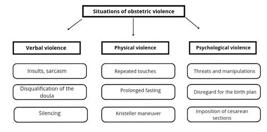
Analytical categories developed from the terms that are most frequent in the doulas' testimonies.
Verbal Violence
It is noticeable in the discourse of doulas that they engage in practices that demean, infantilize, and embarrass women during the gestational, childbirth, and postpartum processes. The statements directed at the victims reflect not only individual disrespect but also the persistence of a technocratic model in obstetric care, as evidenced below:
One of the forms of violence is: “stop looking at your doula, I’m the one talking to you, the doctor is speaking here, I’m the on-call doctor, I’m the one in charge here, your doula doesn’t know anything.” The husband, who is a lawyer, spoke with complete authority, “no doctor, we are informed, we know what the WHO recommends…” and he said, “don’t come with that WHO story, there’s no WHO here, I’m the one here” (P1).
She stayed there for two or three hours, she wasn’t having contractions, and she was listening to insults. The client said she didn’t want her blood pressure measured at that moment, she didn’t want a vaginal exam because she was having contractions, she was in pain, “ah, that client gets to choose when she wants” (P3).
I see that they have a propensity for small flaws in their conduct, they ask the woman not to scream so much. There was a situation where a pregnant woman gave birth in that environment, it wasn’t all that bright, and then she said: My God! She's giving birth in the dark! These are issues that sometimes don't lead to more serious complications, but they are violence against that woman. Because think about it, the woman hearing that she's giving birth in the dark and being told in ways like that... laughing and sarcastic (P5).
Frequent patterns of obstetric violence reveal an authoritarian care model that disregards women's autonomy during childbirth. This includes the imposition of actions without considering the woman's prior birth plan, the use of offensive and degrading language, and attempts to silence expressions of pain and suffering, as seen below:
The doctor arrived shouting, saying that he was in charge and that she only obeyed, and that she should stop this nonsense about wanting a natural birth. And several other things that we as professionals hear, things like: “try not to shout so much,” or as I mentioned before, calling the woman “mommy” may not seem like it, but it's also violence (P6).
And the doctor shouting: “come on, you have to give birth, you have to give birth.” It's violent! Sometimes, this woman isn't ready, she isn't willing to do that (P7).
The nurse came to her and said: “look, it tore quite a bit” and called the pregnant woman's husband to check, saying: “but I'll stitch it up and make it good for you.” After she stitched it up, she even made a point of saying that it was a little tight for the husband. I've been through another situation: there was a pregnant woman who was thirteen years old, and when they arrived they said: “look, little firecracker, so young and giving birth, she was good at making it” and they called everyone over, and it turned into an event in the hospital corridor that a thirteen-year-old girl was giving birth normally (P8).
The pregnant woman arrived already giving birth and defecating, I don't remember if it was a nurse or a technician who was very rude and impolite. She started screaming because she was defecating, I thought it was a bit rude, and they didn't want to let her husband in. There was another situation as well where the baby was in a position that made birth difficult. They directed her to a cesarean section without a conversation or prior explanation. They said that if something happened to the baby, the mother would be to blame (P9).
In short, there is a presence of imposing discourses, exemplified by doctors or nurses who give orders abruptly, reinforcing the expectation that the woman should accept the assistance without questioning. Furthermore, there are attempts to minimize pain through comments such as “try not to scream so much,” which invalidate the woman's suffering at a moment of fragility. There are also statements that disrespect and sexualize the female body, such as expressions like “I'll leave you feeling brand new for you,” uttered in front of other people, such as the pregnant woman's partner. These forms of aggression, treated lightly as “jokes” or “traditions”, constitute obstetric violence.
Physical Violence
This type of violence encompasses behaviors and procedures that go beyond technical care, resulting in pain and physical discomfort through inappropriate, unnecessary, or coercive interventions. In many circumstances, these actions occur without the woman's consent or under the justification of being considered “normal,” as revealed below:
In situations involving touching, where the woman says, “take it away, for God's sake, take your hand away from there,” and the professional replies, “no, calm down, relax, you're not cooperating.” Other forms of violence include: artificially rupturing the amniotic sac, when the woman says, “I don't want to!”, and some doctors rupture it without saying anything, performing a vaginal exam and then rupturing the sac; refusing to increase the air conditioning temperature; refusing to allow the pregnant woman to move, and forcing the pregnant woman to move (P1).
The professional has a habit of doing this mechanically for X amount of time, even when it is no longer indicated. For example: vaginal exams during gynecological consultations for every pregnant woman, even when there are no complaints. These exams violate the woman's integrity and border on sexual violence. I have seen situations where the pregnant woman fasted for more than 24 hours, without water or food. I have seen clients requesting in their birth plan that no episiotomy be performed, and an episiotomy was performed. Directed pushing is a reality. The obstetric nurse said: “push, hold onto your leg and pull like this” (P3).
Even having a normal delivery, there is a waiting period before discharge. When she was discharged, she came home and they didn't do the necessary tests (P5).
This type of obstetric violence is revealed by the adoption of practices involving the use of physical force or painful procedures understood as part of daily routine in hospitals. Long periods of fasting, birthing positions determined exclusively by healthcare professionals, and excessive vaginal examinations are among the reported cases. In this scenario, the female body is used as an object, losing its importance in the birthing process, as revealed below:
This pregnant woman asked for water, saying she was very thirsty, but she was denied water (P5).
Several medical students were performing vaginal examinations; there were approximately six students, and all of them did it. The woman was alone; she was an Afro-descendant woman, and we know that Afro-descendant women are more vulnerable to violence. I imagine the discomfort, being touched by several strangers at such an intimate moment, where she was clearly uncomfortable (P6).
I witnessed the Kristeller maneuver and an unnecessary vaginal examination. He kept touching her with his finger; she was uncomfortable. The contraction came, he didn't remove it, didn't explain, just remained silent and forced it. He was narrowing the cervix with his finger; we know that this is not necessary and doesn't need to be done because the body will take time to accelerate. The woman had to push him away (P7).
The pregnant woman arrived with her water broken; it had been several hours. The nurse went to perform the examination and asked, “Are you sure your water broke?” She answered yes, and she went to check. She pulled in a way that caused pain, pulling on the pregnant woman's private parts to see if it had actually ruptured (P8).
The pregnant woman was already in active labor, and the on-call doctor in a somewhat unsanitary room even assessed her and thought it was time for the baby to be born, and asked for the scalpel without anyone's authorization (P9).
These practices of obstetric violence, even when disguised by hospital routines, violate humanitarian and ethical principles. It is necessary to promote care based on listening, respect, and valuing the autonomy of women during the pregnancy and postpartum period.
Psychological Violence
This refers to actions or the absence thereof that cause emotional pain, insecurity, shame, and feelings of inferiority. This type of obstetric violence, although veiled, is intense and occurs through the words, behaviors, and attitudes of healthcare professionals that demean and undermine the emotional stability of the woman. Frequently, this type of violence is normalized in healthcare services, being erroneously interpreted as part of the “routine” or “standard practices,” as listed below:
He (the doctor) would enter the room, the delivery room, look at the woman and say: “Oh, it won’t be born, I mean, it will be born, but it won’t be a normal birth.” He would examine her and say: “It’s 6 to 7 centimeters dilated, but the way things are, it won’t happen.” The woman would ask why, and he would say: “Because you’ve been there for so long, you’re tired…” Then he would pat the woman’s head: “You’re tired, you need peace, sometimes a woman needs it, she tries for a normal birth, but when it’s not meant to be, it’s not meant to be.” And then he would turn to the husband and say: “If it were my wife, I would have already taken her for a C-section.” It was all manipulation. Another situation: the pregnant woman was a Jehovah’s Witness and said she didn’t want a blood transfusion. At the time of delivery, the nurse wanted to give a lecture on blood transfusions; the woman had made a birth plan, a document registered at the notary’s office stating: “I will not receive blood, neither me nor my baby.” Perhaps the greatest violence is stealing the normal birth from this woman by terrorizing her (P1).
They wanted her freedom to give birth in the position she wanted, she wanted to give birth outside the bed and they requested that she go to the bed, also regarding the use of nitrates. They kept coercing her and saying that it wasn't because of the doula's presence or because the doula had said that they had to attend. After going to the room they started making jokes: "Was it you, the couple, who brought the doula?" (P4).
There is this issue that they really want to push the woman towards a cesarean section, often deceiving the pregnant woman by inventing problems that are not problems, and when the professional speaks and she believes them. They pretend that, "I'm taking very good care of you, I don't want anything bad to happen to you, to avoid you having a problem later on, let's schedule a cesarean section now" (P5).
Given the above, there is evidence of ongoing psychological violence, revealed through degrading comments, threatening suggestions, humiliation, and the marginalization of pregnant women in their choices about their own bodies. These behaviors emotionally debilitate pregnant women and reveal a care pattern marked by asymmetrical power relations, lack of support, and a scarcity of training to offer humanized care, as highlighted below:
And several other things that we as professionals hear, things like: "when the urge to scream comes, you swallow it along with the crying" (P6).
This violence starts a lot in prenatal care, with the doctor defining the patient's choices by saying that the birth has to be a cesarean section. And not offering the information so that she can decide with knowledge, autonomy, so that it is not something imposed by fear. Another thing is photos without authorization, I've seen situations of people sharing them. And even with prior authorization, but suddenly putting the person in a position that is not good, a very exposed position (P8).
When we arrived, the couple and I, I heard some conversations because I was accompanying them. I found it a bit rude and undoing the fact that the pregnant woman was with the doula. And another situation, after the birth, I needed to stay a little longer with the pregnant woman and the doctor came to make the visit. He said completely unnecessary things, that if he were her doctor he wouldn't do it, because nobody does that anymore today, and that his wife would never have a normal delivery, that these are things that doulas put in pregnant women's heads (P9).
Situation of the doctor giving a deadline and saying: if you don't give birth by such and such time, you'll have a cesarean section, or saying that the woman can't get up, move around, or telling her to push (P10).
Psychological violence profoundly affects the well-being of pregnant women, and is therefore transversal to all others. Expressions such as "if you don't give birth by a certain time, you will need to have a cesarean section" or the guilt imposed on the woman in difficult circumstances related to the baby demonstrate how fear and coercion function as forms of control. The lack of adequate information, the disregard for women's autonomy, and the use of an aggressive attitude on the part of health professionals help to create a context that is simultaneously oppressive and dehumanizing. These actions not only violate the guidelines that ensure the rights of pregnant women, but also reinforce a biomedical model that prioritizes the authority of the professional to the detriment of the person under care.
The types of violence identified in this research demonstrate that these expressions are not limited to isolated behaviors or specific moral deviations, but are embedded in a social configuration permeated by gender relations that are historically unequal. Cases of silencing, devaluation of pain, irony, subtle threats, and interventions made without due consent demonstrate the continuity of a care model based on technical and scientific authority, where the woman's body is treated as an object subject to intervention and control.
From this perspective, obstetric violence manifests itself as a particular form of gender violence, based on the validation of medical authority over reproductive processes and the creation of inequalities in decision-making that limit women's autonomy.
Thus, the violence described by doulas highlights the link between care practices and the sociocultural conditions that, throughout history, have placed women in a position of guardianship and subordination. The normalization of narratives that treat the parturient woman in an infantilized way or silence her, in addition to harming the quality of care, reinforces patterns of gender domination, causing obstetric violence to be understood as a structural phenomenon, and not merely occasional.
This violence does not occur in isolation, but often intertwines, intensifying women's suffering and affecting their independence at a time of great fragility and uniqueness. Doulas emphasize the immediate need to restructure care systems, with the aim of promoting an ethical, welcoming and respectful practice that puts women first throughout the entire process.
Discussion
Obstetric violence represents a complex phenomenon that encompasses various facets of women's health care during the pregnancy-puerperal period, including verbal, physical, and psychological abuse. Research conducted in Spain with 899 women revealed that 67.4 % reported having suffered some form of obstetric violence, with 54.5 % being physical violence, 36.7 % psychoaffective, and 25.1 % verbal. 21
It was observed that the sociodemographic and professional characterization of doulas is represented by an ethnic, racial, and financial variety that can significantly affect their ability to identify and symbolize situations of obstetric violence. Doulas who have a higher level of education and more comprehensive professional experience tend to perceive more critically the institutional actions that disrespect women's rights during pregnancy, labor, and the postpartum period, which reinforces the role of these professionals as facilitators in promoting humanized pregnancies, births, and deliveries. In addition to occurring during pregnancy and childbirth, this violence is also present in abortion situations, and can be manifested by a lack of support and assistance, and judgments of a religious and moral nature. 22
A systematic review on obstetric violence estimates that millions of women, in a variety of socioeconomic settings, face some form of physical or verbal abuse during childbirth. This analysis reveals that the main factors linked to the occurrence of this violence are associated with the power relationship between health professionals and women, the lack of effective public policies for humanization, and the lack of knowledge of women's rights. These results emphasize that obstetric violence is not limited to a few countries, but represents a structural issue that demands cohesive and urgent political and professional responses. 23 Such actions indicate the maintenance of an authoritarian and technocratic model characterized by the emphasis on medical methods and the predominant influence of these professionals to the detriment of female autonomy. It is a model based on the view of the woman’s body as a “machine” that needs adjustments, reducing the figure of the pregnant woman to an object of intervention. 24
Studies show that violent practices during the pregnancy-puerperal period are often understood as something necessary to experience the process of motherhood, something that is directly related to the low level of knowledge of women, and health education is fundamental to guide and empower them.25
Verbal violence is a constant and is maintained through negative remarks, infantilization, imposition of behaviors and ironies that devalue the woman's experience during pregnancy, childbirth and the postpartum period. This form of interaction points to unequal power relations, where the pregnant woman's autonomy is lost, going against the principles of humanizing care. Expressions that seem harmless contain sarcasm or sexual connotations, directly affecting the dignity and emotional well-being of women who are in this phase of the life cycle. 26
Global studies have shown that women who experience violence, contempt, or lack of care during childbirth express feelings of shame, fear, and lack of control, which can develop into anxiety disorders, depression, or post-traumatic stress. Lack of compassion and effective communication during care helps create “invisible wounds” that remain even after the baby is born. 27
Regarding physical violence, invasive interventions were performed without proper authorization, including episiotomies, artificial rupture of the amniotic sac, and various vaginal examinations without scientific evidence, in addition to the imposition of certain positions during childbirth and long fasting periods. 28
Furthermore, psychological violence is transversal to all other forms of violence, appearing through threats, instigation of fear, manipulation of emotions, and disrespect for choices previously documented in the birth plan. This form of violence is especially harmful because it undermines trust in health services and weakens the relationship between professionals and clients, in addition to causing psychological damage and trauma to women and babies. In the study in question, these practices were maximized by resistance to the inclusion of the doula, revealing that, even with the legal support available in Brazilian localities, the true incorporation of this professional still faces obstacles of a cultural and institutional nature. 29
A study conducted in Spain found that mothers who experienced abuse during childbirth faced more challenges in early breastfeeding and in forming an emotional bond with their baby. Experiencing disrespect and emotional distress during childbirth generally weakens mothers' self-confidence and their perception of their ability to care for their child. 30 One aspect worth highlighting is that, even with the increased recognition of the role of doulas as physical, emotional, and informational support, there are still healthcare professionals who show resistance to their participation in the pregnancy and childbirth process. Episodes of embarrassment and attempts to delegitimize the work of these professionals have been documented, showing that the integration of doulas into a healthcare team remains a challenge. This resistance may stem from a distorted view that suggests that the doula interferes in medical and nursing decisions, when, in fact, her role is to assist and complement, without replacing, clinical care. 31
A study conducted with researchers from nine countries-Germany, Belgium, Chile, Scotland, Spain, Iceland, the United Kingdom, Sweden, and the Netherlands-revealed that experiencing painful childbirth involves more than just potential clinical complications; it is related to the woman's personal perceptions and experiences. The study revealed that these experiences largely stem from inappropriate conduct by healthcare professionals, lack of emotional support, procedures performed without proper authorization, disrespectful behavior, or actions linked to obstetric violence. Among the psychological damages, fear, sadness, despair, and helplessness stand out. These feelings can persist even after childbirth and may evolve into anxiety, depression, and post-traumatic stress disorder. 32
Consistent, a study conducted in 18 countries including Germany, Belgium, Chile, Spain, Scotland, France, Greece, England, Ireland, Northern Ireland, Iceland, Norway, the Netherlands, Poland, Portugal, Serbia, Switzerland and Turkey showed that obstetric violence entails negative consequences, such as reduced self-confidence, difficulties in relationships with the partner and the child, perception of loneliness, self-deprecating thoughts and unexpected and premature interruption of breastfeeding. Furthermore, there is a hesitation or resistance to seeking professional help, which shows a considerable psycho-emotional effect that can compromise the quality of life of women and lead to mental illness. By articulating the scientific evidence on traumatic childbirth with the real experiences of doulas, the research contributes to understanding that obstetric violence can result in physical, emotional and social trauma. 33
Freedom over one's body and informed consent should be essential values in assisting during childbirth. However, in many scenarios, professionals’ approaches continue to follow authoritarian and paternalistic patterns that ignore the choices and wishes of pregnant women. The author emphasizes that improving reproductive rights guidelines and ethical training for health professionals are fundamental actions to avoid abuse and promote care that is truly humanized and focused on women. 34
Therefore, the presence of doulas in the obstetric setting is perceived as a strategy to strengthen the humanization of childbirth, corroborating initiatives such as the “Community Doulas” project. However, despite normative advances, there are still challenges related to the effective implementation of these policies, which reinforces the need for institutional oversight and commitment. 35
The results demonstrate that doulas understand obstetric violence as practices that disrespect the autonomy, dignity, and protagonism of women in the pregnancy and childbirth process. Their representations show a critical stance towards the interventionist model and reinforce the defense of care centered on listening, respect, and valuing women's choices, revealing the importance of humanization and strategies to mitigate this harmful phenomenon to the lives of women, their children, and families. In this context, understanding the elements that promote or hinder the search for assistance is fundamental, as the way social support and the accessibility of institutional resources are viewed are essential for women to overcome this history of violence.
The forms of violence mentioned by the doulas go beyond the technical sphere of care and reveal a relational dynamic full of power inequalities. When examined from the perspective of gender violence, these practices show that obstetric violence is not restricted to isolated actions, but is embedded in a historical and social framework where women's bodies frequently suffer from excessive medicalization, the devaluation of their decisions, and the hierarchization of biomedical knowledge. This situation is aggravated by the fact that gender-based violence frequently occurs in different social environments, where gender norms often discourage victims from seeking help, directly contributing to the cycle of silence and repetition. The social representations elaborated by the participants suggest that silencing, infantilization, and the imposition of procedures without consent represent forms of control that particularly affect women in vulnerable situations. 36
Thus, obstetric violence can be understood as a particular form of gender-based violence in the health field, sustained by a technocratic care model that naturalizes inequality between health professionals and women. In light of the Theory of Social Representations, it is possible to perceive that doulas attribute meaning to these situations not only as institutional failures, but also as manifestations of a structural logic that maintains inequalities and reinforces the subordination of women in childbirth and delivery care.
The findings of this study add to the existing scientific evidence by analyzing in depth the social representations of doulas about obstetric violence, revealing aspects that have not yet been widely investigated, especially in Brazil, and suggesting directions for strengthening humanized practices and transforming the relationships between professionals and parturients in the obstetric field. Thus, the results align with national and international literature, emphasizing that the presence of doulas can contribute to minimizing obstetric violence, reducing interventions without scientific evidence and without the consent of the pregnant woman, woman in labor, or postpartum woman, as well as informing these women about all their rights, since they act as mediators between the client and the healthcare team. However, this contribution will only be fully effective if it is accompanied by structural, institutional, and sociocultural changes that place women's autonomy at the center of attention during pregnancy, childbirth, and the postpartum period.
Conclusions
The study demonstrates that situations of obstetric violence occur in the verbal, physical, and psychological spheres, revealing that many actions pointed out by doulas are normalized by the women themselves or remain veiled in the daily routine of care. Such types of obstetric violence cause feelings of powerlessness, loss of autonomy and dignity among victims, in addition to harm to the physical, emotional, and relational dimensions of women.
Although doulas serve as physical, emotional, and informational support, these professionals face resistance from some health professionals, both nationally and internationally, revealing that this problem reflects an outdated obstetric care model.
In this sense, there should be institutional protocols for the health system and public policies for the practice of doula work to be developed, whether in the public or private sector, thus contributing to the prevention and mitigation of obstetric violence. In addition, it is essential to create training and awareness programs for interdisciplinary teams on the role of the doula, and to implement educational initiatives aimed at pregnant women, their families, support networks, and the community in general. It is equally crucial to promote the presence of doulas within obstetric teams who work collaboratively. To these measures, it is necessary to add the creation of channels for reporting and monitoring situations of obstetric violence, as well as encouraging scientific research that highlights the importance of the work of doulas, helping to value and recognize this work socially.
Because this is a qualitative study, the aim was not to statistically generalize the findings, but to gain a deeper understanding of the phenomenon investigated in the analyzed context. The detailed description of the scenario, the participants, and the methodological path is a resource that favors the transferability of the results to similar contexts.
References
-
1. Sturza JM, Nielsson JG, Andrade EP. Obstetric violence: a denial of human rights and women’s sexual and reproductive health. Rev Juris Poiesis. 2020;23(32):389-407. doi: 10.5935/2448-0517.20200017
» https://doi.org/10.5935/2448-0517.20200017 -
2. World Health Organization. Compendium on respectful maternal and newborn care: promoting dignity and eliminating mistreatment during facility-based childbirth (Internet). Geneva: World Health Organization; 2025. Disponível em: https://iris.who.int/server/api/core/bitstreams/2ccf29b8-2c8d-45ba-a44c-a45138b88df4/content
» https://iris.who.int/server/api/core/bitstreams/2ccf29b8-2c8d-45ba-a44c-a45138b88df4/content -
3. Yirdaw BW, Yimer BB. Gender-based violence and associated factors among women in Ethiopia: a systematic review and meta-analysis. BMC Women’s Health. 2025(25):312. doi: 10.1186/s12905-025-03867-0
» https://doi.org/10.1186/s12905-025-03867-0 -
4. Moreira MA, Conceição CS. Social representations of black pregnant women regarding obstetric violence. REAS. 2025;15(1):e20257493. doi: 10.18554/reas.v15i1.7493
» https://doi.org/10.18554/reas.v15i1.7493 -
5. Leite TH, Marques ES, Corrêa RG, Leal MC, Olegário BCD, Costa RM, et al. Epidemiology of obstetric violence: a narrative review of the Brazilian context. Ciênc. Saúde Colet. 2024;29(9):e12222023. doi: 10.1590/1413-81232024299.12222023
» https://doi.org/10.1590/1413-81232024299.12222023 -
6. Sousa NB, Matos KO, Sousa PMLS. Obstetric violence: concepts on its implications in childbirth. Res., Soc. Dev. 2021;10(13):e90101321060. doi: 10.33448/rsd-v10i13.21060
» https://doi.org/10.33448/rsd-v10i13.21060 -
7. Dona International. The DONA Advantage; 2024 (Internet). Disponível em: https://www.dona.org/the-dona-advantage/about/
» https://www.dona.org/the-dona-advantage/about/ -
8. Brasil. Projeto de Lei nº 77, de 2022. Regulamenta o exercício da profissão de doula. Disponível em: https://www25.senado.leg.br/web/atividade/materias/-/materia/151541
» https://www25.senado.leg.br/web/atividade/materias/-/materia/151541 -
9. Brasil. Projeto de Lei nº 3.946, de 2021. Dispõe sobre o exercício da profissão de doula. Brasília (DF): MS; 2021. Disponível em: https://www.congressonacional.leg.br/materias/materias-bicamerais/-/ver/pl-3946-2021
» https://www.congressonacional.leg.br/materias/materias-bicamerais/-/ver/pl-3946-2021 -
10. Brasil. Ministério da Saúde. Nota técnica nº 13/2024-COSMU/CGACI/DGCI/SAPS/MS. Brasília (DF): MS; 2024. Disponível em: https://www.gov.br/saude/pt-br/centrais-de-conteudo/publicacoes/notas-tecnicas/2024/nota-tecnica-no-13-2024-cosmu-cgaci-dgci-saps-ms.pdf/view
» https://www.gov.br/saude/pt-br/centrais-de-conteudo/publicacoes/notas-tecnicas/2024/nota-tecnica-no-13-2024-cosmu-cgaci-dgci-saps-ms.pdf/view -
11. Rondon MCS, Sampaio GT, Talizin EV. Mulheres assistidas por doulas: estudo exploratório. Nursing (São Paulo). 2021;24(279):6045-8. doi: 10.36489/nursing.2021v24i279p6045-6052
» https://doi.org/10.36489/nursing.2021v24i279p6045-6052 -
12. Faustino LSS. Método qualitativo: origem, conceitos e relevância nas Ciências Humanas. SciELO Preprints. 2024. doi: 10.1590/SciELOPreprints.9093
» https://doi.org/10.1590/SciELOPreprints.9093 -
13. Sousa KN, Souza PC. Social representation: A theoretical review of the approach. Res., Soc. Dev. 2021;10(6):e38610615881. doi: 10.33448/rsd-v10i6.15881
» https://doi.org/10.33448/rsd-v10i6.15881 -
14. Bahia. Secretaria da Saúde do Estado da Bahia. No Dia Nacional de Luta dos Povos Indígenas, nasce Yarin, mais uma Tupinambá no Hospital Materno-Infantil de Ilhéus. Salvador (BA): SESAB; 2024. Disponível em: https://www.saude.ba.gov.br/2024/02/07/no-dia-nacional-de-luta-dos-povos-indigenas-nasceyarin-mais-uma-tupinamba-no-hospital-materno-infantil/
» https://www.saude.ba.gov.br/2024/02/07/no-dia-nacional-de-luta-dos-povos-indigenas-nasceyarin-mais-uma-tupinamba-no-hospital-materno-infantil/ -
15. Bahia. Secretaria da Saúde do Estado da Bahia. DGC realizou Oficina de Morbimortalidade Materna de Mulheres Negras e Indígenas. Salvador (BA): SESAB; 2024. Disponível em: https://www.saude.ba.gov.br/2024/05/28/dgc-realizou-oficina-de-morbimortalidade-materna-em-indigenas-e-negras/
» https://www.saude.ba.gov.br/2024/05/28/dgc-realizou-oficina-de-morbimortalidade-materna-em-indigenas-e-negras/ -
16. Bockorni BRS, Gomes AF. A amostragem em snowball (bola de neve) em uma pesquisa qualitativa no campo da administração. Rev de Ciências Empresariais da UNIPAR. 2021;22(1):105-117. doi: 10.25110/receu.v22i1.8346
» https://doi.org/10.25110/receu.v22i1.8346 - 17. Bardin L. Análise de Conteúdo. São Paulo (SP): Edições 70; 2016.
-
18. Brasil. Ministério da Saúde. Resolução nº 466 de 12 de dezembro de 2012: diretrizes e normas regulamentadoras de pesquisa envolvendo seres humanos. Conselho Nacional de Saúde, Comissão Nacional de Ética em Pesquisa. Brasília (DF): MS; 2012. Disponível em: https://bvsms.saude.gov.br/bvs/saudelegis/cns/2013/res0466_12_12_2012.html
» https://bvsms.saude.gov.br/bvs/saudelegis/cns/2013/res0466_12_12_2012.html -
19. Brasil. Ministério da Saúde. Resolução nº 510 de 07 de abril de 2016: dispõe sobre as normas aplicáveis a pesquisas em Ciências Humanas e Sociais. Conselho Nacional de Saúde, Comissão Nacional de Ética em Pesquisa. Brasília (DF): MS; 2016. Disponível em: https://bvsms.saude.gov.br/bvs/saudelegis/cns/2016/res0510_07_04_2016.html
» https://bvsms.saude.gov.br/bvs/saudelegis/cns/2016/res0510_07_04_2016.html -
20. Brasil. Ministério da Saúde. Lei nº 14.874 de 28 de maio de 2024. Brasília (DF): MS; 2024. Disponível em: https://www.planalto.gov.br/ccivil_03/_ato2023-2026/2024/lei/l14874.htm
» https://www.planalto.gov.br/ccivil_03/_ato2023-2026/2024/lei/l14874.htm -
21. Martinéz-Galiano JM, Martinez-Vázquez S, Rodriguez-Almagro J, Hernández- Martinez A. The magnitude of the problem of obstetric violence and its associated factors: A cross-sectional study. Women and birth: Journal of the Australian College of Midwives. 2021;34(5):526-536. doi: 10.1016/j.wombi.2020.10.002
» https://doi.org/10.1016/j.wombi.2020.10.002 -
22. Moreira MA, Souza AS, Oliveira PM, Souza MX, Araújo Junior JC, Ribeiro PS. Obstetric violence in the abortion process. Enfermería: Cuidados Humanizados. 2023;12(2):e3166. doi: 10.22235/ech.v12i2.3166
» https://doi.org/10.22235/ech.v12i2.3166 -
23. Hakimi S, Lee M, Ahmed R, Santos D. Global prevalence and risk factors of obstetric violence: a systematic review and meta-analysis. International Journal of Gynecology & Obstetrics. 2025;168(3):210-23S. doi: 10.1002/ijgo.16145
» https://doi.org/10.1002/ijgo.16145 -
24. Buffon TM, Martins CAL. A humanização do parto: uma revisão integrativa. Brazilian Journal of Health Review. 2023;6(3):11095-1109. doi: 10.34119/bjhrv6n3-216
» https://doi.org/10.34119/bjhrv6n3-216 -
25. Moreira MA, Souza MX. Social representations of women in the pregnancy-puerperal cycle regarding obstetric violence. Enfermería: Cuidados Humanizados. 2023;12(2):e3273. doi: 10.22235/ech.v12i2.3273
» https://doi.org/10.22235/ech.v12i2.3273 -
26. Gonçalves LM, Lana LD, Tier CG, Lipinski JM, Escobal APL, Prates LA. Perceptions and experiences of women regarding obstetric violence. CLCS. 2024;17(1):7777-7790. doi: 10.55905/revconv.17n.1-469
» https://doi.org/10.55905/revconv.17n.1-469 -
27. Özer E, Demir S, Kaya A, Yilmaz B. Invisible wounds of childbirth: women’s experiences of obstetric violence. Reproductive Health. 2025;22(1):68. doi: 10.1186/s12978-025-02109-8
» https://doi.org/10.1186/s12978-025-02109-8 -
28. Rocha NFF, Ferreira J. A escolha da via de parto e a autonomia das mulheres no Brasil: uma revisão integrativa: uma revisión integradora. Saúde em Debate. 2022;44(125):556-568. doi: 10.1590/0103-1104202012521
» https://doi.org/10.1590/0103-1104202012521 -
29. Brunet FBS, Costa KLP, Gonçalves TRFT, Bezerra WKT, Oliveira CRT, Adriano MPF, et al. Characterization of unnecessary interventions in low-risk labor and the importance of the obstetric nurse. CLCS. 2024;17(7):1-19. doi: 10.55905/revconv.17n.7-191
» https://doi.org/10.55905/revconv.17n.7-191 -
30. Ballesta-Castillejos A, Gutiérrez-Prada C, López-Rodríguez MM, Martínez-Galiano JM. Influence of abuse and disrespect during childbirth on early initiation of breastfeeding. International Breastfeeding Journal. 2025;20(1):45. doi: 10.1186/s13006-025-00709-5
» https://doi.org/10.1186/s13006-025-00709-5 -
31. Mourão MA, Arrais AR. Differences and similarities between the role of doulas and psychologists in the childbirth setting. CLCS. 2023;16(7):7024-7043. doi: 10.55905/revconv.16n.7-168
» https://doi.org/10.55905/revconv.16n.7-168 -
32. Leinweber J, Fontein-Kulpers Y, Thomson G, Karlsdottir SI, Nilsson C, Ekstrom-Bergstrom A, et al. Developing a woman-centered, inclusive definition of traumatic childbirth experiences: a discussion paper. Birth. 2022;49(4):687-696. doi: 10.1111/birt.12634
» https://doi.org/10.1111/birt.12634 -
33. Thomson G, Diop MQ, Stuijfzand S, Horsch A. Policy, service, and training provision for women following a traumatic birth: an international knowledge mapping exercise. BMC Health Services Research. 2021;21:1206. doi: 10.1186/s12913-021-07238-x
» https://doi.org/10.1186/s12913-021-07238-x -
34. Pickles C. Emerging human rights standards on obstetric violence and abuse during childbirth. International Journal of Gynecology & Obstetrics. 2025;168(2):184-192. doi: 10.1002/ijgo.70174
» https://doi.org/10.1002/ijgo.70174 -
35. Secretária de Saúde do Estado da Bahia (Sesab). Projeto Doulas Comunitárias é implantado no Hospital Materno-Infantil, em Ilhéus. Salvador (BA): SESAB; 2023. Disponível em: https://www.saude.ba.gov.br/2023/06/01/projeto-doulas-comunitarias-e-implantado-no-hospital-materno-infantil-em-ilheus/
» https://www.saude.ba.gov.br/2023/06/01/projeto-doulas-comunitarias-e-implantado-no-hospital-materno-infantil-em-ilheus/ -
36. Owuse-Antwi R, Fedina L, Robba MJB, Khatibi K, Bosomtwe D, Nsereko E, et al. Prevalence of gender-based violence and factors associated with help-seeking among university students in sub-Saharan Africa. Women’s Health. 2024; 20:1-13. doi: 10.1177/17455057241307519
» https://doi.org/10.1177/17455057241307519