Projections of Disciplinary Nursing Care from the Philosophy of Jean Watson: A Systematic Review
Abstract:
Introduction: The history of nursing care has passed through four stages: domestic, vocational, technical and professional, which have been fundamental in its development. However, current socio-sanitary challenges demonstrate the need to plan new steps
Objective: Project the future of nursing care in the light of the philosophy and theory of transpersonal care by Jean Watson
Methodology: A systematic review and critical-reflexive analysis of nursing disciplinary projections was carried out. The review covers articles published until 2023 in Web of Science, LILACS, SciELO and CINAHL. There will be 366 articles, of which 8 met the eligibility criteria. The critical-reflexive analysis focuses on describing the evolution of the stages and proposing a future stage
Results: Humanized care is a complex process that requires specific communication skills, both between healthcare professionals and users and their families. In turn, humanized care is integrated into a challenging clinical environment, due to the high workload, limited availability of resources and the need to maintain a competitive level in professional practice. “Disciplinary nursing care” is proposed as a fifth stage
Conclusions: This new stage will focus on care management and humanized care through perfecting research, continued training, models and theories, and professional autonomy
Keywords:
nursing; disciplinary care; humanization of attention; history of the infirmary; nursing theory
Resumen:
Introducción: La historia del cuidado de enfermería ha transitado cuatro etapas: doméstica, vocacional, técnica y profesional, que han sido fundamentales en su desarrollo. Sin embargo, los actuales desafíos sociosanitarios ponen de manifiesto la necesidad de proyectar nuevas etapas
Objetivo: Proyectar el futuro del cuidado de enfermería a la luz de la filosofía y teoría de los cuidados transpersonales de Jean Watson
Metodología: Se realizó una revisión sistemática y un análisis crítico-reflexivo sobre las proyecciones disciplinares de la enfermería. La revisión abarcó artículos publicados hasta 2023 en Web of Science, LILACS, SciELO y CINAHL. Se encontraron 366 artículos, de los cuales 8 cumplieron con los criterios de elegibilidad. El análisis crítico-reflexivo se centró en describir la evolución de las etapas y en proponer una etapa futura
Resultados: El cuidado humanizado es un proceso complejo que requiere de habilidades de comunicación específicas, no solo entre profesionales de la salud, sino también con los usuarios y sus familias. A su vez, el cuidado humanizado se integra a un entorno clínico desafiante, debido a la alta carga laboral, la disponibilidad limitada de recursos y la necesidad de mantener un nivel competitivo en la práctica profesional. Se propone como quinta etapa el “cuidado disciplinar de enfermería”
Conclusiones: Esta nueva etapa se centraría en la gestión del cuidado y en el cuidado humanizado mediante un perfeccionamiento de la investigación, la formación continua, los modelos y teorías, y la autonomía profesional
Palabras clave:
enfermería; cuidado disciplinar; humanización de la atención; historia de la enfermería; teoría de enfermería
Resumo:
Introdução: A história do cuidado na enfermagem passou por quatro etapas: doméstica, vocacional, técnica e profissional, que foram fundamentais para seu desenvolvimento. No entanto, os atuais desafios sociossanitários destacam a necessidade de projetar novas etapas
Objetivo: Projetar o futuro do cuidado de enfermagem à luz da filosofia e da teoria dos cuidados transpessoais de Jean Watson
Metodologia: Foi realizada uma revisão sistemática e uma análise crítico-reflexiva sobre as projeções disciplinares da enfermagem. A revisão abrangeu artigos publicados até 2023 nas bases Web of Science, LILACS, SciELO e CINAHL. Foram encontrados 366 artigos, dos quais 8 atenderam aos critérios de elegibilidade. A análise crítico-reflexiva concentrou-se em descrever a evolução das etapas e propor uma etapa futura
Resultados: O cuidado humanizado é um processo complexo que exige habilidades específicas de comunicação, não apenas entre os profissionais de saúde, mas também com os usuários e seus familiares. Por sua vez, o cuidado humanizado está integrado em um ambiente clínico desafiador, devido à alta carga de trabalho, disponibilidade limitada de recursos e à necessidade de manter um nível competitivo na prática profissional. Propõe-se como quinta etapa o “cuidado disciplinar de enfermagem”
Conclusões: Esta nova etapa se concentraria no gerenciamento do cuidado e no cuidado humanizado por meio do aperfeiçoamento da pesquisa, da formação continuada, dos modelos e teorias e da autonomia profissional
Palavras-chave:
enfermagem; cuidado disciplinar; humanização do atendimento; histórico da enfermagem; teoria de enfermagem
Introduction
Nursing originates with humanity, and its history has evolved in different stages: domestic, vocational, technical and professional. These periods have been characterized by granting holistic care to the human being. 1,2 Thus, in the 15th century, humanism emerged with a connotation of closeness, affability and humility of the person, being an essential part of nursing care. 3 Between 1950 and 1960, in the United States, the profession developed and incorporated into its body of knowledge its own Models and Theories, seeking professional and disciplinary autonomy. 4,5) Likewise, in 1986, the World Health Organization (WHO) pointed out the importance of incorporating nurses at all levels of health care, through the formulation of public policies and their participation in decision-making. 6
In addition, in 2023, the Pan American Health Organization (PAHO) indicated that in the Region of the Americas there are approximately nine million nursing professionals, who play a key role in health care, health promotion, disease prevention, management and education, contributing to universal health and the fulfillment of the Sustainable Development Goals (SDG). In all countries, care management is governed by laws and organizations with experience that regulate the profession. 6 This management faces various economic, social and political challenges, especially in a context of constant change. Here, technology plays a crucial role in improving care services at all levels. 7
Current social and health crises demand that nursing professionals develop advanced skills to adapt to a constantly changing health environment, offering individualized care. 8 Among the main problems are population aging, the management of mental health pathologies, the climate and migration crisis, and the occurrence of infectious diseases and pandemics. In addition, nurses, as those responsible for public health, must implement contingency plans at all levels of care, 8,9 and adopt transcultural approaches to ensure adequate care for patients from diverse cultures. 10
In the case of Chile, nursing has been recognized for its fundamental role in care management since 2007, granting it professional autonomy and responsibility. 11 It is noted that, in each historical stage of nursing, there have been milestones marked by profound experiences of growth, development of knowledge and tools, which have enriched the profession to consolidate itself as unique and necessary for society, which in Chile began at the beginning of the 20th century.
Thus, the objective of this article is to propose a future stage in the history of nursing disciplinary care, in light of Jean Watson’s Philosophy and Theory of Transpersonal Care,5,12 in a review of the evolution that care management has had. At this stage, the concepts of humanized care and care management are merged, which is established by law as a continuation of the professional stage. To this end, five stages of care are described: domestic, vocational, technical, professional and disciplinary care, which coincide with the past, present and future of the history of nursing and are studied from a critical-reflective analysis.
Methodology
We conducted a systematic review that met the criteria defined by the Preferred Reporting Items for Systematic Reviews and Meta-Analyses (PRISMA) protocol,13) following the statement of the question of scientific interest: What are the disciplinary projections that nursing has for the future?
Design: The systematic review covered the last 5 years (2019-2023) and aimed to summarize the existing literature, either theoretical or empirical, with the intention of providing a better understanding of the given topic. The databases Web of Science, Latin American and Caribbean Literature in Health Sciences (LILACS), Scientific Electronic Library Online (SciELO) and Cumulative Index of Nursing and Allied Literature (CINALH) Complete were used.
Search strategy: These platforms were accessed between July and November 2023. Health Sciences Descriptors (DeCS) and Medical Subject Headings (MeSH) were used with the keywords “nursing”, “nursing history” and “humanization of care”, using the Boolean operators “AND” and “OR”.
Selection strategy: Reviews, duplicate texts, unavailable texts, letters to the editor, and studies that did not answer the research question were excluded. A total of 366 articles were considered.
Analysis strategy: The critical-reflective analysis was based on Watson’s theory of humanized care.
Results
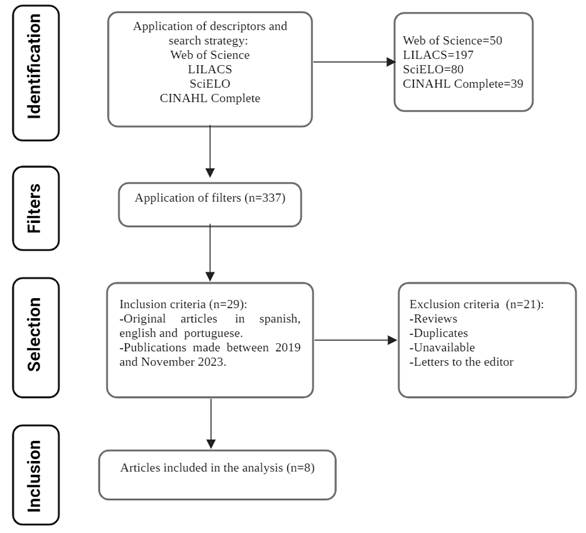
From the databases, 366 articles were reviewed, and 8 articles were identified that met the eligibility criteria for analysis. Regarding the country of origin, the studies were conducted in Mexico (2), Ecuador (2), Angola (1), Spain (1), China (1) and Chile (1). Three used qualitative methodology, and five quantitative. Figure 1 describes the process carried out in the review that initially includes the identification and application of the descriptors, as well as the search strategy used in four databases. Subsequently, filters were applied that allowed the articles to be selected according to the established inclusion and exclusion criteria. Finally, in the inclusion stage, 8 articles were selected for analysis.
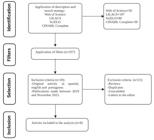
Flowchart of identification, filter, selection and inclusion of articles in the systematic review adapted from PRISMA (2020) 13
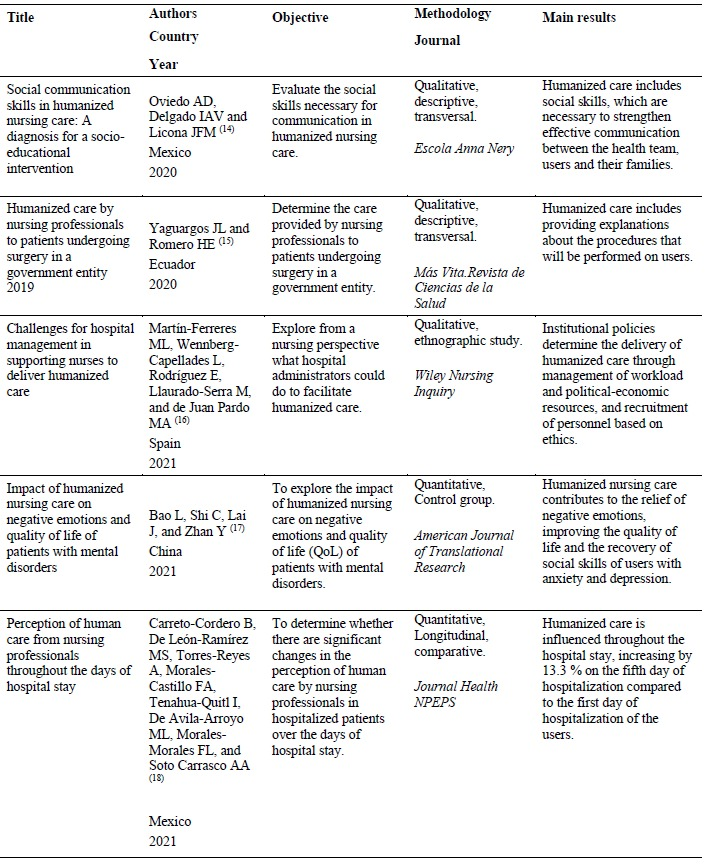
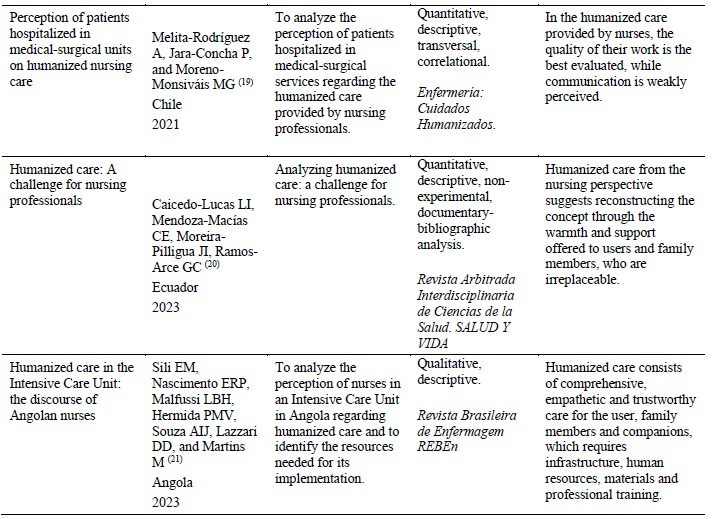
Table 1T2 details general information on the 8 selected articles, which were structured according to title, authors, country, objective, methodology, journal and main results according to the question of scientific interest. One of the studies carried out an intervention to evaluate the impact of humanized care and the rest were non-experimental, either exploratory, descriptive, comparative or correlational. Other characteristics of the studies are described in the same table.
Discussion
Humanized care, as defined by Jean Watson in her Transpersonal Care Theory, is a moral and spiritual process that transcends attention to physical needs and the development of technical skills. Its focus is the deep human connection that promotes the integral well-being of the person. This theory underlines the importance of care in the relationship between the patient and the health professional. Nursing professionals, as care specialists, have a key role in providing care that is not only focused on the sick person, but also on their family and community, thus strengthening the bond of trust and mutual respect. 5,12
In relation to the above, a critical-reflective analysis was carried out based on the four stages of the History of Nursing: domestic, vocational, technical and professional; in addition, a fifth phase called disciplinary nursing care is proposed.
Domestic Stage
This era is characterized by the survival instinct because illnesses were considered a punishment, without a body of knowledge that allowed addressing the care that people required. 2 This care occurred at home, based on natural medicine and where women were socially assigned to fulfill this role, and where men assumed the responsibility of hunting, attending war and maintaining social order. 22,23,24 These human survival cares begin from the first primitive people to societies such as Babylon, the Hebrew people, Egypt, India, China and the classical world such as Greece and Rome, laying the foundations for understanding health and care of the sick. 2 Regarding the American continent, the Inca, Mayan, Aztec and Toltec civilizations considered health as a harmonious relationship between man, nature and the supernatural. 25
Vocational Stage
During this period, the religious value of health fluctuated between God, man and empirical, social and technical beliefs. There was a boom in hospitals, where care was focused on the word, prayer and moral advice, without requiring scientific knowledge and where no remuneration was obtained. Until the second half of the first century, illness was interpreted as a grace from God, received as a form of redemption, so religious congregations, brotherhoods and orders dedicated to the care of the sick flourished. At the end of the sixth century, it was determined that the cause of illness was sin and that its cure depended on divine intervention. 25 Therefore, the power of the church was demanding in care to achieve the salvation of the soul. 23 Nursing in this phase has a strong development of values such as solidarity, altruism, respect for life and love, which is manifested mainly through prayer and spiritual care, which are fundamental to provide humanized care to this day. 2,26
Technical Stage
At this stage, science and culture had great fertility, enhancing the positivist view, where hospitals had a curative purpose. 25 The formation of international organizations such as the Red Cross in 1863 and the International Council of Nursing in 1899 stands out. In addition, health reforms and policies were initiated by the different States, thus distancing health from religion, so it was a decisive stage for nursing, and where it experienced significant progress in relation to knowledge and clinical skills, but not in professional autonomy. In 1857, Florence Nightingale, a pioneer at the time, advanced in forming a school of nursing practitioners, projecting into the future what would be the professional stage. 2,25) In the case of Chile, during the colonial period, mainly in the 16th, 17th and 18th centuries, care had great relevance since the founding of the large cities and the first hospitals. The latter were administered by the brothers of the Order of St. John of God, who began to forge the path for care management. 27
Professional Stage
At the beginning of this stage, from the beginning of the 20th century until the mid-1960s, nursing was represented as the physician’s assistant, an agent of information and execution between the latter and the patient, fulfilling certain canons in the “should be”, identified in a moral and technical role, which slowed down the authenticity and creativity of women, by responding to a group of decent qualities that made them more vulnerable, because, until the Second World War, nurses still received spices in exchange for their services such as uniforms, laundry, food and housing. However, with time and the economic recognition of nursing care, social and labor validation and professional autonomy were allowed. 23
In relation to the above, in Chile in this period, the profession achieved a fundamental fact, in 1902, when the first nursing school was created. (28) And in 1924, the Superior Council of the Nursing Service of Chile was established, which ensured the operation and communication between schools of other institutions. 25
At the beginning of the 20th century, the scarcity of health services and poverty led our country to present high rates of infant mortality, and thus, in 1927, the first postgraduate specialization course for Sanitary Nurses was implemented. Professionals, who contributed to the implementation of health macro policies focused on preventing infectious diseases at the time. 29 In that same year, the School of Sanitary Nurses was also created, responding to the preventive paradigm in public health coming from the United States, where the Ministry of Hygiene of the time hired Sara Adams, an American sanitary nurse, who assumed the direction of the postgraduate course. 30
On the other hand, in 1938, the Association of University Nurses was created, made up of professionals from the hospital and health area. 28 From 1944, nursing schools began to be led by nurses, who promoted professional and disciplinary development. 4 Then, in 1953, the College of Nurses of Chile was founded under Law No. 11,161, 31 and a decade later, in 1963, the Chilean Association of Nursing Education (ACHIEEN) was created, to carry out research activities linked to university teaching. Thus, in 1968, with the university reform, research was recognized as an essential activity of the university. 4) In 1973, the political-social situation of the time produced changes in the university, health and organizational structures of nurses, so the Chilean Society of Nursing Education developed a curricular proposal for the Nursing schools of the country that determined the importance of conducting research in all areas to improve the quality of care and increase the body of knowledge of the discipline. 4,30 Years later, in 1997, nurses were incorporated into Article 113 of the Health Code establishing their care duties, which marked a professional milestone.4,11
Regarding the current century, after the Health Reform of 2004, a new Health Authority was established, constituting the management of care within the structure of the Health Services, in accordance with the Health Services Regulations of 2005 and Administrative Standard No. 19 of 2007, which established the guidelines for implementing a “Nursing Care Management Model in high and medium complexity hospital establishments.” These regulations provided background and the functional organic bases of the Care Management Units only for closed care. 11
Other significant milestones that occurred in the 21st century, at the level of professional training, are marked in 2009, when the annual application of the National Nursing Examination (ENENF) began, led by the Chilean Association of Nursing Education, to which nursing schools can subscribe voluntarily. 32 In the professional context, for its part, in 2019, the National Nursing Directorate emerged, included within the Ministry of Health and led by outstanding nurses in the health context. 7
In way of the above, it is important to consider that, to date, around 17 years have passed since the establishment of the Care Management Units, which have not been exempt from criticism. 33 Ceballos (2010) points out that nurses in Chile have a legal, ethical and social responsibility with the management of care, which forces them to assume a commitment and responsibility based on ensuring the continuity and quality of the care provided; however, their work has focused on the administrative, which lies in one of the main weaknesses presented since its implementation until today. 34 Supporting the above idea, authors such as Galvis and Pérez (2013) indicated that nursing concentrated its actions on technology and scientific progress, neglecting the delivery of these cares. 35 Likewise, Sánchez-Franco et al. (2023) pointed out that there is little scientific production regarding care management in Primary Health Care (PHC) in Chile and that, despite the lack of evidence of the concept as such in this area, it is possible to identify professional characteristics and challenges. 36
Other authors such as Machuca-Contreras, Aguilera and Jara (2022), and Fonseca (2022), showed that care management remains limited to the hospital context, so there is no integrated network system, presenting lack of coordination in the referral and counter-referral of users. 33,36 In this way, it seems that care management is not part of the health system, because it is not contemplated in the Clinical Guidelines of the Explicit Health Guarantees (GES), nursing care and benefits associated with care management are not included, and as Sánchez-Franco et al. (2023) point out, PHC plays an important role throughout the world through the management of public policies, where nurses are the main promoters of care. However, in Chile there is still no regulation of their role at this first level of care. 36
Stage of Nursing Disciplinary Care
At a global level, nursing is defined as the science that encompasses autonomous and collaborative care, which is delivered to people of all ages, families, groups and communities, sick or healthy, in all contexts, and includes health promotion, disease prevention, and care for these with a curative and palliative approach. 37 Regarding this, nursing professionals have intellectual competencies, technical skills and “other abilities such as initiative, optimism, flexibility, adaptability, communication and interpersonal relationships” 38 which are essential to address this new stage of nursing care.
In relation to the historical evolution of humanized care, humanism has great relevance for nursing, which was addressed since 1950 in the first Models and Theories developed by this profession. 5 Later, in 1965, efforts were made from philosophy to ensure minimum safety conditions for patients, arguing that hospitals should be more humane and respectful of individual dignity, through this, a movement of philosophers of the time, questioned the same thing. 3 In 1975, Jean Watson proposed nursing as a human science to provide transpersonal care in the nurse-patient relationship. 5 In this way, her Philosophy and Theory of Transpersonal Care gave nursing a disciplinary, scientific and professional position, highlighting that these professionals within a hospital acquire an institutionalized behavior, which is socially structured and can be negative for users. 39) Therefore, this philosophy seeks to connect and involve the spirit of the other, through the processes of caring, through the interconnection, intersubjectivity and the shared sensations between the nursing professional and the patient, 39,40 being a guide that supports the awareness of care, through the 10 factors of care or charitable factors of care, which are based on the union of science and humanities. In this way, Watson provided a solid training to nursing to use the science of care and a mind-body-spirit structure in the understanding of other cultures. (5,40
Humanized nursing care has been investigated by different authors, establishing communication and interpersonal relationships as its nuclear axes. 42 Care is the essence of nursing, which is materialized through transpersonal actions such as “cognitive, emotional, affective, social, relational, ethical and spiritual.” 12
As described in Table 1 T2, humanized care is presented as a complex process that requires social and communication skills in nursing professionals, which are irreplaceable to provide care and overcome the adversities that human beings face during the health and illness process, as explained by Watson in the 10 factors of care, where nurses must have: 1) “Humanistic-altruistic training in a system of values”, 2) “Incorporation of faith - hope”, 3) “The cultivation of sensitivity towards oneself and towards others”, 4) “The development of a relationship of help and trust”, 5) “The acceptance of expressions of positive and negative feelings”, 6) “The systematic use of a creative resolution of problems in the care process”, 7) “The promotion of interpersonal teaching-learning”, 8) “The creation of a protective and/or corrective environment for the physical, mental, spiritual and sociocultural environment”, 9) “Assistance with the gratification of human needs” and 10) “The recognition of phenomenological and existential forces” that help reconcile or mediate the incongruity of the different points of view of the person in a holistic way, and at the same time, attend to the hierarchical order of their needs. 5,40
Given the above, as a conclusion of this section, the stage of “Disciplinary Nursing Care” is proposed, as a future projection of the professional stage, where humanized care and care management are merged, which have been addressed mainly from the technical and professional phases, including the disciplinary perspective of the profession.
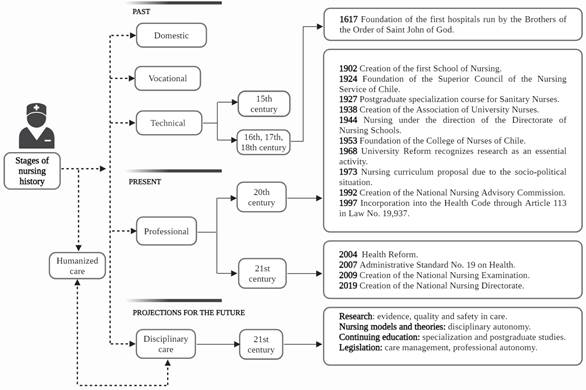
This fifth stage answers the question of what the disciplinary projections of nursing are, highlighting professional autonomy and ethical care that have evolved in response to scientific, technological and sociocultural advances, positioning us at the forefront with respect to other disciplines, mainly because it has been defined as the science of care, which is reflected in Figure 2.
In this sense, Jean Watson’s Philosophy and Theory of Transpersonal Care has promoted the human approach in the delivery of care, through actions that go beyond providing care, because the ethical, compassionate and mutually respectful approach favors the global moment of nursing care, based on the Science of Unitary Care, (26,42 allowing to overcome transhumanism and posthumanism favored by artificial intelligence. 43
The ontology of nursing honors the human perspective, through the assessment of the needs of the patient, family, community and the environment, maintaining values, heritages, traditions and development of knowledge, over time. 26 Likewise, Colliére (2009) points out that the key to the evolution of the profession is to clarify the identity, nature, meaning, social and economic value of the nursing services offered to people who need their care. 23
By 2050, Durán (2018) projects nursing as a creative professional discipline, based on knowledge that requires personal and group commitment. Therefore, nursing professionals must know the history of their profession, to actively participate in political-administrative and research actions, with the aim of not only being professional receivers of information, but also actors who build a disciplinary path. 44 This orientation directs the course of nursing with an emphasis on consolidated research, supported by Nursing Models and Theories and applied to the healthcare area, which has been able to renew and redefine itself over time, based on the emerging needs of human beings and the advances of scientific knowledge. 5
Additionally, Martínez and Chamorro (2023) consider that the new challenges for nursing are the consolidation of advanced practice, the search and selection of information, specialization and continuous training, the incorporation of new Information and Communication Technologies (ICTs), collaborative work, being at the forefront of new diseases of global contingency and establishing lines of research. 25
The “Disciplinary care of nursing” will allow strengthening the common interprofessional language, unifying criteria to address the metaparadigm that characterizes the professional role in its different specialties.
Regarding research, nursing professionals are in continuous training, carrying out postgraduate studies to deepen and develop this area, in favor of improving the quality and safety of care, despite this, there is still a need to invest in national research funds specific to this discipline that enrich knowledge.
Figure 2 shows the four historical stages of nursing care: the domestic, vocational, technical and professional stages, where the last two describe the main milestones achieved in Chile. In addition, a fifth phase of disciplinary care is projected, focused on research, nursing models and theories, continuing education and the development of legislation in the profession.
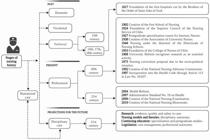
Conclusions
Knowing the historical evolution of nursing contextualizes the different periods experienced, allows us to understand each stage and assess its progress. In its beginnings, care was linked to women, and today it is a task for men and women who make this profession a philosophy of life through transpersonal actions as part of humanized care and that elevate it towards a disciplinary path.
To understand humanization in care, nurses must achieve a balance between moral and technical duty and their economic interests, which were key elements in achieving professional autonomy. Therefore, “Nursing Disciplinary Care” responds to the projections that the profession has for the future and is presented as an opportunity for progress in the ethical, managerial, care, academic, scientific and sociocultural horizons, because at the international level, there are organizations and legislations that regulate its work, while at the national level, in Chile, this new phase poses professional challenges, such as the need to incorporate and maintain management units concerned with humanized care for users and their families. Likewise, in the field of primary care, the adoption of the Comprehensive Family and Community Health Care Model (MAIS) imposes on all health professionals the challenge of providing truly humanized care. In this context, nursing professionals have the responsibility of leading this approach, basing their work on the principles of humanized care, which are deeply rooted in their discipline. Because nursing in Latin America has been strengthened mainly in administration, leaving aside humanized care, for this reason, this stage is oriented in the Philosophy and Theory of transpersonal care of Jean Watson.
Finally, it highlights that continuous training expands the universe of knowledge, allowing the training of specialist nurses, masters and doctors who have a commitment to the discipline and allow consolidating and opening new paths over time, among them, those that allow to respond to chronic non-communicable and communicable diseases in the population throughout the life cycle. Likewise, in the learning of undergraduate students, who are the future of nursing.
Limitations
The search for articles was carried out based on the question of scientific interest posed, although some limitations were identified. Firstly, the number of databases consulted could be expanded in future research, which would allow increasing the number of articles selected. Secondly, the geographical diversity of the countries represented in the studies was limited, covering only Africa, China, Latin America and Spain. Therefore, future research could consider the inclusion of studies from other continents, such as North America, Oceania and Europe with English-speaking countries, where nursing has a broader disciplinary development.
References
- 1. Martínez Martín ML, Chamorro Rebollo E. Historia de la Enfermería. Evolución histórica del cuidado enfermero. 2a ed. España: Elsevier; 2011.
-
2. Moreno Sánchez YM, Daza MF, Ibarra Acuña A, Restrepo SS. Cronología de la profesionalización de la Enfermería. Rev Logos Cienc Tecnol. 2017; 9:64-84. doi: 10.22335/rlct.v9i2.479
» https://doi.org/10.22335/rlct.v9i2.479 -
3. Bermejo JC. Humanizar los cuidados en la relación con el enfermo de Alzheimer. Jornada sobre la ancianidad “El Alzheimer” (Internet). 1999 (citado 2023 dic 20). Disponible en: Disponible en: https://www.gerontologia.org/portal/archivosUpload/Humanizar_los_cuidados_en_la_relacion_con_enfermo_alzheimer.pdf
» https://www.gerontologia.org/portal/archivosUpload/Humanizar_los_cuidados_en_la_relacion_con_enfermo_alzheimer.pdf -
4. Rivas Riveros E. Historia de la enfermería en Chile. Temuco, Chile. Universidad de la Frontera; 2019. Disponible en: https://bibliotecadigital.ufro.cl/?a=view&item=1673
» https://bibliotecadigital.ufro.cl/?a=view&item=1673 - 5. Raile Alligood M. Modelos y Teorías de Enfermería. 10a ed. Barcelona, España: Elsevier; 2023.
-
6. Organización Panamericana de la Salud (OPS). La enfermería en la Región de las Américas (Internet). 2023 (citado 2023 dic 20). Disponible en: Disponible en: https://www.paho.org/es/temas/enfermeria/enfermeria-region-americas-2023
» https://www.paho.org/es/temas/enfermeria/enfermeria-region-americas-2023 -
7. Farfán Vélez LC, Andrade Pizarro LM, Briones Morales CA, Briones Macías CE, Flores Medina BS, Ferrín García RJ, et al. Los desafíos de la gestión del cuidado de los profesionales de enfermería (Internet). 1ª. ed. Mawil Publicaciones de Ecuador; 2023 (citado 2023 dic 20). doi: 10.26820/978-9942-622-65-5
» https://doi.org/10.26820/978-9942-622-65-5 -
8. Dos Santos Dias PD, De Santana ME, De Azevedo Lima VL. Repercussions of the COVID-19 pandemic on breast cancer actions in a Brazilian state. Investig Educ En Enferm (Internet). 2024 (citado 2024 sep 2);42(2). doi: 10.17533/udea.iee.v42n2e04
» https://doi.org/10.17533/udea.iee.v42n2e04 -
9. Andrade-Pizarro LM, Bustamante-Silva JS, Viris-Orbe SM, Noboa-Mora CJ. Retos y desafíos de enfermería en la actualidad. Salud y Vida (Internet). 2023 (citado 2024 sep 2);7(14):41-53. doi: 10.35381/s.v.v7i14.2525
» https://doi.org/10.35381/s.v.v7i14.2525 -
10. Arayathanitkul B, Bandansin J, Lamtrakul S, Eaksamai S. Experience of transcultural nursing for migrant workers in COVID-19 field hospitals: a qualitative study in Samut Sakhon Province, Thailand, J Ners. 2024 (citado 2024 sep 2);19(3):335-345. doi: 10.20473/jn.v19i3.48328
» https://doi.org/10.20473/jn.v19i3.48328 -
11. Milos P, Bórquez B, Larraín AI. La “Gestión del cuidado” en la legislación chilena: Interpretación y alcance. Cienc Enferm (Internet). 2010 (citado 2023 dic 27);16(1). doi: 10.4067/S0717-95532010000100003
» https://doi.org/10.4067/S0717-95532010000100003 -
12. Watson J. Clarificando la disciplina de la enfermería como fundamental para el desarrollo de la enfermería profesional. Texto Contexto - Enferm (Internet). 2018 (citado 2024 ene 3);26(4). doi: 10.1590/0104-07072017002017editorial4
» https://doi.org/10.1590/0104-07072017002017editorial4 -
13. Page MJ, McKenzie JE, Bossuyt PM, Boutron I, Hoffmann TC, Mulrow CD, et al. Declaración PRISMA 2020: una guía actualizada para la publicación de revisiones sistemáticas. Rev Esp Cardiol. 2021 (citado 2024 ene 3);74(9):790-799. doi: 10.1016/j.recesp.2021.06.016
» https://doi.org/10.1016/j.recesp.2021.06.016 -
22. Torres A, Sanhueza O. Desarrollo de la autoestima profesional en enfermería. Investig Educ En Enferm (Internet). 2006 (citado 2024 ene 10);24(2). Disponible en: Disponible en: http://www.scielo.org.co/scielo.php?script=sci_arttext&pid=S0120-53072006000200012
» http://www.scielo.org.co/scielo.php?script=sci_arttext&pid=S0120-53072006000200012 - 23. Colliére Marie Françoise. Promover la vida. 2a ed. México: Mc Graw Hill; 2009.
-
24. Villegas JL, Soto M del CS. Genealogía masculina de la profesión enfermera (I): Etapa doméstica y etapa vocacional. TIEMPOS Enferm SALUD. 2020 (citado 2024 ene 10);2(8):12-20. Disponible en: Disponible en: https://www.tiemposdeenfermeriaysalud.es/journal/article/view/86/72
» https://www.tiemposdeenfermeriaysalud.es/journal/article/view/86/72 - 25. Martínez Martín ML, Chamorro Rebollo E. Historia de la enfermería. 4a ed. Barcelona, España: Elsevier; 2023.
- 26. Watson J. Unitary Caring Science: the Philosophy and Praxis of Nursing. Boulder, CO: University Press of Colorado; 2018.
-
27. Huaiquian-Silva JC, Siles-González J, Velandia-Mora AL, Universidad de Concepción. The Hospitaller Order of Saint John of God in Colonial Chile. Aquichan. 2013(citado 2024 ene 10);13(2):290-300. doi: 10.5294/aqui.2013.13.2.14
» https://doi.org/10.5294/aqui.2013.13.2.14 -
28. Biblioteca Nacional de Chile. Enfermeras: profesionalización y cuidado sanitario (1906-1950). Memoria Chilena. (Internet). (citado 2024 ene 12). Disponible en: Disponible en: https://www.memoriachilena.gob.cl/602/w3-article-100622.html#cronologia
» https://www.memoriachilena.gob.cl/602/w3-article-100622.html#cronologia -
29. Nüñez Carrasco ER, Jana Ayala AC. El legado de las enfermeras sanitarias en el cuidado de la salud chilena. Cienc Enferm. 2017 (citado 2024 ene 12);23(3):113-124. doi: 10.4067/S0717-95532017000300113
» https://doi.org/10.4067/S0717-95532017000300113 - 30. Chiang S. Introducción a la Historia de la enfermería en Chile. Santiago, Chile: Técnicas de Educación Superior; 2010.
-
31. Chile. Crea el colegio de enfermeras y fija las disposiciones por que se regirá. Ley n.°11161 de 17 de enero de 1975. Biblioteca del Congreso Nacional de Chile, 1975. Disponible en: https://www.bcn.cl/leychile/navegar?idNorma=244142
» https://www.bcn.cl/leychile/navegar?idNorma=244142 -
32. Castellano Salas A, Tagle Vargas C, Galdames Cabrera L, Riquelme Pereira N, Landman Navarro C, Peroni Parraguez S. Examen Nacional de Enfermería en Chile: Importancia y desafíos. Cienc Enferm. 2011 (citado 2024 ene 15);17(1):27-36. doi: 10.4067/S0717-95532011000100004
» https://doi.org/10.4067/S0717-95532011000100004 -
33. Machuca-Contreras F, Aguilera NR, Jara RG. A quince años de la promulgación de la gestión del cuidado de enfermería para atención cerrada en Chile ¿En qué estamos? Cuid Enferm Educ En Salud. 2022 (citado 2024 ene 15);7(1):7-9. doi: 10.15443/ceyes.v7i1.1765
» https://doi.org/10.15443/ceyes.v7i1.1765 -
34. Ceballos Vásquez P.A. Desde los ámbitos de enfermería, analizando el cuidado humanizado. Cienc. enferm. (Internet). 2010 (citado 2024 ene 15);16(1):31-35. doi: 10.4067/S0717-95532010000100004
» https://doi.org/10.4067/S0717-95532010000100004 -
35. Galvis López MA, Pérez Giraldo B. Revisión de la literatura sobre el concepto “espiritualidad” aplicado a la práctica de enfermería. (Internet). Enfermería21. 2013 (citado 2024 ene 15) Disponible en: Disponible en: https://www.enfermeria21.com/revistas/aladefe/articulo/82/revision-de-la-literatura-sobre-el-concepto-espiritualidad-aplicado-a-la-practica-de-enfermeria/
» https://www.enfermeria21.com/revistas/aladefe/articulo/82/revision-de-la-literatura-sobre-el-concepto-espiritualidad-aplicado-a-la-practica-de-enfermeria/ -
36. Sánchez-Franco JM, Rodríguez-Solís EE, Zambrano-Loor FG, Martínez-Castro RA. Modelo de gestión del cuidado de enfermería en servicios de atención primaria en salud. Salud y Vida (Internet). 2023 (citado 2024 ene 20);7(13):50-59. doi: 10.35381/s.v.v7i13.2418
» https://doi.org/10.35381/s.v.v7i13.2418 -
37. Consejo Internacional de Enfermeras (CIE). Definiciones de enfermería (Internet). (citado 2024 ene 20). Disponible en: Disponible en: https://www.icn.ch/es/politica-de-enfermeria/definiciones
» https://www.icn.ch/es/politica-de-enfermeria/definiciones -
38. Izquierdo Machín E. Enfermería: Teoría de Jean Watson y la inteligencia emocional, una visión humana. Rev Cuba Enferm. 2015 (citado 2024 ene 20);31(3). Disponible en: Disponible en: http://scielo.sld.cu/scielo.php?script=sci_arttext&pid=S0864-03192015000300006&lng=es
» http://scielo.sld.cu/scielo.php?script=sci_arttext&pid=S0864-03192015000300006&lng=es -
39. Poblete Troncoso M, Valenzuela Suazo S. Cuidado humanizado: un desafío para las enfermeras en los servicios hospitalarios. Acta Paul Enferm. 2007 (citado 2024 ene 20);20(4):499-503. doi: 10.1590/S0103-21002007000400019
» https://doi.org/10.1590/S0103-21002007000400019 -
40. Urra ME, Jana AA, García VM. Algunos aspectos esenciales del pensamiento de Jean Watson y su Teoría de cuidados transpersonales. Cienc Enferm. 2011(citado 2024 ene 20);17(3):11-22. doi: 10.4067/S0717-95532011000300002
» https://doi.org/10.4067/S0717-95532011000300002 -
42. Rodríguez Carrasco LY. Reseña del Libro: «“Cuidado humanizado: un desafío para el profesional de enfermería”». 2023(citado 2024 ene 20);16(1):55-58. doi: 10.5281/zenodo.7582360
» https://doi.org/10.5281/zenodo.7582360 -
43. Siles González J. Un antídoto ante los riesgos del auge de las ideologías transhumanistas y poshumanistas: la poesía de los cuidados. Cult Los Cuid (Internet). 2023 (citado 2024 ene 20);27(65):1-11. doi:10.14198/cuid.2023.65.01
» https://doi.org/10.14198/cuid.2023.65.01 -
44. Durán de Villalobos MM. Una mirada hacia afuera: proyección de enfermería para el 2050. Aquichan (Internet). 2018 (citado 2024 ene 20);18(1):58. doi: 10.5294/aqui.2018.18.1.1
» https://doi.org/10.5294/aqui.2018.18.1.1