Nursing Care for Children with Autism and the Nola Pender Model: Integrative Review
Abstract:
Introduction: Autism Spectrum Disorder is a neurodevelopmental disability that can affect and hinder the individual’s communication and social interaction, as well as present repetitive and restrictive behavior patterns. Signs and symptoms of autism can be observed in children between 18 and 24 months of age, or even in younger children, between 6 and 12 months of age
Objective: To analyze the scientific evidence related to nursing care offered to children with Autism Spectrum Disorder in primary health care, considering the approach proposed by Nola Pender’s Health Promotion Model
Methodology: This is an integrative review study, searches were carried out in the following databases: PubMed, Scopus, CINAHL, EMBASE, Scielo, Web of Science and Virtual Health Library. A total of 910 articles were identified, of which 6 were selected for the final sample. Of the articles analyzed, 2 were located in the VHL, 1 in CINAHL, 1 in the Web of Science and 2 in Scielo. Most of the studies had a qualitative and descriptive methodological design
Results: Regarding the synthesis of the conducts, the predominance of themes such as: Training of the nursing team; The family as a strategy for early diagnosis and Awareness about stigma was observed. The findings point to the importance of the nurse’s role in the early screening of Autism Spectrum Disorder in childcare consultations in PHC.
Conclusion: Nola Pender’s approach resonates significantly in the context of care for children with Autism Spectrum Disorder in primary care
Keywords:
autism spectrum disorder; nursing care; primary health care; child health; nursing theory; health promotion
Resumo:
Introdução: O Transtorno do Espectro Autista é uma deficiência de neurodesenvolvimento que pode acometer e dificultar a comunicação e interação social do indivíduo, assim como apresentar padrões de comportamentos repetitivos e restritivos. Os sinais e sintomas do autismo podem ser observados em crianças entre 18 e 24 meses de idade, ou até mesmo em crianças mais jovens, entre 06 a 12 meses de idade
Objetivo: Analisar as evidências científicas relacionadas ao cuidado de enfermagem ofertado a crianças com Transtorno do Espectro Autista na atenção primária à saúde, considerando a abordagem proposta pelo Modelo de Promoção da Saúde de Nola Pender
Metodologia: Trata-se de um estudo de revisão integrativa, as buscas foram realizadas seguintes bases de dados: PubMed, Scopus, CINAHL, EMBASE, Scielo, Web of Science e Biblioteca Virtual em Saúde. Identificaram-se 910 artigos, dos quais 6 foram selecionados para a amostra final. Dos artigos analisados, 2 foram localizados na BVS, 1 na CINAHL, 1 na Web of Science e 2 na Scielo. A maioria dos estudos teve delineamento metodológico qualitativo e descritivo
Resultados: Quanto a síntese das condutas observou-se a predominância de temas como: Capacitação da equipe de enfermagem; A família como estratégia para diagnóstico precoce e Conscientização sobre o estigma. Os achados apontam para a importância da atuação do enfermeiro/a quanto a triagem precoce do Transtorno do Espectro Autista nas consultas de puericultura na APS
Conclusão: A abordagem de Nola Pender, ressoa de maneira significativa no contexto do cuidado a crianças com Transtorno do Espectro Autista na atenção primária
Palavras-chave:
transtorno do espectro autista; cuidados de enfermagem; atenção primária à saúde; saúde da criança; teoria de enfermagem; promoção da saúde
Resumen:
Introducción: El autismo es una discapacidad del neurodesarrollo que puede afectar y dificultar la comunicación e interacción social del individuo, así como presentar patrones de comportamiento repetitivos y restrictivos. Los signos y síntomas se pueden observar en niños entre los 18-24 meses, o incluso entre los 6-12 meses de edad
Objetivo: Analizar la evidencia científica relacionada con la atención de enfermería ofrecida a niños con trastorno del espectro autista en la atención primaria de salud, considerando el enfoque propuesto por el Modelo de Promoción de la Salud de Nola Pender
Metodología: Es un estudio de revisión integrativa; las búsquedas se realizaron en las siguientes bases de datos: PubMed, Scopus, CINAHL, EMBASE, Scielo, Web of Science y BVS. Se identificaron un total de 910 artículos, de los cuales 6 fueron seleccionados para la muestra final. De los artículos analizados, 2 se localizaron en la BVS, 1 en CINAHL, 1 en la Web of Science y 2 en Scielo. La mayoría de los estudios tuvieron un diseño metodológico cualitativo y descriptivo
Resultados: En cuanto a la síntesis de las conductas, se observó el predominio de temas como: Formación del equipo de enfermería; La familia como estrategia para el diagnóstico precoz; y Concienciación sobre el estigma. Los hallazgos apuntan a la importancia del rol de la enfermera en la detección temprana del autismo en las consultas de puericultura en la APS
Conclusión: El enfoque de Pender tiene una gran relevancia en el contexto de la atención a niños con autismo en atención primaria
Palabras clave:
trastorno del espectro autista; atención de enfermería; atención primaria de salud; salud infantil; teoría de enfermería; promoción de la salud
Introduction
The Ministry of Health (MoH) defines autism as a global developmental disorder whose alterations appear before the age of three and are characterized by problems in communication and social interaction, repetitive behaviors, and restricted interests. 1,2,3
Studies carried out in the United States of America (USA), in their latest epidemiological update, stated that in 2020 the estimated prevalence of ASD was 1 in 36 children, being almost four times higher in boys than in girls. It should be noted that the prevalence of ASD is not documented in many countries, with most studies coming from Europe and the USA. 4 In Brazil, data from the 2022 Census provided by the Brazilian Institute of Geography and Statistics (IBGE), estimated that there are around 2 million autistic people in the country. With such a significant number of ASD sufferers in various regions, it is extremely important to implement public policies to provide the necessary support for this group. 5
In the context of public policies in Brazil, people with ASD are supported by the National Policy for the Protection of the Rights of People with ASD and the National Health Policy for People with Disabilities (PwD), which are aimed at including PwD in the entire Unified Health System (UHS) service network. 2,3
A great ally in the implementation of public policies within health services is nursing, whose profession plays a fundamental role in the context of Primary Health Care (PHC). Within PHC, nurses carry out a variety of different services, including monitoring child development through childcare, thus representing an important professional for the early recognition of neurodevelopmental alterations, making the most appropriate health referrals and follow-ups, and coordinating health services to resolve the problems detected. 4
As child development is dynamic, nurses must always be aware of the changes presented at each stage of development, as well as directing their attention to the concerns raised by the child’s parents and/or guardians. Within the context of ASD, the use of validated instruments to identify the risk of autism is currently the most recommended, because the earlier it is identified, the quicker it will be diagnosed, so that the child has better chances of developing properly, and the whole process of monitoring and stimulation can be carried out by specialized professionals, including nurses. 6,7
Early diagnosis, as well as process detection, allows for the implementation of specific interventions for the treatment of ASD, reducing social barriers and promoting a better quality of life for the child and their environment.
Nurses play an essential role in caring for and protecting children’s health. It is through their close observation that it is possible to conduct a detailed assessment of the child’s well-being, identify potential risks and implement appropriate interventions based on the changes identified during the assessment. Nurses are the professionals who have the most contact with children during their childhood development and for this reason, they are one of the most qualified professionals when it comes to the early detection of autism in this age group.
Nursing care in the early detection of autism in children is essential to ensure proper development and timely interventions. Nurses, especially in PHC, play an essential role in monitoring child development, observing evolutionary milestones and identifying possible signs of autism.
In this context, nursing care plays an essential role in supporting parents and/or guardians, helping them to understand the diagnosis and adopt cognitive and motor stimulation practices. For this to happen, it is necessary to stimulate training and capacity building, as well as greater inclusion of nurses in childcare assistance and actions carried out in PHC. 8,9,10,11
The work of nurses, based on nursing theories, promotes various benefits within the care offered to the population, including the construction of more solid, effective, critical, and reflective knowledge based on scientific evidence, thus making the practice of care more humanistic and centered on the individual and collective well-being of health users. 12
Nursing theories provide a systematized and holistic framework that can guide professional care, enabling a dialogical and comprehensive approach to deal with the particularities, singularities and diversities of people and the community, especially when it comes to the care offered to children. Among the nursing theories focused on health promotion is the Health Promotion Model (HPM) developed by Nola Pender, which aims to unite nursing with the study of human behavior. 13
Nola Pender’s HPM was created in the 1980s, qualified as a mid-range theory, and is widely used in research to predict specific health-promoting lifestyles and behaviors. Its main and major concepts are: health, nursing, environment, and person. HPM addresses three major components: individual characteristics and experiences; feelings and knowledge about the behavior and the outcome of the behavior. It is important to note that each component has its own individualized variables. 13,14
However, despite the importance of nursing in the early detection of ASD, there are gaps in clinical practice that need to be addressed. The literature points to a possible lack of specific protocols for ASD care in PHC, as well as a lack of specialized training for nurses on the subject. In addition, there is a need to compare the situation in Brazil with other countries to identify good practices and improve the care provided.
Given the above, it is necessary to investigate nursing care for children with ASD, with a view to contributing to outlining strategies and planning the implementation of care for this public in PHC. The adoption of Nola Pender’s HPM is justified by its applicability in promoting children’s health, allowing nurses to develop actions based on an understanding of the factors that influence the development and well-being of autistic children.
Thus, this research poses the following guiding question: What nursing care is offered to children with ASD in PHC? Therefore, the general objective of this research is to analyze the scientific evidence on nursing care for children with ASD in PHC from the perspective of Nola Pender’s Health Promotion Model. The specific objectives are to identify nursing care strategies for children with ASD in primary care and to evaluate the training and qualification of nurses in the management of ASD in primary care.
Method
This is an integrative review (IR) study. The choice of IR as a research method is justified by its ability to synthesize and critically analyze different studies on the same topic, allowing for a comprehensive view of the current state of knowledge. 15 Unlike systematic reviews, which follow strict inclusion and exclusion criteria and focus on primary evidence with similar methodologies, IR allows for the inclusion of studies with different methodological approaches (quantitative, qualitative, and mixed), broadening the understanding of the phenomenon under investigation.
Furthermore, unlike meta-analysis, which focuses on the statistical synthesis of quantitative results, IR allows for a more interpretative and reflective analysis of the findings, which is fundamental for a complex subject such as nursing care for autistic children in conjunction with the Nola Pender Model. This approach makes it possible to identify gaps in knowledge, assess the applicability of the results in clinical practice and provide input for the development of new intervention strategies.
To carry out this study, a methodological approach consisting of six stages was adopted: 1) identifying the topic and selecting the hypothesis or research question for the integrative review; 2) establishing criteria for including and excluding studies/sampling or searching the literature; 3) defining the information to be extracted from the selected studies/categorizing the studies; 4) evaluating the studies included in the integrative review; 5) interpreting the results; 6) presenting the review/synthesis of knowledge. 16
The research period ran from April 2022 to May 2024.
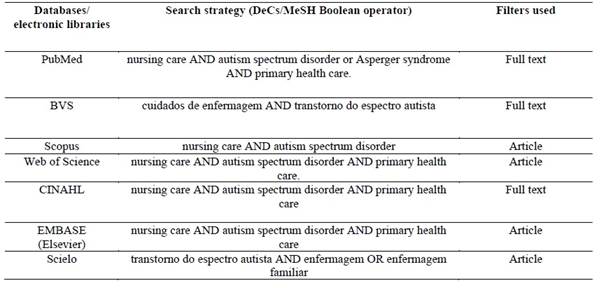
To formulate the guiding question, the PICo strategy was adopted, which is an acronym for P: Population, I: Interest, Co: Context. 17 Thus, the following structure was obtained: P: autistic children; I: nursing care; and Co: Primary Health Care, as described in Table 1.
For the selection criteria, the following were used as inclusion criteria for the studies: research articles published in scientific journals with full texts that address the nursing care offered to children with ASD in primary health care, with no time frame and no language restrictions. The following were excluded from the study: editorials, manuals, review articles, case reports, duplicated articles, or articles that did not answer the research question. The Boolean operands AND and OR were used, there was no language filter, and the search also included related terms.
To define the sample, the study’s area of knowledge (Health Sciences) and sub-area (Nursing) were taken into account, and the following databases were selected: US National Library of Medicine (PubMed), Scopus, Cumulative Index to Nursing and Allied Health Literature (CINAHL), EMBASE (Elsevier), Scielo, Web of Science and the Virtual Health Library (VHL).
The following Health Science Descriptors (DeCS) were used: autism spectrum disorder OR autistic disorder; nursing care; primary health care. And Medical Subject Headings (MeSH): autism spectrum disorder; nursing care; primary health care.
To systematize the search for articles while respecting the peculiarities of each database, specific Boolean combinations were used, as described in Table 1.
To ensure a broad search, the studies were accessed through the journal portal of the Coordination for the Improvement of Higher Education Personnel (CAPES). It should be noted that the different search strategies in different databases and the fact that no time frame was used were important to avoid missing significant studies, as well as providing an opportunity to expand the evidence that answered the research question. After obtaining the results of the study’s search strategy, the findings were transferred to the Rayyan software (Qatar Computing Research Institute, Doha, Qatar) whose aim is to identify duplicate studies to be excluded, as well as to carry out a blind peer review. After excluding the duplicate studies, two researchers read the titles and abstracts to include and exclude the findings that would probably make up this research. After this process, the studies that were included were analyzed and read in full. The selection of articles was carried out in a blind, paired, and independent manner by two reviewers. As no distinction was found between the studies selected, there was no need for the studies to be analyzed by a third reviewer.
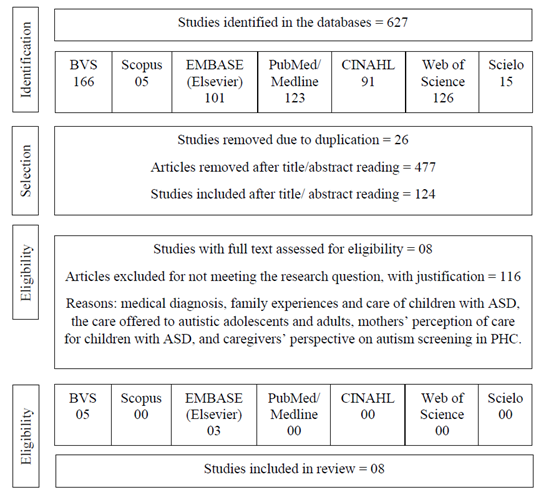
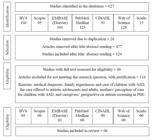
The Preferred Reporting Items for Systematic Reviews and Meta-Analyses (PRISMA) checklist was used to demonstrate the process of identification, screening, eligibility, and inclusion of scientific studies. The stages and variables evaluated in the studies are described in Figure 1.
Bardin’s content analysis was used to categorize the studies, with the first step being a floating reading of all the transcribed material, followed by pre-analysis. 18 Initially, the information collected was detailed using a form constructed by the authors containing the title, journal, year of publication, country in which the study was carried out, objective, methodology, level of evidence, and main results.
The information contained in the studies formed the corpus of analysis, which led to the development of indicators that were submitted to analytical procedures and subsequent inference, comparing them with data from the literature. 19
It should be noted that during the search for data related to the topic, most of the studies did not address nursing care for children with ASD. Although autism is currently a much-discussed subject, the nursing field has not yet fully grasped the issue, thus explaining the low number of results used to compose the final sample.
The studies selected and included in this review were evaluated using the Grading of Recommendations Assessment, Development and Evaluation (GRADE), a system officially used by the World Health Organization (WHO), which determines that the scientific evidence observed should be classified according to the quality of the studies.
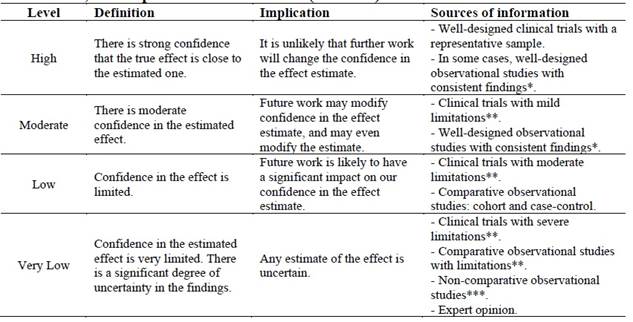
The quality of evidence in the GRADE system is classified into four levels: high, moderate, low, and very low. Studies classified as high-quality evidence have consistent results, are well-designed methodologically, and have a low risk of bias. Moderate evidence may have some methodological limitations but still maintains a reasonable level of reliability. 20
Low evidence indicates considerable uncertainty due to bias or significant limitations in the studies, while very low evidence indicates a high degree of uncertainty, making its conclusions less certain. In addition, the strength of the recommendation indicates the relevance of adopting or rejecting certain clinical conduct based on the quality of the studies analyzed. 20
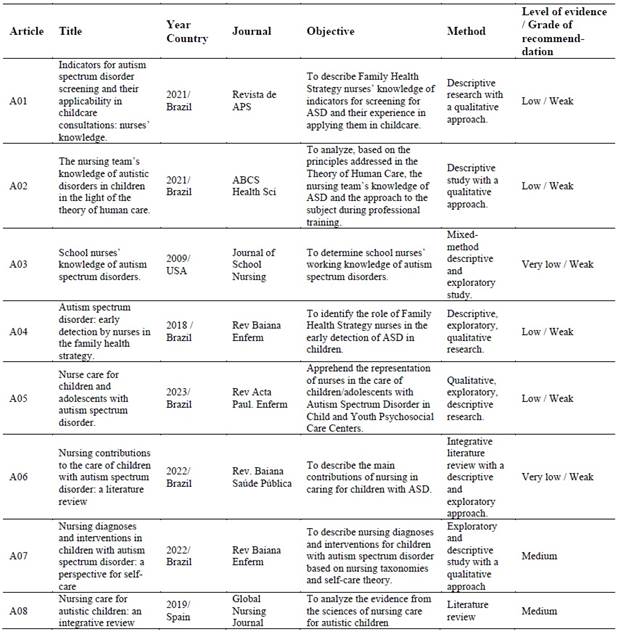
To ensure the accuracy of the classification of the included studies, the assessment of the quality of the evidence was conducted by independent reviewers. In cases of discrepancy in the classification, the studies were re-evaluated and discussed between the reviewers until a consensus was reached. This process strengthens the reliability of the results and ensures the rigorous application of the GRADE system in the review. Table 2 shows how the articles included in this review were assessed.
To interpret the findings and synthesize the knowledge, categorization was used to analyze the results, extracting the scientific evidence that underpins nursing care for children with ASD in PHC. The aim of the analysis was to get to know and characterize the general panorama of the studies according to their object of investigation.
The categories of analysis were generated from a thorough and interpretative reading of the findings of the included studies, allowing them to emerge from the data in an inductive way. This approach enabled a more comprehensive understanding of the aspects investigated, ensuring that the synthesis of knowledge was built based on the evidence extracted.
To validate the categorization and coding of the data, triangulation between reviewers was carried out, ensuring greater methodological rigor and reliability in the analysis. In the event of discrepancies in the classification, the findings were discussed until a consensus was reached.
To present the results, three stages were carried out: firstly, synthesis of the methodological information, second, description of the nurse’s conduct/care for children with ASD identified in the studies included in the review and third, organization of the results found according to the HPM diagram. 21
This study aims to organize the results based on Nola Pender’s diagram and analyze the results collected from the perspective of her theory. Based on the principles of the Health Promotion theory developed by Pender, we will try to understand the relationship between the data obtained and the theoretical constructs proposed by this approach. Analysis from Pender’s perspective will provide an in-depth look at the determinants of healthy behavior, helping to interpret the results and improve the health promotion strategies adopted in this study.
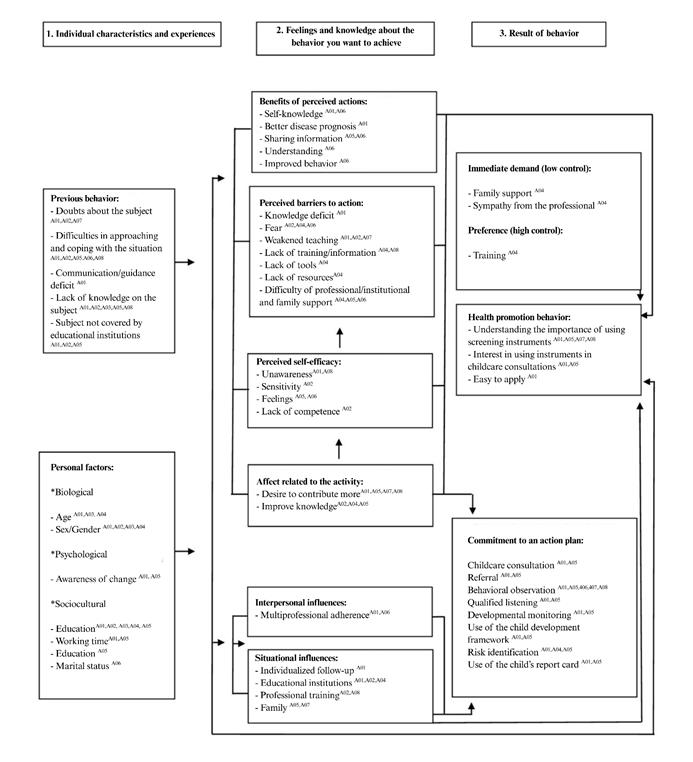
To systematize the correlation between the HPM and the results of the included studies, Nolar Pender’s theory was read in detail first. This was followed by an interpretative reading of the findings so that they could be integrated, analyzed, discussed and organized in a diagram (Figure 2) according to the components and variables of the model proposed by Pender.
Results
To better visualize the data, a summary table (Table 3) was constructed with an analytical synthesis of methodological information from the studies included in the review.
Concerning the methodological design, there was a predominance of qualitative and descriptive studies (four), followed by mixed studies (two). Based on the number of results found, it was found that the evidence supporting nursing consultations for children with ASD in PHC is fragile and presented in a fragmented and scarce way in the literature. When nursing care is provided to children with ASD, there is no scientific basis, demonstrating a lack of theoretical and practical articulation, which shows a conceptual and applicative gap in practice in the Health Care Network (HCN).
As for the level of evidence, the articles selected were classified as low level and weak recommendation according to the Grading of Recommendations Assessment, Development and Evaluation (GRADE). It is believed that this is related to the non-experimental design adopted by the authors included in this review, and the descriptive content of the studies found. However, evidence from descriptive studies cannot be dismissed, as scientific evidence for nursing practice depends on descriptive research. 22)
The findings highlight the scarcity of scientific research on the work of nursing professionals with children with ASD, coupled with the lack of cross-sectional, observational and experimental studies on the subject, demonstrating the importance of nursing studies to guide the practice of these professionals with autism. 23
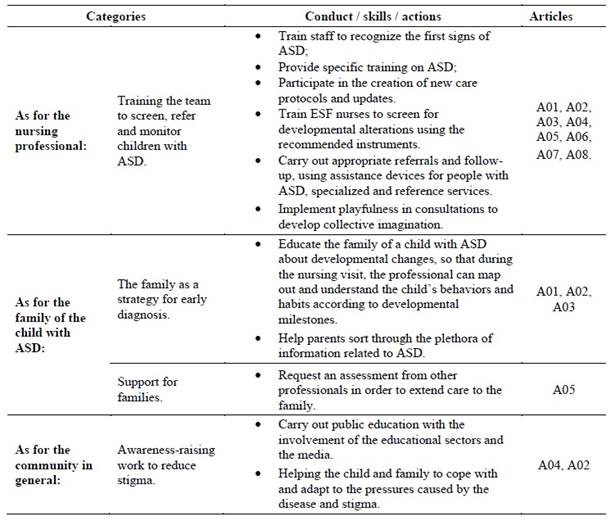
As for the nursing care practices mentioned in the studies, it is important to highlight the need to train the nursing team to understand autism to care for children with ASD, and their families and to raise awareness among the community in general. The results are detailed in the table below (Table 4).
Figure 2 presents the association of the results included in this review and organized within the delimited components of the HPM theory. The diagram was systematized to promote a deeper and more contextualized analysis, establishing significant connections between the scientific evidence found and the theoretical model. This systematization offers practical guidelines for future interventions, strengthening the applicability of HPM theory within PHC.
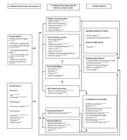
Diagram of Nola Pender’s Health Promotion Model based on the studies that make up this integrative review.
Discussion
Based on the theoretical principles of social learning and human motivation, Nola Pender explores three distinct elements and their corresponding categories through the HPM. These elements have the potential to influence or not the individual’s participation in behaviors that promote health. In the context of nursing care offered to autistic children in PHC, the articles reviewed provide an in-depth analysis of this issue. 13
Component: Individual characteristics and experiences
This is the first component of the HPM, which comprises two main categories: previous behavior and personal factors. The first category, previous behavior, refers to the behavior that needs to be modified and/or the expected habits. The second category, personal factors, encompasses biological, psychological, and sociocultural variables. These categories offer a contextualized analysis of the habits and life circumstances of an individual or population, so it is essential that the analysis is carried out in detail for a better understanding and approach. 21
It was observed that the most prevalent feelings among the studies within this component were difficulties in approaching and coping with situations, lack of knowledge and lack of explanation of the subject by educational institutions.
It has been proven that difficulties in approaching and coping with autism hinder nursing care for children with ASD, especially in the early identification of the signs and symptoms that are presented in the initial phase of autism, thus making it impossible to make an early referral and diagnosis. As a result of these factors, the child is subjected to late initiation of cognitive therapies that can aggravate and/or delay the child’s neurological development. 7
It is worth emphasizing that overcoming these barriers requires training and interventions by nurses and other health professionals, addressing the characteristics of ASD, and its particularities, identifying signs and symptoms, family approach, and promoting efficient referrals. Implementing strategies that facilitate early intervention not only optimizes the prospects of diagnosis but also paves the way for more effective cognitive therapies, thus contributing to the healthy and integral development of children with ASD.
The study 24 points out that during the higher education of nursing professionals, the approach to ASD is superficial or non-existent, which means that nurses are not trained and consequently are not able to attend to the particularities of autistic children and their families/support network. It is important to point out that when effective teaching is compromised and has limitations in its professional training, this will affect the quality of the health promotion offered by the services and, consequently, there will be population dissatisfaction with the results that are being obtained, causing a feeling of frustration in users, which may aggravate or hinder their state of health.
The lack of knowledge about children with ASD is also noticeable in school nurses in the state of Virginia in the United States of America. It was noted that school nurses were limited in their knowledge of how to help parents make decisions about a child with ASD. 25 this situation may be repeated in Brazil. Studies are needed to identify nurses’ knowledge and practices in Brazil.
It is necessary for ASD to be thoroughly addressed in the context of professional training by educational institutions in general, whether national or international, so that trained professionals know how to more efficiently approach and deal with situations that are part of their daily lives as health promoters and educators.
Due to the growing prevalence of ASD and the importance of early identification and diagnosis, it is of the utmost importance that nurses are prepared to screen children for autism in primary health care. To ensure that these professionals are increasingly qualified, specific training programs must be offered to them when applying instruments capable of identifying whether a child is at risk of autism. In Brazil, for example, the Ministry of Health has included the M-CHAT-R/F screening instrument in the child’s booklet so that it can be applied during childcare appointments, thus expanding the strategies for screening children within the recommended age and, if identified as being at risk of ASD, carrying out the quickest possible interventions.
Component: Specific behavior
The second component of Pender’s model is considered to be the central component of his theory: feelings and knowledge about the behavior that is to be achieved. It encompasses six categories that represent cognitions, that is, specific understandings and perceptions about the behavior, which have the potential to influence engagement. These are: benefits, barriers, self-efficacy, affect, interpersonal and situational influences. 13
Among the studies selected, nurses addressed some variables that hinder and can sometimes make it impossible for nursing care for children with ASD to be ineffective, shallow, and embarrassing for the parties involved. The most common issues reported were lack of resources, tools and training, difficulties with professional/institutional and family support, fear and lack of competence to coordinate the situation.
On the other hand, despite the limitations pointed out, the professionals are aware of the changes that need to be made for this care to be more effective and targeted, and this desire can be seen from the professional’s report of wanting to contribute more to the provision of care.
During risk identification screening in PHC, nurses can use and apply instruments with the aim of obtaining a scale that qualifies the presence of behaviors known as early signs of ASD. However, many professionals don’t feel safe or qualified to put these instruments into practice, thus giving rise to a feeling of fear and trepidation when faced with practices that until then have been little known to them, which results in delayed referrals and overcrowding in diagnostic centers. (26
It is well known that nursing professionals have difficulties and limitations in terms of their professional competence when it comes to early detection and signs and symptoms of ASD, due to the lack of training and dissemination of specific materials that encourage the use of facilitating tools aimed at autistic children. However, the study points out that this is sometimes a result of the scarcity of institutional support and the lack of incentives for training that addresses the issue in greater detail. 7
Despite the difficulties faced by nursing professionals when it comes to ASD, the feeling of wanting to make a more significant contribution to the care of these children reflects their awareness of the importance of a multidisciplinary approach to caring for these patients. 27
By seeking a greater understanding of the specific needs of these patients and acquiring specialized skills, nurses can promote a more welcoming and adapted environment, contributing to the physical and emotional well-being of children with ASD.
Research reports that social stigma is also a significant challenge to promoting ASD screening. Research participants believe that ASD is a stigmatized condition, in which parents prefer to keep their child’s condition hidden. 28
There are situations in which the family can become a risk factor for the performance of a child with ASD, especially when, due to the influence of social stigmas, the family creates barriers that prevent the child’s rehabilitation. These barriers include denial of the symptoms and the child’s non-attendance at childcare appointments. 29
This stigma can be related to a lack of knowledge, judgment, rejection, and lack of support. These situations happen at school, in the community, with families and friends. Sensitization and awareness-raising work should also be aimed at these places. 3
Therefore, more resources should be available for nurses to ensure an assertive and resolute practice with children who have ASD. 24 Nurses must understand the dysfunctions that affect children and compromise their quality of life. To do this, nurses must observe and interpret the child and their family, seeking to plan the care to be offered by constantly evaluating it during the care process. 24
Component: Result of behavior
The third component of the HPM deals with the implementation of the stipulated healthy behavior. The category, commitment to the action plan, begins the behavioral process and is of paramount importance for its effective management. This commitment must be established jointly, because, during the implementation phase, new unanticipated requirements may arise.13
This component has three categories, immediate demand (low control) addresses the fact that individuals have little control over their behavior and that immediate changes are needed. The preference category (high control) refers to behaviors that individuals have a high degree of control over. Health promotion behavior is the results that individuals show after applying interventions and/or training aimed at health promotion. Lastly, the commitment to an action plan category, which involves carrying out the actions or behaviors agreed upon to promote a healthy lifestyle, i.e. putting into practice the behavior that was previously agreed upon to maintain health. 30
Among the categories presented, the feelings that the nursing professionals scored were: understanding the importance of using screening instruments, qualified listening during childcare consultations, observing the child’s behavior to identify risk, appropriate referrals and qualified listening.
In 2014, the Ministry of Health published “Guidelines for Rehabilitation Care for People with ASD” with the aim of training health professionals, emphasizing the importance of identifying behaviors and indicators through careful evaluation and highlighting the importance of early diagnosis. One of the instruments recommended by the Ministry of Health for identifying the early signs and symptoms of ASD, and which should be used by nurses, is the Modified Checklist for Autism in Toddlers (MCHAT - R/F) and the Clinical Indicators of Risk for Child Development (IRDI). 7
The study 26 analyzed that the use of specific instruments for screening for ASD by health professionals is easy to understand and apply, thus showing good results in their applicability within consultations aimed at caring for children with ASD, the study also points out that even professionals who did not have much knowledge about autism were able to apply and use the ASD screening instruments.
Nurses’ behavioral observation of children plays a crucial role in the early detection of ASD. By carefully observing children’s behavior during social interactions, communication and repetitive patterns, professionals can identify potential indicators of ASD. This special attention allows for early referral for assessment and intervention, maximizing the chances of a positive outcome in the child’s development. 26
By recognizing the importance of behavioral observation, nurses play a key role in promoting the health and well-being of children with ASD, ensuring a holistic and integrated approach to pediatric care.
The literature analyzed points to the importance and effectiveness of early intervention and support services for children with ASD and their families and communities, leading to the need for screening and a change in early action practices. 6 This is in line with the participants in the study 7 who unanimously consider early screening to be relevant for the identification of risk by nursing staff.
Early recognition of developmental alterations should also be carried out during the child’s follow-up in primary health care services, such as routine appointments and vaccinations. For this to happen, the team must be trained to recognize the first signs of ASD and make the appropriate referral and follow-up for the child and family. 3)
During nursing consultations, specifically childcare consultations, carried out in PHC, the nursing professional must be attentive to any kind of alteration in the developmental milestones defined for the child’s age. The professional’s attention must be associated with qualified listening to the reports and complaints made by the child’s parents and/or guardians. 26
This factor corroborates the study carried out in Oman, 28 which found that participants were resistant to any potential screening for ASD, as there were no clear coordination services or referral routes for this specific disorder. The lack of an organized line of care in the care network greatly hinders treatment and rehabilitation actions.
The line of care for children’s health in primary care must be drawn up with the aim of providing a safe flow of care for children and their families in such a way as to guarantee access to the health network for these clients, according to their needs and specificities. 31
As for the limitations of this study, there were gaps in scientific production on nursing care for children with ASD in primary health care, thus making it difficult to analyze the results based on the HPM, as well as a lack of knowledge of this disorder by professionals, which reflects a situation of fragility in the implementation of public policies aimed at people with disabilities. There is also a low level of evidence in the studies used according to the classification adopted and a lack of resolutive proposals to promote new approaches to nursing consultations.
This study was impacted by the limitations found, since the findings concerning professionals’ knowledge of autism were often limited and scarce, thus hindering the process of analyzing the results. The low level of evidence pointed out makes it clear that new studies with a more robust and appropriate design are needed. This study opens the way for new research to be carried out in the field on nurses’ knowledge of Autism Spectrum Disorder.
As a contribution, this study reinforces the fact that to ensure effective professional management of children with ASD by nurses, public management should include in its training activities knowledge actions for screening for the disorder in PHC through meetings to discuss the subject, with specific information on autism in childhood, emphasizing the benefits of early diagnosis and the screening that can be carried out in childcare. The research aims to raise awareness of the importance of using care tools for nursing consultations and the importance of improving practices in line with nursing theories and Nola Pender’s HPM when monitoring children with ASD in PHC.
It is also important to create new lines of research that address the issue of Autism Spectrum Disorder within nursing. The growing prevalence of ASD reaffirms the need to train health professionals who are increasingly inclusive and have technical and practical knowledge of neurodevelopmental disabilities.
Conclusion
The findings point to the importance of the nurse’s role in early screening for Autism Spectrum Disorder in childcare consultations in PHC, offering possibilities and opportunities for stimulation, monitoring, treatment and better child development through nursing care and other health professionals. Support and communication with the family were identified as essential actions for early diagnosis. Activities to promote community awareness were highlighted to reduce social stigma and insecurity, reducing the ambiguity surrounding the disorder.
References
-
1. Ministério da Saúde. Diretrizes de Atenção à Reabilitação da Pessoa com Transtornos do Espectro do Autismo (TEA). Ministério da Saúde, Secretaria de Atenção à Saúde, Departamento de Ações Programáticas Estratégicas. (Internet). Brasília: 2014. Disponível em: https://bvsms.saude.gov.br/bvs/publicacoes/diretrizes_atencao_reabilitacao_pessoa_autismo.pdf
» https://bvsms.saude.gov.br/bvs/publicacoes/diretrizes_atencao_reabilitacao_pessoa_autismo.pdf - 2. Ministério da Saúde. Secretaria de Atenção Primária à Saúde. Departamento de Ações Programáticas Estratégicas. Caderneta da Criança. Passaporte da cidadania. 2 ed. Brasília: Ministério da Saúde; 2020.
-
3. Bonfim TA, Giacon-Arruda BCC, Hermes-Uliana C, Galera SAF, Marcheti MA. Family experiences in discovering Autism Spectrum Disorder: implications for family nursing. Rev Bras Enferm. 2020;73(6):e20190489. doi: 10.1590/0034-7167-2019-0489
» https://doi.org/10.1590/0034-7167-2019-0489 -
4. Maia FA, Almeida MTC, Silva VB, Alves MR, Silveira MF. Transtorno do Espectro do Autismo: uma revisão sobre etiologia, epigenética e mutação de novo. Rev Renome. 2020;6(1):101-114. Disponível em: https://www.periodicos.unimontes.br/index.php/renome/article/view/1243
» https://www.periodicos.unimontes.br/index.php/renome/article/view/1243 -
5. Instituto Brasileiro de Geografia e Estatística. Censo Demográfico 2022 - População e domicílios: Primeiros resultados. Rio de Janeiro, Brasil; 2023. Disponível em: https://biblioteca.ibge.gov.br/visualizacao/livros/liv102011.pdf.
» https://biblioteca.ibge.gov.br/visualizacao/livros/liv102011.pdf. -
6. Dunlap JJ. Autism Spectrum Disorder Screening and Early Action. The Journal for Nurse Practitioners. 2019;15(7):496-500. doi: 10.1016/j.nurpra.2019.04.001.
» https://doi.org/10.1016/j.nurpra.2019.04.001. -
7. Corrêa IS, Gallina F, Schultz LF. Indicadores para triagem do transtorno do espectro autista e sua aplicabilidade na consulta de puericultura: conhecimento das enfermeiras. Rev APS. 2021;24(2):282-295. doi: 10.34019/1809-8363.2021.v24.32438
» https://doi.org/10.34019/1809-8363.2021.v24.32438 -
8. Reis ST, Lenza N. A Importância de um diagnóstico precoce do autismo para um tratamento mais eficaz: uma revisão da literatura. Revista Atenas Higeia, 2019;2(1):1-7. Disponível em: http://atenas.edu.br/revista/index.php/higeia/article/view/19
» http://atenas.edu.br/revista/index.php/higeia/article/view/19 -
9. Feifer GP, Souza TB, Mesquita LF, Ferreira ARO, Machado FM. Cuidados de Enfermagem a pessoa com Transtorno do Espectro Autista: Revisão de Literatura. Rev UNINGÁ. Maringá. 2020;57(3):60-70. doi: 10.46311/2318-0579.57.3.060-070
» https://doi.org/10.46311/2318-0579.57.3.060-070 -
10. Nogueira MA, Rio SC. A família com crianças autistas: apoio de enfermagem. Rev Port J Ment Health Nurs. 2011;(5):16-21. doi: 10.19131/rpesm.0089
» https://doi.org/10.19131/rpesm.0089 -
11. Pompeu MRM. Concepção e validação de uma tecnologia para nortear a consulta de enfermagem à criança com transtorno do espectro autista. (Dissertação Mestrado). Fortaleza, Brasil: Universidade de Fortaleza; 2019. Disponível em: https://biblioteca.sophia.com.br/terminalri/9575/acervo/detalhe/121115
» https://biblioteca.sophia.com.br/terminalri/9575/acervo/detalhe/121115 - 12. George JB, Thorell AMV. Teorias de enfermagem: os fundamentos a pratica profissional. 4 ed. Porto Alegre, Brasil: Artmed; 2000.
-
13. Santi DB, Nogueira IS, Baldissera VDA. O Modelo de Nola Pender para promoção da saúde do adolescente: Revisão integrativa. Rev Min Enferm. 2023;27. doi: 10.35699/2316-9389.2023.40440
» https://doi.org/10.35699/2316-9389.2023.40440 -
14. Victor JF, Lopes MV, Ximenes LB. Análise do diagrama do modelo de promoção da saúde de Nola J. Pender. Acta Paul Enferm. 2005;18(3):235-240. doi: 10.1590/s0103-21002005000300002
» https://doi.org/10.1590/s0103-21002005000300002 -
15. Botelho LLR, Cunha CJCA, Macedo M. O método da revisão integrativa nos estudos organizacionais. Gestão e Sociedade. 2011;5(11):121-136. Disponível em: http://www.spell.org.br/documentos/ver/10515/o-metodo-da-revisao-integrativa-nos-estudos-organizacionais
» http://www.spell.org.br/documentos/ver/10515/o-metodo-da-revisao-integrativa-nos-estudos-organizacionais -
16. Mendes KDS, Silveira RCCP, Galvão CM. Revisão integrativa: método de pesquisa para a incorporação de evidências na saúde e na Enfermagem. Texto & Contexto Enferm. 2008;17(4):758-764. doi: 10.1590/S0104-07072008000400018
» https://doi.org/10.1590/S0104-07072008000400018 -
17. Lockwood C, Porritt K, Munn Z, Rittenmeyer L, Salmond S, Bjerrum M, et al. Systematic reviews of qualitative evidence. In: Aromataris E, Munn Z, editors. Joanna Briggs Institute Reviewer’s Manual. Adelaide: The Joanna Briggs Institute; 2017. doi: 10.46658/JBIRM-17-02
» 10.46658/JBIRM-17-02 - 18. Bardin L. Análise de conteúdo. São Paulo: Edições 70; 2011.
-
19. Silva TC, Nietsche EA, Cogo BS. Palliative care in Primary Health Care: an integrative literature review. Rev Bras Enferm. 2022;75(1). doi: 10.1590/0034-7167-2020-1335
» https://doi.org/10.1590/0034-7167-2020-1335 - 20. Ministério da Saúde. Diretrizes metodológicas: Sistema GRADE - Manual de graduação da qualidade da evidência e força de recomendação para tomada de decisão em saúde. Ministério da Saúde, Secretaria de Ciência, Tecnologia e Insumos Estratégicos, Departamento de Ciência e Tecnologia. Brasília: Ministério da Saúde ; 2014.
- 21. Pender NJ, Murdaugh C, Parsons MA. Health promotion in nursing practice. Englewood Cliffs: Prentice Hall; 2015.
- 22. Polit DFF, Beck CT. Fundamentos de pesquisa em enfermagem: avaliação de evidências para a prática da enfermagem. 7. ed. Porto Alegre: Artmed; 2011.
-
23. Sena RCF, Reinalde EM, Silva GWS, Sobreira MVS. Prática e conhecimento dos enfermeiros sobre o autismo infantil. Ver Fund Care Online. 2015;7(3):2707-2716. doi: 10.9789/2175-5361.2015.v7i3.2707-2716
» https://doi.org/10.9789/2175-5361.2015.v7i3.2707-2716 -
24. Soeltl SB, Fernandes IC, Camillo SD. O conhecimento da equipe de enfermagem acerca dos transtornos autísticos em crianças à luz da teoria do cuidado humano. ABCS Health Sci. 2021;46:e021206. doi: 10.7322/abcshs.2019101.1360
» https://doi.org/10.7322/abcshs.2019101.1360 -
25. Brito Ribas L, Alves M. O Cuidado de Enfermagem a criança com transtorno do espectro autista: um desafio no cotidiano. Rev Pro UniverSUS. 2020;11(1):74-79. doi: 10.21727/rpu.v11i1.2107
» https://doi.org/10.21727/rpu.v11i1.2107 -
26. Medeiros TD, Silva NK, Silva TB, Medeiros LS, Nascimento MH, Pamplona MC. O papel do enfermeiro na triagem do transtorno do espectro autista durante as consultas de puericultura. Rev Eletronica Acervo Saude. 2023;23(4):e11874. doi: 10.25248/reas.e11874.2023
» https://doi.org/10.25248/reas.e11874.2023 -
27. Gonçalves WR, Graup S, Balk RD, Cunha ÁL, Ilha PV. Barreiras e facilitadores para a prática de atividades físicas em crianças e adolescentes com transtorno do espectro autista de uruguaiana. Rev Assoc Bras Ativ. Mot Adapt. 2019;20(1). doi: 10.36311/2674-8681.2019.v20n1.02.p17
» https://doi.org/10.36311/2674-8681.2019.v20n1.02.p17 -
28. Al Maskari T, Melville C, Al Farsi Y, Wahid R, Willis D. Qualitative exploration of the barriers to, and facilitators of, screening children for autism spectrum disorder in Oman. Early Child Dev Care. 2018;190(11):1762-1777. doi: 10.1080/03004430.2018.1550084
» https://doi.org/10.1080/03004430.2018.1550084 -
29. Nascimento YC, Castro CS, Lima JL, Albuquerque MC, Bezerra DG. Transtorno do espectro autista: detecção precoce pelo enfermeiro na estratégia saúde da família. Rev Baiana Enferm. 2018;32. doi: 10.18471/rbe.v32.2542531
» https://doi.org/10.18471/rbe.v32.2542531 -
30. Bultas MW, Mcmillin SE, Zand DH. Reducing Barriers to Care in the Office-Based Health Care Setting for Children With Autism. Journal of Pediatric Health Care. v. 30. n. 1. 2015. doi: 10.1016/j.pedhc.2015.08.007
» https://doi.org/10.1016/j.pedhc.2015.08.007 - 31. Secretaria de Estado da Saúde do Distrito Federal. Diretoria de Ciclos de Vida e Práticas Integrativas em Saúde. Gerência de Ciclos de Vida. Núcleo de Saúde da Criança. Protocolo de Atenção Primária à Saúde da Criança. Brasília: Núcleo de Saúde da Criança; 2014.