Representations and perspectives of primary caregivers of children with chronic kidney disease
Introduction: Pediatric chronic kidney disease (CKD) is a serious health problem that affects the life of the adults and generates psychosocial impact on the family network.
Objective: To reveal the representations and perspectives of primary caregivers of children with chronic kidney disease.
Methodology: Study with phenomenological design administered in 9 informants, collection of information through in-depth interviews, category analysis, triangulation by researcher, safeguarding the rigorous criteria of Guba and Lincoln, and respect for the ethical principles of Ezekiel Emanuel.
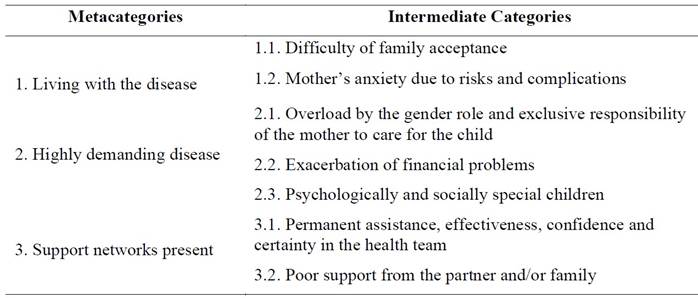
Results: The meta categories “living the disease”, “highly demanding disease” and “support networks present” emerged.
Discussion: Coping with the disease is threatened by physical fatigue, uncertainty, and alteration of support within and outside the family structure. A similar result is found in the base study. The management of the child is carried out by the mother in almost all the activities associated with its treatment.
Conclusions: Women provide care invisibly and continuously. It is necessary to make it visible as a social problem, to establish policies with a gender perspective that determine corrections of inequities that cultural stereotypes provide, as well as to make visible the need for greater nursing intervention as support for informal care.
Keywords:
child care; chronic kidney failure; parents; gender identity