Family Support in the Neonatal ICU: Significance from the Perspective of Mothers and Nurses
Abstract:
Introduction: The hospitalization of a newborn in the Neonatal Intensive Care Unit (NICU) is a stressful experience for families. Nurses play a central role in this scenario in mediating between technical care and the needs of family members
Objective: To describe the meanings attributed to welcoming families in the NICU from the perspective of mothers and nurses
Methodology: This is a descriptive study with a qualitative approach, grounded in the theoretical framework of Symbolic Interactionism. It was conducted with 9 mothers of newborns hospitalized in the NICU of a public teaching hospital in Brasília, DF, and with 5 nurses working in the unit. Data collection took place from February to May 2022, using in-depth open-ended interviews
Results: Mothers and nurses construct the meaning of care based on their lived experiences. The core of care for mothers lies in alleviating suffering, interpersonal sensitivity, and practical support. Nurses define care from a technical, organizational, and philosophical perspective, linking it to family-centered care, humanization, and the development of parental autonomy
Conclusion: Care in the NICU cannot be reduced to institutional protocols; it requires flexibility and sensitivity and is configured as a continuous interactive process between mothers, family members, and healthcare professionals
Keywords:
family; neonatal intensive care unit; nurses; mothers; family nursing
Resumo:
Introdução: A hospitalização do recém-nascido na Unidade de Terapia Intensiva Neonatal (UTIN) é uma experiência desgastante para as famílias. Nesse cenário, o enfermeiro é central na mediação entre o cuidado técnico e as necessidades dos familiares
Objetivo: Descrever os significados atribuídos ao acolhimento da família na UTIN, na perspectiva de mães e enfermeiras
Metodologia: Estudo descritivo, de abordagem qualitativa, sob o referencial teórico do interacionismo simbólico. Desenvolvido com 9 mães de neonatos hospitalizados em UTIN de uma instituição pública, de ensino, de Brasília-DF, e com 5 enfermeiras atuantes na unidade. Coleta de dados ocorreu no período de fevereiro a maio de 2022, por meio da entrevista aberta em profundidade
Resultados: As mães e as enfermeiras constroem o significado do acolhimento a partir da experiencia vivida. Para as mães a centralidade do acolhimento está no alívio do sofrimento, na sensibilidade interpessoal e no suporte prático. As enfermeiras definem o acolhimento a partir de uma perspectiva técnica, organizacional e filosófica, articulando-o ao cuidado centrado na família, a humanização e ao desenvolvimento da autonomia parental
Conclusão: O acolhimento na UTIN não pode se reduzir a protocolos institucionais, ele exige flexibilidade, sensibilidade e configura-se como um processo interacional contínuo entre mães, familiares e profissionais de saúde
Palavras-chave:
família; unidade de terapia intensiva neonatal; enfermeiros; mães; enfermagem familiar
Resumen:
Introducción: La hospitalización del recién nacido en la Unidad de Cuidados Intensivos Neonatales (UCIN) es una experiencia agotadora para las familias. En este contexto, el personal de enfermería desempeña un papel central en la mediación entre la atención técnica y las necesidades de los familiares
Objetivo: Describir los significados atribuidos a la acogida de la familia en la UCIN, desde la perspectiva de las madres y las enfermeras
Metodología: Estudio descriptivo, de enfoque cualitativo, bajo el marco teórico del interaccionismo simbólico. Realizado con 9 madres de neonatos hospitalizados en la UCIN de una institución pública de enseñanza de Brasilia (DF) y con 5 enfermeras que trabajan en la unidad. La recopilación de datos se llevó a cabo entre febrero y mayo de 2022, mediante entrevistas abiertas en profundidad
Resultados: Las madres y las enfermeras construyen el significado de la acogida a partir de la experiencia vivida. Para las madres, la esencia de la acogida radica en el alivio del sufrimiento, la sensibilidad interpersonal y el apoyo práctico. Las enfermeras definen la acogida desde una perspectiva técnica, organizativa y filosófica, articulándola con la atención centrada en la familia, la humanización y el desarrollo de la autonomía parental
Conclusión: La acogida en la UCIN no puede reducirse a protocolos institucionales, exige flexibilidad y sensibilidad, y se configura como un proceso interactivo continuo entre madres, familiares y profesionales de la salud
Palabras clave:
familia; unidad de cuidados intensivos neonatales; enfermeros; madres; enfermería familiar
Introduction
Hospitalization of a newborn in the Neonatal Intensive Care Unit (NICU) is an experience usually perceived as exhausting and stressful for parents and families, as they are immersed in worries, insecurities, anxiety, fears, and helplessness. They face and manage their child’s clinical fragility immersed in these feelings, within a highly technological environment and the unit’s rigid protocols. 1
In this context, the nurse, a professional of the NICU team, can assume a behavior of seeking and welcoming the needs of parents and family members, an aspect aligned with comprehensive and humanized care, 2,3 promoting family-centered care (FCC). FCC is a theoretical and philosophical perspective that recognizes the mutual influence of family members on each other, and the relevance of partnerships between professionals and the family in planning, providing, and evaluating healthcare. 4 FCC supports concepts such as unrestricted entry, respect, information in accessible language, choice, flexible care, autonomy of those involved, collaboration and support for families in different aspects, which is fundamental to nursing care. 5
Despite the recommendation to integrate the CCF into healthcare settings, including NICUs, its implementation in neonatal care remains gradual and uneven, resulting in a care environment that is not particularly sensitive or welcoming to families. This requires cultural and organizational changes that are not always firmly established, which limits family involvement and the transformation of the traditional care model. 6
FCC, especially in the aspect of welcoming in the NICU, is configured as an assistance and interactional challenge that involves family members and professionals, especially nurses, who longitudinally accompany the hospitalization experience. Despite being recognized as a central dimension of FCC, there are still gaps in understanding how this welcoming is meant and experienced by the different actors involved. In this context, contrasting the perspectives of mothers and nurses becomes essential, as it enables identifying convergences and dissonances between those who receive and those who offer care, contributing to qualifying practices, strengthening the relational dimension of FCC, and advancing the production of evidence applicable to the NICU. Welcoming is a fundamental relational dimension of FCC, involving meanings, interpretations, and behaviors in the NICU.
Given the above, this study addressed the following questions: What are the meanings and perceptions of mothers and nurses regarding welcoming the family in the neonatal intensive care unit? The objective was to describe the meanings attributed to welcoming the family in the NICU from the perspective of mothers and nurses.
Method
Study Design
This is a descriptive study with a qualitative approach developed under the theoretical framework of Symbolic Interactionism. (7,8 The qualitative approach is indicated for understanding healthcare, especially in the aspects of interactions, meanings, beliefs and perceptions (of users, professionals and managers). (9 In turn, the interactionist perspective focuses on the complexity and nature of interactions, on the dynamics of social activities between people, on the meaning of objects and events for people in the world in which they live, in the natural environments of their daily lives and in the actions they perform. (8
In this study, welcoming is understood as an ethical posture of listening, recognizing and responding to the needs of the family, a relational technology dynamized in the encounters focused on the care provided in healthcare.
The study conduct and writing of the report followed the guidelines of the Consolidated Criteria for Reporting Qualitative Research (COREQ) checklist, translated and validated version for Portuguese.(10
Study Location and Participants
The study was conducted with mothers of newborns hospitalized in the NICU of a public teaching institution located in Brasília, Federal District, and with the nurses working in that same unit.
The NICU included in the study has 10 beds, an average occupancy rate of 85%, and is a referral center for the care of high, medium, and low-risk newborns. According to the unit’s protocols, fathers have free access and are considered companions of the newborn. However, the unit does not have the structure for both to stay, as only the women have designated space in case of need for accommodation in the hospital, which determines the predominance of the mothers’ presence during hospitalization. Other family members are considered visitors, having daily access to the unit at pre-established times, with two visitors allowed to enter at a time and remain for up to 60 minutes. The nursing process is implemented, and the nurses perform care, management, educational, and research activities. The nursing team consists of two nurses and six nursing technicians per shift.
Family members were located and approached during the monitoring of their newborns’ hospitalization in the NICU, as we intended to provide a hands-on experience of support during the hospital stay. The nurses approached them during their work shift, and interviews were scheduled upon their acceptance and availability.
The inclusion criteria were: being a registered nurse, having provided care in the NICU for a period equal to or greater than six months, and having a specialization in Neonatology; for family members, being a significant family member, caregiver, guardian, or having an affective bond with the neonate and experiencing the neonate’s hospitalization in the NICU for a period greater than 48 hours, taking into consideration the initial impact of hospitalization and the need for acclimatization of mothers and family members. The exclusion criteria were: being a temporary or substitute nurse in the NICU services; for the family member, not possessing the cognitive and/or psychic conditions to participate in an interview. The sample size was defined by the criterion of theoretical saturation, with data collection ending when new interviews did not add relevant elements to the categories under construction. 7) The process was conducted reflectively by the researchers, with continuous data analysis and influences on interpretation. Nurses and mothers participated, with only mothers being included because there were no other family members present in the NICU at the time of data collection. Saturation was considered in accordance with the delimitation of the object of study, ensuring depth and focus in understanding the phenomenon under investigation.
Data Collection
Data collection was conducted from February to May 2022 through open-ended in-depth interviews, a data collection strategy designed to reach subjective, specific, and unique aspects of the socio-historical-cultural experiences of the participants. (11 Data collection for the mothers began with the question: “Tell me about your experience of having your child hospitalized in the NICU,” and subsequently, “Considering what you have told me, how do you understand the family being welcomed in the NICU?” Intermediate and complementary questions were introduced to broaden understanding, such as: “What did the professionals say and/or do to welcome you in the NICU?” Questions aimed at constructing the genogram were used in a complementary way with the aim of getting to know who the mothers were and their socio-family structure.
In turn, the following questions were adopted as triggers with the professionals: “I would like you to tell me about welcoming the family in the NICU,” “What does welcoming mean to you?” and “What do you do to welcome the family to the NICU?”. Similarly, other questions were presented in line with what was narrated in order to deeply understand what was presented.
The interviews were conducted in pairs by two authors of this study, and under the supervision of the research advisor, who has experience with qualitative methodologies and research with families. The researchers did not have a functional link with the service and had prior involvement in the NICU for teaching and research purposes. The interviews were conducted in the hospital in a private location in order to facilitate narrative and protect the confidentiality of the participants. They were audio-recorded and transcribed in full. The average duration was 25 minutes, with each of the participant groups, nurses and mothers.
The researchers’ observations, perceptions, and reflections were recorded in notes (researcher impressions) during the interview and after transcription. These records guided the data collection process, highlighting issues which needed further exploration and precautions to maintain focus on the narrative constructed by the participant and avoid preconceptions.
The participants in this study are identified by the letter M (mother) or N (nurse) followed by a number according to their inclusion order in the study to maintain anonymity.
Data Analysis
The data were analyzed using the thematic analysis method proposed by Minayo.12-14Thus, the analysis began with identifying patterns in the data, such as: recurring themes, central ideas or forms of expression; and then in a second moment interpreting the meanings underlying the themes found. Finally, the aim was to understand the welcoming process through various readings and reflective analysis of the narratives, followed by coding and categorizing the emerging themes. (12-14
The analytical process was developed by the first three authors of this article and discussed in periodic meetings with the other authors. All have experience in developing qualitative studies in pediatric and/or neonatal nursing and in family research.
Ethical Aspects
All ethical recommendations were respected, and the study was approved by the Ethics and Research Committee with Human Beings of the Faculty of Health Sciences of the University of Brasília, opinion 4.049.575, CAAE 26646819.7.0000.0030. All participants signed the Informed Consent Form.
The ethical commitment to the psycho-emotional well-being of the participants was assumed throughout the research process, and specific care was available at the study site. However, it should be noted that no situations occurred that required activating this service
Results . .
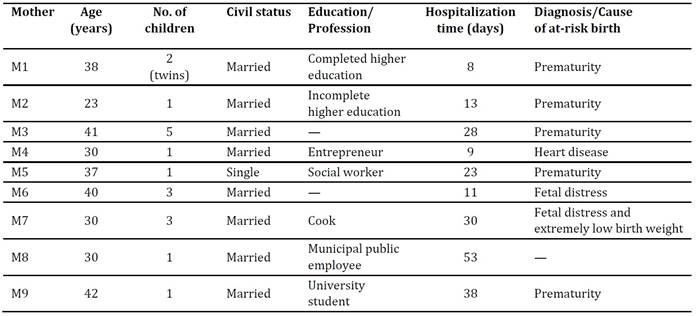
A total of nine mothers of newborns hospitalized in the NICU and five nurses from the neonatal intensive care team of that unit participated in the study. The mothers’ ages ranged from 23 to 42 years, the number of children ranged from one to five, and seven of them had stable relationships. Maternal education ranged from high school to higher education. The length of hospitalization ranged from 8 to 53 days. Regarding the health problems faced, we found that one had fertility problems, three had issues related to mental health, and one had hypertension. Most reported having support from their husband/partner and their mother (the child’s maternal grandmother). Aunts, mothers-in-law, sisters-in-law, and sisters also composed the support network.
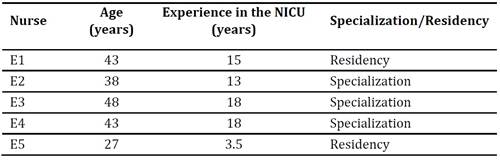
The nurses’ ages ranged from 27 to 48 years. Their length of experience in the NICU ranged from 3 to 18 years, and all had at least one specialization or residency in Neonatal Nursing.
The results are presented based on two categories representative of the meanings attributed by mothers and nurses to welcoming in the NICU: “Identification of and responses to diversities and needs” and “Inflexibility and non-recognition of demands”. These thematic cores encompass relational aspects that both facilitate and hinder reception.
Identification of and Responses to Diversities and Needs
Integrating nurses’ and mothers’ perspectives on welcoming the family during the newborn’s hospitalization in the NICU reveals convergences of meanings. Both nurses and mothers define welcoming as a continuous relational process, characterized by the collaborative construction of authentic care and expressed in identifying and providing responses to maternal and family diversities and needs.
From the maternal perspective, the relationship established with professionals is structuring and qualifying for the welcoming process. Identifying professional efforts to welcome them and their families, as well as sensitivity to the various needs which arise throughout the stay in the NICU, are within the scope of welcoming. In this context, mothers register empathy and an essentiality of the professional recognizing the complexity and dynamism of the stay in a NICU given the simultaneity of challenges, such as experiencing the postpartum period associated with separation and hospitalization of the child in the NICU.
Acceptance arises for mothers when the professional’s behavior demonstrates efforts and intentions to respond to the particularities of the experience of the woman and her family. Acceptance for mothers signifies a professional duty, an act which is integral to the human dimension and empathy, as we can observe in the mothers’ statements below:
First, put yourself in the other person’s shoes and treat them appropriately, because the way you approach the person in my situation is crucial, right? (M2)
It’s about receptiveness, right… welcoming you, welcoming is the way you are received. (…) First and foremost, being human, having humanity is essential, empathy, putting yourself in the place of a mother who is in the postpartum period, who has just had a baby. So empathy and humanity, which is the first thing in the world, indispensable. (M5) Welcoming is doing the right thing, doing what you committed to doing, that’s welcoming me. (M9)
The mothers emphasize that the professional’s support beyond the emotional dimension involves instrumental aspects and practical support in managing clinical and documentary situations inherent to neonatal care, which can be evidenced in the statement by M7:
Solutions to current problems. For example, if I need the newborn screening test report, someone helping me get the report has already been a form of support, it has already taken a weight off my shoulders. So, helping me deal with the situations I’m going through is already considered support. (M7)
Promoting understanding of the child’s evolving situation and fostering a relationship with the child are integral parts of providing care. In this regard, mothers value professionals offering knowledge and their support given to developing skills for childcare. The professional’s sensitivity is evident in: proposing and mediating conversations about topics related to the experience of being a mother in the NICU; acts and words of optimism; being patient, available, and affectionate; and continuously providing information in clear and simple language, without technical terms. The way of conversing and calming, including the choice of words, is part of providing care. The team’s sensitivity to emotional and psychological needs was highlighted in the welcoming process. The mothers’ statements below express these feelings:
They (the professionals) always taught me how to handle it, you know… even today, since she’s about to be discharged, they put a little bow on her, bathed her, because they thought she was going to leave today. (…) And the doctors are always giving updates, you know… because I think you need feedback from the doctor, someone who says something, even if it’s good or bad, they’ve always been very patient. (M1)
They came and explained the whole procedure to me, what they were doing with her. (M2) They said she was going to be okay, she was going to get better, and so, both night and day, they were always giving me strength, you know… (…) The social worker came, talked to me, gave me a lot of attention. (…) calms me down, gives me simple information about the baby, you know, how she’s progressing, they’ve been providing for me. (M6)
They noticed when I was feeling down, they talked to me in a way that didn’t use so many technical terms, they explained everything very clearly (…) they were very caring, polite, and treated my daughter so well (…) they see that we need individual attention, they always say things like, ‘Let’s talk,’ they take us to the garden, we talk to both the psychologist and the occupational therapist. (M8)
The nurses link the welcoming process to the philosophy of family-centered care, highlighting the importance of the presence, contact, and participation of parents in the environment and care of the newborn, considering the diversity of families and their needs, as demonstrated in the following statements:
Welcoming is about making the father, the mother, the family feel comfortable, because here we have many family configurations. Sometimes there’s a grandmother with the mother, sometimes there’s only a mother, like we had now in the ICU with an adoptive mother who is in the adoption process. So today we have different family configurations. For me, welcoming is about making the family, whatever it may be, feel comfortable and including them in the care process. It’s about showing, talking, and having that feedback with the family. (N5)
Since welcoming is a form of treatment and care, it’s about having help, being heard and responded to, being seen. (N3) This welcoming is about meeting the needs of each one, considering that each one is different from the other and therefore each one has their own needs, even though they are hospitalized in the same sector. Each family there, of each baby as well, will have a specific demand. (N4)
It is reinforced in the nurses’ statements that the professional’s competence for this welcoming is “honed over time and through the nurse’s experiences” (N3), derived from “continuous learning” (N3) which involves the act of caring.
The nurses conceive welcoming as a responsibility that begins with the reception and admission of the neonate and family to the unit, offering information regarding the rules, routine, and functioning of the space in order to promote their familiarization with the NICU. Informing parents about the unit’s routine is considered crucial, which determines that they do so in stages and with reinforcement, as they recognize that it is a moment of emotional instability in which it is not possible to absorb all the information. This means that parents and family members need to know their rights in the unit, as shown in the following statements:
We welcome the parents right after the baby is admitted, talk about the unit, the neonatal ICU, the routine procedures, explain to the father and mother about visits, that the father and mother will be considered visitors, they have the right to access and stay in the NICU whenever they wish, 24 hours a day; regarding the mother, if she wishes, she has the nursing mother’s ward, where she can stay here in the hospital, with the right to food (…) in this delicate moment, we try to welcome these parents, welcome this baby, we try very hard to work with the issue of humanization in care here in the ICU. (N2)
For every mother and every father who arrives it is a shocking scene, so on the first day, no matter how much information we try to give them, they absorb very little, because on the first day it’s so shocking that sometimes they say they understand, but if you ask them the next day what was said, they won’t be able to tell you even a third of what you said, because they haven’t absorbed it due to the immense emotional instability they experience in that first moment. So, in addition to this initial support, I always try to be close, encouraging the mother’s presence and respecting when she can’t be there, because it’s common for people to judge. (N4)
The nurses believe that welcoming today occurs through professional behavior of being present, attentive, sensitive, and empathetically available to help, inform, listen to, and respond to mothers and family members’ needs. Welcoming means “making the family feel more familiar with the NICU, with the team, with the care, with the routine” (N1). To this end, they highlight affection, education, and respect as being essential in the relationship with the mother and family.
The nurses highlight routine actions of teaching practices, supervising, and encouraging participation in the child’s care, such as skin-to-skin contact with the newborn, according to the neonate’s clinical stability. Furthermore, they consider welcoming actions to include: talking about the importance of the parents’/family’s presence for the newborn, about the benefits of hearing the parents’ voice and feeling their touch. However, the father’s presence in the NICU is not a prevalent reality, and the nurses question the reasons for his absence.
We in nursing talk about the importance of the mother’s and father’s presence, because sometimes they say, ‘Oh, I can’t stay’, and we reinforce that their presence is very important. Look how much calmer the baby is when you’re there; your touch, your hand touching the baby, everything is important. (N1)
Furthermore, welcoming involves introducing and building the autonomy of mothers in childcare. Nurses identify benefits “in the recovery of the newborn who has the constant presence of parents” (N1). They describe the satisfaction of realizing that mothers, fathers, and other family members gain confidence when nurses are able to convey security and affection in the work they perform.
We try to involve the mother in the care to demonstrate to her, to make her feel confident and that she is the protagonist in the care of this baby, when we feel she is secure in the care, in the feeding of a diet, when the baby is clinically more stable, a diaper change, if she so desires, and always encouraging the kangaroo position. Today we talk a lot with the mother, I believe that this is also a form of support. (N2)
The other day, the father of a baby said he was afraid to hold him because the baby is very small, low weight, premature, is recovering now, so the father said, ‘no, I’ll break him’, we said, ‘you have to be brave, it’s your son, he’s going home with you, you’re going to have to hold him, let’s do it here, here you have a lot of professionals, we’re going to help you’; I managed to put the baby in his arms and he fell in love. So, I think that when we have the opportunity for the father to be present, we promote inclusion. At least I really like to include him, because you have to think that when the baby goes home, that father has to be a support network for that mother. So if we can encourage that from now on, it makes things easier for her, right? It will be someone else to help, because we know it’s not easy. (N4)
Trust is also a valuable issue for nurses. To that end, they believe it is necessary to recognize the diversity of newborns and families and their expressions. Thus, the professionals value dialogue, honesty, effective communication that is sincere and timely, getting to know the family, and the signals and feedback they receive in interactions. They recognize that judging families is not the place of any professional, as this is an action contrary to welcoming.
Institutional welcoming is manifested in the way the environment and rules are organized to ensure the presence of mothers and families. There is emphasis on the “nursing mother” accommodation in the studied unit, a space reserved for rest, hygiene, and meals for mothers who wish to remain in the hospital 24 hours a day.
I think that humanization, attention to the patient, I think it depends, it’s not that it depends on each institution, I think we all say the same thing, which is the look, the touch, giving as much attention as possible to these family members who are sensitive at that moment, but I think that today we have a lot of support from the multidisciplinary team, so that already contributes. Sometimes I used to make an old decision, like we authorize the children, the siblings of our patients to enter, so there’s welcoming, there’s a conversation beforehand, so we get to know the child. In the past, the nurse did this, we didn’t have support from psychology, we didn’t have support from social services, and today I have the support of these professionals, there is more personalized, more specific care. (N3)
Mothers and nurses construct the meaning of welcoming based on lived experience. The central theme of welcoming for mothers lies in alleviating suffering, interpersonal sensitivity, and practical support. In turn, nurses define welcoming from a technical, organizational, and philosophical perspective, linking it to family-centered care, humanization, and the development of parental autonomy.
Inflexibility and Non-Recognition of Demands
Inflexibility and a lack of recognizing demands are elements of the relationship developed between nurses and mothers, perceived by both as obstacles to acceptance.
Mothers interpret and signify the lack of acceptance as a relational gap or error and a violation of rights. From the maternal perspective, the lack of acceptance was related to qualified professionals who were cold, lacking empathy, and had communication weaknesses. As a consequence, these professionals do not guarantee the family’s right to information, disregard the need for comfort, and are insufficient in supporting the development of the family’s technical skills in childcare. Negative experiences reverberate in feelings of helplessness and indignation, as evidenced in the excerpts below:
Some of the technical nurses, there are only a few who don’t fall short, because the rest are very cold, we feel lost. (…) You know, there’s no welcoming atmosphere, they don’t receive you well. There are a few, but many don’t ask your name, how you are (…) There are things that aren’t within the technician’s scope, but there are things that the technician can answer, and they are very cold, they turn their backs on us. (…) I didn’t have the information that should have been passed on to the mother, because it’s our right to know everything. (M5)
It’s difficult to see our daughter needing support that we can’t give. At first, we idealize breastfeeding, but it’s not how we imagine. (…) even the doctors don’t give the proper attention and help regarding the milk bank, not all of them help with expressing milk. So I need help to express, to extract the milk. But not all of them understand that I need help. (M2)
The only thing we’ve already gone after them for, but we don’t have any rights to, is food. Because, like, I breastfeed at all times, so the snacks aren’t adequate, the food isn’t either, so sometimes I feel sick, but it’s because of the lack of food. (M6)
Thus, the mothers realized that the obstacles and disadvantages in their relationships with significant people, along with the barriers preventing family members from getting to know the child, worked against the principle of acceptance. In these cases, such professional behaviors acted as barriers and impediments to the participation of other family members, such as visits from grandparents, as reported in the mothers’ statements below:
What upset me was that I know that due to COVID, (...), she couldn’t come in to see them, not at all... so she couldn’t take pictures, and then I looked for the psychologist and couldn’t find her, because it could only be done with the psychologist’s authorization... another thing is a video call, so everyone is without seeing my children for a long time. And my mother is going crazy. (M1)
In the case of a newborn, I think there should be an authorization form that allows parents to use their children’s images, because after all, people have no idea what’s happening, those at home don’t know what you’re going through here, and if you had the option to share, I’m not even talking about me arriving and grabbing my dirty cell phone and going into the ICU, but having a professional in the ICU who would be responsible for bringing and making the connection between the patient who is there and the one at home so that they understand, because people can’t understand what the child is going through.… (M7)
Mothers relate accommodation and transportation needs to their perception of being welcomed. They describe inadequacies in accommodation in terms of hygiene and suitability for their postpartum condition. Furthermore, issues related to transportation between the hospital and home are compounded by financial concerns and weaknesses in their social support network. There are significant impacts on maternal comfort, sleep, and rest, as reported in the following statements:
There are days when the room isn’t even cleaned. I don’t think that’s the problem, because the beds are bunk beds... how am I supposed to sleep? I’m still full of stitches. I had a C-section, I have a lot of stitches on my stomach. How am I supposed to get into a bunk bed? It’s impossible. I think this is a serious problem. (M1)
And lack of information... for those of us who live in (name of satellite city), they should be more communicative with the parents, because I can come, but there are many parents who can’t, who don’t have the means, gas for the car, and so they leave much to be desired in terms of information. (M4)
In the beginning it was quite distressing, you know, difficult... for me every moment was almost deadly, not knowing, you’re stuck without knowing... ask the doctor, wait for the doctor, ask the nurse. (...) I’m from Minas Gerais, so it’s unfeasible because only the father and mother can come. His father is in Minas Gerais, and I was having a lot of trouble calling because they can’t give information over the phone, but I got the information because I said he was hospitalized and I needed news about him. (M5)
So I see that there’s a lack of interest, a lack of willingness to do things, you know. So it leaves much to be desired, very much so. I’m being very honest. I’m going to complain to the public prosecutor’s office. Not about the employees, because sometimes we employees depend on the team that manages us. (M9)
Nurses interpret and understand the limits or obstacles to welcoming as conditioned by clinical, normative, and structural factors, especially the severity of the newborn’s condition and institutional restrictions.
In addition to relational difficulties, nurses identify that the more serious and threatening the newborn’s clinical condition, the more challenging it is to welcome the family. Among the aspects related to this is the fact that many times these newborns arrive unaccompanied by their parents due to the mother’s condition after childbirth; other times, the team, due to the newborn’s condition, does not authorize entry; and there is also the prescription of minimal handling. These elements affect the family’s emotional state and interfere with information provision, leading to a dialogue which focuses on talking about the newborn’s clinical condition.
Another point perceived by nurses as fragile in terms of welcoming refers to the consideration of other family members, including the father. This was exacerbated by the COVID-19 pandemic, as grandparents and other significant family members were prohibited from attending the NICU, and activities involving family members, such as support groups and discussion circles, were interrupted.
Missing extra activities in the routine with the mothers (for relaxation) (...), a crochet activity, anything different, so they can have a moment different from this routine. We’ve already had these cutting and sewing groups... in some situations they had the skill to sew, there were mothers who made clothes for the baby in these groups, and I think that’s very beneficial, very valuable and very positive for them. (N2)
We can’t let the grandmother in, we have this impasse because of the pandemic and sometimes the mother doesn’t have a partner and the person by her side is either the grandmother or the aunt, so we’re a little restricted in that sense, I think that’s very bad, because we know how difficult it is, there are also many cases, so she is unable to see and there’s no one, and authorization has to come from the head, authorizing this mother or this aunt to enter to be able to pass on all the information to the mother regarding the baby. (N1)
The father is a less present figure than the mother in the NICU (…) Ultimately, we provide less support to the fathers because they are less present, even though we encourage and ask them. Often, either the mother is single or is no longer with her partner; we see this frequently. Or they say they have other children, and the father is with the other children, so the fathers’ participation is much lower, also because the ward we have here in the hospital for monitoring is for mothers, the nursing mother ward. Sometimes there would even be fathers who could be here, but we wouldn’t be able to accommodate them today. (N4)
From the perspective of both mothers and nurses, there is recognition that the pandemic, regulations, and infrastructure negatively impact the care process. However, there are differences in how this obstacle is experienced and understood: for mothers, it occurs in the concrete context of interaction; while for nurses, it is contextualized within the organizational and clinical framework.
Discussion
In light of Symbolic Interactionism, the welcoming process in the NICU emerges for mothers as a relational process of meaning-making, in which daily interactions with the staff give meaning to the hospitalization experience. More than the technical dimension, it is the form of reception, the quality of communication, and the sensitivity to suffering which guide how these women interpret their place in the NICU, sometimes as legitimate participants in care, sometimes as peripheral figures. Thus, the bond, trust, and reduced anxiety do not solely derive from interventions, but from the interpretation that mothers make of professional attitudes; in turn, their absence produces meanings of exclusion and weakens the experience of motherhood.
From the nurses’ perspective, welcoming is also configured as a practice mediated by meanings, anchored in humanization and FCC, and operationalized in interactions from admission onwards. Their actions, such as informing, including, and promoting autonomy, not only reflect protocols, but interpretations of what it means to welcome in a vulnerable context. In this sense, skills such as empathy, listening, and presence qualify the interaction as a symbolic space for negotiating meanings. Therefore, the uniqueness of the findings lies in the evidence that welcoming is not reduced to established practices, but is built in the interpretative dynamics between mothers and nurses, and may generate convergences or tensions according to the meanings attributed by each group.
This set of experiences directly dialogues with the principles of FCC, a care model which proposes the active participation of family members in planning and care decisions, respecting their needs, values, and preferences. By considering the family as an inseparable part of the therapeutic process, FCC contributes to reducing the impacts of hospitalization, strengthening parental bonds, and promoting the maternal experience in a context marked by vulnerability. (15-18 In this sense, welcoming is realized through informational, interactional, emotional, and practical support, not only constituting itself as a care strategy, but also as an ethical and moral practice. (19,20
It is evident that the meanings of welcoming are constructed in the daily interactions between professionals and family members, thus articulating with the assumptions of Symbolic Interactionism. It assumes that interaction is dynamic and that all human beings are involved in an interpretative process in daily life. It further addresses how people create, interpret, endorse or alter meanings based on actions and interactions experienced in their daily lives. All people are considered active participants engaged in the world in which they live; it is through interaction with other people and with themselves that people give meaning to the world. 21
One of elements of this interactional process most valued by mothers is communication, recognized as a structuring axis of welcoming. Adequate information transmission contributes to coping with hospitalization, reduces anxiety and strengthens the bond of trust with the team. (22,23 In contrast, communication failures are configured as one of the main complaints, generating dissatisfaction, insecurity and compromising the quality of care. (24 The literature recommends that communication be continuous, culturally sensitive, and adapted to the clinical and emotional demands of each family. (25 Educational technologies, such as manuals and brochures, can enhance understanding of guidelines, but they do not replace close and empathetic dialogue, which is essential for building trust.
Professional empathy also occupies a central place in the interactional experience of welcoming. Studies indicate that nurses’ personal experiences, such as the hospitalization of a child or the experience of grief, favor developing greater sensitivity and availability to create bonds with families, strengthening practices of active listening, clear guidance, and emotional support that have a positive impact even after hospital discharge. (26,27 In this sense, welcoming goes beyond the technical dimension and materializes in ethical and moral attitudes that recognize families in their uniqueness and legitimize their presence as an integral part of care.
Despite these advances, reports of not feeling welcomed persist, manifested by an absence of listening, exclusion of family members from decisions and care, and limited provision of information. Such experiences reveal the persistence of paternalistic and prescriptive practices, in which professionals assume the leading role to the detriment of family participation. (28,29 The literature shows that the difficulties in implementing FCC are not limited to the relational dimension, but also reflect institutional barriers, such as work overload, lack of adequate infrastructure, reduced teams, and insufficient institutional support, which limit the capacity to fully welcome. (28,30
Another determining factor is the physical structure of the NICU, which can either promote or restrict the welcoming experience. Shared environments (common in many services) limit privacy and the presence of the family with the neonate, while the adoption of single-family rooms proves to be more favorable to psychological well-being, closeness between parents and children, and strengthening parental autonomy. (31 In addition, financial and logistical difficulties associated with prolonged hospitalization increase maternal vulnerability, reinforcing the need for institutional support and welcoming policies.
The conditions imposed by the COVID-19 pandemic exacerbated these fragilities. Restrictions on visits and communication mediated by telephone or virtual resources reduced the presence of the family in the NICU, weakened the bond with the children, and compromised the exercise of mothering, demonstrating the limitations of alternative remote care strategies. (32,33 This scenario even more forcefully highlighted the importance of physical presence and close contact between parents and children in the welcoming process.
Despite the challenges, the literature shows that welcoming practices based on active listening, emotional support, and the inclusion of parents in care produce positive impacts, encouraging maternal engagement, understanding of the care provided, and adherence to treatment. (3,34,35 The nurse plays a strategic role as a mediator between clinical demands and the emotional needs of the family by integrating technical and affective dimensions, contributing to a more humanized and shared experience.
The findings of this study show that welcoming in the NICU is configured as an interactional practice traversed by tensions between the FCC paradigm and the institutional barriers that limit its full effectiveness. Although the literature points to unequivocal benefits of family involvement, its consolidation not only depends on the ethical commitment and sensitivity of professionals, but also on investments in infrastructure and institutional policies which recognize the family as a partner and protagonist in neonatal care. Although recent literature recommends the family as a care partner, in practice welcoming is still affected by restrictive policies, including persistent paternalistic practices, in which health professionals make decisions on behalf of families with minimal or no input from them, limiting family involvement in care. (28
Much of the research shows that institutional rigidity still defines how families are received and integrated into the Neonatal ICU. A study by Feeley et al. 29 identified that neonatal intensive care areas have strict patient safety policies and infection control measures that can affect parental presence and hinder establishment of a welcoming environment.
However, it is observed that care is still prescriptive and rigid. Living care must be built on interaction, and welcoming involves flexible, innovative, creative, and individualized attitudes for each neonate and their family.
Final Considerations
This study enabled identifying the meanings of welcoming attributed by mothers of at-risk newborns and by nurses during hospitalization in the NICU. These meanings reveal perceptions of this interactional process that, while complementing each other, also contrast when analyzed from the two perspectives. Convergences are evident regarding the concept of welcoming and differences in how it is experienced and signified; it occurs in the concrete context of the interaction for mothers, while for nurses it occurs at the organizational and clinical level.
The articulation of these views shows that welcoming in the NICU cannot be reduced to institutional protocols or pre-established routines. On the contrary, it requires flexibility, sensitivity, and co-responsibility, configuring itself as an interactional process that integrates mothers, family members, and health professionals. Realizing truly welcoming care demands aligning maternal expectations and professional practices, overcoming communication barriers, and establishing real spaces for active and autonomous family participation in decision-making about care.
Thus, the results of this study reaffirm the centrality of welcoming in the neonatal hospitalization experience for both mothers and newborns, while also highlighting gaps that need to be addressed. Recognizing these weaknesses and investing in humanized practices guided by family-centered care with the development of communication and empathy skills, as well as improvements in organizational conditions which favor the presence and participation of mothers constitutes an essential path to strengthening bonds, giving new meaning to the experience of hospitalization, and in turn promoting more sensitive, comprehensive, and dignified care.
Study Limitations
The study’s limitations include the sample characteristics and the study site. The study was conducted in a single service, and the data reflect this specific care reality and a small sample size, obtained through theoretical saturation, which may not be the reality for other services and participants. Therefore, studies in broader contexts, across multiple services, and exploring diverse services are recommended. It should also be noted that data collection took place during the COVID-19 pandemic, and the restrictive measures imposed during this period may have influenced the feelings and perceptions of care experienced by mothers and nurses.
Implications for Practice and Future Research
The findings broaden the disciplinary knowledge of nursing by clarifying how the meanings and actions of family support in the NICU are constructed from the perspectives of mothers and nurses. In clinical practice, they indicate the need to strengthen active listening, honest communication, interaction, and building bonds with families. For care management, they highlight the importance of organizing care processes that support family-centered care. In the academic and nursing education context, they reinforce incorporating relational competencies and family support in preparing professionals, as well as research focused on developing guiding models for care and implementing interventions in family support, recognizing the vulnerabilities experienced by the family in facing high-risk births and hospitalization in the NICU.
References
-
1. Brito TC de, Motta ALC, Lima CP de, Lemos LL, Silva M de C, Borges MVA, Pinheiro BBFM. O acolhimento de enfermagem aos pais frente a hospitalização de neonatos em unidade de terapia intensiva. Rev Contemp (Internet). 2024 (citado 2025 Jun 10); 4(9). doi: 10.56083/RCV4N9-051
» https://doi.org/10.56083/RCV4N9-051 -
2. Silva SRP, Alencar GT de, Sousa Lima HL, Santos JB dos, Silva Lima VM da, Dias Viana AM. Assistência de enfermagem na UTI neonatal: dificuldades enfrentadas pelos enfermeiros e prejuízos causados aos recém-nascidos. Braz J Hea Rev (Internet). 2020 (citado 2025 Out 9);3(5):11817-11826. doi: 10.34119/bjhrv3n5-039
» https://doi.org/10.34119/bjhrv3n5-039 -
3. Leite PIAG, Pereira FG. Humanização da assistência de enfermagem em unidade de terapia intensiva neonatal. Rev Enferm Aten Saúde (Internet). 2020 (citado 2025 Jun 10);9(1):90-102. doi: 10.18554/reas.v9i1.3649
» https://doi.org/10.18554/reas.v9i1.3649 -
4. Institute for Patient and Family Centered Care (IPFCC). Patient- and family-centered care (Internet). Bethesda: Institute for Patient and Family Centered Care; 2022 (citado 2025 Jun 10). Disponível em: Disponível em: http://www.ipfcc.org/about/pfcc.html
» http://www.ipfcc.org/about/pfcc.html -
5. Dalfior CS, Ogradowski KRP, Marchiorato AAL, Hack NMRAS. O cuidado centrado na família no contexto da unidade de terapia intensiva neonatal. SHS (Internet). 2022 (citado 2025 Out 9);3(1):369-80. doi: 10.54022/shsv3n1-033
» https://doi.org/10.54022/shsv3n1-033 -
6. Franck LS, O’Brien K. The evolution of family-centered care: from supporting parent-delivered interventions to a model of family integrated care. Birth Defects Res (Internet). 2019 (citado 2025 Out 9);111(15):1044-59. doi: 10.1002/bdr2.1521
» https://doi.org/10.1002/bdr2.1521 - 7. Blumer H. Symbolic interactionism: perspective and method. Englewood Cliffs: Prentice Hall; 1969.
- 8. Charon JM. Symbolic interactionism. an introduction, an interpretation, an integration. 10a ed. New Jersey: Prentice Hall; 2010.
-
9. Minayo MCS, Guerriero ICZ. Reflexividade como éthos da pesquisa qualitativa. Cien Saude Colet. 2014;19(4):1103-1112. doi: 10.1590/1413-81232014194.18912013
» 10.1590/1413-81232014194.18912013 -
10. Souza VRS, Marziale MHP, Silva GTR, Nascimento PL. Translation and validation into Brazilian Portuguese and assessment of the COREQ checklist. Acta Paul Enferm (Internet). 2021 (citado 2021 Abr 08);34:eAPE02631. doi: doi: 10.37689/acta-ape/2021ao02631
» 10.37689/acta-ape/2021ao02631 -
11. Muylaert CJ, Sarubbi Jr V, Gallo PR, Neto MLR, Reis AOA. Entrevistas narrativas: um importante recurso em pesquisa qualitativa. Rev Esc Enferm USP (Internet). 2014 (citado 2022 Set 28);48(spe2):184-189. doi: 10.1590/S0080-623420140000800027
» https://doi.org/10.1590/S0080-623420140000800027 -
12. Minayo MCS. Análise qualitativa: teoria, passos e fidedignidade. Ciênc Saúde Coletiva (Internet). 2012 (citado 2022 Set 28);17(3):621-626. doi: 10.1590/S1413-81232012000300007
» https://doi.org/10.1590/S1413-81232012000300007 - 13. Minayo MCS. O desafio do conhecimento: metodologia de pesquisa social (qualitativa) em saúde. 14a ed. São Paulo: Hucitec; 2014.
- 14. Minayo MCS, Deslandes SF, Gomes R. Pesquisa social: teoria, método e criatividade. 25a ed. Petrópolis: Vozes; 2024.
-
15. Loutfy A, Zoromba MA, Mohamed MA, El-Gazar HE, Andargeery SY, El-Monshed AH, et al. Family-centred care as a mediator in the relationship between parental nurse support and parental stress in neonatal intensive care units. BMC Nurs (Internet). 2024 (citado 2022 Set 28);23:572. doi: 10.1186/s12912-024-02258-4
» https://doi.org/10.1186/s12912-024-02258-4 -
16. Kokorelias KM, Gignac MAM, Naglie G, Cameron JI. Towards a universal model of family centered care: a scoping review. BMC Health Serv Res (Internet). 2019 (citado 2022 Set 28);19:564. doi: 10.1186/s12913-019-4394-5
» https://doi.org/10.1186/s12913-019-4394-5 -
17. Abukari AS, Schmollgruber S. Concepts of family-centered care at the neonatal and paediatric intensive care unit: a scoping review. J Pediatr Nurs. 2023;71:e1-a10. doi: 10.1016/j.pedn.2023.04.005
» https://doi.org/10.1016/j.pedn.2023.04.005 -
18. Kegler JJ, Neves ET, Lacerda MR, Hausen CF, Oliveira DC de, Barbosa SC. Estratégias para promoção do cuidado centrado na família em unidade de terapia intensiva neonatal. Text Context Enferm (Internet). 2024 (citado 2025 Set 20);33:e20230404. doi: doi: 10.1590/1980-265X-TCE-2023-0404pt
» 10.1590/1980-265X-TCE-2023-0404pt -
19. Adama EA, Adua E, Bayes S, Mörelius E. Support needs of parents in neonatal intensive care unit: an integrative review. J Clin Nurs (Internet). 2022 (citado 2025 Out 9);31(5-6):532-547. doi: 10.1111/jocn.15972
» https://doi.org/10.1111/jocn.15972 - 20. Prosdossimi C. Cuidado centrado na família em unidades de assistência neonatal de um hospital universitário: percepção da equipe multidisciplinar e da família (Dissertação). São Paulo: Escola de Enfermagem da Universidade de São Paulo; 2023.
- 21. MacDonald M, Schreiber RS. Constructing and deconstructing: grounded theory in a postmodern world. In: Schreiber RS, Stern PN, editores. Using grounded theory in nursing. New York: Springer; 2001, p. 35-54.
-
22. Rosa NRPS, Curado MAS, Henriques MAP. Percepção dos pais sobre as práticas de educação em saúde na Unidade Neonatal. Esc Anna Nery. 2022;26:e20210040. doi: 10.1590/2177-9465-EAN-2021-0040
» https://doi.org/10.1590/2177-9465-EAN-2021-0040 -
23. Balbino AC, Silva ANS, Queiroz MVO. O impacto das tecnologias educacionais no ensino de profissionais para o cuidado neonatal. Rev Cuidarte. 2020;11(2):e954. doi: 10.15649/cuidarte.954
» https://doi.org/10.15649/cuidarte.954 -
24. Guttmann KF, Raviv GN, Fortney CA, Ramirez M, Smith CB. Parent perspectives on communication quality in the neonatal intensive care unit. Adv Neonatal Care (Internet). 2024 (citado 2025 Out 9);24(4):382-388. doi: 10.1097/ANC.0000000000001178
» https://doi.org/10.1097/ANC.0000000000001178 -
25. Smith W. Concept analysis of family-centered care of hospitalized pediatric patients. J Pediatr Nurs. 2018;42:57-64. doi: 10.1016/j.pedn.2018.06.014
» https://doi.org/10.1016/j.pedn.2018.06.014 -
26. Mufato LF, Gaiva MAM. Motivos porque da empatia de enfermeiras com os familiares de recém-nascidos em UTI neonatal. Rev Gaúcha Enferm. 2020;41:e20190508. doi: 10.1590/1983-1447.2020.20190508
» https://doi.org/10.1590/1983-1447.2020.20190508 -
27. Boyamian TMDL, Mandetta MA, Silva SQ, Damaceno DF, Felipe TS, Balbino FS et al. Validação do Instrumento de Percepção do Acesso a Informação Compartilhada entre Equipe-Família em unidade neonatal. Rev Soc Bras Enferm Ped. 2021;21(2):150-158. doi: 10.31508/1676-379320210021
» https://doi.org/10.31508/1676-379320210021 -
28. Aljawad B, Miraj SA, Alameri F, Alzayer H. Family-centered care in neonatal and pediatric critical care units: a scoping review of interventions, barriers, and facilitators. BMC Pediatr (Internet). 2025 (citado 2025 Out 9);25:291. doi: 10.1186/s12887-025-05620-w
» https://doi.org/10.1186/s12887-025-05620-w -
29. Feeley N, Robins S, Genest C, Stremler R, Zelkowitz P, Charbonneau L. A comparative study of mothers of infants hospitalized in an open ward neonatal intensive care unit and a combined pod and single-family room design. BMC Pediatr. 2020;20(1):38. doi: 10.1186/s12887-020-1929-1
» https://doi.org/10.1186/s12887-020-1929-1 -
30. Fonseca SA, Silveira AO, Franzoi MAH, Motta E. Cuidado centrado na família na unidade de terapia intensiva neonatal (UTIN): experiências de enfermeiras. Enfermería Cuidados Humanizados. 2020 (citado 2022 Set 28);9(2):170-190. Disponível em: Disponível em: https://revistas.ucu.edu.uy/index.php/enfermeriacuidadoshumanizados/article/view/1908
» https://revistas.ucu.edu.uy/index.php/enfermeriacuidadoshumanizados/article/view/1908 -
31. Lee J. Neonatal family-centered care: evidence and practice models. Clin Exp Pediatr. 2024 (citado 2025 Set 20);67(4):171-177. doi: 10.3345/cep.2023.00367
» https://doi.org/10.3345/cep.2023.00367 -
32. Rocha ALS, Dittz ES. As repercussões no cotidiano de mães de bebês internados na unidade de terapia intensiva neonatal no isolamento social devido à covid-19. Cad Bras Ter Ocup (Internet). 2021 (citado 2025 Set 20);29:e2158. doi: 10.1590/2526-8910.ctoAO2158
» https://doi.org/10.1590/2526-8910.ctoAO2158 -
33. Reichert AP da S, Guedes ATA, Soares AR, Brito PKH, Bezerra IC da S, Silva LCL da, et al. Repercussões da pandemia da covid-19 no cuidado de lactentes nascidos prematuros. Rev Esc Enferm Anna Nery. 2022;26(spe):e20210179. doi: 10.1590/2177-9465-EAN-2021-0179
» https://doi.org/10.1590/2177-9465-EAN-2021-0179 -
34. Barison GB, Machado VS. O processo de humanização e o profissional de enfermagem em UTI Neonatal: revisão integrativa. Recima21 (Internet). 2022 (citado 2025 Set 20);3(9):E391985. doi: 10.47820/recima21.v3i9.1985
» https://doi.org/10.47820/recima21.v3i9.1985 -
35. Moura LP de, Moura GMSS de, Wegner W, Hoffmeister LV. Os pais como pilares para a segurança do paciente em unidade neonatal. Rev Enferm UERJ (Internet). 2020 (citado 2025 Set 20);28:E49564. doi: 10.12957/reuerj.2020.48578
» https://doi.org/10.12957/reuerj.2020.48578