Effectiveness of Negative Pressure Wound Therapy in Reducing Postoperative Complications: A Systematic Review
Introduction: Postoperative wound complications, such as infections, seromas, and dehiscence, represent a global health challenge. Negative Pressure Wound Therapy (NPWT) is an advanced technique that accelerates wound healing through the application of controlled subatmospheric pressure, reducing the risk of infection and promoting tissue regeneration
Objective: o analyze the effectiveness of NPWT in reducing postoperative complications and improving clinical outcomes in various surgical contexts
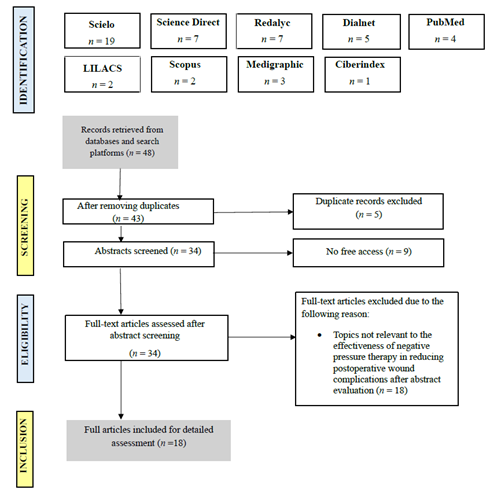
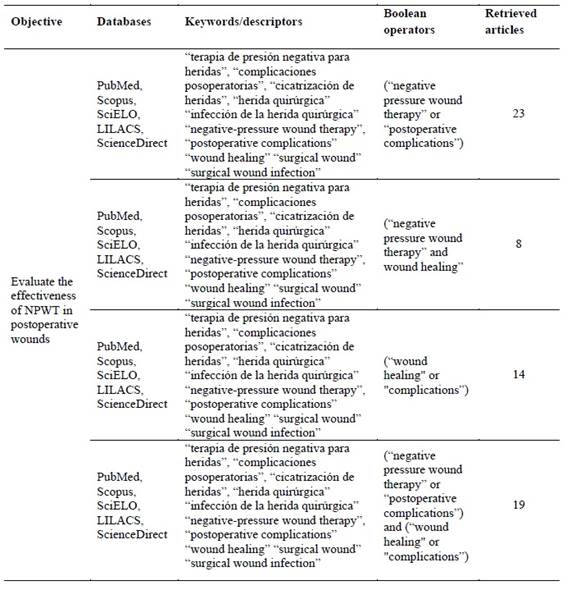
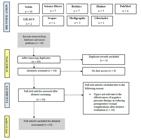
Methodology: A systematized review was conducted following the PRISMA guidelines. The following databases were consulted: PubMed, Scopus, Web of Science, SciELO, LILACS, Redalyc, Dialnet, ScienceDirect, Medigraphic and Ciberindex. DeCS and MeSH descriptors were used, including: “negative pressure wound therapy,” “wound healing,” “surgical wound infection,” and “postoperative complications,” along with their Spanish equivalents, combined using Boolean operators AND and OR. Studies published between 2017 and 2024 in English, Spanish, and Portuguese were included
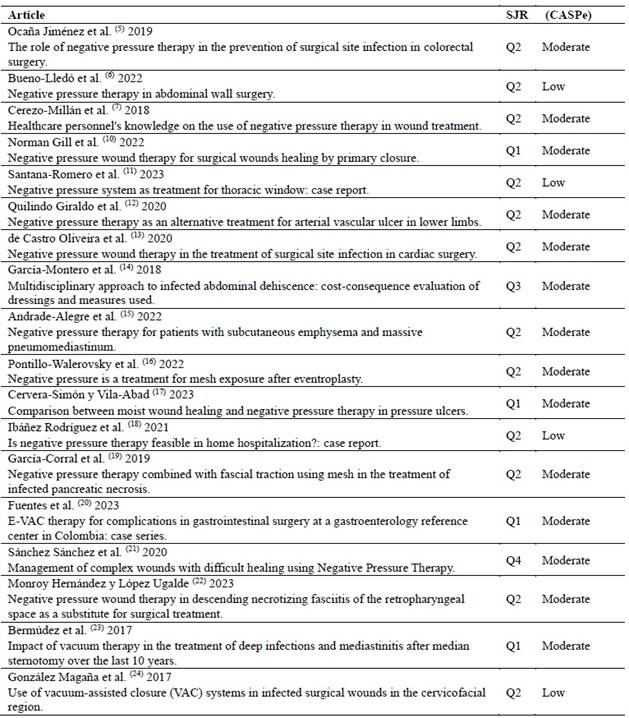
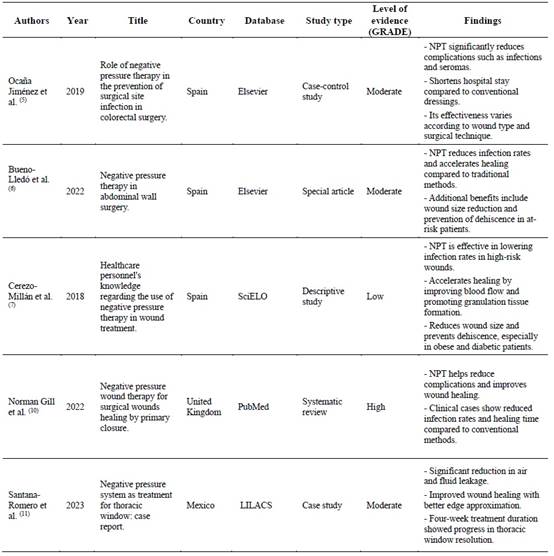
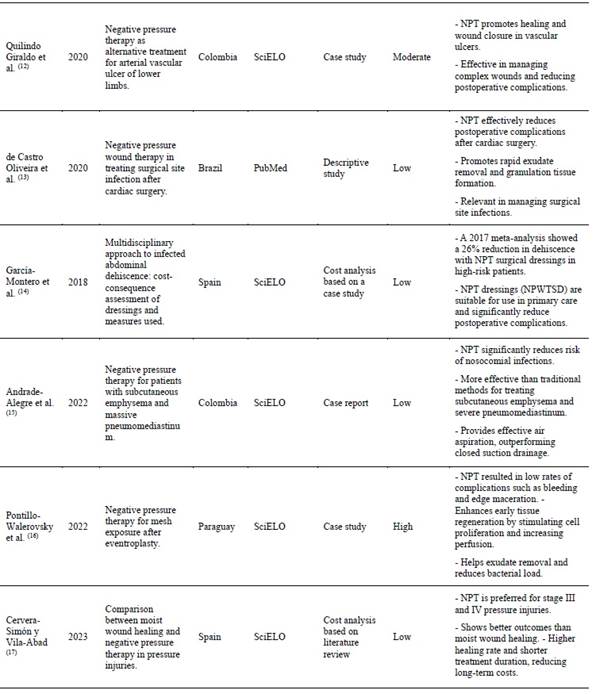
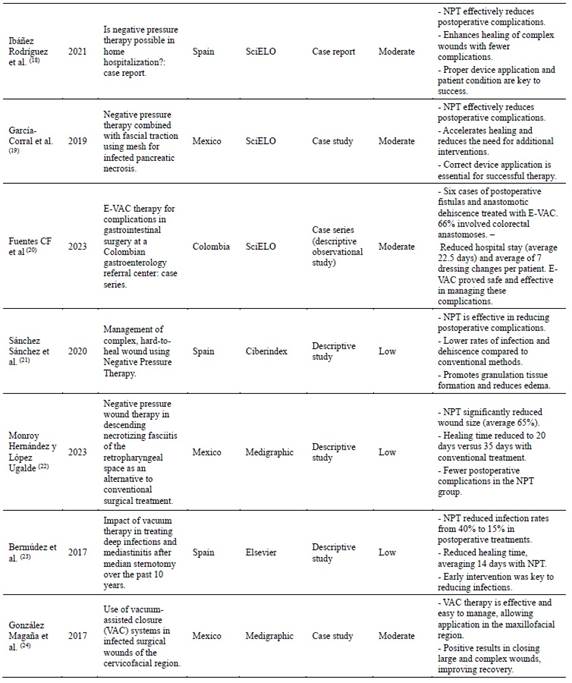
Results: The reviewed studies demonstrated that NPWT significantly reduces the incidence of infections (by approximately 35 % compared to conventional methods) and dehiscence (by 30-40 %). Key success factors include wound location, type of surgery, and individual patient characteristics such as obesity, diabetes, and advanced age
Conclusions: The evidence suggests that NPWT is an effective intervention for reducing postoperative complications -particularly infections and dehiscence- in patients with complex wounds and comorbidities. The studies report consistent improvements in healing time and clinical outcomes, especially in high-risk surgical procedures
Keywords:
negative pressure wound therapy; postoperative complications; wound healing; surgical wound; surgical wound infection
 Thumbnail