Effectiveness of Negative Pressure Wound Therapy in Reducing Postoperative Complications: A Systematic Review
Abstract:
Introduction: Postoperative wound complications, such as infections, seromas, and dehiscence, represent a global health challenge. Negative Pressure Wound Therapy (NPWT) is an advanced technique that accelerates wound healing through the application of controlled subatmospheric pressure, reducing the risk of infection and promoting tissue regeneration
Objective: o analyze the effectiveness of NPWT in reducing postoperative complications and improving clinical outcomes in various surgical contexts
Methodology: A systematized review was conducted following the PRISMA guidelines. The following databases were consulted: PubMed, Scopus, Web of Science, SciELO, LILACS, Redalyc, Dialnet, ScienceDirect, Medigraphic and Ciberindex. DeCS and MeSH descriptors were used, including: “negative pressure wound therapy,” “wound healing,” “surgical wound infection,” and “postoperative complications,” along with their Spanish equivalents, combined using Boolean operators AND and OR. Studies published between 2017 and 2024 in English, Spanish, and Portuguese were included
Results: The reviewed studies demonstrated that NPWT significantly reduces the incidence of infections (by approximately 35 % compared to conventional methods) and dehiscence (by 30-40 %). Key success factors include wound location, type of surgery, and individual patient characteristics such as obesity, diabetes, and advanced age
Conclusions: The evidence suggests that NPWT is an effective intervention for reducing postoperative complications -particularly infections and dehiscence- in patients with complex wounds and comorbidities. The studies report consistent improvements in healing time and clinical outcomes, especially in high-risk surgical procedures
Keywords:
negative pressure wound therapy; postoperative complications; wound healing; surgical wound; surgical wound infection
Resumen:
Introducción: Las complicaciones en heridas postquirúrgicas, como infecciones, seromas y dehiscencias, representan un desafío global en salud. La terapia de presión negativa (TPN) es una técnica avanzada que acelera la cicatrización mediante presión subatmosférica controlada, reduciendo el riesgo de infecciones y promoviendo la regeneración tisular
Objetivo: Profundizar en la eficacia de la TPN en la reducción de complicaciones posoperatorias y mejorar los resultados clínicos en diversos contextos quirúrgicos
Metodología: Se realizó una revisión sistemática basada en la guía PRISMA. Se consultaron las bases de datos PubMed, Scopus, Web of Science, SciELO, LILACS, Redalyc, Dialnet, ScienceDirect, Medigraphic y Ciberindex. Se utilizaron descriptores DeCS y MeSH como: “negative pressure wound therapy”, “wound healing”, “surgical wound infection”, “postoperative complications” y sus equivalentes en español, combinados mediante operadores booleanos AND y OR. Se incluyeron estudios publicados entre 2017 y 2024, en inglés, español y portugués
Resultados: Los artículos analizados evidenciaron que la TPN reduce significativamente la incidencia de infecciones (35 % en comparación con métodos convencionales) y dehiscencias (30-40 % menos). Los factores determinantes para el éxito de la TPN incluyen la localización, el tipo de cirugía y características individuales como obesidad, diabetes y edad avanzada
Conclusiones: La evidencia indica que la TPN es una intervención eficaz para reducir complicaciones posquirúrgicas, especialmente infecciones y dehiscencias, en pacientes con heridas complejas y comorbilidades. Los estudios muestran mejoras consistentes en los tiempos de cicatrización y en los desenlaces clínicos en cirugías de alto riesgo
Palabras clave:
terapia de presión negativa para heridas; complicaciones posoperatorias; cicatrización de heridas; herida quirúrgica; infección de la herida quirúrgica
Resumo:
Introdução: As complicações em feridas pós-operatórias, como infecções, seromas e deiscências, representam um desafio global em saúde. A terapia por pressão negativa (TPN) é uma técnica avançada que acelera a cicatrização por meio de pressão subatmosférica controlada, reduzindo o risco de infecções e promovendo a regeneração tecidual
Objetivo: Aprofundar na eficácia da TPN na redução de complicações pós-operatórias e melhorar os resultados clínicos em diversos contextos cirúrgicos
Metodologia: Foi realizada uma revisão sistematizada com base nas diretrizes do PRISMA. Foram consultadas as bases de dados: PubMed, Scopus, Web of Science, SciELO, LILACS, Redalyc, Dialnet, ScienceDirect, Medigraphic e Ciberindex. Utilizaram-se descritores DeCS e MeSH como: “negative pressure wound therapy”, “wound healing”, “surgical wound infection”, “postoperative complications” e seus equivalentes em espanhol, combinados por meio de operadores booleanos AND e OR. Foram incluídos estudos publicados entre 2017 e 2024, em inglês, espanhol e português
Resultados: Os artigos analisados evidenciaram que a TPN reduz significativamente a incidência de infecções (35% em comparação com métodos convencionais) e deiscências (30-40% a menos). Os fatores determinantes para o sucesso da TPN incluem localização, tipo de cirurgia e características individuais como obesidade, diabetes e idade avançada
Conclusões: As evidências indicam que a TPN é uma intervenção eficaz para reduzir complicações pós-operatórias, especialmente infecções e deiscências, em pacientes com feridas complexas e comorbidades. Os estudos mostram melhorias consistentes nos tempos de cicatrização e nos desfechos clínicos em cirurgias de alto risco
Palavras-chave:
terapia por pressão negativa para feridas; complicações pós-operatórias; cicatrização de feridas; ferida cirúrgica; infecção da ferida cirúrgica
Introduction
The incidence of postoperative wound complications is a global concern in the healthcare field. According to data from the World Health Organization (WHO), approximately 11 % of surgical procedures in developed countries result in surgical site infections (SSIs). 1 In Latin America, the prevalence of SSIs may be even higher, with reported rates reaching up to 11.2 % in some regions, particularly in low- and middle-income countries. 2 A quantitative observational study conducted in a hospital-clinic in Guayaquil, Ecuador, with a sample of 19 patients, identified the most frequent postoperative complications, among which surgical site infection (45 %) was the most common, followed by seromas (24.9 %), hematomas (15.6 %), and dehiscence (14.6 %). 3
Surgical wounds are controlled disruptions of the integrity of the skin and underlying tissues resulting from incisions made during surgical procedures. 3 Although these wounds are the result of precise and controlled actions, they are still exposed to postoperative complications such as SSIs, seromas, hematomas, and dehiscence, which can have significant clinical consequences, including prolonged hospital stays and the need for additional interventions. 4 The classification of surgical wounds is based on the degree of contamination, being categorized as clean, clean-contaminated, contaminated, and dirty. This classification influences the risk of complications and, consequently, the therapeutic approach required. 4,5
In this context, Negative Pressure Wound Therapy (NPWT) emerged as an advanced and effective alternative for managing surgical wounds. Introduced in 1997 by Drs. Argenta and Morykwas, 6 NPWT is based on the application of controlled subatmospheric pressure to accelerate wound healing. This approach promotes the removal of exudate, reduces edema, stimulates angiogenesis, and facilitates the formation of granulation tissue. 6 The NPWT system consists of a porous sponge, usually made of polyurethane, placed inside the wound cavity, covered with an occlusive dressing connected to a suction device. This creates an ideal environment for healing and reduces bacterial load. 5-7
NPWT was introduced as an alternative to conventional wound care methods such as wet-to-dry dressings and has proven effective in reducing postoperative complications. It promotes faster healing and improves clinical outcomes, as supported by randomized clinical trials, observational studies, and meta-analyses. 7 The benefits of NPWT have been documented in various types of surgical wounds, including abdominal, orthopedic, plastic, and reconstructive surgeries, as well as cesarean sections and gynecological procedures.
Considering the importance of minimizing postoperative complications and their impact on both patients and healthcare systems, this systematized review aimed to analyze the effectiveness of NPWT in reducing postoperative complications, with a focus on improving clinical outcomes across different surgical contexts.
Methodology
This study was based on a systematic review following the PRISMA (Preferred Reporting Items for Systematic Reviews and Meta-Analyses) guidelines. The research aimed to analyze the effectiveness of Negative Pressure Wound Therapy (NPWT) in reducing postoperative wound complications, structured under the PICOT format: In patients undergoing surgery, does the application of negative pressure wound therapy compared to conventional surgical wound management reduce postoperative complications, as reported in primary quantitative studies (descriptive, case-control), case reports, systematic reviews, and meta-analyses published between 2017 and 2024?
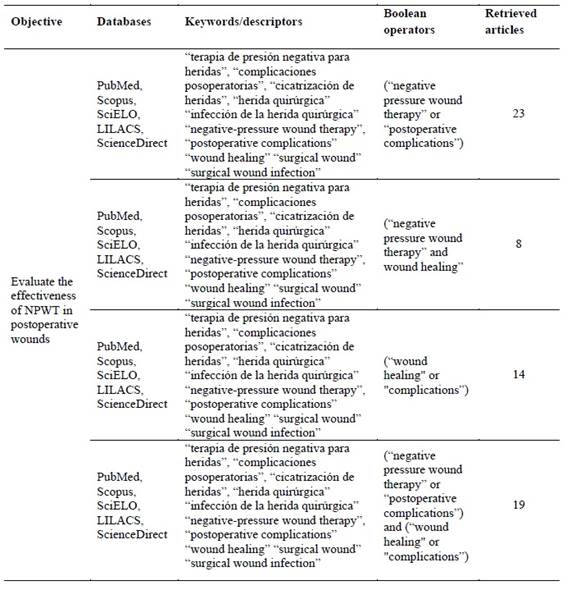
Scientific articles and research papers were retrieved from various academic and scientific databases, including PubMed, Scopus, Web of Science, SciELO, Redalyc, Dialnet, Medigraphic, and Ciberindex. The search strategy included keywords and thesauri from Medical Subject Headings (MeSH) and Health Sciences Descriptors (DeCS), which were combined using Boolean operators (AND, OR) to optimize the accuracy and relevance of the results.
The search was limited to the period from 2017 to 2024, given that the application of NPWT in the context of postoperative wound complications is an emerging line of research, with significant and high-quality evidence becoming available starting in 2017. Articles were selected in Spanish, English, and Portuguese.
Table 1 presents the search strategy.
The methodological quality of the included studies was evaluated using the CASPe (Critical Appraisal Skills Programme) checklists, selecting the format according to the type of study. This tool allowed identification of strengths and weaknesses regarding internal validity, objectives, design, and applicability of results. Additionally, the GRADE system (Grading of Recommendations, Assessment, Development and Evaluation) was applied to assess the certainty of evidence, considering risk of bias, consistency, precision, and applicability of findings.
The SCImago Journal Rank (SJR) was used to assess the impact of scientific journals, without replacing critical appraisal of content. In randomized clinical trials, the Cochrane risk-of-bias tool was also applied. 8
The information retrieval and selection process followed PRISMA guidelines and included three stages: database review, application of inclusion and exclusion criteria, and critical appraisal using CASPe and GRADE, allowing rigorous interpretation of the studies in response to the research question.
To ensure proper data organization, tools such as Zotero, Excel, and Microsoft Word were used to classify the studies in tables. This facilitated the selection of relevant articles and the exclusion of those not aligned with the study objectives.
This article emphasized adherence to copyright regulations and proper source attribution. During the study selection process, measures were taken to avoid selection bias, ensuring that the inclusion of studies was objective and based on predefined criteria.
Study selection
The studies underwent a progressive selection process based on: rates of postoperative complications, effectiveness of NPWT compared to conventional methods, and clinical outcome influencers (e.g., type of surgery or patient characteristics).
Results
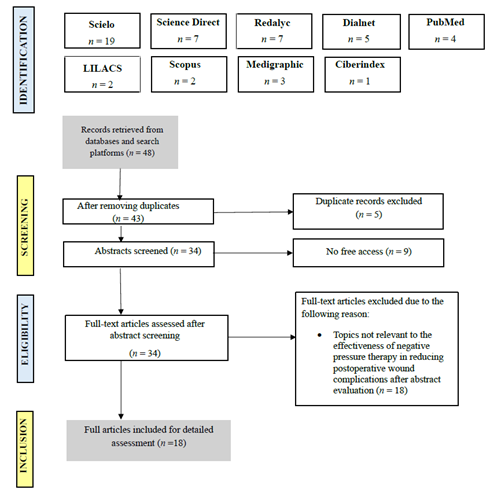
Following the systematized review according to the specifications described in the methodology, 48 publications were initially identified. Of these, 18 articles met the inclusion criteria for full reading; 30 publications were excluded, including 9 due to lack of free access, 16 that were not relevant to the research objective, and 5 duplicates.
Ultimately, 18 articles were included in this systematized review. Methodological analysis revealed that 6 of the articles were observational descriptive studies (33.3 %), which reported clinical experiences and preliminary results regarding the application of Negative Pressure Wound Therapy. Additionally, 6 case studies (33.3 %) explored the individual progress of patients treated with NPWT in specific clinical settings. Two cost-analysis studies were identified: one based on a literature review and another on a clinical case (11.1 %). Furthermore, two narrative systematic reviews (11.1 %) and one systematized review (5.5 %) were included, which synthesized secondary evidence on NPWT effectiveness. Finally, one retrospective case-control study (5.5 %) was found, comparing NPWT to conventional methods. This methodological diversity provided a broad and complementary perspective on the effectiveness and applicability of NPWT in different clinical scenarios. F2
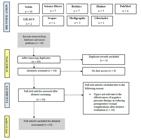
Flow diagram describing the process of search, identification, screening, eligibility, and inclusion of studies for results analysis.
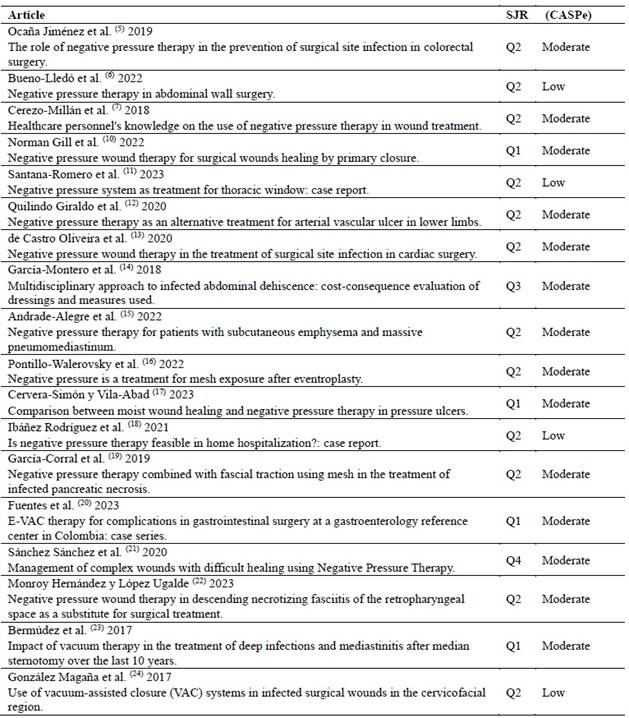
The 18 articles selected for this systematized review were published between 2017 and 2024 and directly address the use of Negative Pressure Wound Therapy in postoperative wounds. The majority are quantitative studies, with a predominance of descriptive approaches, case reports, and systematic reviews, published in Spanish, English, and Portuguese (the latter translated into Spanish for analysis). To ensure the quality of the evidence, the 18 articles were evaluated using the SCImago Journal Rank (SJR), a ranking metric that assesses the impact of scientific publications by grouping them into quartiles based on the number of citations and the relevance of the journal in which they were published. 9 These results are presented in Table 2.
Quality assessment of selected articles using SCImago Journal Rank (SJR) and Critical Appraisal Skills Programme (CASPe)
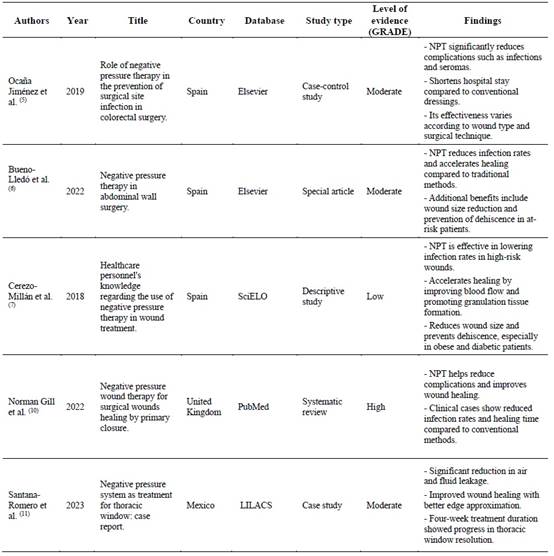
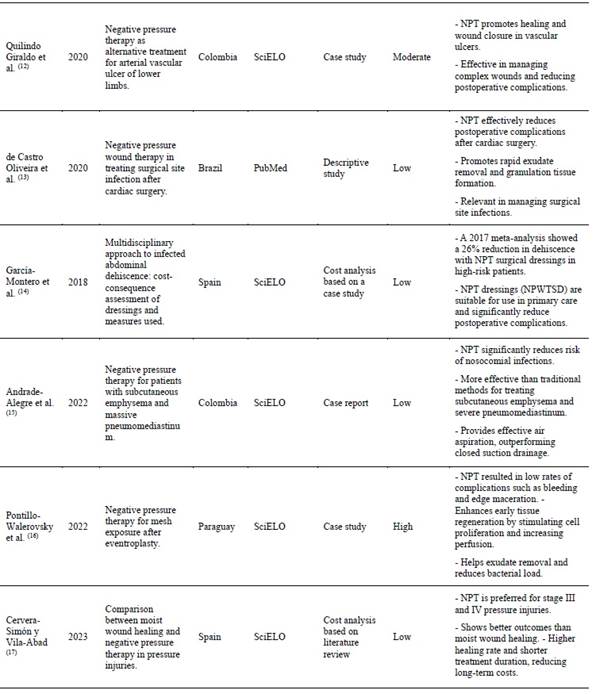
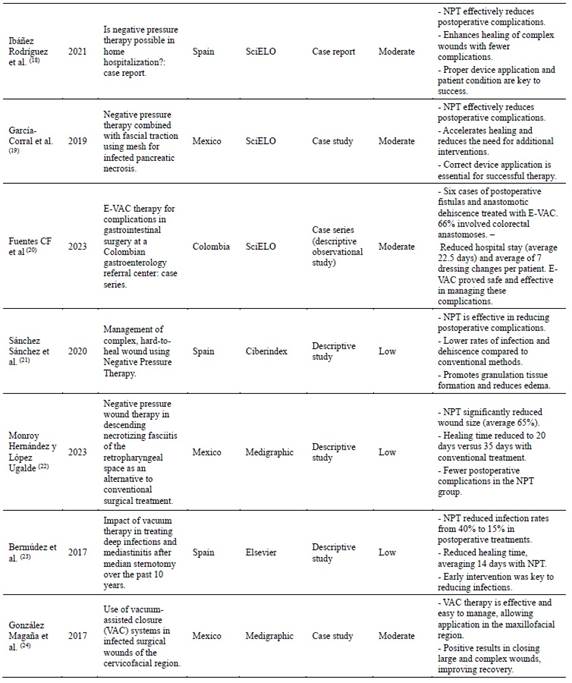
For the data extraction process, an organized approach was employed through the development of a table encompassing various indicators to classify the reviewed articles. These indicators include author(s), year of publication, article title, country, database, study type, level of evidence, and findings. This detailed classification enabled the grouping, comparison, and subsequent drafting of the systematic review article. Structuring the information in this manner facilitated a coherent synthesis of the results and contributed to the orderly presentation of the systematic review.Table 3 . .
Discussion
The results of this systematic review confirm the effectiveness of Negative Pressure Wound Therapy as a relevant intervention for reducing complications in postoperative wounds, especially in patients with comorbidities or those undergoing high-risk procedures. Unlike conventional methods, NPWT not only optimizes the healing process but also appears to alter the clinical course of recovery by significantly decreasing rates of infection, seroma, and dehiscence. 5,6,7
This effect has been observed across multiple surgical contexts. In colorectal surgery, for instance, a clear reduction in hospital stays and infection rates has been documented compared to conventional dressings. 5 Likewise, in abdominal wall surgery, NPWT has proven especially beneficial for patients with risk factors such as obesity, diabetes, or immunosuppression, where it accelerates granulation tissue formation and reduces wound size. 6 These findings support the hypothesis that NPWT should not be considered solely as a curative measure, but as a prophylactic strategy with broad clinical impact.
From a pathophysiological standpoint, NPWT promotes healing through modulation of local pressure, increased blood flow, and reduction of exudate, creating an optimal environment for tissue regeneration. This synergy of physiological mechanisms justifies its effectiveness in complex clinical scenarios such as subcutaneous emphysema, pneumomediastinum, 3 or deep vascular ulcers, 14 where traditional methods fail to achieve the same level of therapeutic progression or control.
However, indiscriminate implementation of NPWT in all surgical patients may not be justified. The reviewed evidence suggests that the greatest benefits are observed in high-risk patients or those with complex wounds. Conversely, in low-risk cases or superficial wounds, some authors such as Norman et al. 10 and Fuentes et al. 20 have found no significant differences compared to conventional methods, highlighting the need to establish well-defined clinical criteria for its indication.
These findings reinforce NPWT as an effective clinical intervention, highlighting its utility in various surgical applications and in enhancing healing in patients with risk factors. The reviewed studies, classified within quartiles Q1 and Q4, provide robust evidence supporting the use of this therapy in high-complexity hospital settings, suggesting that its implementation can significantly improve clinical outcomes and reduce complications in postoperative patients. 11,20
Regarding safety and potential adverse effects, while most studies highlight the benefits of NPWT in reducing infections, some reports mention mild side effects such as skin irritation and, in rare cases, wound edge necrosis due to prolonged pressure, as described by Andrade-Alegre et al. 15 Additionally, a study conducted by Santana-Romero et al. 11 reports a 5% adverse event rate, emphasizing the importance of proper monitoring in patients with fragile skin or in anatomically challenging areas. This variability in outcomes suggests that the efficacy and safety of NPWT may largely depend on proper protocol application and individual patient factors such as skin type and existing comorbidities. 12,13
When comparing these findings with previous reviews, studies such as those by Quilindo-Giraldo et al. 12 and García-Montero et al. 14 have reported positive outcomes in terms of complication reduction but emphasize that the cost of NPWT remains a barrier to widespread implementation in all postoperative patients. Quilindo-Giraldo et al. 12 note that while NPT is effective, its cost-benefit ratio is more favorable in deep wounds and patients with comorbidities, whereas in less complex wounds the benefits do not justify the high costs-an observation consistent with that of Castro Oliveira et al. 13 Meanwhile, Pontillo-Walerovsky et al. 16 found that when combined with topical agents such as honey, NPWT improves outcomes, opening the door to future research on combined treatments that may reduce costs without sacrificing effectiveness. 17
The limitations of this review include heterogeneity in the study designs and protocols analyzed. Many studies show variations in the duration of NPWT application and in the criteria used to evaluate healing and complications, which hinders direct comparison of results.18,19Furthermore, most investigations have been conducted in specialized healthcare centers, limiting the generalizability of results to other settings. The lack of long-term follow-up studies also represents a significant limitation, as the long-term impact of NPWT on quality of life and sustained healing remains unknown. 21,22,23
Based on these findings, it can be stated that NPWT represents a valuable therapeutic tool that should be considered a first-line intervention for managing postoperative wounds in high-risk patients. Its selective use, based on precise clinical criteria, can not only improve surgical outcomes but also optimize resource utilization in healthcare institutions. In contrast, its use in low-risk populations should be assessed with caution, prioritizing more cost-effective interventions. 24
Moreover, it would be beneficial to investigate the combination of NPWT with topical antimicrobial agents, as proposed by Sánchez, 21 to potentially enhance clinical outcomes and reduce costs. The implementation of standardized NPWT protocols in hospitals could optimize clinical practice and allow for a more accurate evaluation of its benefits and limitations in the treatment of postoperative wounds.
Conclusions
Negative Pressure Wound Therapy (NPWT) is established as an effective intervention in reducing postoperative complications, with results supporting its superiority over conventional methods in patients with complex wounds and significant risk factors such as obesity, diabetes, and severe comorbidities.24Through this systematic review, it was determined that NPWT consistently decreases rates of infections and dehiscence, while accelerating wound healing through mechanisms such as increased blood flow, granulation tissue formation, and efficient exudate management. Its application has proven particularly beneficial in abdominal, colorectal, and thoracic surgeries, as well as in the treatment of vascular ulcers and advanced infections. 25
The success of NPWT is influenced by factors such as the type of surgery, wound location, and patient characteristics. The therapy demonstrates high effectiveness in high-risk patients, while in superficial wounds or low-risk individuals, its efficacy appears comparable to that of conventional methods.
Additionally, factors such as proper device application and adequate training of healthcare personnel are essential to optimize outcomes, highlighting the importance of standardized protocols and ongoing professional education. Despite its benefits, NPWT presents certain limitations, including mild adverse effects such as skin irritation and local discomfort, emphasizing the need for careful evaluation to ensure maximum safety and effectiveness.
NPWT represents a valuable clinical tool in the management of surgical wounds, particularly in vulnerable patients and high-complexity settings. However, further large-scale studies with greater methodological rigor, as well as cost-effectiveness analyses, are needed to support its evidence-based implementation across diverse medical environments and to expand its use in specific populations.
References
-
1. Organización Mundial de la Salud. La OMS recomienda 29 formas de detener las infecciones quirúrgicas y evitar microorganismos multirresistentes (Internet). OMS; 2025 (citado 2024 jun 17). Disponible en: Disponible en: https://www.who.int/es/news/item/03-11-2016-who-recommends-29-ways-to-stop-surgical-infections-and-avoid-superbugs
» https://www.who.int/es/news/item/03-11-2016-who-recommends-29-ways-to-stop-surgical-infections-and-avoid-superbugs - 2. José-Borjas E, Bejarano S, Martinez-Miranda P, Toledo J, Campos G, Fajardo V, et al. Presencia de infección de sitio quirúrgico en procedimientos gineco-obstétricos en un hospital de II nivel de atención, Honduras 2017-2018. Rev. chil. obstet. ginecol. (Internet). 2021 (citado 2024 jun 16);86(1):42-51. doi: 10.4067/S0717-75262021000100042
-
3. Hinojosa Guerrero JE, Mendez Zuñiga CR, Ostaiza Véliz IV, Ureta Centeno WL. Ventajas del uso de la terapia de presión negativa en heridas quirúrgicas. S. E. (Internet). 2022 (citado 2024 jun 17);E(Esp.1). doi: 10.37954/se.v0i0.92
» https://doi.org/10.37954/se.v0i0.92 -
4. Cajas Bejarano CJ. Factores asociados a la complicación de heridas postquirúrgicas. Cirugía General, Hospital General IESS, Milagro. 2018. RECIAMUC (Internet). 2019 (citado 2024 sep 19);3(1):464-482. doi: 10.26820/reciamuc/3.(1).enero.2019.464-482
» https://doi.org/10.26820/reciamuc/3.(1).enero.2019.464-482 -
5. Ocaña Jiménez J, Abadía Barno P, Ramos Rubio D, Pina Hernández JD, García Pérez JC, Moreno Montes I, et al. Papel de la terapia presión negativa en la prevención de infección del sitio quirúrgico en cirugía colorrectal. Cir Esp (Internet). 2019;97(5):268-274. doi: 10.1016/j.ciresp.2019.03.001
» https://doi.org/10.1016/j.ciresp.2019.03.001 -
6. Bueno-Lledó J, Martínez-Hoed J, Pous-Serrano S. Terapia de presión negativa en cirugía de la pared abdominal. Cir Esp (Internet). 2022 (citado 2024 jun 17);100(8):464-71. doi: 10.1016/j.ciresp.2021.12.006
» https://doi.org/10.1016/j.ciresp.2021.12.006 -
7. Cerezo-Millán P, López-Casanova P, Verdú-Soriano J, Berenguer-Pérez M. Conocimientos del personal sanitario respecto al uso de la terapia de presión negativa en el tratamiento de las heridas. Gerokomos (Internet). 2018 (citado 2024 sep 19);29(4):181-191. Disponible en: Disponible en: https://scielo.isciii.es/scielo.php?script=sci_arttext&pid=S1134-928X2018000400181
» https://scielo.isciii.es/scielo.php?script=sci_arttext&pid=S1134-928X2018000400181 -
8. Pardal-Refoyo JL, Pardal-Peláez B. Anotaciones para estructurar una revisión sistemática. Rev ORL (Internet). 2020 (citado 2024 oct 11);11(2):155-160. doi: 10.14201/orl.22882
» https://doi.org/10.14201/orl.22882 -
9. Hernández Lalinde JD, Bermúdez V, Arias V, Chacín M, Pahuana M, Barroso M. Indicadores de rendimiento de citas: clasificación e importancia. Arch Venez Farmacol Ter. 2018 (citado 2024 oct 11);37(3):172-175. Disponible en: Disponible en: https://www.redalyc.org/journal/559/55963208001/html/
» https://www.redalyc.org/journal/559/55963208001/html/ -
10. Norman G, Shi C, Goh EL, Murphy EMA, Reid A, Chiverton L, et al. Negative pressure wound therapy for surgical wounds healing by primary closure. Cochrane Libr (Internet). 2022; 4(4):CD009261. doi: 10.1002/14651858.cd009261.pub7
» https://doi.org/10.1002/14651858.cd009261.pub7 -
11. Santana-Romero C, Santiago-González N, Martínez-López Y, Antonio-Francisco N, Tortolero-Sánchez CR, González-Olivares DB, et al. Sistema de presión negativa como tratamiento de la ventana torácica: informe de un caso. Rev Enferm Neurol (Internet). 2023;22(1):93-99. doi: 10.51422/ren.v22i1.416
» https://doi.org/10.51422/ren.v22i1.416 -
12. Quilindo Giraldo CI, Ramirez Román JA, Martinez JP. Terapia de presión negativa como tratamiento alternativo en el manejo de una úlcera vascular arterial de miembros inferiores. Rev médica Risaralda (Internet). 2020;26(1). doi: 10.22517/25395203.21271
» https://doi.org/10.22517/25395203.21271 -
13. de Castro Oliveira M, Andrade AYT de, Turrini RNT, Poveda V de B. Negative pressure wound therapy in the treatment of surgical site infection in cardiac surgery. Rev Bras Enferm (Internet). 2020;73(5). doi: 10.1590/0034-7167-2019-0331
» https://doi.org/10.1590/0034-7167-2019-0331 -
14. García-Montero A, Viedma-Contreras S, Martínez-Blanco N, Gombau-Baldrich Y, Guinot-Bachero J. Abordaje multidisciplinar de una dehiscencia abdominal infectada: evaluación coste-consecuente de apósitos y medidas utilizadas. Gerokomos (Internet). 2018 (citado 2024 nov 8);29(3):148-152. Disponible en: Disponible en: https://scielo.isciii.es/scielo.php?script=sci_arttext&pid=S1134-928X2018000300148&lang=es
» https://scielo.isciii.es/scielo.php?script=sci_arttext&pid=S1134-928X2018000300148&lang=es -
15. Andrade-Alegre R, Díaz A, Juárez H. Terapia de presión negativa para pacientes con enfisema subcutáneo y neumomediastino masivo. Revista Colombiana de Cirugía (Internet). 2022;37(2):305-307. doi: 10.30944/20117582.932
» https://doi.org/10.30944/20117582.932 -
16. Pontillo-Walerovsky M, Ferreira-Pozzi M, Wagner-Taustanowski G, Trostchansky-Vasconcellos I. Presión negativa como tratamiento de la exposición de la malla luego de una eventroplastia. Cir. parag. (Internet). 2022 (citado 2024 nov 8);46(1):32-35. doi: 10.18004/sopaci.2022.abril.32
» https://doi.org/10.18004/sopaci.2022.abril.32 -
17. Cervera-Simón M, Vila-Abad E. Comparativa entre cura en ambiente húmedo y terapia de presión negativa en lesiones por presión. Revisión bibliográfica. Gerokomos (Internet). 2022 (citado 2024 nov 6);33(4):263-268. Disponible en: Disponible en: https://scielo.isciii.es/scielo.php?script=sci_arttext&pid=S1134-928X2022000400011&lang=es
» https://scielo.isciii.es/scielo.php?script=sci_arttext&pid=S1134-928X2022000400011&lang=es -
18. Ibáñez Rodríguez B, Maestre Bernat L, Moya Martínez D, Bodro Marimont M, Hernández Carceny C. ¿Es posible la terapia de presión negativa en hospitalización a domicilio?: caso clínico. Gerokomos (Internet). 2021 (citado 2024 nov 9);32(2):136-139. Disponible en: Disponible en: https://scielo.isciii.es/scielo.php?script=sci_arttext&pid=S1134-928X2021000200136&lang=es
» https://scielo.isciii.es/scielo.php?script=sci_arttext&pid=S1134-928X2021000200136&lang=es -
19. García-Corral JR, Cárdenas-Lailson LE, Sanjuan-Martínez CA, Arellano-Solorio CH, Aquino-Matus JE, Carrillo-Romero A. Terapia de presión negativa combinada con tracción fascial mediante malla en el tratamiento de la necrosis pancreática infectada. Una nueva opción terapéutica. Cir Cir (Internet). 2019 (citado 2024 nov 6);87(2):219-223. doi: 10.24875/ciru.18000472
» https://doi.org/10.24875/ciru.18000472 -
20. Fuentes CF, Córdoba Guzmán AC, Daza Castro EM, Aponte D, González C, Sabbagh LC. Terapia E-VAC como tratamiento de complicaciones en cirugía gastrointestinal en centro de referencia de gastroenterología en Colombia: Serie de casos. Rev Gastroenterol Peru (Internet). 2023 (citado 2024 nov 8);43(2):e1472. doi: 10.47892/rgp.2023.432.1472
» https://doi.org/10.47892/rgp.2023.432.1472 -
21. Sánchez ES. Abordaje herida compleja de difícil cicatrización mediante Terapia de Presión Negativa. Paraninfo Digital (Internet). 2020 (citado 2024 nov 6);(31):e3133. Disponible en: Disponible en: https://ciberindex.com/index.php/pd/article/view/2787
» https://ciberindex.com/index.php/pd/article/view/2787 -
22. Monroy-Hernández D, López-Ugalde AC. Terapia de heridas con presión negativa en fascitis necrosante descendente de retrofaringe como sustituto al tratamiento quirúrgico convencional. An Orl Mex. (Internet). 2023 (citado 2024 nov 6);68(3):100-106. doi: 10.24245/aorl.v68i3.8677
» https://doi.org/10.24245/aorl.v68i3.8677 -
23. Bermúdez A, Daroca T, García N, Martín M de LÁ, Vignau JM, Carmona C, et al. Impacto de la terapia de vacío en el tratamiento de las infecciones profundas y mediastinitis tras esternotomía media en los últimos 10 años. Cir Cardiovasc (Internet). 2017;24(5):293-297. doi: 10.1016/j.circv.2016.11.054
» https://doi.org/10.1016/j.circv.2016.11.054 -
24. González MF, Malagón HHO, Gerez ÁKP, et al. Uso de sistemas de cierre asistido al vacío (VAC) en heridas quirúrgicas infectadas en región cervicofacial (presentación de un caso clínico y revisión de la literatura). Rev Mex Cir Bucal Maxilofac. (Internet). 2017 (citado 2024 nov 8);13(2):40-50. Disponible en: Disponible en: https://www.medigraphic.com/cgi-bin/new/resumen.cgi?IDARTICULO=75582
» https://www.medigraphic.com/cgi-bin/new/resumen.cgi?IDARTICULO=75582 -
25. Llamas Fernández S. Actualización de los resultados de la Terapia de Presión Negativa: Revisión Sistemática. Nure Inv. (Internet). 2023 (citado 2024 oct 11);20(112). doi: 10.58722/nure.v20i122.2340
» https://doi.org/10.58722/nure.v20i122.2340